




How Restaurants Can Use AI to Optimize Workforce Management
AI helps restaurants optimize workforce management through smarter scheduling, labor forecasting, employee productivity improvements, cost control, and data-driven staffing decisions.

The Growing Role of AI in Restaurant Workforce Management
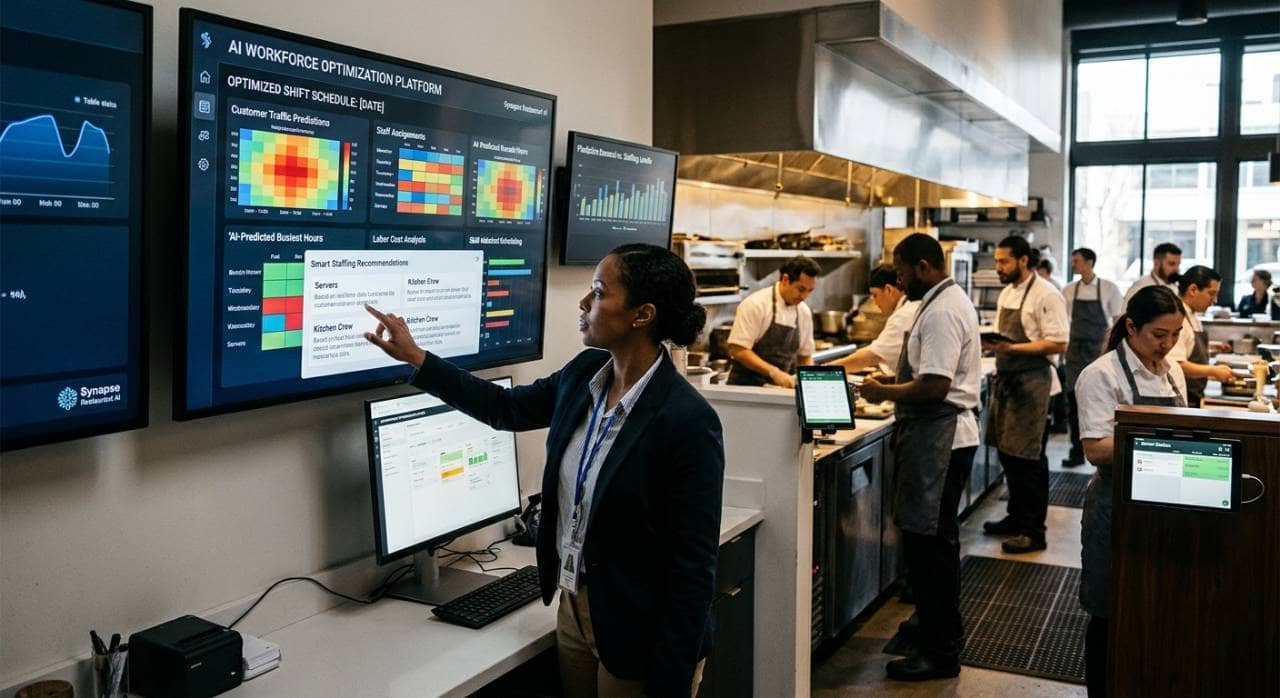
Managing restaurant employees requires careful planning, consistent communication, and accurate staffing decisions. Restaurant owners and managers must coordinate employee schedules, monitor attendance, control labor costs, manage shift coverage, and ensure enough staff members are available to maintain service quality. These responsibilities become more challenging when customer demand fluctuates, employees request schedule changes, or unexpected absences disrupt daily operations. Traditional workforce management methods often rely on spreadsheets, manual scheduling, and separate systems for tracking employee hours and labor expenses. These approaches can make it difficult to identify staffing inefficiencies, anticipate labor requirements, and respond quickly to operational changes. Managers may spend considerable time handling administrative responsibilities instead of focusing on employee performance, customer service, and restaurant operations. Artificial intelligence (AI) is changing how restaurants approach workforce management by helping managers make more informed, data-driven decisions. AI-powered tools can analyze historical sales, customer traffic, employee availability, and labor patterns to identify staffing requirements and forecast workforce demand. This information helps restaurants create more accurate employee schedules, allocate labor efficiently, and reduce unnecessary staffing expenses. Beyond scheduling and labor cost management, AI can also improve workforce productivity by automating repetitive administrative tasks, identifying scheduling conflicts, and supporting better workload distribution. Restaurant managers can use these capabilities to improve operational visibility, maintain appropriate staffing levels, and give employees more time to focus on their responsibilities. As restaurant operations become increasingly complex, adopting AI for workforce management can help owners balance labor expenses, employee productivity, and customer service. Understanding how these technologies work and where they provide the most value is an important step toward building a more efficient and well-managed restaurant workforce.
What Is AI Workforce Management in Restaurants?
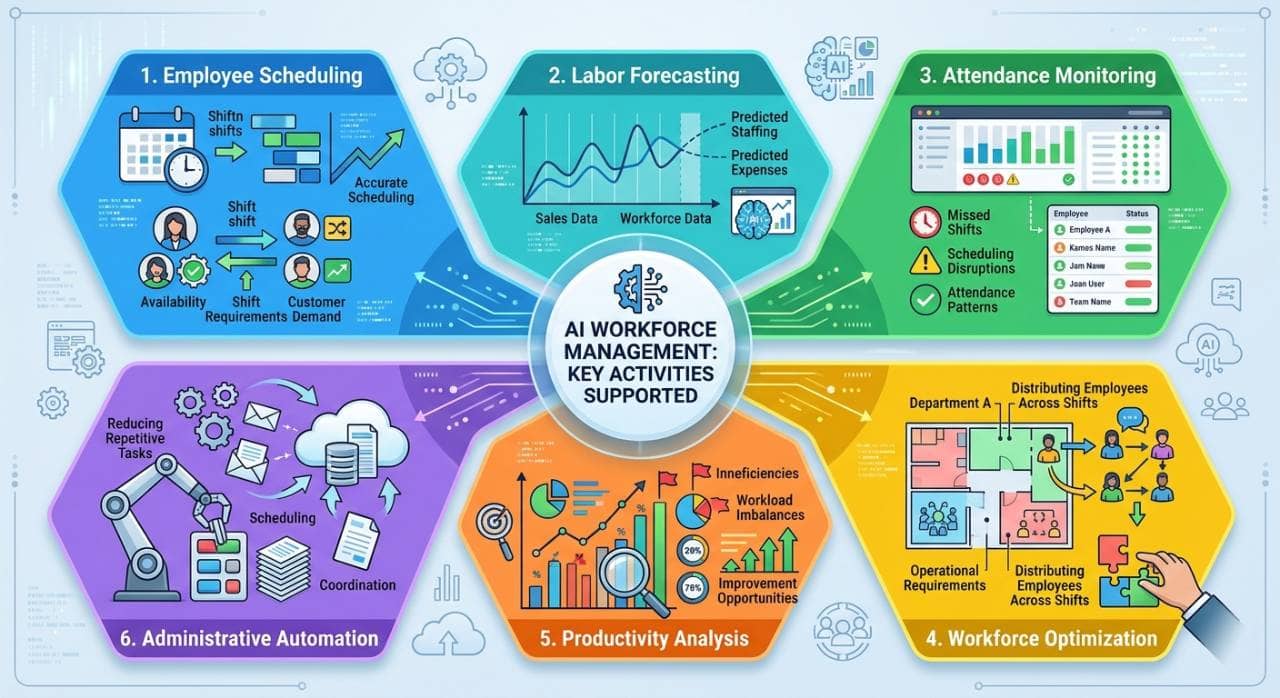
AI workforce management refers to the use of artificial intelligence to help restaurants plan, organize, monitor, and optimize their employees. It uses data analysis, predictive algorithms, and automation to support decisions related to employee scheduling, labor allocation, attendance, productivity, and workforce planning. Instead of relying entirely on manual processes, restaurant managers can use AI to identify workforce patterns and make decisions based on operational data. In restaurant operations, AI can analyze information from multiple sources, including historical sales, customer traffic, employee availability, timekeeping records, and labor expenses. By evaluating these data points, AI-powered systems can identify when additional employees may be needed, which shifts require adjustments, and where labor resources may not be used efficiently. For example, a restaurant experiences different staffing requirements during weekday lunches, weekend dinners, and seasonal periods. AI can examine historical demand patterns and estimate how many employees are needed for specific shifts. Managers can use these predictions to plan schedules more accurately, avoid unnecessary labor hours, and maintain appropriate service levels. Key activities supported by AI workforce management include - 1. Employee scheduling - Analyzing employee availability, shift requirements, and expected customer demand to support more accurate scheduling decisions. 2. Labor forecasting - Predicting staffing requirements and labor expenses using historical sales and workforce data. 3. Attendance monitoring - Identifying attendance patterns, missed shifts, and potential scheduling disruptions. 4. Workforce optimization - Helping managers distribute employees across shifts and departments according to operational requirements. 5. Productivity analysis - Evaluating workforce patterns to identify inefficiencies, workload imbalances, and opportunities for improvement. 6. Administrative automation - Reducing repetitive tasks associated with scheduling, reporting, and workforce coordination. AI Workforce Management vs. Traditional Workforce Management Traditional workforce management typically depends on managers manually reviewing schedules, employee availability, attendance records, and labor reports. Although these methods can support daily operations, they may require significant administrative time and make it harder to respond quickly to changing business conditions. AI-powered workforce management adds predictive analysis and automation to these processes. Rather than simply recording employee hours or displaying existing schedules, AI can evaluate historical information, identify patterns, and recommend adjustments based on anticipated staffing requirements.
Improve Restaurant Employee Scheduling
Employee scheduling is one of the most important responsibilities in restaurant workforce management. Restaurant owners must ensure that enough employees are available for every shift without scheduling more workers than necessary. Poor scheduling can lead to understaffed shifts, excessive labor expenses, employee dissatisfaction, and inconsistent customer service. AI can help restaurants improve this process by analyzing workforce data and predicting staffing requirements more accurately. Traditional scheduling often relies on managers reviewing previous schedules, estimating customer traffic, and manually assigning employees to shifts. While experience plays an important role, these decisions can become difficult when demand changes frequently or multiple locations require different staffing levels. AI-powered scheduling tools can analyze historical information and help managers make more informed scheduling decisions. 1. Forecast Staffing Requirements Based on Customer Demand AI can analyze historical sales, transaction volumes, customer traffic, and seasonal patterns to estimate how busy a restaurant is likely to be during specific periods. These forecasts help managers determine how many employees are needed for breakfast, lunch, dinner, and other operating periods. For example, if historical data indicates that Friday evenings consistently generate higher customer traffic, AI can recommend allocating additional employees to those shifts. During slower periods, managers can adjust staffing levels to avoid unnecessary labor hours while maintaining adequate service coverage. 2. Match Employee Availability with Scheduling Requirements Employee availability is another important factor in creating effective schedules. Managers must consider requested days off, preferred working hours, existing shift assignments, and employee availability when preparing weekly schedules. AI-powered scheduling tools can evaluate these requirements and help managers identify suitable shift assignments. This reduces manual scheduling work and makes it easier to accommodate employee preferences while meeting operational needs. 3. Identify Scheduling Conflicts and Staffing Gaps Scheduling conflicts can create unnecessary disruptions, particularly when employees are assigned overlapping shifts, unavailable during scheduled hours, or scheduled without the necessary qualifications. AI can help identify potential conflicts and highlight shifts that may not have enough employees assigned. Managers can review these alerts and make adjustments before schedules are finalized, reducing the likelihood of unexpected staffing shortages. 4. Balance Employee Workloads Across Shifts Effective scheduling involves more than having enough employees available. Restaurant managers must also distribute working hours fairly and ensure that employees are not consistently assigned excessive workloads. AI can analyze employee schedules, working hours, and shift distribution to identify potential imbalances. Managers can use this information to distribute hours more consistently, reduce scheduling pressure, and support better employee satisfaction. By incorporating AI into employee scheduling, restaurants can move from reactive scheduling decisions toward more proactive workforce planning. Managers gain better visibility into staffing requirements, reduce administrative responsibilities, and create schedules that account for both business demand and employee availability.
Optimize Labor Costs Through AI-Powered Forecasting
Controlling labor costs requires restaurant owners to understand how staffing decisions affect payroll expenses and daily operations. Scheduling too many employees during slow periods increases unnecessary labor expenses, while having too few employees during busy shifts can reduce service quality and put additional pressure on existing staff. AI-powered forecasting helps restaurants address these challenges by using operational data to predict labor requirements and improve workforce allocation. Rather than relying solely on historical averages or manual estimates, restaurant managers can use AI to evaluate sales trends, customer traffic, employee working hours, and wage information. These insights help identify where labor resources are being underutilized and where additional staffing may be necessary. How AI Helps Restaurants Control Labor Expenses 1. Predict staffing requirements - AI analyzes historical sales, transaction volumes, and customer traffic to estimate future staffing needs. Managers can use these predictions to schedule employees according to expected demand instead of relying on fixed staffing levels for every shift. 2. Identify unnecessary labor hours - AI can compare scheduled working hours with anticipated operational requirements to identify potential overstaffing. This allows managers to review employee assignments and adjust schedules before unnecessary labor expenses accumulate. 3. Monitor overtime risks - By analyzing employee schedules, attendance records, and accumulated working hours, AI can help identify employees approaching overtime thresholds. Managers can use these alerts to review upcoming shifts and make adjustments that help control additional payroll expenses. 4. Forecast labor expenses - AI can combine projected sales, employee wage rates, scheduled hours, and historical labor costs to estimate future payroll expenses. This information helps restaurant owners compare expected spending against labor budgets and identify potential cost overruns. 5. Allocate employees more efficiently - AI can help managers determine where labor resources are needed most based on anticipated customer demand and operational requirements. This supports better staffing distribution across departments and shifts without compromising service coverage. Balance Labor Savings with Restaurant Performance Reducing labor costs should not mean automatically cutting employee hours or operating with fewer staff members. Understaffing can increase employee workloads, create longer customer wait times, and negatively affect service quality. Restaurant owners must consider these operational consequences when making workforce decisions. AI-powered forecasting provides information that helps managers find a more appropriate balance between staffing expenses and operational requirements. By evaluating labor patterns alongside projected sales and customer demand, managers can make adjustments based on actual business needs rather than assumptions. Ultimately, effective labor cost optimization involves using available workforce resources more efficiently, preventing unnecessary overtime, and maintaining appropriate staffing levels. AI supports this process by turning restaurant operational data into actionable insights that help owners control expenses while maintaining consistent service.
Improve Employee Productivity and Team Efficiency
Restaurant productivity depends on how effectively employees complete their responsibilities, communicate with team members, and coordinate daily activities. When employees spend too much time handling administrative work, dealing with unclear instructions, or waiting for other departments, restaurant operations can become inefficient. AI helps address these challenges by automating routine processes, analyzing workforce activity, and providing managers with information to improve how work is organized. For restaurant owners, improving productivity is not simply about increasing the amount of work employees complete. It involves identifying unnecessary tasks, reducing operational delays, and making sure employees have enough time to focus on their primary responsibilities. Ways AI Can Improve Restaurant Workforce Productivity 1. Reduce administrative workloads - AI can automate repetitive management activities, including organizing workforce information, preparing reports, reviewing schedules, and identifying scheduling conflicts. This reduces the administrative burden on managers and gives them more time to supervise employees and oversee restaurant operations. 2. Distribute workloads more effectively - AI can analyze employee schedules, assigned responsibilities, and operational requirements to help managers identify workload imbalances. This allows managers to distribute tasks more appropriately, provide additional support during busy periods, and prevent certain employees from becoming consistently overloaded. 3. Identify operational inefficiencies - AI can evaluate available workforce and operational data to identify recurring delays, productivity gaps, and workflow bottlenecks. Managers can use these insights to investigate problems, adjust employee assignments, and improve processes across front-of-house and back-of-house operations. 4. Improve communication between employees - AI-supported tools can help organize shift updates, distribute routine notifications, and make important operational information easier to access. Better communication helps employees understand their responsibilities, stay informed about changes, and coordinate more effectively with other team members. 5. Prioritize customer-facing responsibilities - By reducing repetitive administrative tasks and simplifying daily workflows, AI can give employees more time to focus on food preparation, order accuracy, customer interactions, and service quality. This helps restaurants improve workforce efficiency without relying entirely on increasing staffing levels. Measure Productivity to Improve Workforce Performance AI-generated insights can help restaurant managers understand where productivity improvements are needed. For example, managers can review labor hours, task completion patterns, staffing levels, and operational delays to identify areas that require attention. However, productivity should not be evaluated solely by how many tasks employees complete or how quickly they work. Restaurant owners must also consider service quality, workload distribution, employee well-being, and operational consistency. Using AI insights alongside direct employee feedback helps managers make more balanced decisions. AI improves restaurant workforce productivity by helping managers organize responsibilities, reduce administrative work, and identify inefficiencies. When employees have clearer responsibilities and better-coordinated workflows, restaurants can make better use of their existing workforce while maintaining consistent operating standards.

Improve Workforce Planning and Employee Retention
Maintaining a stable workforce is an ongoing challenge for restaurant owners. Employee turnover, inconsistent availability, scheduling conflicts, and unexpected absences can make it difficult to maintain adequate staffing levels. When employees frequently leave or experience unpredictable schedules, managers must spend additional time recruiting, training, and reorganizing shifts. AI can help restaurants address these challenges by providing better workforce insights and supporting more informed employee management decisions. Workforce planning involves understanding current staffing levels, anticipating future labor requirements, and ensuring the right employees are available when needed. AI can analyze employee schedules, attendance records, working hours, and labor patterns to help managers identify potential workforce problems before they disrupt daily operations. 1. Identify Workforce Trends and Potential Staffing Shortages AI can analyze historical attendance records, employee availability, turnover patterns, and scheduling information to identify recurring workforce issues. For example, if certain shifts frequently experience employee absences or staffing shortages, managers can review these patterns and adjust their workforce plans. Identifying potential shortages early gives restaurant owners more time to arrange shift coverage, redistribute responsibilities, or plan additional recruitment. 2. Create More Consistent and Fair Employee Schedules Unpredictable schedules can make it difficult for restaurant employees to balance work with personal responsibilities. Frequent last-minute changes, uneven working hours, and inconsistent shift assignments can also contribute to employee dissatisfaction. AI-powered scheduling tools can help managers consider employee availability, preferred working hours, and workload distribution when preparing schedules. More consistent scheduling can improve workforce organization and support a better working environment. 3. Recognize Patterns Associated with Employee Burnout Excessive working hours, repeated overtime, insufficient rest between shifts, and uneven workloads can contribute to employee fatigue. AI can analyze workforce information to identify patterns that may indicate scheduling pressure or potential burnout risks. For example, managers may use workforce reports to identify employees who consistently work extended hours or cover frequent additional shifts. They can then review these situations and make appropriate scheduling adjustments to support employee well-being. 4. Support Employee Retention Through Better Workforce Management Employee retention depends on several factors, including workplace conditions, management practices, compensation, scheduling flexibility, and opportunities for development. Although AI cannot directly solve every retention challenge, it can help managers understand workforce patterns and identify areas that need attention. By evaluating scheduling consistency, attendance trends, overtime, and employee availability, managers can identify potential problems affecting workforce stability. These insights can support more proactive management decisions and help restaurants create better working conditions. 5. Plan Future Staffing Requirements More Effectively Restaurant staffing needs change based on business growth, seasonal demand, operating hours, and employee turnover. AI can analyze historical workforce data and anticipated customer demand to help managers estimate future staffing requirements. This information can support recruitment planning, employee training schedules, and decisions about allocating workers across departments or locations. Better workforce planning helps restaurants prepare for operational changes instead of reacting only after staffing shortages occur. Combine AI Insights with Human Management Employee retention requires more than analyzing schedules and attendance records. Restaurant managers must communicate with employees, understand their concerns, provide appropriate support, and create a positive workplace environment. AI should serve as a decision-support tool rather than independently determining employee performance or making sensitive employment decisions. Managers should review recommendations, consider individual circumstances, and ensure that workforce decisions are fair and consistent. By combining AI-driven workforce insights with effective management practices, restaurant owners can improve staffing stability, create more predictable schedules, and build a workforce that supports long-term operational performance.
Integrate AI into Restaurant Workforce Management Operations
Integrating AI into restaurant workforce management requires a structured approach that connects technology with existing operational processes. Restaurant owners must determine which workforce challenges need attention, identify the data required to support AI-driven decisions, and select tools that address their operational requirements. Without proper planning, introducing new technology can create additional administrative work instead of simplifying workforce management. The first step is understanding how workforce information is currently collected, organized, and used. Restaurants that rely on disconnected systems for employee scheduling, timekeeping, attendance, and labor reporting may struggle to maintain accurate workforce records. Connecting these processes can give managers a more complete view of employee activity, staffing requirements, and labor expenses. Important Considerations When Implementing AI 1. Evaluate existing workforce management processes - Review current scheduling methods, attendance tracking, overtime management, and labor reporting. Identify repetitive administrative tasks, recurring staffing problems, and areas where manual processes create inefficiencies. This assessment helps determine where AI can provide the greatest operational value. 2. Centralize workforce information - AI requires reliable data to generate useful insights. Restaurants should organize employee availability, working hours, attendance records, historical schedules, and labor expenses so managers can evaluate workforce performance more accurately. Integrating scheduling and timekeeping information can also improve visibility into actual labor usage. 3. Select technology based on operational requirements - Restaurant owners should evaluate AI solutions according to the workforce management activities they support. Important capabilities may include employee scheduling, labor forecasting, time and attendance tracking, workforce reporting, and automated notifications. The objective is to choose technology that addresses specific operational challenges rather than adding unnecessary features. 4. Prepare employees and managers for adoption - Employees need to understand how new systems affect their schedules, attendance records, and daily responsibilities. Managers should receive training on interpreting AI-generated recommendations, reviewing workforce reports, and making manual adjustments when necessary. Proper training helps employees use the technology effectively. 5. Monitor workforce performance - After implementation, managers should regularly evaluate whether AI is improving workforce operations. Metrics such as labor cost percentage, overtime hours, attendance accuracy, employee turnover, and scheduling efficiency can help measure progress and identify areas that require additional attention. Maintain Data Accuracy and Employee Privacy The reliability of AI recommendations depends on the quality of the information being analyzed. Outdated employee availability, incorrect working hours, and incomplete attendance records can produce inaccurate forecasts and scheduling recommendations. Restaurants should establish consistent procedures for updating workforce information and correcting errors. Employee privacy is equally important. Workforce management systems may process sensitive information, including employee schedules, attendance records, and working hours. Restaurant owners should restrict access to authorized personnel, follow applicable data protection requirements, and understand how their technology providers collect, store, and process employee information. Human oversight should also remain part of the implementation process. AI can identify workforce patterns and recommend scheduling adjustments, but managers must consider employee circumstances, operational requirements, and applicable employment regulations before making decisions.
Building a More Efficient Restaurant Workforce with AI
Managing a restaurant workforce requires balancing employee availability, staffing requirements, labor expenses, and customer service expectations. As restaurant operations become more complex, relying entirely on manual scheduling and traditional workforce management methods can make it difficult to respond to changing business demands. AI provides restaurant owners with additional tools to organize employees, analyze workforce information, and make more informed operational decisions. From employee scheduling and labor forecasting to productivity analysis and workforce planning, AI can improve several aspects of restaurant management. By analyzing historical sales, customer traffic, attendance records, and labor patterns, AI-powered tools help managers anticipate staffing requirements, identify inefficiencies, and allocate employees more effectively. Automation can also reduce repetitive administrative tasks, allowing managers to dedicate more time to supervising employees and maintaining service quality. However, adopting AI does not mean removing human involvement from workforce management. Restaurant managers still need to evaluate employee needs, address workplace concerns, monitor performance, and make decisions that account for the realities of daily operations. AI should provide useful information and recommendations that support these responsibilities rather than replace managerial judgment. For restaurant owners, the objective should be to use AI to create a more organized, productive, and cost-efficient workforce. Combining reliable workforce data, appropriate technology, and effective management practices can help restaurants control labor expenses, improve employee scheduling, and maintain consistent operational performance.