

Craveworthy Brands Acquires Papa Gino's in Biggest Deal
Craveworthy Brands is acquiring Papa Gino's Pizzeria, its largest deal yet, pairing the pizza chain with Wing It On in a major co-branding push.

A Record Check for Craveworthy
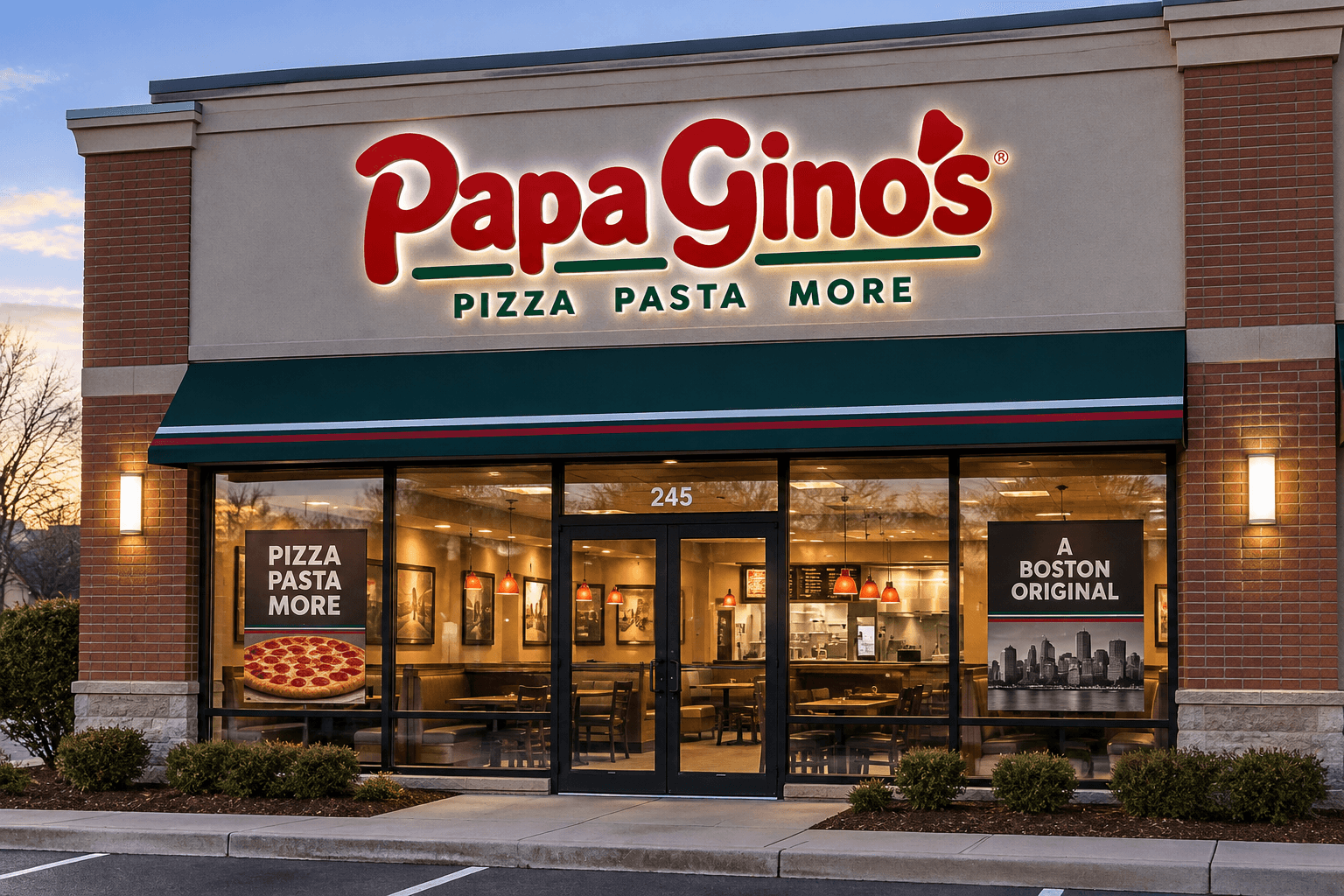
Gregg Majewski just wrote the biggest check of his career, and he's not shy about saying so. "This is the most I've ever paid for a brand because the opportunity is massive," he said of Craveworthy Brands' definitive agreement to acquire New England Authentic Eats LLC, the Massachusetts parent company behind Papa Gino's Pizzeria. The terms haven't been disclosed. The ambition behind them hasn't been hidden at all.
Craveworthy, the Chicago-based portfolio company Majewski founded in 2022, expects the deal to close by Dec. 31. Once it does, the plan is straightforward on paper and anything but simple in execution: fold the company's Wing It On concept into existing Papa Gino's stores, turning them into co-branded locations. Majewski says that single move will make Wing It On the largest brand in the entire Craveworthy portfolio, jumping from nearly 50 stores to roughly 145 almost overnight. Wing It On joined Craveworthy back in early 2023, and this is the chapter the company has clearly been building toward since. Majewski has also hinted that some existing Craveworthy brands will get trimmed in the coming weeks, though he hasn't said which ones are on the chopping block.
How Bankruptcy Made Papa Gino's a Better Bet
Papa Gino's carries a history that stretches back to 1961, when it opened its doors in East Boston. The brand's road since then hasn't been smooth. Its former parent, PGHC Holdings, filed for bankruptcy in 2018, triggering a wave of store closures across the region. A year later, a court signed off on the sale of the brand to private equity firm Wynnchurch Capital for $20 million.
For Majewski, that painful restructuring is precisely what makes Papa Gino's appealing now. "After the bankruptcy, it shed a ton of stores, but the brand has performed since," he said. "What I normally do when I take over a brand is cut stores that aren't performing. They've already done that, so I go in with a cleaner slate than I've ever had." Papa Gino's closed out 2025 with 70 locations, all in New England, and nearly $50 million in sales, a 9.5% year-over-year decline, according to Technomic. A smaller, already-pruned brand with a sales slump is exactly the kind of setup Majewski says he looks for.
Pushing EBITDA Toward $30 Million
The math behind the deal is where things get interesting. Majewski expects the added scale from Papa Gino's to push Craveworthy's EBITDA to between $20 million and $30 million within the next 12 months. "That's substantial," he said. "We'll go from making money but not rolling in it to a company with excess cash flow because we can cut (general and administrative costs) across the board."
There's no overlap concern with Craveworthy's other pizza brand, Fresh Brothers, which the company acquired in 2024 and which operates in entirely different markets across California, Florida, and Michigan. Fresh Brothers finished last year with 21 locations and $35.4 million in sales, and Craveworthy plans to keep growing it while also pairing it with Wing It On in its own co-branded format. Across existing co-branded locations, that pairing has already contributed nearly 25% of sales. The Papa Gino's rollout should be easier than most, Majewski noted, since the stores are larger and already have the ventilation equipment needed to handle a second kitchen concept.
Why Pizza and Wings Pay Off Together
The profitability logic comes down to a phrase Majewski repeats often: box economics. "Box economics are so tough right now, so adding two brands that complement each other allow us to be more profitable," he said. He estimates the wing business alone could add between $250,000 and $600,000 annually to an existing Papa Gino's location. Smaller test sites pairing Fresh Brothers and Wing It On are already on pace to add $100,000 to $150,000 each, which Majewski called "massive."
His confidence in the Papa Gino's rollout rests on a simple comparison: "Pizza and wings are a strong combination and Wing It On's wings are a better product than what they have now." Craveworthy funded the acquisition with what Majewski described only as "significant capital." On the deal team, Keel Merchant Bank and its affiliate Keel Advisory advised Craveworthy, with Akerman LLP handling legal work, while Harrington Park Advisors advised NEAE and Vedder served as its legal counsel.
A Valuation Boost and a Billion-Dollar Goal
Folding Papa Gino's into the portfolio pushes Craveworthy's valuation north of $550 million, Majewski said, a meaningful step toward the billion-dollar business he's building toward over the next three years or so. He pointed to room for 75 new locations within a 120-mile radius of Papa Gino's current footprint, a figure that only makes sense because of the clean slate the brand's bankruptcy years left behind.
"This deal allows us to become extremely profitable at a faster pace to grow and continue to acquire other brands," he said. "This is the deal we wanted to get to." Beyond this single transaction, Majewski has set a pace of one acquisition every six to nine months for the next four years. "As we get to bigger deals, it takes a lot more leg work," he admitted. The rest of the Craveworthy roster, including Big Chicken, Taim, Gregory's Coffee, Sigri, Dirty Dough, Taffer's Tavern, and Genghis Grill, shows a company built around collecting brands rather than scaling a single one, a strategy that increasingly looks like the industry's answer to brutal unit economics.
Will the Co-Branding Playbook Travel?
What happens next in New England will say a lot about whether this playbook travels. The exact price tag stays private, the list of brands getting trimmed hasn't been announced, and the "significant capital" funding the deal remains just as vague.
But the shape of the bet is plain enough: take a 70-unit pizza brand with a recent sales dip and a famously clean operational history, pair it with a wings concept that's growing fast, and see if New England can become the proving ground for co-branding at a scale Craveworthy hasn't attempted before.