


Restaurant Promotion Ideas to Increase Sales and Protect Margins
Restaurants attract guests without losing profit through targeted bundles, loyalty rewards, and limited-time offers, tested small and measured against costs.

Overview
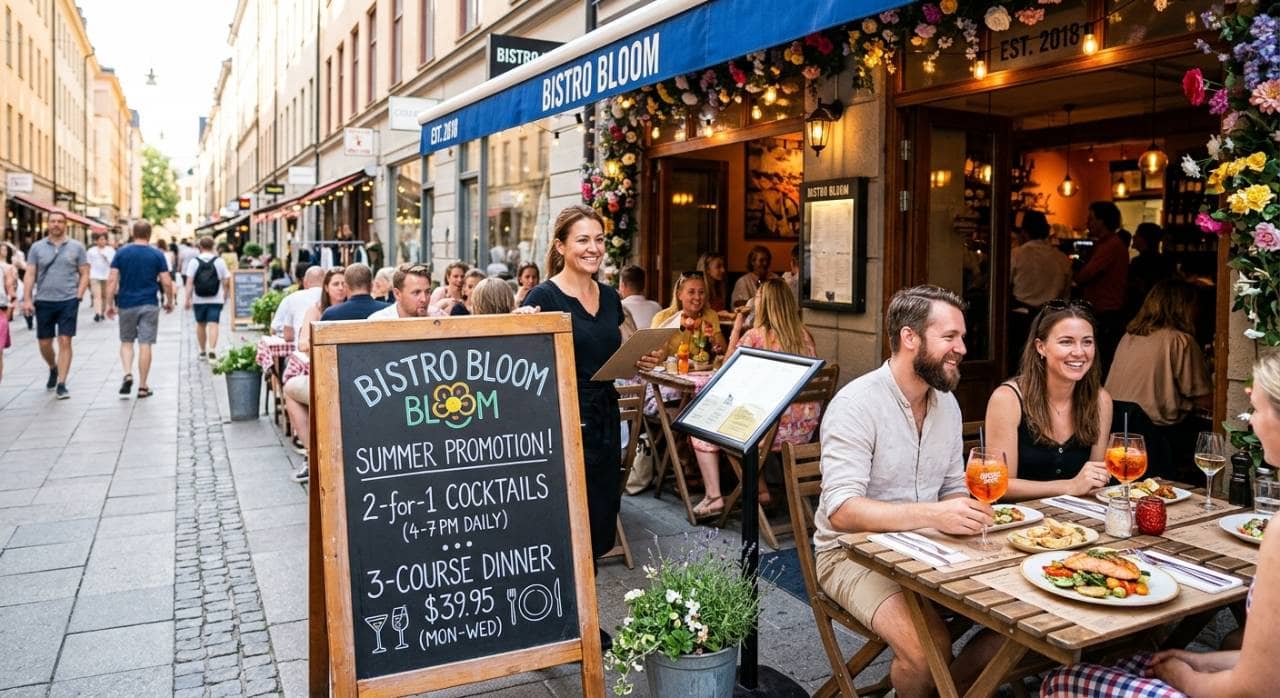
Restaurant promotions are an effective way to attract new customers, increase order frequency, and generate additional sales. From meal bundles and loyalty rewards to limited-time offers and happy hour specials, the right promotions can encourage customers to visit more often and spend more at each visit. However, increasing sales does not always mean increasing profits. If promotions are poorly planned, the cost of discounts, ingredients, additional labor, and marketing can quickly outweigh the revenue they generate. For restaurant owners, the challenge is finding ways to attract customers without sacrificing profit margins. Offering 20% off an entire menu might generate more orders, but it can also significantly reduce the revenue retained from each transaction. Similarly, a buy-one-get-one-free offer may increase order volume while doubling ingredient and preparation costs. Without understanding these expenses, restaurants risk generating more business while earning less profit. A profitable promotion should do more than convince customers to make a purchase. It should encourage additional spending, increase repeat visits, introduce customers to high-margin menu items, or generate sales during slower business periods. For example, bundling an entree with a beverage and side dish can increase average check size while giving customers a perceived value. Loyalty rewards can encourage repeat purchases without requiring restaurants to discount every transaction. Protecting profit margins starts with understanding the financial impact of every promotion. Restaurant owners need to consider food costs, portion sizes, labor requirements, discount expenses, and customer purchasing behavior before introducing an offer. They should also monitor promotional performance to determine whether an offer generates additional revenue or simply reduces the price customers would have paid anyway. The goal is not to avoid discounts or promotional campaigns altogether. Instead, it is to develop restaurant promotion ideas that generate profitable sales, strengthen customer relationships, and support long-term business growth. With the right approach, restaurants can attract more customers, increase order values, and maintain healthy profit margins without relying on excessive price reductions.
The Hidden Cost of Discounting
Before choosing a promotion, it helps to understand exactly how discounts can work against you. The risk isn't that customers use them. It's who uses them, and what they would have done without them. Rewarding Sales You Already Had Customers are becoming more selective about where and how they spend. Data shows 45% of surveyed consumers were intentionally reducing restaurant spending, while 50% reported trading down to less expensive menu items. Another 30% actively sought out promotions from restaurants they already planned to visit. That last number deserves attention. When nearly a third of diners are looking for deals at places they were going to visit anyway, a share of your redemptions will come from guests who would have paid full price. Consider a guest who normally orders a $12 lunch and uses a $3 coupon for the same meal. The restaurant still makes a sale, but it collects $3 less than it otherwise would have. No new customer was gained, no extra item was sold, and the margin on that order simply got smaller. Figure Out What Problem You're Solving Not every slow stretch calls for a discount. Before building an offer, determine which of these is actually happening - 1. Losing visits - Fewer guests are coming through the door. 2. Smaller average checks - Guests are still coming, but spending less per visit. 3. Shifting to lower-priced items - Guests are ordering the cheapest options on the menu. Each problem needs a different solution. A targeted lunch special could help fill a slow afternoon, while a bundle might encourage customers to add items to their order. Neither is guaranteed to improve profitability, and both need their costs checked before launch. One of the most useful ideas for protecting margins is that offering value doesn't require lowering prices across the entire menu. A narrow, well-defined offer aimed at a specific daypart, customer group, or menu item gives guests a reason to act while limiting how much revenue you give up.
Set the Foundation - Goals, Limits, and Small-Scale Testing
A profitable promotion starts well before the offer goes live. Three decisions made up front shape whether it protects your margins - what the promotion is meant to accomplish, who can redeem it and when, and how you test it before committing. Start With a Specific Goal Decide what the promotion should accomplish before choosing the discount. A restaurant might want to - - Increase weekday lunch traffic. - Bring back customers who haven't visited recently. - Encourage purchases during a slow afternoon. - Introduce a new menu item. - Increase average checks through meal bundles. Each goal calls for a different offer. A discounted lunch combo may help attract guests during a slow daypart, but it could also reduce revenue if most buyers would have ordered a full-price meal anyway. Start with the actual problem, then design the promotion around it. Limit Who Can Redeem and When Open-ended discounts are the hardest to control. Tighter redemption rules keep your exposure in check, and you don't need a dedicated app to apply them. Depending on your point-of-sale (POS) capabilities, you can - - Limit the offer to one redemption per customer. - Restrict it to a particular daypart. - Target a defined customer group. - Use a POS-generated coupon code or loyalty offer to track redemptions. These limits help manage discount exposure, but they don't prove a promotion will be profitable. They simply keep a weak offer from becoming an expensive one. If your goal is to encourage repeat visits, consider loyalty offers that reward specific customer behaviors rather than every purchase. Test Small Before Rolling Out A promotion doesn't have to run across the entire restaurant or every operating hour. Testing on a small scale lets you learn what works before the cost of a mistake grows. There's also good reason to be cautious about assuming a pricing move will behave the same way everywhere. Local competition, customer income, and neighborhood demand can all influence results, which means what works elsewhere may not work for your location. Instead of launching a weeklong discount, try the offer during one slower weekday or across a limited number of service periods. Then compare the results with similar days before the promotion. If the additional orders aren't covering the discount and operating costs, adjust the offer before expanding it. With a clear goal, firm redemption limits, and a small test in place, you're ready to look at the numbers that decide whether an offer is truly worth running.
Calculating a Promotion's True Cost
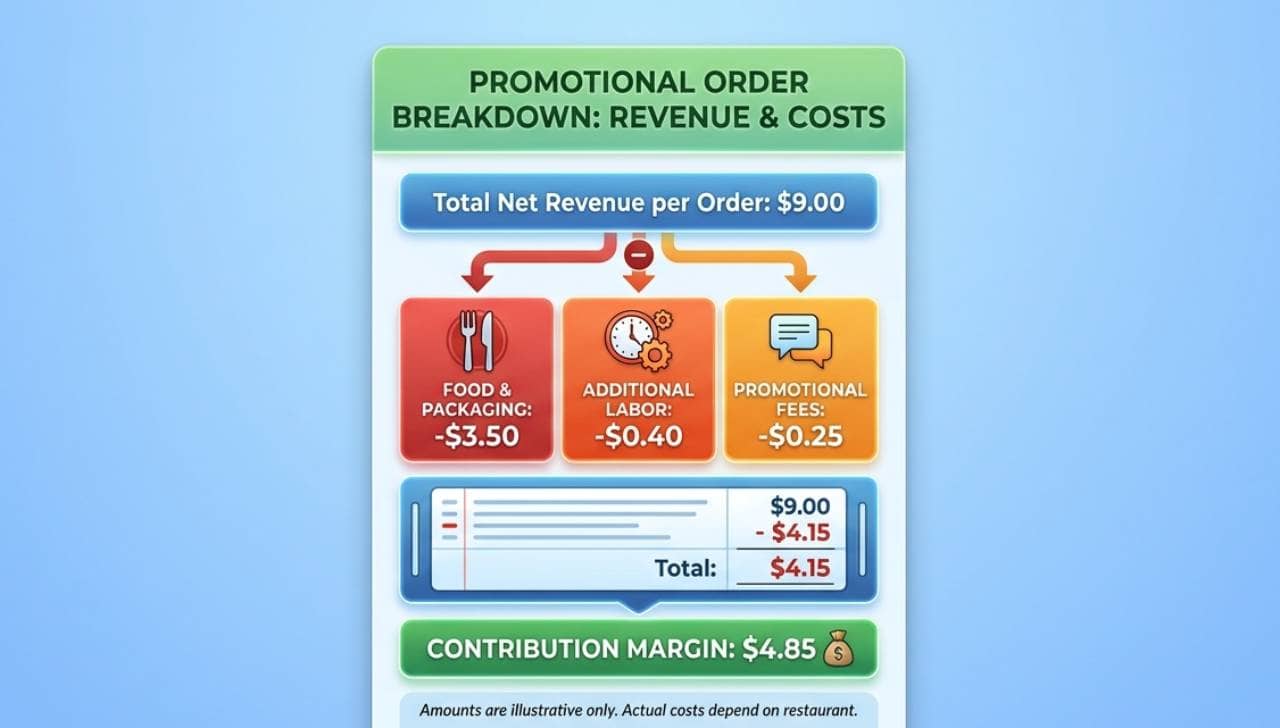
A discount can look reasonable on a menu board and still lose money at the register. The only way to know is to work through the math before launch, using your own costs rather than assumptions. What to Include in the Cost Before launching, determine how much each promotional order contributes after accounting for the discount and any additional costs. Include - - Food ingredients and packaging. - Additional labor required to serve promotional orders. - Payment processing and third-party ordering fees, where applicable. - Coupon distribution or promotional messaging costs. - The revenue potentially lost when regular customers switch to discounted meals. Use your restaurant's actual recipe and portion costs rather than applying a blanket food-cost percentage. A single percentage can hide the fact that some menu items are far more profitable than others. Calculating ingredient costs at both the menu-item and restaurant levels gives you a much clearer picture of what a promotional item really costs you. A Worked Example Consider a restaurant offering $3 off a regularly priced $12 meal. After the discount, each promotional order brings in $9.00 in revenue. From that, the restaurant pays $3.50 for food and packaging, $0.40 in additional labor, and $0.25 in promotional platform or messaging fees. That leaves a contribution of $4.85 per promotional order before fixed operating costs. These amounts are illustrative only, and actual costs will depend on the restaurant and the order. That $4.85 looks healthy, but the figure alone doesn't tell you whether the promotion increases overall profit. That depends on whether the order is new or simply replaces a full-price purchase. New Orders vs. Replaced Orders The same $4.85 can be a gain or a loss depending on who redeemed the offer. If the order is genuinely additional, meaning the guest wouldn't have visited without the promotion, the restaurant gains $4.85 in contribution, assuming all relevant incremental costs are included. If an existing customer would have purchased the same meal for $12 anyway, the picture reverses. That normal sale would have generated $8.50 after $3.50 in food and packaging costs, without the promotion-specific labor and fees. Replacing it with a $4.85 order means the restaurant loses $3.65 in contribution. This is why restaurants can report higher promotional sales while earning less than they would have without the offer. A Simple Break-Even Test You can turn these two scenarios into a rough break-even check. Using the example's costs and assuming no other changes in purchasing behavior, the restaurant would need roughly three genuinely new orders for every four existing orders converted to the discount just to come out even. That ratio is a useful reality check. If you expect most redemptions to come from regulars, the offer has to bring in a lot of new business to justify itself. Keep in mind that actual performance also depends on add-on purchases, capacity, payment fees, and whether customers return without another discount. Use these calculations alongside broader profit margin tracking to see whether promotional revenue improves the bottom line, not just the sales total. With a clear picture of what an offer costs and what it must earn back, you can start evaluating specific promotion types, beginning with bundles and add-ons.
Bundles and Add-Ons That Lift the Check
If your challenge is smaller average checks rather than fewer visits, bundles and add-ons are often a better fit than a straight discount. Instead of lowering the price of something guests already buy, they encourage guests to buy more in a single visit. Why Bundles Can Protect Margins A meal bundle combines an entree with a drink or side at a set price. Done well, it gives guests a clear sense of value while steering them toward additional items, so the restaurant earns on more than one product per order. Unlike a blanket percentage off, the offer is tied to a specific combination of items, which makes the cost easier to predict and control. Bundles also address one of the biggest risks covered earlier - giving a discount to a guest who would have paid full price. When the offer is structured around adding items to the order, the restaurant has a better chance of earning more per visit rather than simply collecting less on the same purchase. That said, a bundle is not automatically profitable. As with any promotion, it needs to be tested against real costs. Build the Bundle Around Ingredients You Already Have The easiest bundles to run profitably use what's already in your kitchen. A casual restaurant, for example, could introduce a weekday burger-and-drink bundle using ingredients it already stocks. The offer may encourage customers to visit during a slower period without requiring a discount across the entire menu. Choosing items that fit existing workflows and ingredients keeps preparation simple. It also reduces the risk of new waste, extra prep labor, and slower ticket times, all of which can eat into the contribution a bundle is meant to generate. Two numbers matter most when evaluating a bundle - 1. Bundle food costs - Add up the ingredient and packaging costs of every item in the bundle, using your actual recipe and portion costs rather than a blanket food-cost percentage. The combined cost needs to leave a healthy contribution at the bundle price. 2. Displaced full-price sales - If guests who would have bought the entree and drink separately now choose the bundle, the discount is coming out of sales you already had. Compare the bundle's contribution with what those guests would have spent without it. Measure Add-Ons at Contribution, Not Selling Price Add-on sales deserve special attention when you evaluate a promotion. A discounted entree may still be worthwhile if it generates additional profitable purchases, such as drinks, sides, or other extras. But those purchases should be counted at their contribution, meaning what the restaurant keeps after the cost of making them, not at their menu price. This distinction keeps you from overestimating a promotion's success. An add-on that sells for $4 but costs $2.50 to produce adds far less to your bottom line than the sales total suggests. Finally, check that your team can handle what the bundle brings in. A popular offer that overwhelms the kitchen can lead to longer ticket times, overtime, and poor service, which can cancel out the financial benefit. If your staff can't reliably accommodate more demand, limit redemption volume or restrict the bundle to slower dayparts.
Loyalty Rewards and Lapsed-Customer Offers
Bundles and add-ons aim to get more from each visit. Loyalty rewards and lapsed-customer offers focus on something different - bringing guests back. Because these promotions can be aimed at specific people rather than the whole dining room, they are one of the easier ways to limit how much margin you give away. Reward Behaviors, Not Every Purchase The biggest risk with a loyalty program is rewarding visits that would have happened anyway. A program that gives something back on every purchase can end up working like a permanent discount for your most loyal regulars, who are often the guests least likely to need an incentive. A more margin-friendly approach is to reward specific behaviors you actually want to encourage. Depending on your goals, that could mean - - Visiting during a slower daypart. - Trying a new menu item. - Returning within a set window after a previous visit. Tying the reward to a particular action lets you steer demand toward the times and items where you have capacity and a healthy contribution, rather than spreading discounts across everything. Win Back Lapsed Customers With Targeted Offers A lapsed-customer reward is a targeted offer sent to guests who haven't returned recently. Because it goes only to people who have drifted away, it avoids the central problem of broad discounts - handing savings to guests who were coming anyway. The idea is simple. A guest who hasn't visited in a while is, almost by definition, not a full-price purchase you're at risk of losing today. If the offer brings them back, the order is far more likely to be genuinely additional. That makes the break-even math from earlier work in your favor, since fewer redemptions come from regulars who would have paid full price. Keep the Offer Tightly Controlled The same redemption limits discussed earlier apply here. Limit the offer to one redemption per customer, confine it to a defined customer group, and use a POS-generated coupon code or loyalty offer so you can track who uses it. If the reward is meant to fill a slow period, restrict it to that daypart so a returning guest doesn't land on your busiest night. Two measurements tell you whether a lapsed-customer offer is working - 1. Redeemer history - Look at when each redeeming guest last visited. If many of them had been in recently, the offer reached the wrong audience and was likely discounting existing business. 2. Subsequent full-price visits - The real payoff is whether these guests come back again without another discount. A guest who redeems once and disappears has cost you margin without building lasting value. Tracking Needs the Right Tools A POS system with customer or loyalty tracking makes it much easier to tell new and returning guests apart and to see who redeems what. Restaurants without that capability should be cautious about claiming a promotion acquired new customers, since it's hard to know whether redeemers were genuinely new or simply regulars using a coupon. For retention, consider tracking redeemers for 30 to 60 days after the promotion and comparing their behavior with a similar group that didn't redeem. That comparison shows whether the reward changed how often guests returned, or whether they would have come back on their own.
Limited-Time Offers and Labor-Smart Promotions
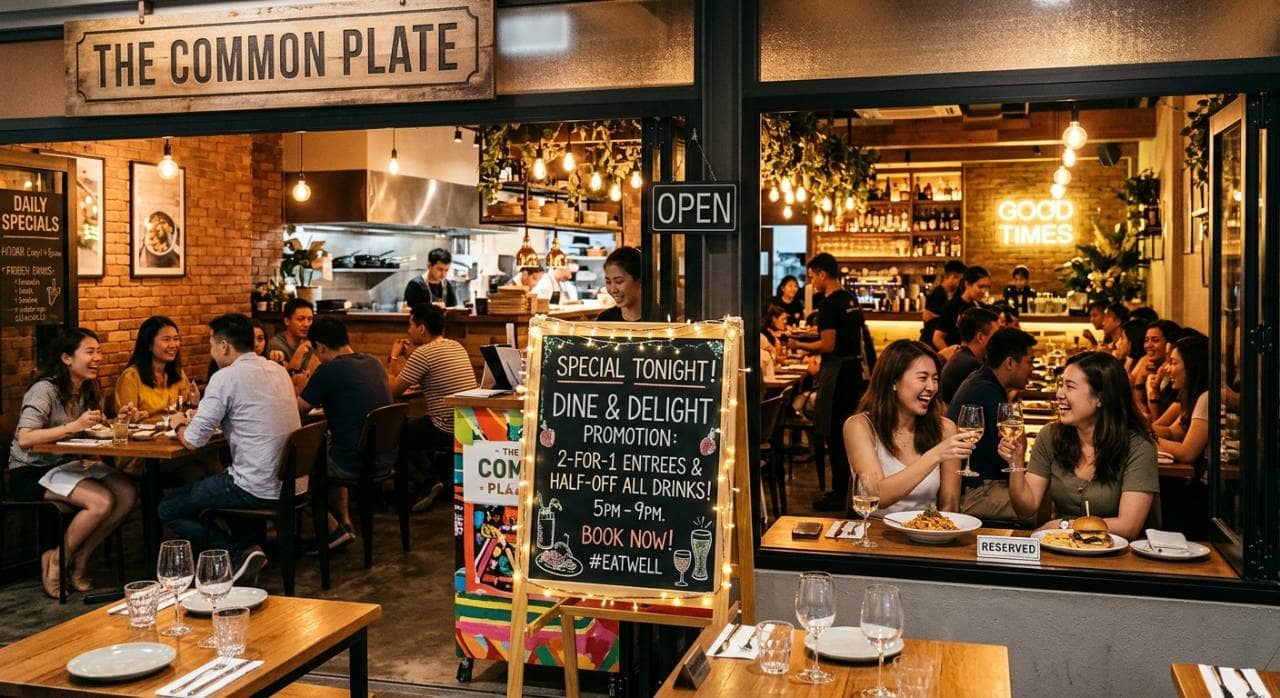
Time-limited promotions can create a reason to visit without turning a discount into a permanent expectation. The key is to pair a clear end date and a narrow focus with an honest look at what your kitchen and staff can handle. A promotion that fills seats but overwhelms the team can cost more than it earns. Slow-Day Lunch Specials A slow-day lunch special offers a limited menu during a low-traffic daypart. Because it targets a time when you already have empty seats and available labor, the offer can add business without competing with your busiest periods. A shorter menu also helps control costs. Fewer items mean simpler prep, less inventory to manage, and more predictable ingredient use. The main things to watch are whether the special generates additional transactions and what it contributes to lunch overall. If most buyers would have ordered a full-price lunch anyway, the special is just lowering your revenue. Limited-Time Prix-Fixe Menus A limited-time prix-fixe menu offers a fixed-price dining experience with controlled portions. For a full-service restaurant, a limited prix-fixe dinner can encourage reservations while keeping portion sizes and preparation under control. Because guests choose from a set format, you know in advance what each plate costs and how much prep it requires. That predictability makes it easier to protect your margin than an open-ended discount. Track ingredient costs, prep labor, and average check to confirm the menu performs as intended. New-Item Promotions A trial discount or bundle on a new dish can encourage guests to try something they might otherwise skip. It works best as a short introduction rather than a lasting price cut. Measure the following - 1. Trial purchases - Are guests ordering the item? 2. Repeat orders - Do they come back for it at full price? 3. Ingredient waste - Are you stocking items that spoil before they sell? A new item that guests try once and never reorder has cost you discount dollars without building lasting demand. Check Staffing and Kitchen Capacity First Before any limited-time offer launches, estimate how many additional orders your team can handle and whether the promoted items require extra preparation. A promotion that fills the dining room can still create problems if the kitchen can't keep up. Longer ticket times, overtime, food waste, and poor service can reduce or eliminate the financial benefit. A few practical ways to keep labor in check - - Choose offers that fit your existing workflows and ingredients whenever possible. - Limit redemption volume if the kitchen or service team can't reliably accommodate more demand. - Run the offer during slower periods so the added orders land when your team has room to absorb them. These promotion ideas are starting points for testing, not guaranteed winners. The right choice depends on customer demand, kitchen capacity, and the contribution each offer is expected to generate. A short run on a quiet weekday will tell you far more about whether an offer works for your restaurant than any general rule.
Measuring Results and Deciding What to Repeat
A promotion isn't finished when the offer ends. The last step is finding out whether it actually made your restaurant more money, which is a different question from whether guests used it. Redemption counts alone can make almost any offer look like a success. Before launching, record sales, transaction counts, average checks, and contribution from the same weekdays or dayparts over the previous four weeks. This gives you a picture of normal performance to compare against. Where possible, adjust for holidays, local events, and unusual demand so a busy festival weekend doesn't make an average promotion look brilliant. During and after the promotion, focus on these four questions - 1. Incremental transactions - Did the promotion generate orders beyond expected business? 2. Contribution margin - Did the additional revenue cover the discount and the incremental costs? 3. Customer mix - How many redeemers were new customers, and how many were regulars who likely would have purchased anyway? 4. Repeat visits - Did promotional customers return without another discount? Together, these show whether the offer brought in business you wouldn't have had, whether that business was profitable, and whether it lasted. Use Your POS to Tell New Guests From Regulars A POS system with customer or loyalty tracking can help distinguish new and returning guests. Restaurants without that capability should be cautious about claiming a promotion acquired new customers, since it's difficult to know whether redeemers were truly new or simply regulars using a coupon. Look Beyond the Discounted Item Check whether the promotion affected kitchen ticket times, average checks, and add-on sales. A discounted entree may still be worthwhile if it generates additional profitable purchases, but those purchases should be measured at their contribution, not their selling price. Slower tickets or a stressed kitchen are also costs, even if they don't appear on the discount line. Track Retention Over Time For customer retention, consider tracking redeemers for 30 to 60 days after the promotion and comparing their behavior with a similar group that didn't redeem. This shows whether the offer changed how often guests returned or whether they would have come back anyway. Lasting value comes from guests who keep visiting at full price, not from a one-time spike. Decide - Repeat, Revise, or Retire Use the results to make a clear decision. If the offer mainly discounts existing customers, reduces contribution, or causes service problems, revise or discontinue it. A promotion that produces temporary traffic but little incremental profit isn't necessarily worth repeating. If it brought in additional orders, covered its costs, and built repeat visits, it's a strong candidate to run again, ideally with the same limits that made it work. Restaurant promotions work best when they solve a specific business problem without creating a larger financial one. Short redemption windows, targeted offers, controlled menu costs, and careful tracking can help you manage the risks of discounting. But even a well-designed promotion has to prove its value through additional contribution and repeat business. The question isn't simply how many customers redeemed the offer. It's whether your restaurant earned more because it ran the promotion.