


DoorDash's $17 Billion Instacart Acquisition Explained
DoorDash agrees to acquire Instacart for $17 billion in a deal reshaping grocery and restaurant delivery for shoppers, merchants, and gig workers.

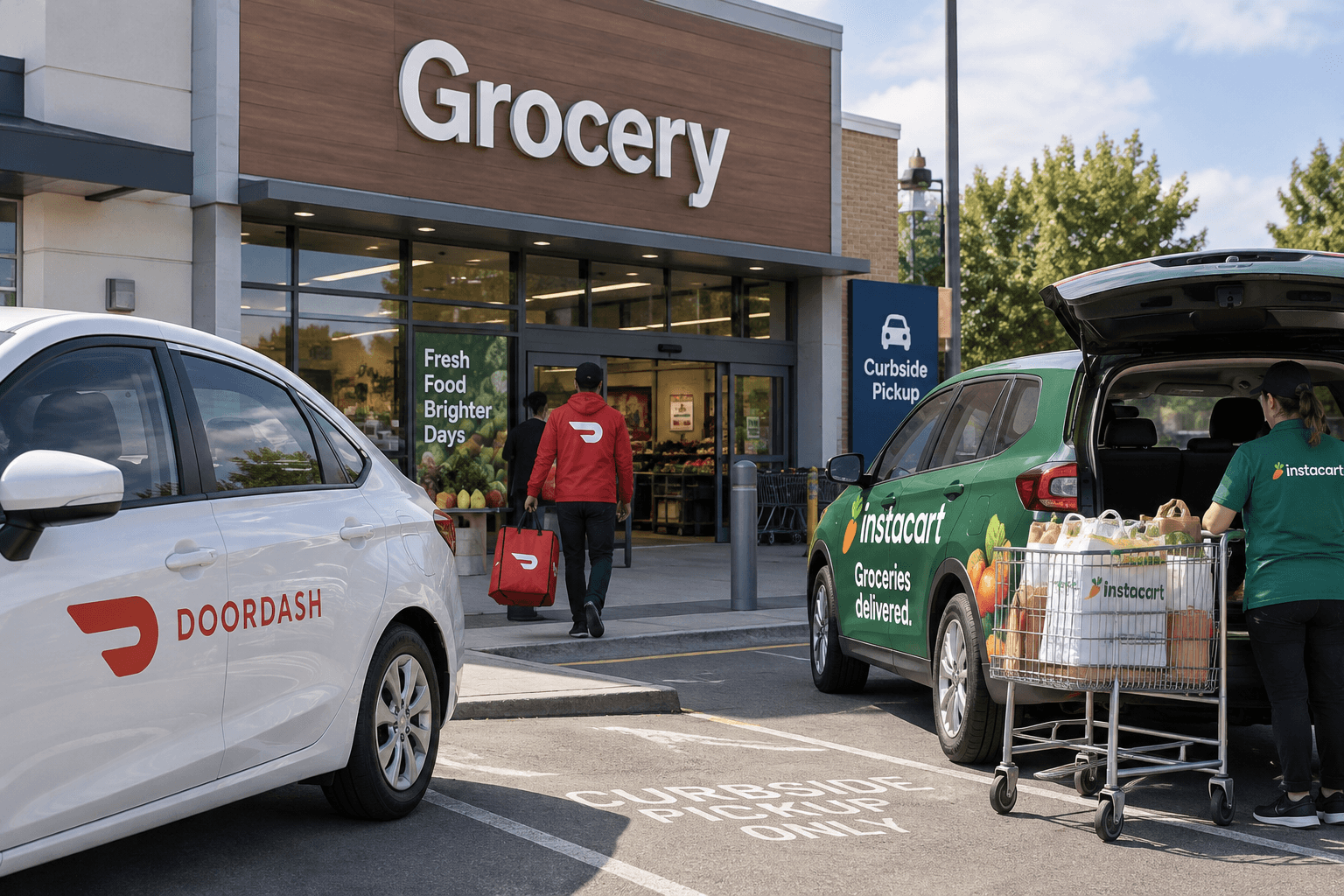
A $17 Billion All-In Bet
Seventeen billion dollars buys a lot of ripe avocados. That's essentially the wager DoorDash just made, agreeing to acquire Instacart in a deal that values the grocery delivery pioneer at $65.00 per share, a 26% premium over where Instacart's stock closed on October 22, 2026, the day before word of a possible deal first leaked. Instacart's board approved the agreement unanimously, and the cash-heavy structure tells its own story about how this transaction was built to close: at least 75% of the payout arrives in cash, with shareholders free to choose straight cash, DoorDash stock, or a blend, capped so that stock never exceeds a quarter of the total consideration.
The Logic Behind the Match
The logic behind pairing these two companies comes down to something deceptively simple: grocery delivery is hard in ways that restaurant delivery isn't. DoorDash co-founder and CEO Tony Xu put it plainly: "Grocery is one of the hardest things to get right online. Someone has to pick a ripe avocado, find a substitute you'd choose yourself, and get the ice cream to you before it melts. Instacart has spent years learning to do that well for grocers, while DoorDash has built a delivery network and technology that local stores rely on every day." Instacart CEO Chris Rogers framed the match from his side of the table, noting that after 14 years building grocery technology and retailer relationships, joining forces with DoorDash "allows us to do even more," pairing that technology with "DoorDash's global consumer reach and logistics capabilities."
The two platforms have always served overlapping but distinct habits: families lean on Instacart for the big weekly haul, DoorDash for the meal that needs to show up in under an hour. Stitching those behaviors into one company is a bet that grocery and restaurant delivery infrastructure belongs under a single roof.
Racing to Keep Up With Big Retail
Timing matters here as much as rationale. Most groceries still get bought in person, but the shift online keeps accelerating, and the big retailers aren't waiting around. Large online retailers and grocers have been pouring money into their own delivery fleets, warehouses, membership programs, and AI shopping assistants, a buildout that smaller, thin-margin grocers simply can't match on their own.
DoorDash and Instacart are explicit that artificial intelligence threatens to widen that gap even further unless independent and local retailers get comparable tools. The fix they're proposing bundles DoorDash's delivery network with Instacart's grocery and fulfillment technology into a single package, usable inside the companies' own apps or embedded directly on a retailer's website, alongside existing advertising and AI capabilities from both sides. Notably, the actual mechanics of a sale don't change: shoppers still pick a store from their own neighborhood, and that store still completes the transaction, keeping the merchant relationship intact rather than routing it through a middleman.
The Promises for Grocers, Shoppers, and Workers
The promises attached to the deal are specific enough to be testable later. Grocers stand to gain expanded branded websites and retail media networks built on Instacart's technology, plus access to added order capacity through DoorDash's DashMart Fulfillment Services. On the consumer side, DoorDash projects that Instacart customers could unlock access to more than 50,000 additional stores, stacking on top of the nearly 100,000 already available. DashPass and Instacart+ would merge into a single membership fee, a consolidation DoorDash estimates will save members roughly $100 million a year combined.
Workers get a pitch too: Dashers and Shoppers would be able to pick up grocery orders during slow stretches or restaurant orders during peak windows, widening the available work beyond what either app offers alone. DoorDash has paired these projections with specific commitments meant to calm nerves among merchants and gig workers, including a pledge of no grocery exclusivity so local stores can keep working with whichever delivery platform they prefer, continued flexibility for Instacart Shoppers over their hours and which batches to accept, and a promise to preserve Instacart's brand, app, and enterprise products rather than absorbing them into DoorDash wholesale. Until the deal closes, the two companies keep operating as separate businesses.

How the Deal Gets Funded and Approved
Getting there requires threading a fairly specific needle. DoorDash will fund the cash portion with existing reserves plus debt financing, backed by a commitment letter from JPMorgan Chase Bank, N.A. for a 364-day senior unsecured bridge loan; the deal itself isn't contingent on financing coming through. DoorDash says it's aiming to keep its credit structure investment-grade once the dust settles.
Closing isn't expected until somewhere between the end of 2027 and the first half of 2028, pending Instacart stockholder approval, clearance under the Hart-Scott-Rodino Antitrust Improvements Act of 1976, and additional regulatory sign-off in Canada and Israel. Roughly 19% of Instacart's outstanding shares are already locked in to vote yes, giving the deal a head start heading into that process. On the advisory side, Centerview Partners LLC and J.P. Morgan Securities LLC are guiding DoorDash, with Latham & Watkins LLP as legal counsel, while Goldman Sachs & Co. LLC advises Instacart alongside legal counsel from Cravath, Swaine & Moore LLP and Cooley LLP.

The Numbers Behind a Major Consolidation
Scale is really the point here. DoorDash has facilitated more than 10 billion consumer orders since launching in 2013, driven over $230 billion in merchant sales, and helped Dashers earn more than $80 billion across a footprint spanning over 40 countries, with brands including DoorDash, Deliveroo, SevenRooms, and Wolt under its roof. Instacart, still legally registered as Maplebear Inc., partners with more than 2,200 retail banners covering nearly 100,000 stores through its Marketplace, Enterprise platform, and Ads ecosystem.
Put those two footprints together and you get, as the companies themselves describe it, one of the more significant consolidations in local commerce and delivery technology to date. Both sides have also flagged the usual hazards that come with a deal this size: termination fees, the possibility of regulatory delay or denial, integration headaches, stock volatility, litigation risk, and the strain that uncertainty puts on operations and key staff while everything is pending. Whether regulators in the U.S., Canada, and Israel see this as a threat to competition in local delivery and grocery markets remains an open question, as does whether that projected $100 million in member savings and expanded store access actually shows up once integration begins in earnest.
The Real Test Comes After Closing
What happens next depends less on the announcement itself than on follow-through. The companies have built in real commitments, an open platform for grocers, continued flexibility for Shoppers, a standalone Instacart brand, that suggest they're trying to get ahead of exactly the concerns regulators and merchants are likely to raise.
Whether those commitments hold up once the deal clears review and moves toward closing in late 2027 or the first half of 2028 will tell us a lot more about this merger than any press release can.