







How to Use Food Cost Data to Improve Restaurant Profit Margins
Learn how to analyze food cost data, control ingredient expenses, reduce waste, optimize menu profitability, and improve restaurant profit margins through informed decisions.

Overview
Food costs are among the largest operating expenses for restaurants, making them one of the most important factors influencing profitability. Ingredient prices fluctuate, customer demand changes, and food waste can increase without clear warning. Even small increases in purchasing costs or ingredient usage can gradually reduce profit margins if restaurant owners do not monitor them closely. Understanding where money is spent and how ingredients are used is essential for maintaining financial control. Food cost data helps restaurant owners make informed decisions instead of relying on estimates or assumptions. By tracking ingredient prices, inventory levels, food cost percentages, purchasing activity, and waste, owners can identify where expenses are increasing and which areas require attention. These insights make it easier to recognize unnecessary spending, evaluate supplier costs, and understand how ingredient expenses affect overall restaurant performance. Without accurate food cost information, restaurant owners may struggle to identify the reasons behind declining margins. For example, higher food expenses could result from rising supplier prices, excessive portion sizes, inaccurate inventory records, spoilage, or inefficient purchasing practices. Looking at total expenses alone does not reveal these underlying problems. Analyzing detailed food cost data helps pinpoint their causes and determine which corrective actions will have the greatest financial impact. Restaurant owners can use food cost insights to improve purchasing decisions, optimize menu pricing, reduce waste, and maintain consistent portion sizes without compromising food quality or customer satisfaction.
The Key Food Cost Data Every Restaurant Should Track
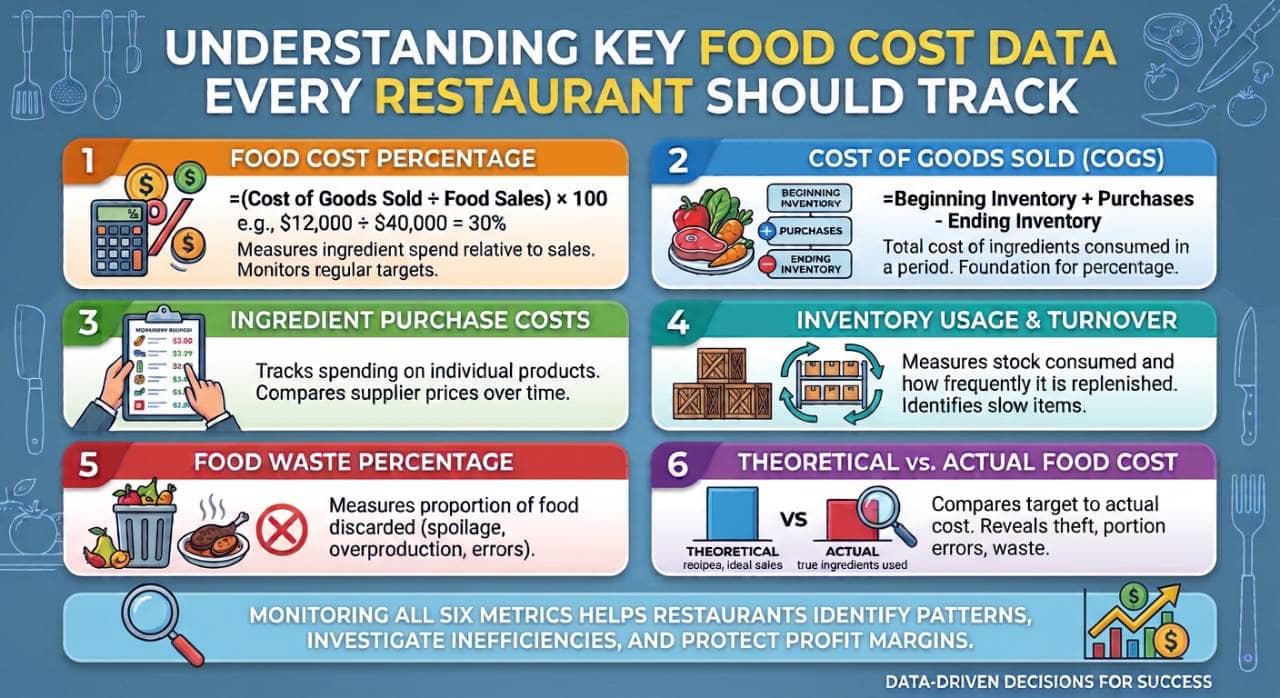
Improving restaurant profitability starts with understanding which food cost metrics influence daily operations and overall financial performance. Restaurant owners need more than a single food cost percentage to evaluate expenses effectively. Tracking multiple data points provides a clearer picture of ingredient consumption, purchasing efficiency, inventory management, and menu profitability. The following metrics help identify where food expenses are increasing and where cost-control improvements are needed. 1. Food Cost Percentage Food cost percentage measures how much a restaurant spends on ingredients relative to its food sales. It helps owners understand how much revenue goes toward covering ingredient expenses. The formula is - Food Cost Percentage = (Cost of Goods Sold / Food Sales) x 100 For example, if a restaurant generates $40,000 in food sales and incurs $12,000 in food costs, its food cost percentage is 30%. Monitoring this figure regularly helps owners identify changes in ingredient expenses and evaluate whether food costs remain within their targets. 2. Cost of Goods Sold (COGS) COGS represents the total cost of ingredients consumed during a specific reporting period. It accounts for beginning inventory, purchases, and ending inventory. COGS = Beginning Inventory + Purchases - Ending Inventory Tracking COGS helps restaurant owners understand actual ingredient consumption rather than relying exclusively on purchasing totals. It also provides a foundation for calculating food cost percentages and evaluating financial performance. 3. Ingredient Purchase Costs Ingredient purchase costs show how much a restaurant spends on individual products and supplies. Monitoring these expenses helps owners identify supplier price increases, compare purchasing costs over time, and evaluate whether certain ingredients are becoming more expensive. This information supports better supplier negotiations and purchasing decisions. 4. Inventory Usage and Turnover Inventory usage measures how much stock a restaurant consumes during a given period. Inventory turnover indicates how frequently inventory is used and replenished. These metrics help identify slow-moving ingredients, excessive stock levels, and purchasing patterns that may lead to spoilage or unnecessary expenses. 5. Food Waste Percentage Food waste percentage measures the proportion of purchased or prepared food that is discarded instead of sold or consumed. Tracking waste by ingredient, quantity, and reason helps owners identify recurring problems such as spoilage, overproduction, and preparation mistakes. 6. Theoretical vs. Actual Food Cost Theoretical food cost represents what a restaurant should spend based on recipes, ingredient quantities, and sales volume. Actual food cost reflects the ingredients consumed during the same period. Comparing these figures helps identify unexplained differences caused by overportioning, waste, theft, inaccurate recipes, or inventory recording errors. Tracking these six metrics together gives restaurant owners a more complete understanding of food cost performance. Rather than focusing on individual expenses, they can identify patterns, investigate inefficiencies, and make informed decisions that protect restaurant profit margins.
How to Collect and Organize Accurate Food Cost Data
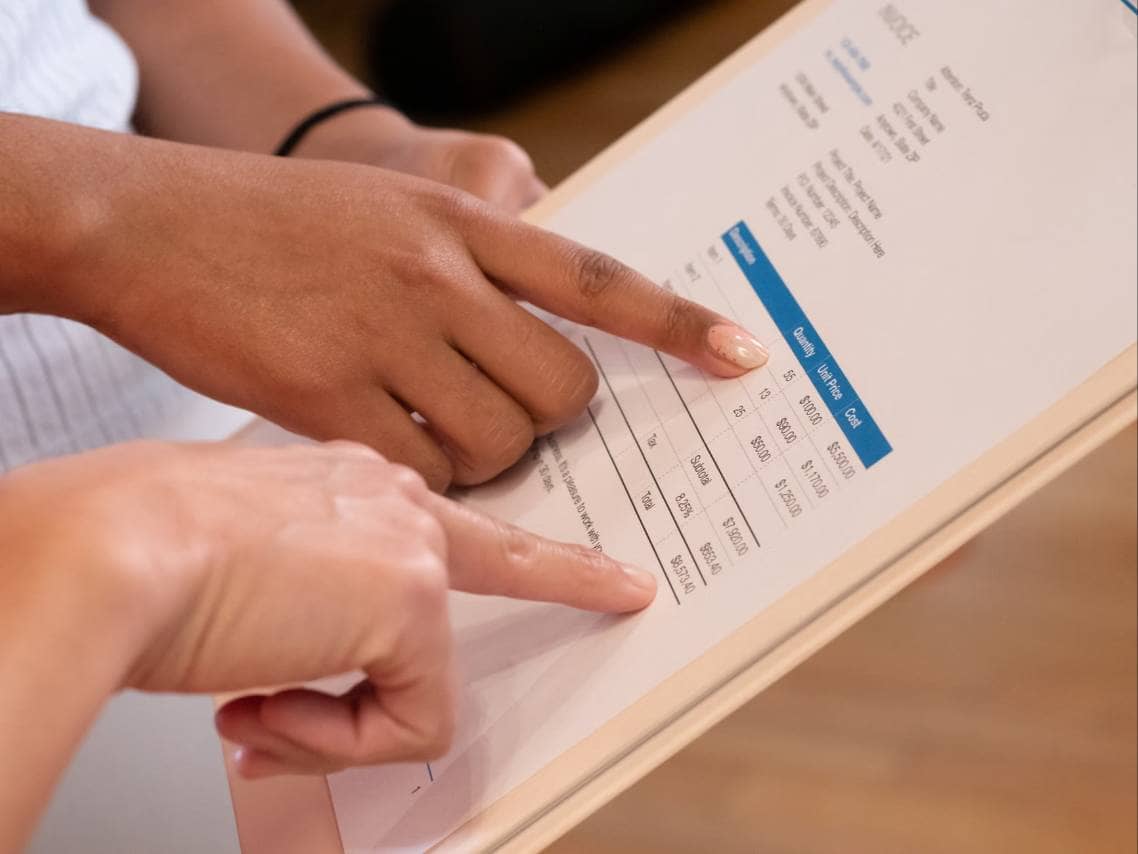
Accurate food cost analysis depends on having reliable information from different areas of restaurant operations. Ingredient purchases, inventory counts, sales transactions, and food waste records all contribute to understanding how much a restaurant spends and consumes. If these records are incomplete or inconsistent, owners may calculate incorrect food costs and make decisions based on misleading information. Establishing a consistent data collection process helps ensure that every expense and ingredient movement is accounted for. Here are the main steps restaurant owners should follow. 1. Collect Supplier Invoices and Purchase Records Supplier invoices provide essential information about ingredient prices, quantities purchased, and total purchasing expenses. Restaurant owners should maintain organized records of every purchase and compare current prices with previous invoices. Pay attention to - - Ingredient names, quantities, and unit prices. - Supplier price increases and changes in purchasing terms. - Delivery quantities compared with ordered quantities. - Discounts, credits, and additional purchasing charges. These records help identify rising ingredient costs and provide a reliable foundation for evaluating supplier performance. 2. Conduct Regular Inventory Counts Inventory records show how much food a restaurant has available at the beginning and end of a reporting period. Conducting consistent physical counts helps owners determine actual ingredient consumption and calculate COGS accurately. Use standardized measurement units, such as pounds, ounces, gallons, or individual units, to avoid inconsistencies. Record damaged, expired, and discarded ingredients separately so they are not mistaken for usable inventory. 3. Maintain Accurate Recipe Costing Sheets Recipe costing sheets document the ingredients and quantities required to prepare each menu item. They should include current ingredient prices, portion sizes, and the total cost of preparing each dish. Update these records whenever recipes change, portion sizes are adjusted, or supplier prices increase. Outdated recipe costs can lead to inaccurate theoretical food cost calculations and incorrect menu pricing decisions. 4. Use POS Reports to Track Food Sales POS reports provide information about menu item sales, quantities sold, and revenue generated during specific periods. Restaurant owners can connect this information with recipe costing data to estimate how much inventory should have been consumed. Comparing sales reports with inventory records helps identify unusual ingredient usage and evaluate menu item profitability. 5. Record Food Waste and Spoilage Maintain a food waste log that records discarded ingredients, quantities, financial values, and reasons for disposal. Categorize waste by cause, such as spoilage, overproduction, preparation mistakes, or incorrect orders. This makes recurring waste patterns easier to identify and address. 6. Standardize Reporting Periods and Data Entry Collect and organize information using consistent daily, weekly, and monthly reporting periods. Assign employees responsibility for recording purchases, completing inventory counts, and documenting waste. Restaurant owners can also use inventory management and reporting technology to centralize these records, reduce manual entry errors, and make information easier to review. Accurate and organized food cost data creates a dependable foundation for financial analysis. When purchasing, inventory, recipe, sales, and waste records are consistently maintained, restaurant owners can identify spending problems earlier and make more effective cost-control decisions.
Analyze Food Cost Percentages and Identify Spending Problems
Collecting food cost data is only the first step toward improving restaurant profitability. Restaurant owners must also understand how to interpret the numbers and identify patterns that indicate unnecessary spending. Analyzing food cost percentages alongside purchasing records, inventory reports, and sales figures helps reveal why expenses are increasing and where corrective actions are needed. 1. Calculate Food Cost Percentage Regularly Food cost percentage provides a starting point for evaluating how much revenue goes toward ingredient expenses. Restaurant owners should calculate this metric consistently using cost of goods sold and food sales. The formula is - Food Cost Percentage = (COGS / Food Sales) x 100 For example, if a restaurant records $15,000 in COGS and generates $50,000 in food sales, its food cost percentage is 30%. Calculate this figure weekly or monthly to understand how ingredient expenses compare with revenue. Avoid relying on a single reporting period because temporary sales fluctuations or unusual purchasing activity can distort the results. 2. Compare Actual Food Costs Against Target Percentages Every restaurant should establish a target food cost percentage based on its menu, pricing strategy, ingredient expenses, and profitability goals. Compare actual performance against this target to identify unfavorable differences. If the target is 28% but actual food costs reach 33%, investigate what caused the increase. Consider whether supplier prices have increased, portion sizes have become inconsistent, or food waste is affecting ingredient consumption. 3. Monitor Ingredient-Level Cost Changes An overall food cost percentage does not explain which ingredients are responsible for rising expenses. Restaurant owners should examine individual ingredient prices and compare purchasing costs across different periods. Pay particular attention to - - Ingredients with frequent supplier price increases. - High-volume products that significantly influence total food expenses. - Expensive ingredients used across multiple menu items. - Products with inconsistent purchasing prices. This analysis helps prioritize ingredients that have the greatest impact on food costs. 4. Compare Food Costs With Sales Performance Food expenses should be evaluated alongside restaurant sales. Higher ingredient spending is not necessarily a problem if food sales increase proportionally. However, if purchasing costs rise while sales remain unchanged or decline, profit margins may suffer. Reviewing sales trends alongside COGS helps owners distinguish between increased business activity and inefficient spending. 5. Investigate Unusual Changes and Cost Variances Look for unexpected increases in food cost percentages, ingredient consumption, or purchasing expenses. Compare actual food costs with theoretical costs to identify discrepancies that require investigation. Check inventory counts, recipe quantities, waste records, and supplier invoices to determine the underlying causes. 6. Turn Findings Into Corrective Actions Once spending problems are identified, establish specific actions such as renegotiating supplier prices, adjusting purchasing quantities, reviewing portion sizes, or updating menu prices. Regularly measure the results to determine whether these changes improve cost performance. Ultimately, analyzing food cost percentages is about understanding what drives restaurant expenses. By reviewing multiple metrics together, restaurant owners can identify problems earlier, control unnecessary spending, and make decisions that support healthier profit margins.
Use Inventory and Purchasing Data to Control Ingredient Costs
Inventory and purchasing decisions have a direct impact on restaurant food costs. Ordering too much can lead to spoilage and unnecessary storage expenses, while ordering too little can disrupt kitchen operations and force restaurants to make expensive last-minute purchases. Analyzing inventory and purchasing data helps restaurant owners balance stock levels, control ingredient expenses, and make better decisions about when and how much to order. 1. Monitor Inventory Turnover and Stock Levels Inventory turnover measures how frequently a restaurant uses and replenishes its inventory during a specific period. Tracking this metric helps owners identify ingredients that move quickly and products that remain unused for extended periods. Review inventory levels regularly and compare them with historical consumption. Pay attention to slow-moving ingredients, excessive stock, and products approaching their expiration dates. Reducing unnecessary inventory helps limit spoilage and prevents cash from being tied up in ingredients that may not be needed. 2. Analyze Supplier Pricing and Purchasing Trends Supplier prices can change because of seasonal availability, market conditions, transportation expenses, and supply shortages. Restaurant owners should maintain purchasing records to understand how ingredient costs change over time. Compare current invoices with previous purchases to identify price increases. For frequently purchased ingredients, evaluate multiple suppliers to determine whether better pricing or purchasing terms are available. Consistent supplier analysis helps owners negotiate more effectively and avoid paying unnecessarily high prices for essential ingredients. 3. Use Historical Consumption to Forecast Purchasing Needs Historical inventory and sales data can help restaurants estimate future ingredient requirements. Review previous sales volumes, seasonal demand, and ingredient consumption to determine how much stock is needed for upcoming operating periods. For example, if sales reports show increased demand for certain menu items during weekends, purchasing quantities can be adjusted accordingly. 4. Identify Inventory Discrepancies Compare actual inventory consumption with expected ingredient usage based on recipes and sales records. Significant differences may indicate overportioning, unrecorded waste, inaccurate inventory counts, or unauthorized ingredient usage. Investigate recurring discrepancies instead of automatically increasing purchasing quantities. Identifying the underlying problem helps prevent unnecessary spending from becoming a regular operating expense. 5. Reduce Overstocking and Emergency Purchases Use inventory data to establish appropriate minimum and maximum stock levels for frequently used ingredients. Consider shelf life, storage capacity, supplier delivery schedules, and expected demand when setting these limits. Avoid ordering large quantities simply to receive bulk discounts. Potential savings from lower unit prices can disappear if ingredients expire before they are used. 6. Review Purchasing Performance Regularly Establish a routine for reviewing purchasing quantities, supplier prices, inventory turnover, and stock discrepancies. Assign responsibility for monitoring these figures and adjusting orders when demand or ingredient availability changes. Effective inventory and purchasing management helps restaurants control costs without compromising food availability or quality. By using reliable data to guide ordering decisions, restaurant owners can reduce waste, avoid unnecessary purchases, and protect their profit margins.
Use Menu and Recipe Cost Data to Improve Profitability
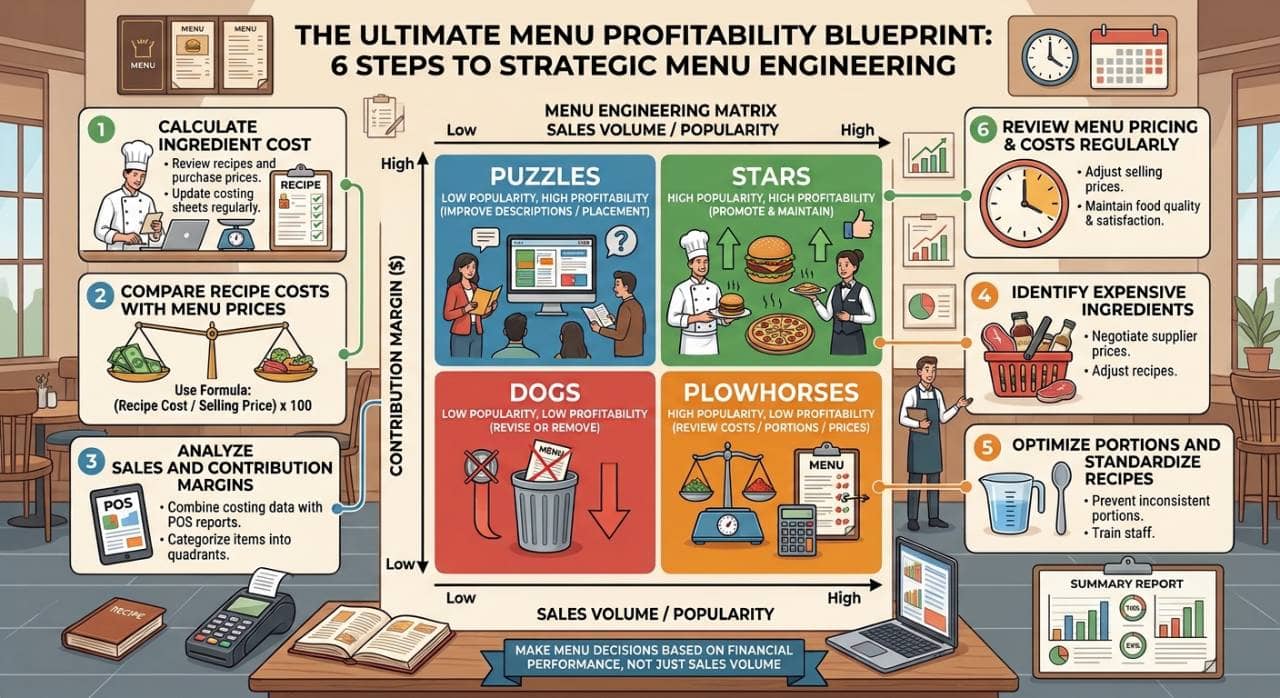
Menu items do not contribute equally to restaurant profitability. Some dishes generate strong sales but have high ingredient costs, while others deliver better margins despite selling less frequently. Analyzing menu and recipe cost data helps restaurant owners understand which items are financially beneficial and where adjustments can improve overall performance. 1. Calculate the Ingredient Cost of Each Menu Item Start by determining how much it costs to prepare each menu item. Review standardized recipes and calculate the cost of every ingredient based on its purchase price and required quantity. For example, if a burger requires beef, cheese, bread, vegetables, and sauces, calculate the individual cost of each ingredient and add them together to determine the total recipe cost. Keep recipe costing sheets updated whenever ingredient prices, portion sizes, or preparation methods change. Accurate calculations help prevent outdated cost information from influencing menu pricing decisions. 2. Compare Recipe Costs With Menu Selling Prices Once recipe costs are established, compare them with menu selling prices to understand how much revenue remains after ingredient expenses. Use the following formula - Menu Item Food Cost Percentage = (Recipe Cost / Selling Price) x 100 For example, if a menu item sells for $15 and its ingredient cost is $4.50, its food cost percentage is 30%. However, food cost percentage alone does not determine profitability. Restaurant owners should also consider contribution margin, which measures how much revenue remains after variable ingredient costs. 3. Analyze Menu Item Sales and Contribution Margins Combine recipe costing information with POS sales reports to evaluate menu performance. Identify which dishes sell frequently and which generate the highest contribution margins. This information helps categorize menu items based on popularity and profitability - High popularity, high profitability - Promote these items to maintain strong sales and margins. High popularity, low profitability - Review ingredient costs, portion sizes, and selling prices. Low popularity, high profitability - Consider improving menu descriptions, placement, or promotion. Low popularity, low profitability - Evaluate whether these items should be revised or removed. This approach helps owners make menu decisions based on financial performance rather than sales volume alone. 4. Identify Expensive Ingredients Affecting Multiple Dishes Review ingredient costs across the entire menu to identify products that significantly influence overall food expenses. An increase in the price of a frequently used ingredient can affect the profitability of several dishes simultaneously. Consider negotiating supplier prices, evaluating alternative ingredients, or adjusting recipes while maintaining food quality. 5. Optimize Portion Sizes and Standardize Recipes Inconsistent portions can increase ingredient consumption and reduce contribution margins. Establish standardized recipes with clearly defined ingredient quantities and preparation instructions. Monitor portion sizes regularly to ensure employees follow established specifications. 6. Review Menu Pricing and Recipe Costs Regularly Ingredient prices change over time, so menu pricing should be reviewed periodically. Use updated recipe costs and contribution margin calculations to determine whether selling prices need adjustment. Analyzing menu and recipe cost data helps restaurant owners understand which dishes support profitability and which require attention. By combining ingredient costs, sales information, and contribution margins, owners can make smarter menu decisions while maintaining food quality and customer satisfaction.
Food Waste and Variance Data
Food waste is a significant source of unnecessary spending in restaurant operations. Ingredients that spoil, prepared meals that remain unsold, and food discarded during preparation all contribute to higher operating costs. Without accurate records, restaurant owners may struggle to understand how much money is being lost or identify the reasons behind recurring waste. Analyzing food waste and cost variance data helps uncover these problems and establish more effective cost-control practices. 1. Track Food Waste by Ingredient and Financial Value Start by maintaining a food waste log that records discarded ingredients, quantities, estimated costs, and reasons for disposal. Categorize waste into areas such as spoilage, overproduction, preparation mistakes, damaged deliveries, and incorrect orders. Assigning a financial value to discarded ingredients helps owners understand the actual impact of waste on food costs. Review these records regularly to identify which ingredients generate the highest losses and where improvements are needed. 2. Identify Recurring Waste Patterns Analyze waste records to determine whether certain ingredients or menu items are consistently being discarded. Frequent spoilage may indicate excessive purchasing, poor storage practices, or inaccurate demand forecasting. Similarly, repeated overproduction could suggest that preparation quantities are not aligned with actual customer demand. Use these findings to adjust purchasing schedules, improve food storage procedures, and prepare ingredients according to expected sales volumes. 3. Compare Actual and Theoretical Food Costs Theoretical food cost represents the expected ingredient expenses based on standardized recipes and the number of menu items sold. Actual food cost reflects the ingredients consumed during the same period. Comparing these figures helps restaurant owners identify unexplained differences that may indicate operational inefficiencies. For example, if actual ingredient consumption is consistently higher than theoretical usage, investigate potential causes such as - - Employees using larger portions than specified in recipes. - Ingredients being discarded without proper documentation. - Inaccurate inventory counts or recording errors. - Incorrect recipe measurements or outdated costing information. - Unrecorded food consumption or unauthorized ingredient usage. Identifying these discrepancies helps owners address the underlying problems rather than simply accepting higher food expenses. 4. Improve Portion Control and Food Preparation Standardize ingredient quantities and preparation procedures across kitchen operations. Use portioning tools, measuring equipment, and clearly documented recipes to maintain consistency. Review preparation quantities against historical sales data to avoid producing more food than customers are likely to order. Better production planning helps reduce unsold prepared food while maintaining menu availability. 5. Establish Waste Reduction Targets Set measurable targets for reducing food waste and monitor progress through regular reports. Assign employees responsibility for recording discarded ingredients and following proper storage and preparation procedures. Review performance weekly to determine whether operational adjustments are reducing unnecessary losses. Reducing food waste requires more than simply discarding less food. Restaurant owners must understand where waste occurs, measure its financial impact, and use that information to improve purchasing, preparation, and inventory practices. These improvements help control ingredient expenses and protect restaurant profit margins.
How to Build a Consistent Food Cost Data Analysis Process
Analyzing food cost data should be an ongoing part of restaurant management rather than an occasional financial review. Ingredient prices, customer demand, inventory levels, and food waste can change frequently, making consistent monitoring essential for maintaining cost control. Restaurant owners need a structured process for reviewing performance, identifying problems, and turning findings into operational improvements. 1. Establish a Regular Food Cost Reporting Schedule Create a reporting schedule that covers daily, weekly, and monthly food cost performance. Each reporting period serves a different purpose - Daily - Review ingredient purchases, inventory movements, food waste, and unusual spending. Weekly - Evaluate food cost percentages, supplier price changes, inventory discrepancies, and menu performance. Monthly - Analyze COGS, overall food cost trends, profitability, and progress toward cost-control targets. Consistent reporting makes it easier to identify unusual changes before they significantly affect restaurant profitability. 2. Build a Food Cost Dashboard Centralize important food cost metrics in a dashboard that provides an overview of restaurant expenses and inventory performance. Include information such as food cost percentage, COGS, ingredient purchase prices, inventory turnover, waste levels, and theoretical versus actual food costs. A centralized dashboard helps restaurant owners review multiple performance indicators without manually gathering information from separate records. It also makes it easier to compare results across different reporting periods and identify areas requiring attention. 3. Set Measurable Food Cost Targets Establish clear performance targets based on the restaurant's menu, purchasing costs, operating model, and financial objectives. Targets can include maintaining a specific food cost percentage, improving inventory accuracy, reducing waste, or minimizing supplier price increases. Review these targets regularly and adjust them when ingredient costs, menu prices, or business conditions change. Avoid relying on generic industry benchmarks without considering the restaurant's individual cost structure. 4. Assign Responsibilities for Food Cost Management Effective cost control requires accountability across different areas of restaurant operations. Assign specific responsibilities for purchasing, receiving deliveries, inventory counts, recipe updates, and waste tracking. Make sure employees understand the importance of accurate recordkeeping and standardized procedures. Clear responsibilities reduce inconsistencies and help restaurant owners identify where operational improvements are needed. 5. Use Restaurant Technology to Centralize Cost Information Restaurant technology can simplify food cost analysis by connecting inventory management, purchasing, recipe costing, and POS sales information. These systems can help automate inventory calculations, update ingredient costs, monitor purchasing activity, and generate reports that provide better visibility into restaurant expenses. Reducing manual data entry also helps minimize recording errors and makes important financial information easier to access. 6. Review Performance and Adjust Operations Use food cost reports to identify unfavorable trends and establish corrective actions. Review whether changes to purchasing quantities, supplier agreements, recipes, portion sizes, or waste management practices are producing measurable improvements. A consistent food cost analysis process helps restaurant owners move from reactive spending decisions to proactive financial management. By regularly monitoring performance, maintaining accurate records, and using technology to organize information, restaurants can control ingredient expenses, improve operational efficiency, and protect long-term profit margins.