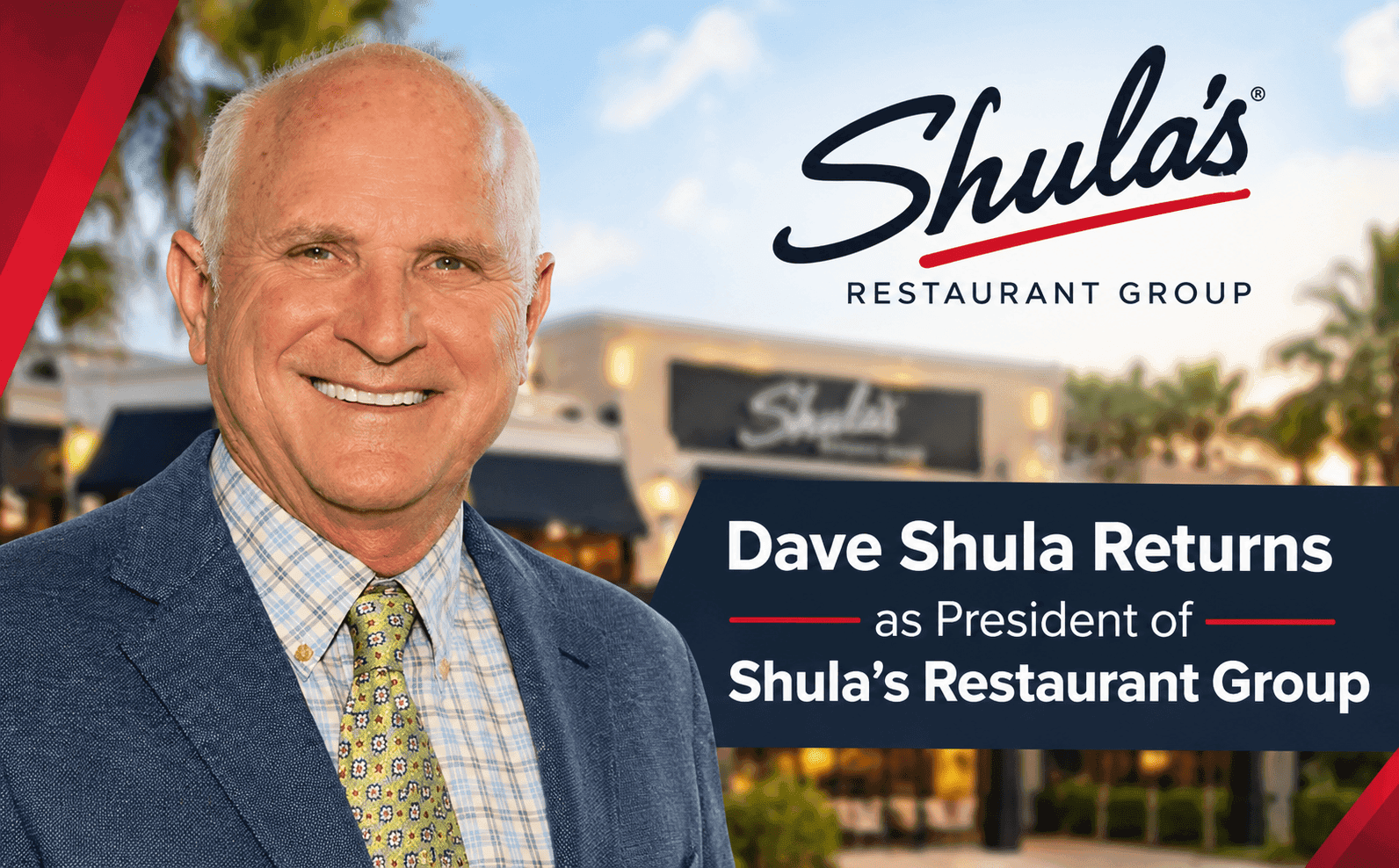
Dave Shula Returns as President of Shula's Restaurant Group
Dave Shula rejoins Shula's Restaurant Group as president, leading growth into Palm Beach Gardens and a 2027 Thomasville, Georgia expansion.
News
Sep 23, 2026
Dave Shula rejoins Shula's Restaurant Group as president, leading growth into Palm Beach Gardens and a 2027 Thomasville, Georgia expansion.
Sep 23, 2026
McDonald's commits $8.5 billion through 2036 to modernize restaurants, boost cash flow by $100,000 per store, and grow chicken and beverage sales.
Sep 23, 2026
WKS Restaurant Group promotes Jay Spongberg to president and COO after he helped grow the company from 65 to 382 restaurants over 16 years.
Sep 23, 2026

Smokey Mo's BBQ names Von Dawson, a Dine Brands veteran, as VP of Franchise Development to lead its Texas expansion strategy.
Sep 23, 2026
.png&w=3840&q=70)
Meritage Hospitality's Chapter 11 filing pulls 5% of Wendy's U.S. stores into bankruptcy, exposing cracks in franchising's bigger-is-safer bet.
Sep 21, 2026
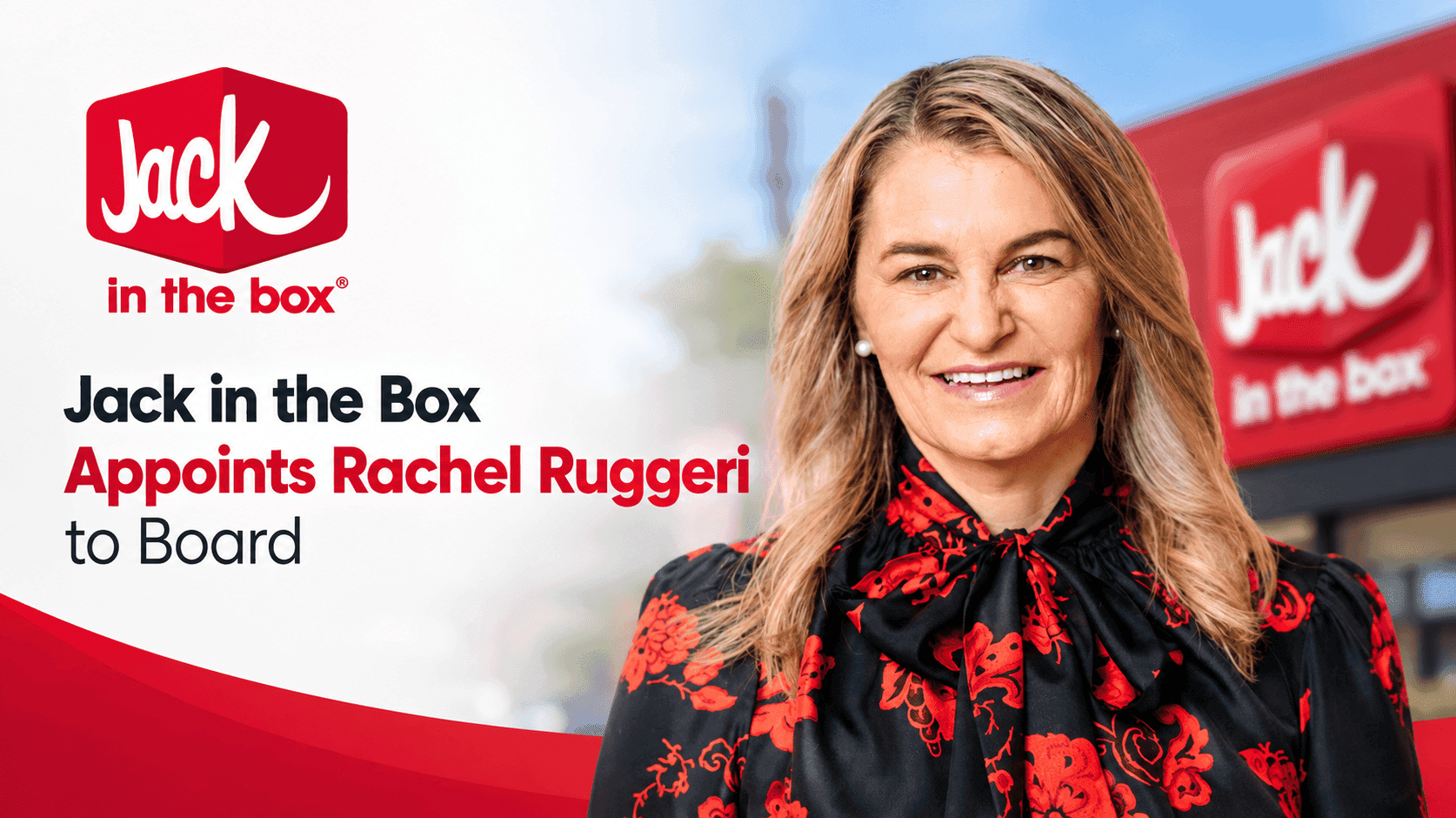
Jack in the Box names Rachel Ruggeri to its board as Michael Murphy retires, amid a CEO transition and deal with investor GreenWood.
Sep 21, 2026

Improve restaurant Google Maps rankings by optimizing your business profile, selecting accurate categories, gathering reviews, adding photos, and strengthening local relevance signals.
Sep 21, 2026

Restaurant inventory tracking helps owners monitor stock, control food costs, reduce waste, improve purchasing, and make informed operational decisions.
Sep 21, 2026

Restaurant owners can significantly reduce restaurant costs by leveraging technology across inventory, labor, procurement, forecasting, and administrative operations for better profit margins.
Sep 18, 2026

Understand how to forecast restaurant revenue and expenses with methods for sales projection, cost scaling, fixed-cost planning, and risk buffering.
Sep 18, 2026

Unlock Exclusive Access To Webinars, Events, And The Latest News For Free!
Arts-first preschool chain Building Kidz continues U.S. expansion while facing a wrongful death suit and appealing a California penalty.

Photo by Nick Sparkman
Building Kidz, the arts-first preschool network founded by Vineeta Bhandari, is pressing ahead with expansion while under scrutiny in California.
The brand has grown to 58 schools across 11 states and plans to open 10 more locations by December 2026. That growth track runs alongside a wrongful death lawsuit filed in October 2025 over the April 15, 2025 death of a 2-year-old boy at its Dublin, California facility, and a state penalty the company is appealing.
Bhandari opened the first school in 2003 with a simple premise that feels timeless in any setting where care and learning meet. “The first thing that came to my mind was confidence,” she said, reflecting on her own childhood in the performing arts and the effect she saw on her children.
The curriculum braids daily dance, music, and performing arts with secondary language instruction, basic health and nutrition lessons,
and community engagement, including interactions with local emergency services. Research has trailed that instinct. A 2023 longitudinal study linked high levels of school-based arts engagement with better self-regulation and reduced externalizing behaviors into adolescence (nature.com).
“We’re so confident in the foundation we have built that now things will move a lot faster, and we're truly excited about it,” Bhandari said of future unit openings.
The company began franchising in 2016, building a playbook that pairs lead generation and marketing infrastructure with operational account management.
New locations require an investment between $327,000 and $1.5 million, a range aimed at delivering consistent facilities and curriculum. Dedicated account managers oversee franchisee resources, training modules, and customer-acquisition tools, while Bhandari concentrates on brand vision, curriculum innovation, franchise growth, and leadership development to sustain aggressive expansion over the next three to five years.
The wrongful death suit names Building Kidz of Dublin and related entities, alleging negligence in supervision.
The California Department of Social Services concluded on October 14, 2025 that inadequate staffing during nap time violated licensing requirements, issuing a Type A violation. The state imposed a $10,000 fine on April 21, 2026, which Building Kidz has formally appealed (pleasantonweekly.com).
The company says staff did not know the child was ill at drop-off and cites a coroner’s report attributing death to complications from influenza B, while it continues to cooperate with investigations and civil proceedings.
Chief resource officer Sanjay Gehani says leadership remains committed to sharing facts when possible and supporting affected families while executing expansion plans. He also points to the purpose behind the model families buy into: “There's a tremendous amount of scientific research that has proven children exposed to the arts early in their formative years supports enhanced, analytical thinking capabilities in adults.”
The larger market is expanding fast, which lifts expectations. The International Franchise Association estimates the child-related franchising segment generated $71.7 billion in U.S. sales in 2024, fueled by demand for structured early education and enrichment (franchise.org).
Global preschool franchising revenue rose from $34.31 billion in 2025 to $35.99 billion in 2026 (pmarketresearch.com).

The broader child education franchise market is valued at $287.64 billion in 2025 with an 8.3 percent CAGR projected through 2033 (datainsightsmarket.com). Established competitors are sizable, too. Primrose Schools operates over 530 accredited preschools in the U.S. as of 2025 (en.wikipedia.org). For a concept like Building Kidz, that means differentiation through curriculum or service excellence is not optional, it is survival.
Key unknowns still hang over the brand. The outcome of the CDSS appeal and the timing of civil litigation could introduce settlement terms that affect corporate finances or franchisee obligations.
Evolving regulatory scrutiny in California may influence licensing requirements for nutrition, staff-to-child ratios, and nap-time supervision standards. Public details on any internal review and potential operational changes are limited given ongoing proceedings, which leaves observers guessing about risk mitigation beyond public statements. As Building Kidz seeks to open more schools through December 2026, the measure of progress will be twofold: whether its arts-integrated promise continues to resonate, and whether parents and investors feel fully at ease with the safety and compliance practices behind the curtain.