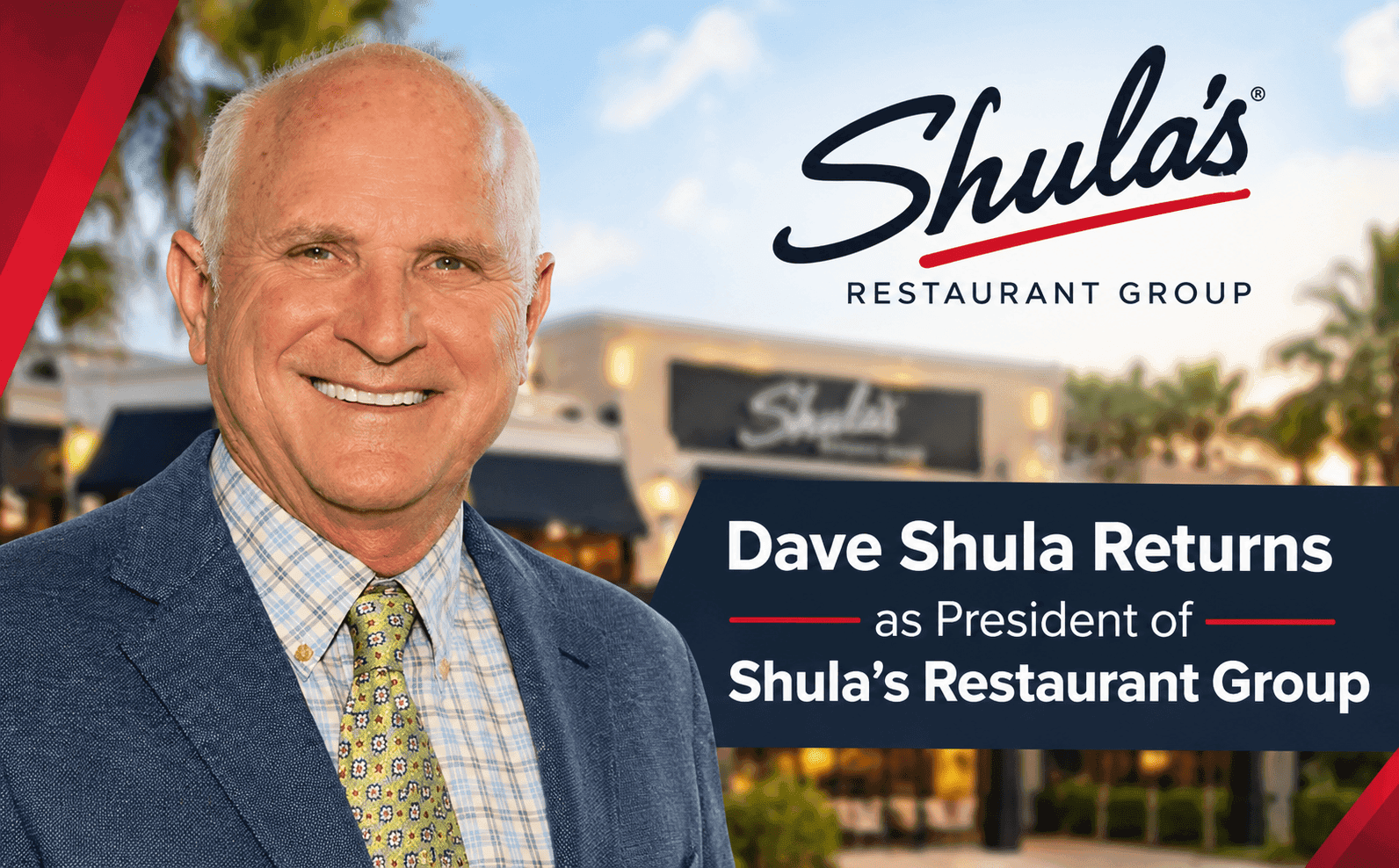
Dave Shula Returns as President of Shula's Restaurant Group
Dave Shula rejoins Shula's Restaurant Group as president, leading growth into Palm Beach Gardens and a 2027 Thomasville, Georgia expansion.
News
Sep 23, 2026
Dave Shula rejoins Shula's Restaurant Group as president, leading growth into Palm Beach Gardens and a 2027 Thomasville, Georgia expansion.
Sep 23, 2026
McDonald's commits $8.5 billion through 2036 to modernize restaurants, boost cash flow by $100,000 per store, and grow chicken and beverage sales.
Sep 23, 2026
WKS Restaurant Group promotes Jay Spongberg to president and COO after he helped grow the company from 65 to 382 restaurants over 16 years.
Sep 23, 2026

Smokey Mo's BBQ names Von Dawson, a Dine Brands veteran, as VP of Franchise Development to lead its Texas expansion strategy.
Sep 23, 2026
.png&w=3840&q=70)
Meritage Hospitality's Chapter 11 filing pulls 5% of Wendy's U.S. stores into bankruptcy, exposing cracks in franchising's bigger-is-safer bet.
Sep 21, 2026
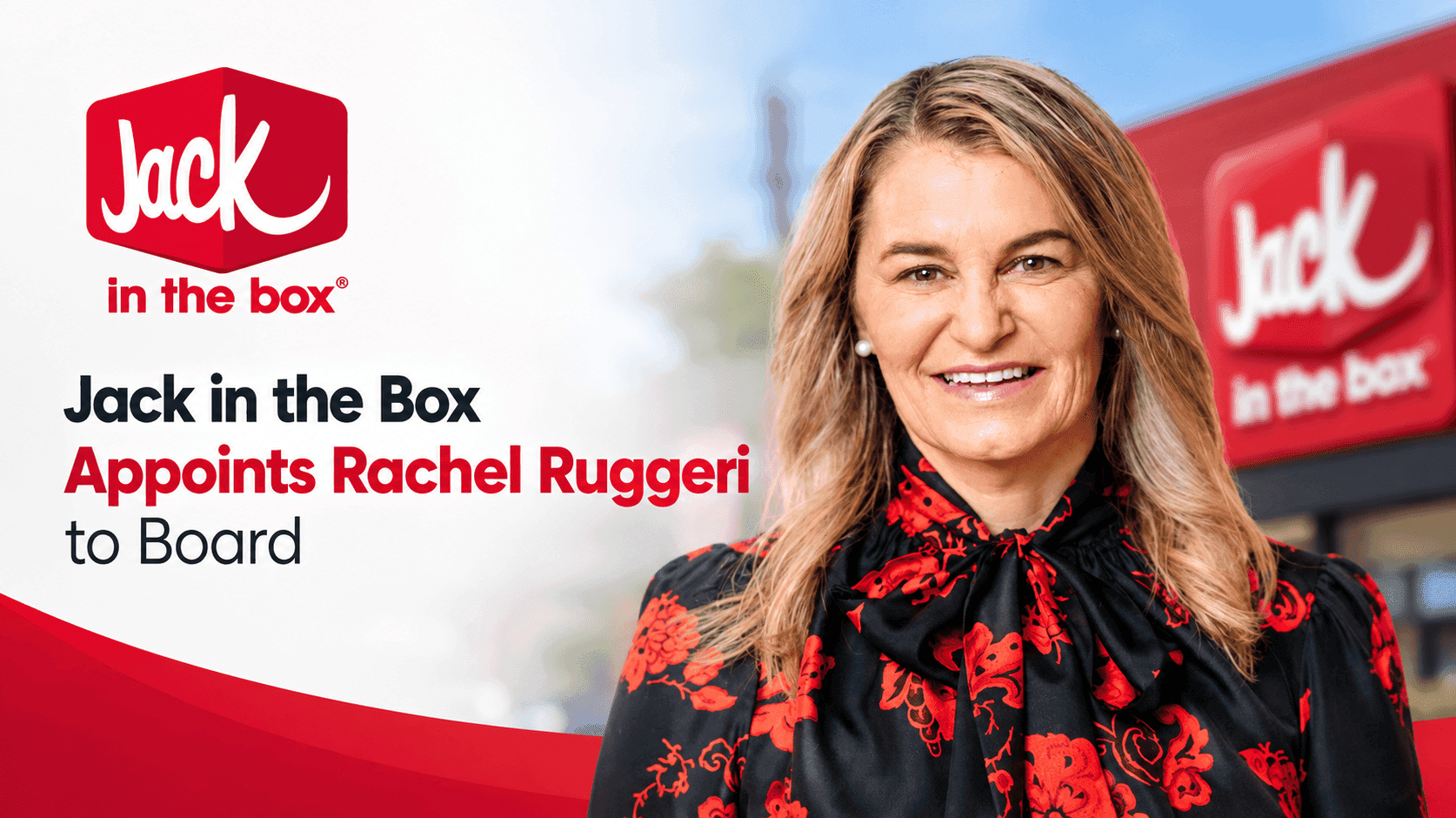
Jack in the Box names Rachel Ruggeri to its board as Michael Murphy retires, amid a CEO transition and deal with investor GreenWood.
Sep 21, 2026

Improve restaurant Google Maps rankings by optimizing your business profile, selecting accurate categories, gathering reviews, adding photos, and strengthening local relevance signals.
Sep 21, 2026

Restaurant inventory tracking helps owners monitor stock, control food costs, reduce waste, improve purchasing, and make informed operational decisions.
Sep 21, 2026

Restaurant owners can significantly reduce restaurant costs by leveraging technology across inventory, labor, procurement, forecasting, and administrative operations for better profit margins.
Sep 18, 2026

Understand how to forecast restaurant revenue and expenses with methods for sales projection, cost scaling, fixed-cost planning, and risk buffering.
Sep 18, 2026

Unlock Exclusive Access To Webinars, Events, And The Latest News For Free!
California's $20 fast-food wage and the Fast Food Council reshape pricing, labor, and expansion decisions across the industry.

Photo by mafe estudio
California's FAST Act arrived with the cadence of a new season for a vast and visible sector, the quick-service kitchens that feed daily life from coast to coast within the Golden State's borders. It did not merely raise a wage; it rewrote the tempo of operation. On April 1, 2024, fast‑service workers began earning at least $20 per hour, and a new Fast Food Council within the Department of Industrial Relations was empowered to chart future steps through 2029. The council would set annual increases, capped by the lesser of 3.5% or the Consumer Price Index, a mechanism designed to reduce volatility while anchoring ambition. The policy speaks to workers’ welfare and to a broader rebalancing of the industry's cost structure.
Under the operative framework, the wage floor is uniform across fast‑food employers, regardless of brand size or ownership model. The DIR notes the $20 benchmark became effective on April 1, 2024, and the Fast Food Council may raise it each year by the lesser of 3.5% or CPI. In practical terms, operators face a recalibration that touches pricing, hours, and growth plans. The directive is not confined to a single franchisee; it binds the sector to a shared economic rhythm, inviting menu strategy and store economics to evolve in tandem with policy tempo. This is not a one-store issue; it is a state-wide recalibration.
AB 1228, signed into law in 2023, created a laboratory for a new equilibrium: a Fast Food Council and a $20 minimum wage that would take hold in April 2024. The legislative package framed the shift as both worker welfare and a standardized operating environment, an instrument to formalize industry standards and speed a period of rapid recalibration across chains, especially given California's concentrated fast‑food labor. In the months after enactment, state communications highlighted job gains in the fast‑food segment even as operators prepared for ongoing cost pressures and potential geographic realignment.
Public materials described the wage accelerant as a lever for welfare and a driver of operational change across the sector. The policy's momentum was underscored by language about continued fast‑food job creation, signaling that cost pressures would persist and that brands might rethink where they deploy capital. The prospect of geographic reorientation, growth outside California, emerged as a natural outcome of a cost structure recalibrated by policy. Investors and operators began mapping scenarios for margins, capital allocation, and menu architecture as a long horizon unfolded.
As a consequence, labor strategies evolved from reactive scheduling toward forward‑looking planning, with a shared expectation that wage growth would be absorbed through a combination of price discipline, efficiency gains, and selective geographic expansion to markets outside California as part of a long‑term plan.
The mechanics of the shift unfolded in real time. The Employment Policies Institute (EPI) surveyed limited‑service operators statewide to quantify the cost impact of the new $20 minimum, and the initial response was to cut shifts and hours as a direct counterweight to higher labor costs. Yet the longer arc pointed toward technology as a stabilizer: self‑service kiosks and more efficient kitchen workflows could redirect labor toward expediting tasks while introducing upfront and ongoing maintenance costs. The trajectory remains a negotiation between wages and the price customers pay, a tension that will shape decisions about staffing, hours, and capital investments.

DIR’s Fast Food Minimum Wage FAQ confirms the present wage at $20 and reiterates the council's authority to adjust to the annual cap. The implication is not merely a number on a poster but a planning horizon that invites menus, labor models, and expansion strategies to evolve in tandem with policy tempo.
In practice, operators are urged to anticipate and prepare for ongoing volatility, weaving automation investments and reallocation of labor into a broader strategy that could extend beyond California’s borders as the policy’s horizon stretches toward 2029.
Industry observers describe the early months as a period of rapid recalibration across brand types. Chipotle has acknowledged wage-cost dynamics as pervasive across California, noting that some price adjustments were used to offset higher costs. In a composite reading of industry signals, the brand signaled price responses in California and framed the trend as part of a broader consumer‑cost landscape. Kura Sushi reported that California represents a large share of its comparable-store performance, yet the quarter's end saw deceleration in top-line growth as perceptions of higher costs broadened. CEO Hajime Uba noted diners increasingly viewed restaurants as more expensive, dampening anticipated benefits from quick-service price elevations.
Across brands, the resilience has shown itself in automation, digital ordering, and menu simplification to bolster efficiency while labor markets remain tight. Brands are refining value messaging and streamlining offerings, hoping that clarity of purpose can offset the sting of higher menu prices and preserve guest loyalty.
The broader takeaway is that the policy has widened the dialogue between price and perception, nudging brands to craft a narrative of value that can ride alongside innovation and efficiency.
Taken together, California's experience points to a broader recalibration of restaurant economics, where wage floors, pricing discipline, and labor models interact with expansion plans and technology adoption. Brands will pursue a blend of price discipline, automation investments, and selective geographic diversification to mitigate cost pressures while preserving customer value.

In this sense, the policy framework could set a template for how state wage policies influence national labor-market dynamics in the restaurant sector. If the trajectory persists through 2029, California's model may shape future expansion playbooks and operational playbooks for brands seeking to balance wage growth with financial viability, even as the broader economy contends with higher menu prices and evolving consumer expectations.
Ultimately, the road ahead will test whether wage gains can coexist with traffic and profitability, a test that will unfold across markets inside and beyond the state as operators decide where to invest next.
