Restaurant Industry Performance Report - Q2 2026 Trends
Explore the latest restaurant industry performance report for Q2 2026, including key restaurant industry trends, segment performance, and labor challenges.
Jul 1, 2026
Explore the latest restaurant industry performance report for Q2 2026, including key restaurant industry trends, segment performance, and labor challenges.
Jul 1, 2026
Papa John’s announces the departure of CFO Ravi Thanawala and the appointment of Chris Collins as interim CFO, signaling strategic leadership changes in the company’s finance team.
Jul 1, 2026
Compare the top 10 restaurant POS systems in the USA for 2026. Explore features, pricing, pros, cons, and the best POS options for every restaurant type.
Jul 1, 2026
Buffalo Wild Wings has named Scott Nelson as Chief Marketing Officer, signaling a strategic evolution ahead of Inspire Brands' anticipated IPO. Learn how his diverse background may impact your restaurant's marketing playbook.
Jul 1, 2026
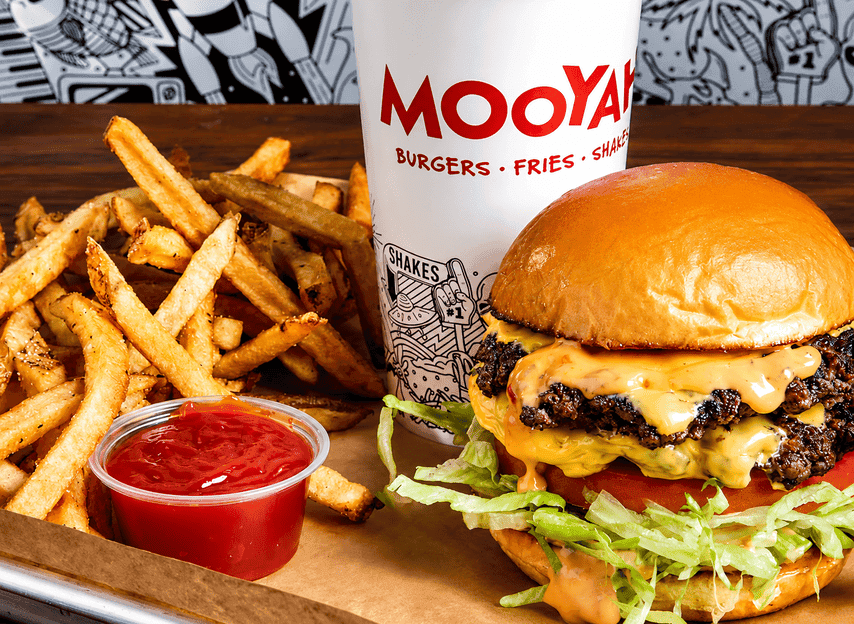
Learn how Mooyah Burger drives growth through operational excellence, technology, franchise leadership, and a customer-first approach.
Jun 30, 2026
Taco Bell’s Cantina model has opened at Denver International Airport, serving specialty eats and alcoholic beverages to travelers and signaling new growth opportunities for on-the-go dining.
Jun 30, 2026
Restaurants can prepare for FIFA Quarter Finals by planning menus, staffing, promotions, inventory, and guest retention to increase match-day sales.
Jun 30, 2026
Ranking for "restaurants near me" searches requires local SEO, strong reviews, mobile ordering, accurate profiles, and ongoing performance tracking improvements.
Jun 30, 2026
Dog Haus has signed an exclusive beverage partnership with Keurig Dr Pepper, bringing flexible and innovative drink options to the chain and setting a new standard for franchise beverage programs.
Jun 30, 2026
Explore Inspire Brands’ rapid expansion and what their upcoming IPO could mean for restaurant owners. We break down the latest performance of Arby’s, Sonic, Jimmy John’s, Baskin-Robbins, and Dunkin’ to help you benchmark and plan.
Jun 30, 2026
SB 22 lifts cash-out to $15, squeezing breakage and raising compliance stakes. What retailers must fix before April 1, 2026.
Photo by Mos Sukjaroenkraisri
California just moved the line. Starting April 1, 2026, SB 22 raises the state’s mandatory cash redemption threshold for gift cards from balances under $10 to those under $15. It’s the first update since the original rule took hold in 2008, and it lands in a market where gift cards pull serious weight across omnichannel sales. A recent survey pegs 43% of U.S. adults as holding at least one unused card, fueling a national float of roughly $27 billion. That idle value has long padded margins through breakage. Now, more of it can walk out the door in cash. Retailers need to recalibrate fast:
Civil Code section 1749.5 has required cash-outs under $10 since 2008. SB 22, chaptered on October 1, 2025, lifts that bar to under $15 and preserves limited exemptions. The operational punch is simple: more transactions will qualify for instant cash redemption, fewer will trickle into breakage, and friction at the counter becomes expensive. Systems, staff, and disclosures must all work in concert. That means POS logic that recognizes sub-$15 balances, clear prompts for cash-out, and front-of-house messaging that sets expectations before a dispute starts.
The law didn’t loosen the net; it defined the edges. SB 22 keeps narrow carve-outs for programs that don’t fit the classic paid gift card mold. Whether a card qualifies turns on how it was issued, what was paid (if anything), and whether required disclosures stand out in the right size and place. The more a retailer blends program types or buries terms, the more risk creeps in. If you’re counting on exceptions to shield a balance from cash-out, your documentation and on-card language need to carry the weight. The state expects precision, not improvisation:
- Promotional or loyalty certificates: Issued without payment; not cash redeemable under the statute when properly designed and disclosed.
- Perishable food vouchers: Redeemable only for goods; exempt from cash-out when they meet the statute’s criteria.
- Nonprofit-donated or deeply discounted fundraising cards: Must display a clear disclaimer, at least 10‑point font, stating they are not cash redeemable.
Key hinge points: issuance method, consideration paid, and the prominence of statutory disclosures determine eligibility. Sloppy formatting turns a planned exception into a legal problem.
Raising the threshold is easy on paper and tricky in code. Multi-vendor setups and legacy gift card platforms mean one weak link can block a lawful payout. Retailers should audit POS and API integrations now so any balance under $15 triggers a cash-out workflow or a clear consumer prompt. Front-end clarity matters too: in-store signage, website banners, and e-receipts need to spell out the right to cash redemption. Staff training closes the loop, scripts for what to say, manual overrides when automation stumbles, and logs that document every payout. Clean triggers. Clean receipts. Clean records.
Pillsbury Winthrop Shaw Pittman LLP flags California’s gift card cash-out rule as one of the state’s most actively litigated consumer statutes. That means two paths: build automation and controls that honor the law every time, or defend a pattern of denials in front of prosecutors and class counsel. Documentation is protective gear. So are proactive disclosures that match what your system actually does. When a redemption request hits, a trained associate with a working override and a tight script can defuse a complaint before it becomes a demand letter. Miss those basics and the tabs climb fast.
California prosecutors have shown their hand. In October 2025, Chipotle Mexican Grill agreed to pay $246,000 in civil penalties, restitution, and costs tied to allegations it failed to provide required cash refunds under the prior threshold. The stipulated judgment did more than levy fines. It ordered injunctive relief: a dedicated online cash-out portal and updated gift card disclosures by January 2026, months before the new April 1, 2026 operative date. Private class actions followed in state and federal courts, signaling dual exposure, regulators on one side, plaintiffs’ bars on the other.
The consumer message is straightforward. As District Attorney Carla Rodriguez put it, “California law ensures that consumers receive the full benefit of the money available to them on gift cards that they have purchased or received as a gift.” Defense counsel see the design traps too. Shawn Collins points to ambiguous program builds, like layering loyalty points onto gift cards, that obscure eligibility and spark disputes. His team has led preoperative compliance reviews for multi-unit retailers to align user experience with statutory requirements and the risk appetites of prosecutors and private plaintiffs. Clear programs travel farther than clever ones.
The statute says more than enough to act, but not everything is settled. Some issuers will try to reframe paid instruments as “gift certificates” or promotions to dodge the cash-out rule. Others will fight over the 10‑point font disclaimer, its legibility, its placement, its prominence. Dormancy fees and other program mechanics still raise interpretive questions. In this environment, disclosure claims make easy fuel for Unfair Competition Law and Consumer Legal Remedies Act class actions. The lesson is simple: where the line is gray, tighten the design until it’s black-and-white on the card, online, and at the register.
Qualification hinges on facts: issuance method, consideration paid, and the clarity of statutory disclosures. If those inputs aren’t nailed down, so is your defense. Program complexity rarely beats a clean entitlement to cash. Where possible, separate promotional instruments from paid cards in both branding and redemption flow. When categories blur, plaintiffs win on confusion alone. Write your rules for consumers first and your auditors second. Both audiences need to see the same story, in the same font, every time.
Breakage has been a profit center. Starbucks reported $207.6 million in breakage in 2024, and industry estimates put average rates between 3%–10%. Prepaid programs are scaling fast, from $1.24 trillion in 2025 toward projections above $3.81 trillion by 2034. More cash-outs under $15 will trim that upside and shift recognition timing. That’s a forecasting issue as much as a legal one. Smart operators get ahead of it with a cross-functional push, legal, IT, ops, and marketing at the same table, so the technology and the terms match the promise on the card. Start with the steps that actually change outcomes:
1. Convene workshops – Bring legal, IT, operations, and marketing together before January 1, 2026 to inventory every gift card and certificate variant.
2. Update system logic – Audit POS and API flows so sub‑$15 balances auto-trigger cash-out or prompt clear offers.
3. Refresh disclosures – Align in-store signage, website banners, and e-receipts with statutory rights and your actual flow.
4. Train and test – Script staff responses, enable manual overrides, and log every redemption.
5. Govern and forecast – Stand up compliance audits, sign-offs, and revised breakage models to manage revenue recognition and cash flow.
Embed the $15 rule in code and culture. That’s how you avoid penalties, keep trust, and control the math.