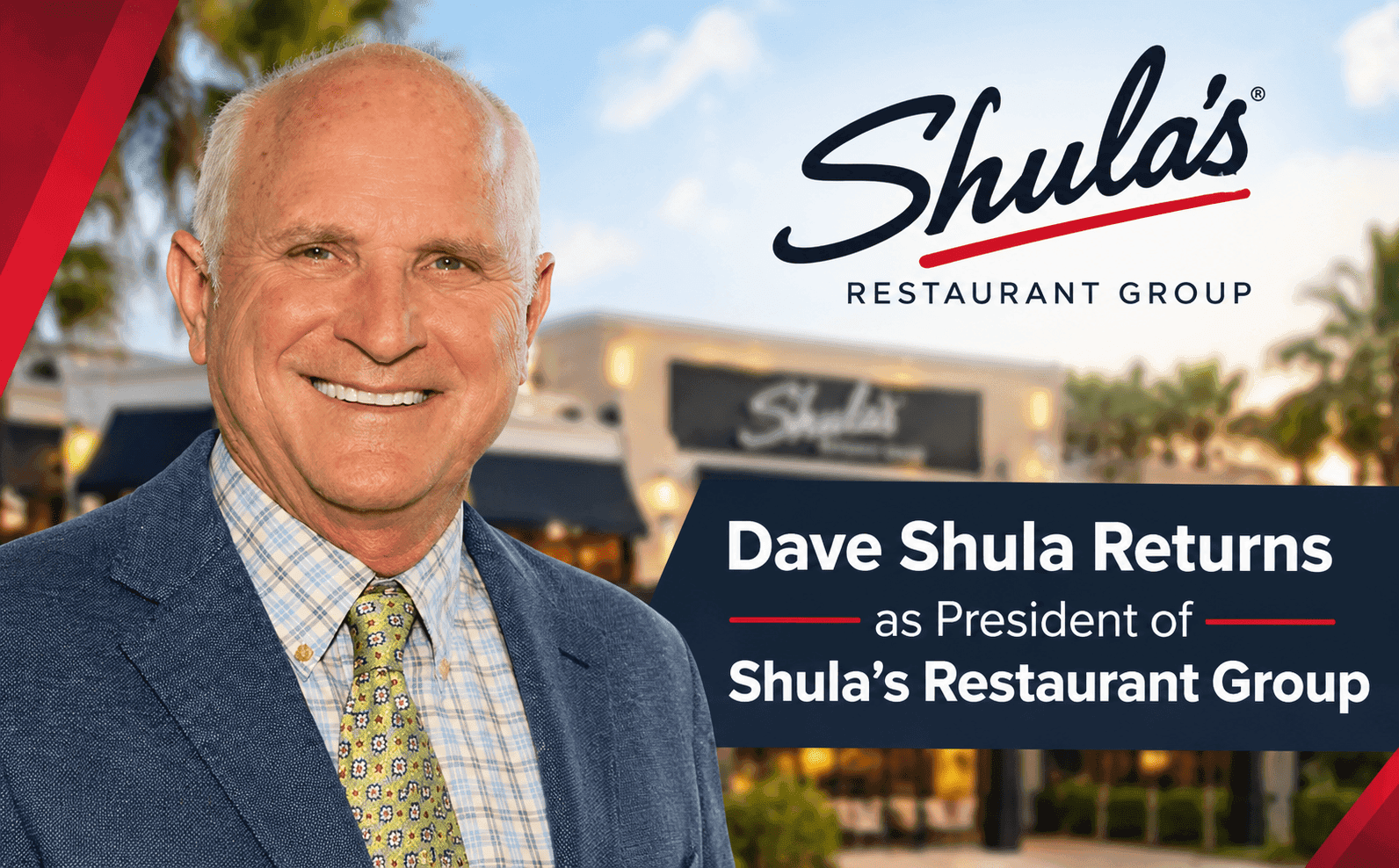
Dave Shula Returns as President of Shula's Restaurant Group
Dave Shula rejoins Shula's Restaurant Group as president, leading growth into Palm Beach Gardens and a 2027 Thomasville, Georgia expansion.
News
Sep 23, 2026
Dave Shula rejoins Shula's Restaurant Group as president, leading growth into Palm Beach Gardens and a 2027 Thomasville, Georgia expansion.
Sep 23, 2026
McDonald's commits $8.5 billion through 2036 to modernize restaurants, boost cash flow by $100,000 per store, and grow chicken and beverage sales.
Sep 23, 2026
WKS Restaurant Group promotes Jay Spongberg to president and COO after he helped grow the company from 65 to 382 restaurants over 16 years.
Sep 23, 2026

Smokey Mo's BBQ names Von Dawson, a Dine Brands veteran, as VP of Franchise Development to lead its Texas expansion strategy.
Sep 23, 2026
.png&w=3840&q=70)
Meritage Hospitality's Chapter 11 filing pulls 5% of Wendy's U.S. stores into bankruptcy, exposing cracks in franchising's bigger-is-safer bet.
Sep 21, 2026

Jack in the Box names Rachel Ruggeri to its board as Michael Murphy retires, amid a CEO transition and deal with investor GreenWood.
Sep 21, 2026
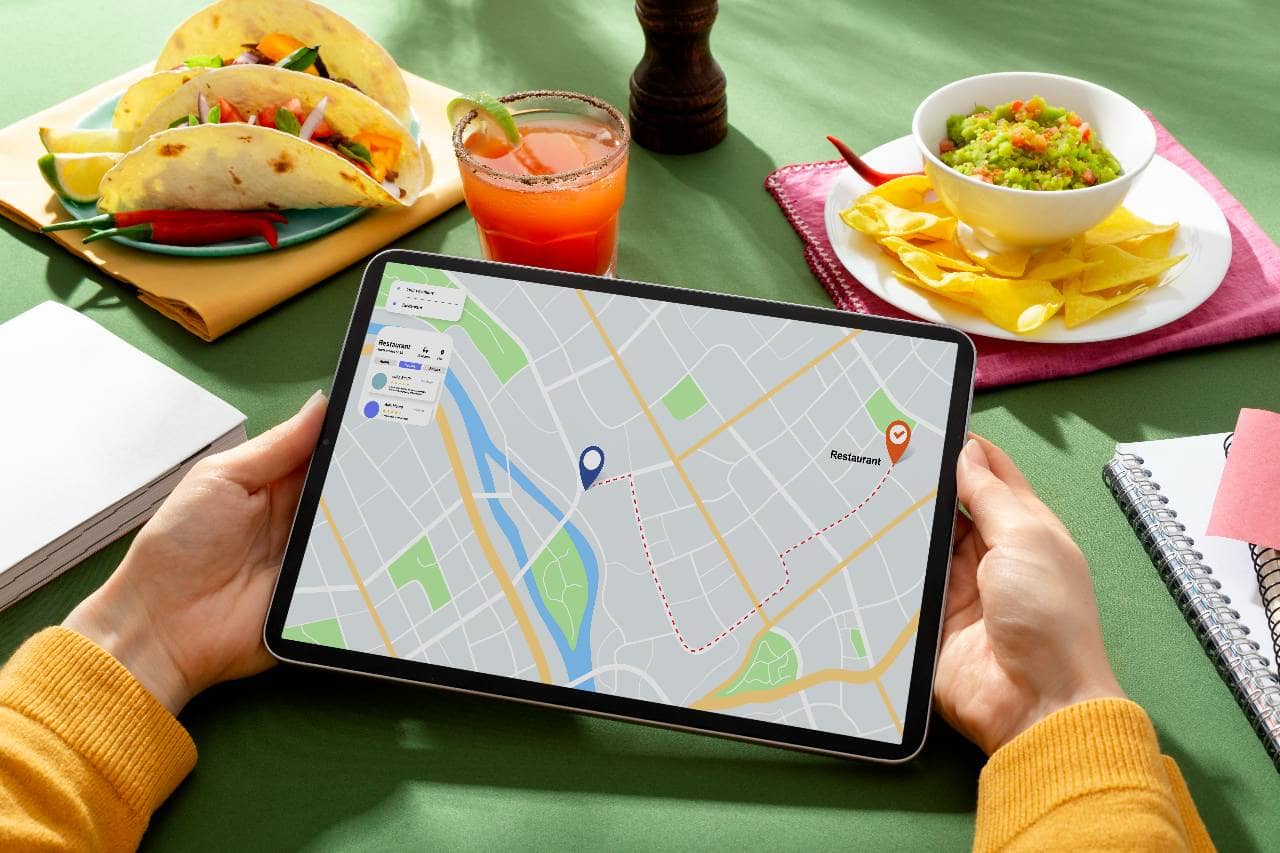
Improve restaurant Google Maps rankings by optimizing your business profile, selecting accurate categories, gathering reviews, adding photos, and strengthening local relevance signals.
Sep 21, 2026

Restaurant inventory tracking helps owners monitor stock, control food costs, reduce waste, improve purchasing, and make informed operational decisions.
Sep 21, 2026

Restaurant owners can significantly reduce restaurant costs by leveraging technology across inventory, labor, procurement, forecasting, and administrative operations for better profit margins.
Sep 18, 2026

Understand how to forecast restaurant revenue and expenses with methods for sales projection, cost scaling, fixed-cost planning, and risk buffering.
Sep 18, 2026

Unlock Exclusive Access To Webinars, Events, And The Latest News For Free!
Chili’s brings back Ziosk for pay-at-table, loyalty, and AI insights across 1,100+ locations, signaling a thoughtful, guest-focused digital restart.

Photo by Adrien Olichon
On the tables of Chili’s, a familiar glow returns, like the soft warmth of a café on a quiet evening. The rhythm of order, pay, and bite remains the same, yet the presence of a tabletop tablet adds a new kind of ease, an unobtrusive companion that speeds things up without crowding conversations. Since August 2024, Chili’s has expanded its relationship with Ziosk to place pay-at-table tablets across more than 1,100 restaurants, a homecoming that signals the brand’s enduring belief in friendly, technology-enabled service. In a dining world that moves quickly, the moment feels crafted for lingering over a shared meal:
Beyond the screen at the table, Chili’s now leans into a broader Ziosk ecosystem. The platform will integrate with My Chili’s Rewards to enroll guests at the moment of payment, while an AI-driven post-dining survey analysis promises practical insights for operators. Guests can interact with lighthearted features like games, and the data generated is intended to fuel personalized offers and more nuanced guest sentiment monitoring. The Dallas-based vendor’s hardware and software suite is positioned to support both smoother operations and warmer, more resonant guest moments.
Chili’s first welcomed Ziosk in 2014 and kept it through 2020, before shifting to Presto for tabletop technology. The renewed partnership is less about nostalgia than a calculated response to a market that prizes speed, seamless payments, and richer guest data. Coverage notes the expansion to more than 1,100 restaurants and frames the move as a way to sharpen team efficiency and guest experiences under pressure from competitors. In other words, it’s not a gimmick; it’s a coordinated effort to balance care with acceleration.

Industry observers describe the move as consistent with a broader push toward guest-facing tech that blends convenience with personalization. For Chili’s, the aim is simple: speed service, simplify payments, and create an in-store moment that feels both efficient and inviting. Brinker executives emphasize a longer arc, using the platform to enable ongoing brand improvement and sustained guest delight, while staying true to the chain’s tradition of hospitality in a digital era.
What Ziosk brings to Chili’s goes beyond convenience. The pay-at-table capability is paired with loyalty enrollment at point-of-sale, and the system’s AI-informed sentiment analytics are designed to surface actionable feedback in near real time. The technology also supports interactive features like games and serves as a central hub for data that can power tailored offers and sharper guest insights. In short, Ziosk is positioned as a backbone for both smoother service and richer guest engagement across a broad network.
Executive reactions echo that dual aim. Leaders described the renewed alliance as a way to speed service, simplify payments, and elevate each in-store moment, while Brinker executives frame it as a lever for ongoing brand improvement and stronger guest experiences. Taken together, the statements sketch a vision of blending tradition with digital-first tools so guests feel cared for without noticing the mechanics behind the scene.
August 2024 marks the culmination of a multi-year journey: Chili’s moves away from Ziosk and then returns as it scales the concept across more than 1,100 locations. Public disclosures in late 2025 and early 2026 underscore continued momentum for Chili’s, with quarterly reports highlighting strong performance within Brinker’s portfolio. The footprint remains substantial: nearly 1,600 restaurants in the United States and 27 other countries, plus two U.S. territories, positioning Ziosk as a high-impact touchpoint across most of the Chili’s network.
For guests, the renewal signals an experience-led differentiation in a crowded field. By combining fast pay-at-table speed, loyalty enrollment at POS, and AI-informed sentiment analysis, Chili’s can refine engagement, tailor offers, and monitor satisfaction in near real time. The overarching aim is to save guests’ time while making each visit feel personalized and distinctive, an ideal that industry observers say could set a precedent for how casual-dining brands use guest-facing tech.
Yet large-scale, cross-location tech rollouts come with caveats. Integrating loyalty, payments, and AI analytics across more than 1,100 restaurants requires robust data governance and ongoing staff training. Brinker has discussed tokenizing guest data to build unified profiles, a move that raises questions about privacy, security, and guest consent in a regulated environment. As with any rapid tech adoption, execution risk remains, and outcomes hinge on consistent implementation across diverse locations.
For Chili’s and Brinker, the project is a thoughtful wager on experience-led differentiation. The promise is clear: faster service, deeper loyalty, and near real-time sentiment that helps shape offers and hospitality. If governance, training, and rollout discipline keep pace with ambition, this renewed alliance could become a gentle benchmark, a reminder that comfort and connection can coexist with the spark of modern technology around the table.
