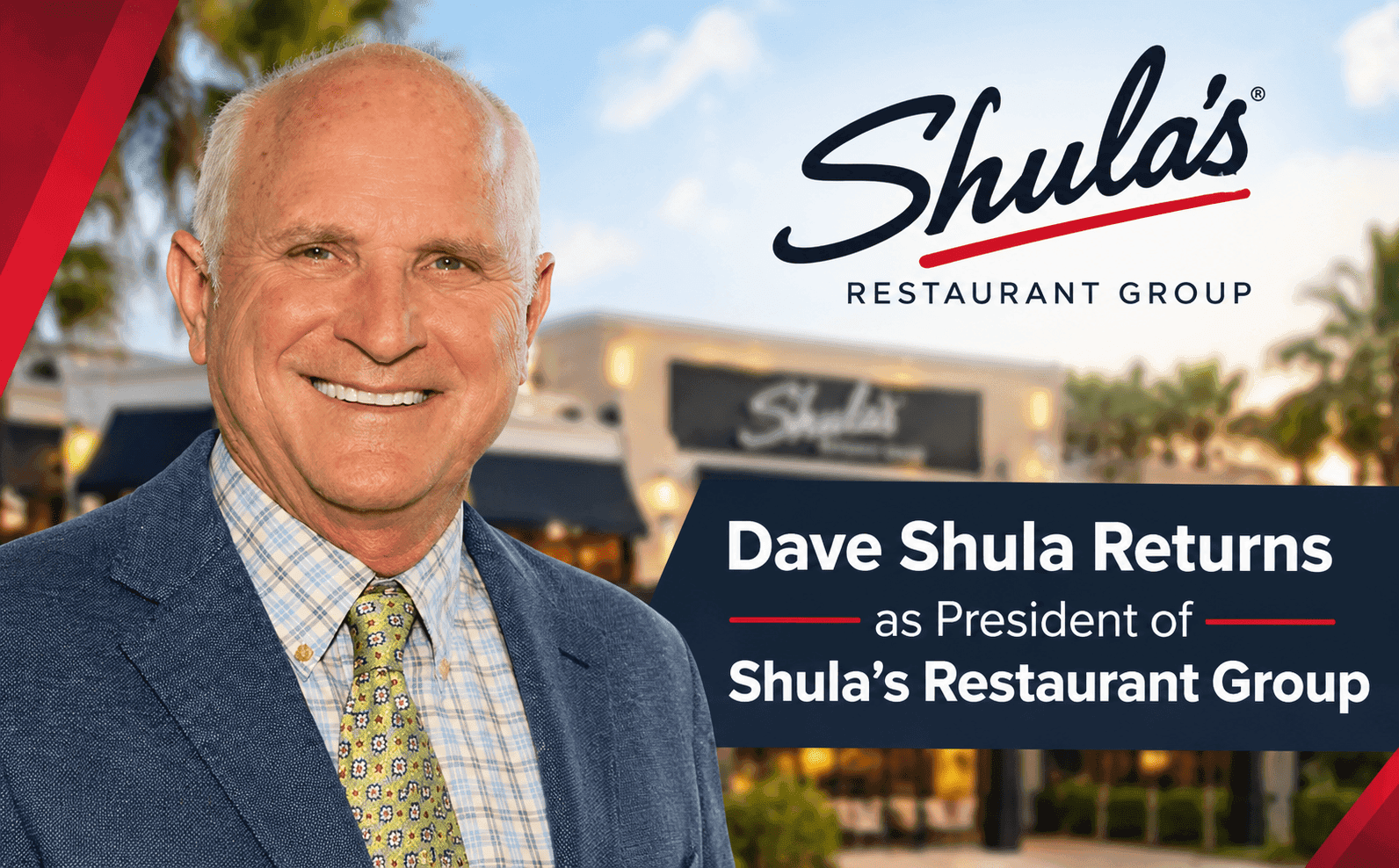
Dave Shula Returns as President of Shula's Restaurant Group
Dave Shula rejoins Shula's Restaurant Group as president, leading growth into Palm Beach Gardens and a 2027 Thomasville, Georgia expansion.
News
Sep 23, 2026
Dave Shula rejoins Shula's Restaurant Group as president, leading growth into Palm Beach Gardens and a 2027 Thomasville, Georgia expansion.
Sep 23, 2026
McDonald's commits $8.5 billion through 2036 to modernize restaurants, boost cash flow by $100,000 per store, and grow chicken and beverage sales.
Sep 23, 2026
WKS Restaurant Group promotes Jay Spongberg to president and COO after he helped grow the company from 65 to 382 restaurants over 16 years.
Sep 23, 2026

Smokey Mo's BBQ names Von Dawson, a Dine Brands veteran, as VP of Franchise Development to lead its Texas expansion strategy.
Sep 23, 2026
.png&w=3840&q=70)
Meritage Hospitality's Chapter 11 filing pulls 5% of Wendy's U.S. stores into bankruptcy, exposing cracks in franchising's bigger-is-safer bet.
Sep 21, 2026
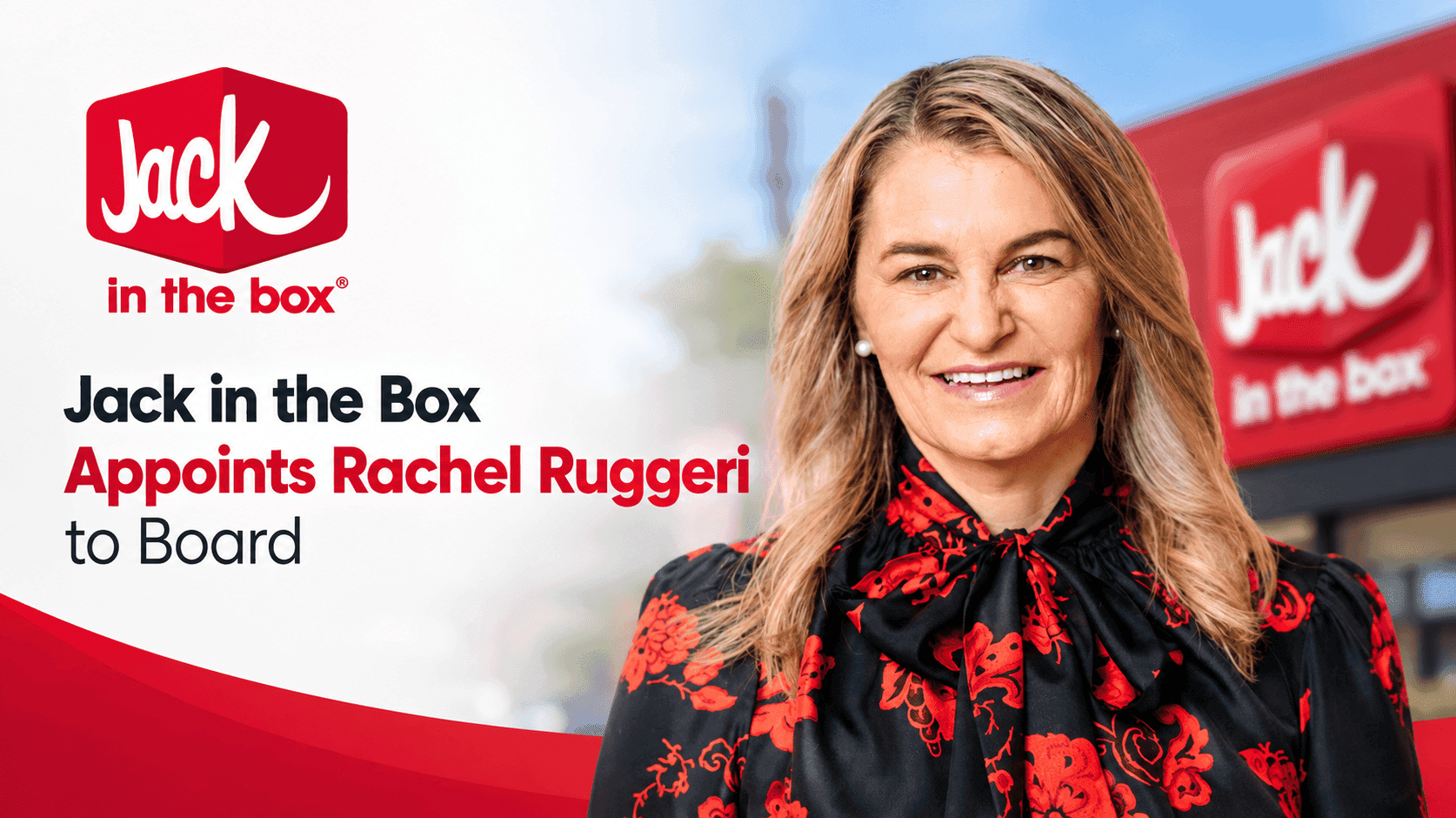
Jack in the Box names Rachel Ruggeri to its board as Michael Murphy retires, amid a CEO transition and deal with investor GreenWood.
Sep 21, 2026

Improve restaurant Google Maps rankings by optimizing your business profile, selecting accurate categories, gathering reviews, adding photos, and strengthening local relevance signals.
Sep 21, 2026

Restaurant inventory tracking helps owners monitor stock, control food costs, reduce waste, improve purchasing, and make informed operational decisions.
Sep 21, 2026

Restaurant owners can significantly reduce restaurant costs by leveraging technology across inventory, labor, procurement, forecasting, and administrative operations for better profit margins.
Sep 18, 2026

Understand how to forecast restaurant revenue and expenses with methods for sales projection, cost scaling, fixed-cost planning, and risk buffering.
Sep 18, 2026

Unlock Exclusive Access To Webinars, Events, And The Latest News For Free!
The Fifth Circuit ends the 80/20 tipped-wage framework, returning to a pre-rule baseline while state rules move independently. A detailed, expert-led look at origins, mechanics, and industry impact.

Photo by Niconor Brown
Fifth Circuit turning point in tip policy is real. The court has vacated the 2021 Final Rule governing tip credits, effectively ending the 80/20/30 framework that dictated how operators could apply the federal tip credit. The ruling lands on August 23, 2024, and it is geographically narrow but loud in impact. It returns the region to the pre-rule baseline, while state and local variations still apply. For servers, cooks, and managers, this isn’t distant policy, it changes how payroll is planned, how shifts are structured, and how managers talk with staff about pay. This is the moment: the next moves will define wage practice in hospitality across the area.
Under the 80/20/30 framework, tipped workers could be paid a subminimum wage via the federal tip credit only for tip-producing tasks, with additional regular wages required if workers spent more than 20% of a workweek on tip-supporting duties or performed such duties for more than 30 consecutive minutes. The mechanism forced operators to maintain meticulous time records and to adjust schedules as duties shifted. The Department of Labor’s guidance historically tied tips to the federal minimum wage of $7.25 per hour and the $2.13 per hour tip credit, though state rules could impose higher floors or even eliminate the credit. The Fifth Circuit’s ruling framed the regulation as arbitrary and capricious and inconsistent with the Fair Labor Standards Act, a finding that unsettled a long sequence of regulatory shifts. The decision is a reminder that policy and practice must stay aligned to statutory language.
The 80/20 concept grew from a long-running effort to tighten the line between tip-producing tasks and ancillary duties for workers who receive a tip credit. The Obama-era groundwork suggested the rule would be revisited as policy evolved, a reflection of shifting political priorities. In practice, the rule sought to quantify how much time tipped employees could spend on non‑tip-related activity while still qualifying for the reduced tipped wage. Critics argued the framework was intricate and burdensome, especially for servers who fluidly switch between tipping and non‑tip tasks. The back-and-forth, policy moves tied to administrations, became a hallmark of how agencies translate statutes into restaurant life.

Regulatory pendulum swung from initial proposals to a rollback under the Trump administration, then a reintroduction with clarifications under the Biden administration. Industry practitioners argued the idea promised precision but demanded operational discipline that many operators found impractical. As observers noted, the rule’s arc reflects how labor standards policy bends with political winds more than with statutory text, which has tangible consequences for how restaurants staff and pay their people. The tension, between ideal precision and workable operations, remains the backdrop to every payroll decision in hospitality.
Policy direction matters, but operational discipline wins in the end. The industry is watching for clarity on whether tipping can be simplified without sacrificing fairness. In practice, managers should expect to communicate pay changes well in advance, document decisions, and coordinate with staff to minimize disruption. The broader takeaway is that the policy pendulum will continue to swing, but operators can control the pace by investing in transparent payroll practices and by keeping lines of communication open with employees about any shifts in wage structures.