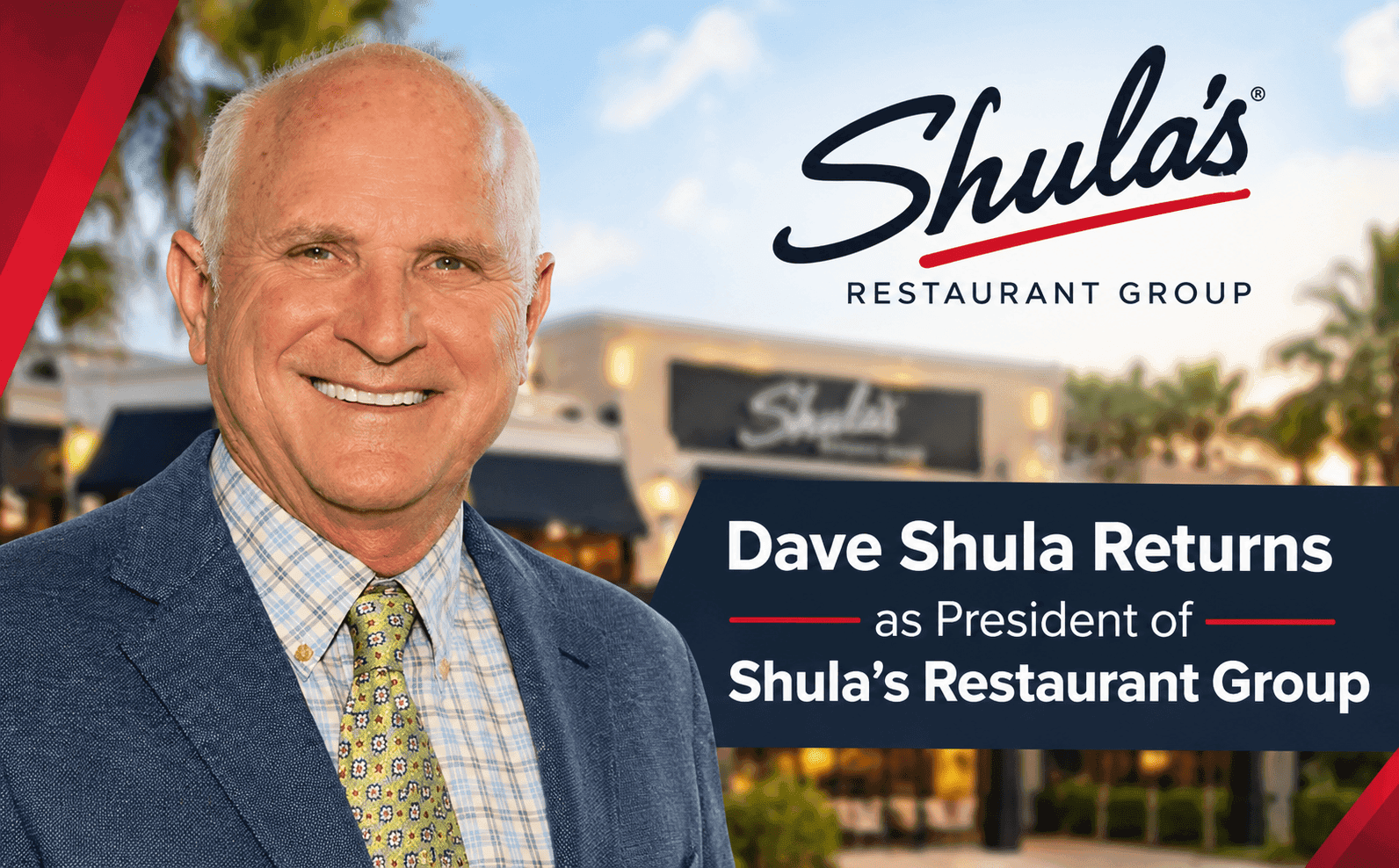
Dave Shula Returns as President of Shula's Restaurant Group
Dave Shula rejoins Shula's Restaurant Group as president, leading growth into Palm Beach Gardens and a 2027 Thomasville, Georgia expansion.
News
Sep 23, 2026
Dave Shula rejoins Shula's Restaurant Group as president, leading growth into Palm Beach Gardens and a 2027 Thomasville, Georgia expansion.
Sep 23, 2026
McDonald's commits $8.5 billion through 2036 to modernize restaurants, boost cash flow by $100,000 per store, and grow chicken and beverage sales.
Sep 23, 2026
WKS Restaurant Group promotes Jay Spongberg to president and COO after he helped grow the company from 65 to 382 restaurants over 16 years.
Sep 23, 2026

Smokey Mo's BBQ names Von Dawson, a Dine Brands veteran, as VP of Franchise Development to lead its Texas expansion strategy.
Sep 23, 2026
.png&w=3840&q=70)
Meritage Hospitality's Chapter 11 filing pulls 5% of Wendy's U.S. stores into bankruptcy, exposing cracks in franchising's bigger-is-safer bet.
Sep 21, 2026
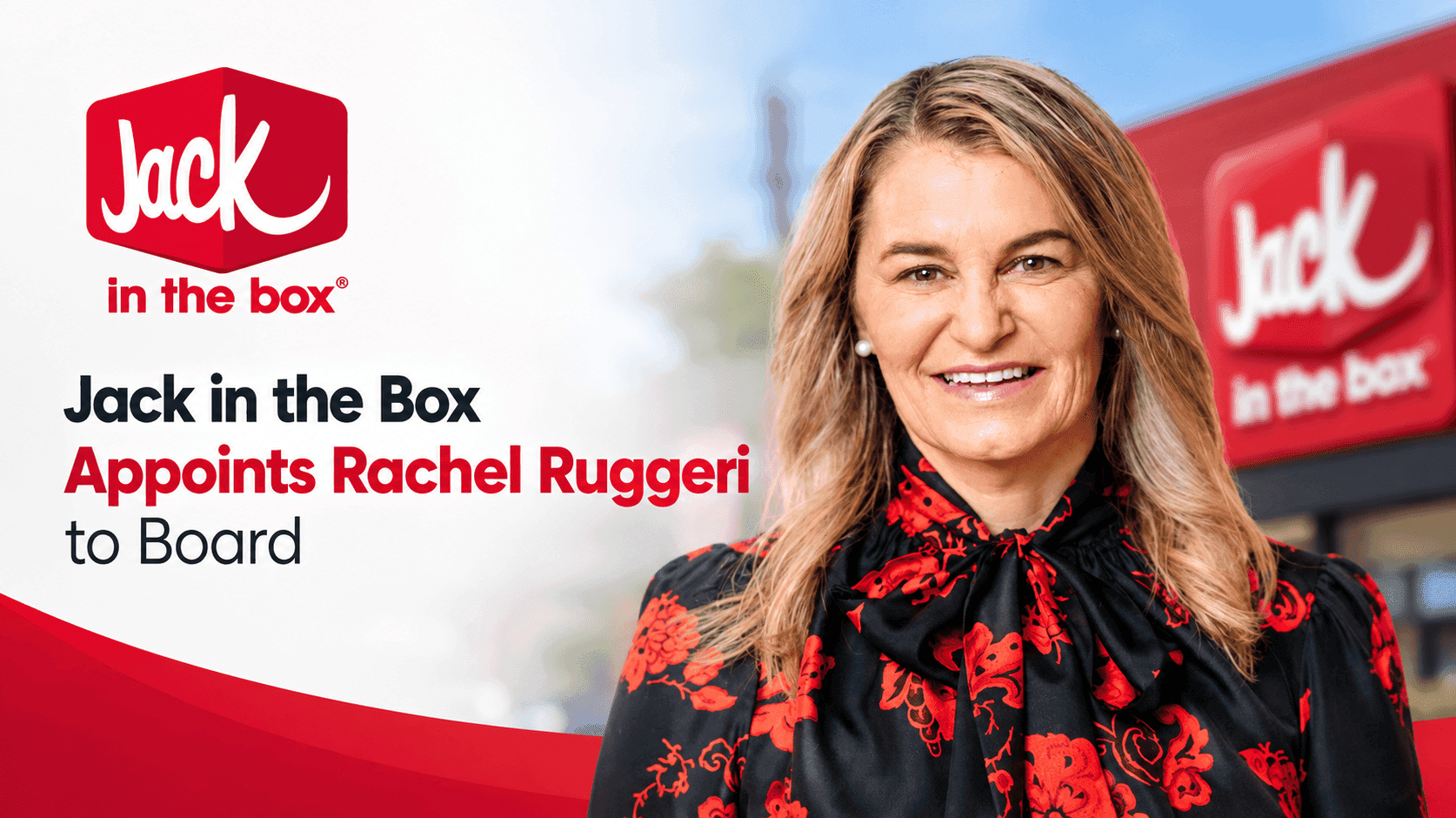
Jack in the Box names Rachel Ruggeri to its board as Michael Murphy retires, amid a CEO transition and deal with investor GreenWood.
Sep 21, 2026

Improve restaurant Google Maps rankings by optimizing your business profile, selecting accurate categories, gathering reviews, adding photos, and strengthening local relevance signals.
Sep 21, 2026

Restaurant inventory tracking helps owners monitor stock, control food costs, reduce waste, improve purchasing, and make informed operational decisions.
Sep 21, 2026

Restaurant owners can significantly reduce restaurant costs by leveraging technology across inventory, labor, procurement, forecasting, and administrative operations for better profit margins.
Sep 18, 2026

Understand how to forecast restaurant revenue and expenses with methods for sales projection, cost scaling, fixed-cost planning, and risk buffering.
Sep 18, 2026

Unlock Exclusive Access To Webinars, Events, And The Latest News For Free!
Crunch, Bodybar Pilates, and UFC Gym share disciplined playbooks: strong presales, premium upsells, and capital-backed operators fueling rapid, profitable growth.

Photo by Humphrey M
At Franchise Times’ inaugural Fitness Finance & Growth Conference in Chicago, three familiar names laid out a simple, high-discipline recipe for expansion: get presales right, invest where the consumer can feel it, and back operators with capital and playbooks.
Daniel Gallagher of Crunch Fitness, Kamille McCollum of Bodybar Pilates, and Adam Sedlack of UFC Gym spoke to a room of growth-minded operators at the Loews Hotel from May 18 to 20, tying rapid openings and stronger unit economics to a clear promise at the front door and premium services once a member walks in.
Gallagher’s update on Crunch set the tone. The brand has more than tripled its EBITDA between 2018 and 2025 while adding units under his eight-year stewardship, with Crunch 3.0 rolling out as Leonard Green & Partners assumes a majority stake.
The other force he pointed to sits on the franchisee side: “They have banks behind them; they have [private equity] money behind them.” That access, he said, means “a lower-risk platform for expansion.”
Bodybar Pilates, founded by Matt and Kamille McCollum, has grown to 84 studios and is pouring energy into standardized training, a learning management system, and in-house real estate support to keep quality tight as it scales.
UFC Gym is rebuilding rhythm after a challenging franchise acquisition that stalled growth, with Sedlack leaning on what he calls “professional emotional intelligence” to make sure expansion decisions match member expectations and the brand’s premium lens.
The mechanics behind the momentum are refreshingly specific. Crunch 3.0 layers new fitness modalities with recovery-based amenities designed to upsell higher-priced memberships. National marketing outlay climbed from six million dollars in 2019 to more than thirty million dollars this year, and presales now average over 6,000 members within thirty days of opening, which is reshaping the revenue mix toward higher-margin offerings.
Bodybar’s in-house real estate team cut the average sold-to-open timeline from fifteen months to ten, making room for thirty-five additional studios before December 31, 2026. Promotional events have nudged average presales from 175 to 225 members, and the brand launched its first national commercial across streaming platforms.
UFC Gym is threading wellness into the core experience. Fifteen recovery centers now offer hyperbaric oxygen therapy, cryotherapy, red light, and compression services, each generating approximately fifty thousand dollars in additional monthly revenue. A recent acquisition of NextGen MD Scientific adds another layer, with the first two clinic-style sites scheduled for July 2026 and forecast to generate one hundred thousand dollars each month.
The operators’ voices carried the throughline. “We have franchisees that are more sophisticated in our portfolio, and they’re well capitalized,” Gallagher observed, tying Crunch’s growth velocity to better banking relationships and private equity backing. McCollum was candid about onboarding new owners who love wellness but have never run a P&L.
“They might be a health and wellness enthusiast, but they don't know how to manage staff. They don't know how to run a studio. They may not even know what a P&L is, which is wild. You have to have all of these trainings, creating those on the front end.”

Sedlack framed UFC Gym’s reset through the lens of the athletes who built the brand. “If you think about the UFC brand, it's these incredible athletes that maximize performance through nutrition, training and making sure they supplement their nutrients with what is required. We're positioning our gyms to do that,” he said, while noting the need to avoid “over-messaging” to the average member.
The market backdrop is a steady tailwind. According to Statista, the Gym & Training sector in the United States is projected to reach US$10.78 billion in revenue in 2025, with growth continuing through 2029. Worldwide, the category is expected to generate approximately US$34.20 billion in the same period.
Consumer appetite for varied experiences, from boutique Pilates to recovery modalities, is steering franchise investment toward concepts that blend thoughtful programming with add-on services members are willing to pay for. The Chicago gathering echoed that rhythm, spotlighting how structure, ample capital, and a clear consumer promise can speed growth while reinforcing profitability.

There are open questions that deserve careful handling. Independent benchmarking on the ROI of hyperbaric and cryotherapy within franchised gyms remains limited, so system-wide projections will need real data behind them. The regulatory ground for peptide-based treatments is still shifting, with rules likely to vary by state, which raises compliance considerations for any clinic-style offering.
Franchisee readiness is uneven too. Strong operators are embracing training and capital plans, but others may struggle with standardized P&L expectations and operational guardrails.

Even with those caveats, the playbook that emerged in Chicago feels pragmatic. Disciplined presales, serious franchisee enablement, and high-margin ancillary services can accelerate openings and shore up unit economics, as long as operators keep execution tight and the member promise plain and consistent.
With the U.S. gym and training market targeting double-digit revenue gains, brands that balance structure, capital support, and targeted upsells look best positioned to meet rising demand while protecting consistency and profitability.