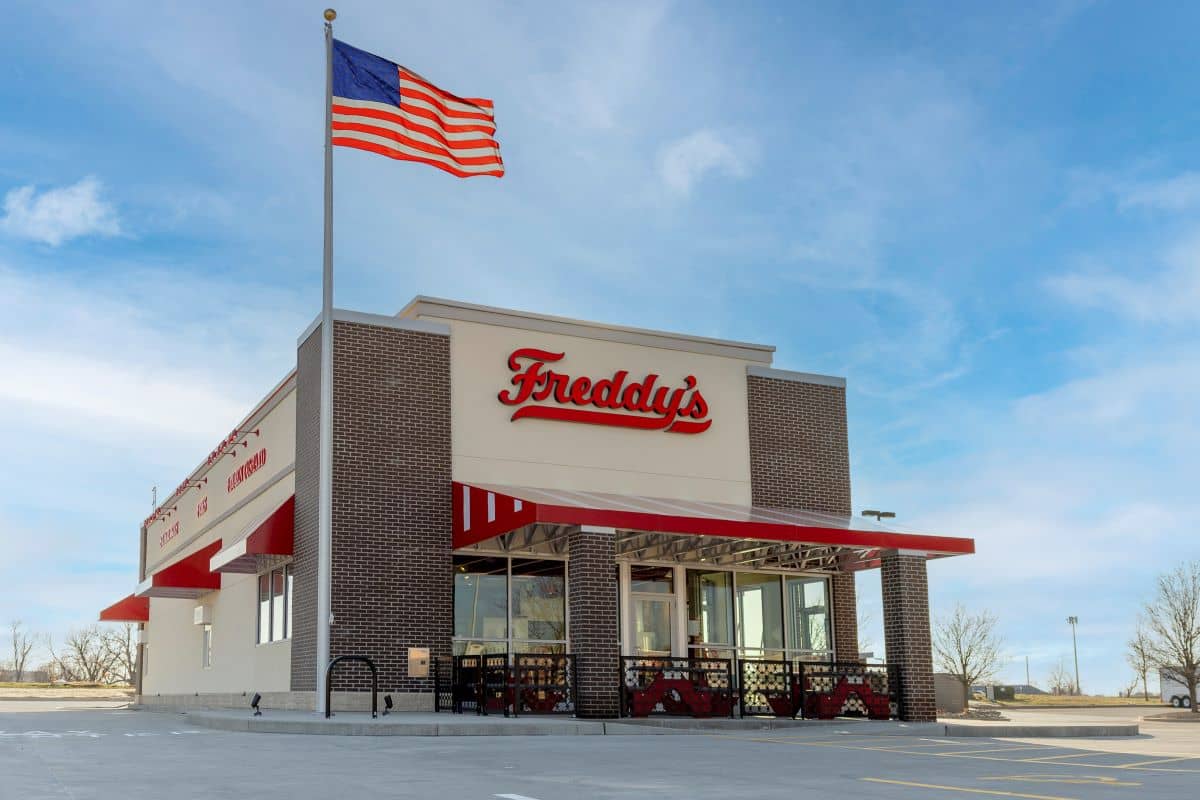
Freddy's Hits 600 Restaurants With Smaller Format Strategy
Freddy's celebrates 600 restaurants with a smaller, drive-thru-free format in Beaufort, SC, reshaping its real estate, tech, and pricing strategy.
Franchising
Oct 16, 2026
Freddy's celebrates 600 restaurants with a smaller, drive-thru-free format in Beaufort, SC, reshaping its real estate, tech, and pricing strategy.
Oct 16, 2026
Inspire Brands taps Jenna Bromberg as Arby's new CMO while Jeff Baker shifts to lead culinary innovation in a quiet leadership reshuffle.
Oct 16, 2026
Five Guys partners with Full Day Productions and Lost Tribe Creative for On The Line, a docuseries on Prime Video following its global crew competition.
Oct 16, 2026
AI helps restaurant owners streamline back-office management, automate administrative tasks, improve accuracy, control costs, and make smarter business decisions.
Oct 14, 2026
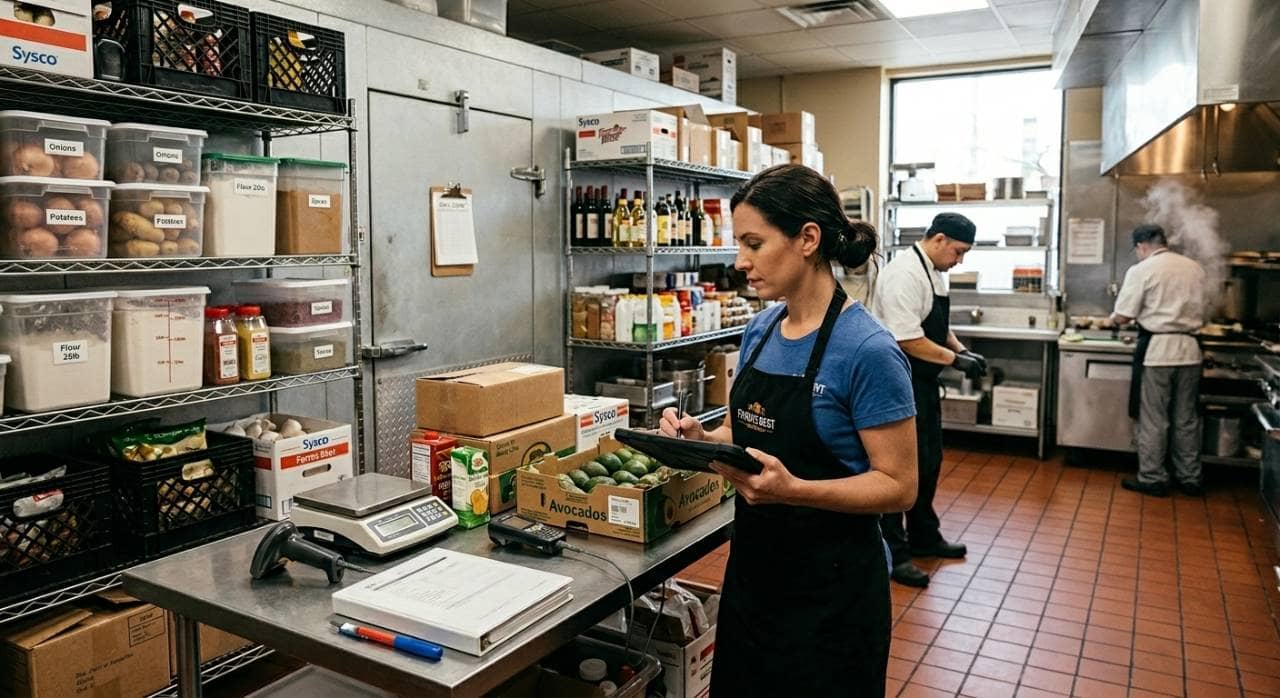
Learn how to forecast restaurant inventory using sales data, demand trends, and stock tracking to reduce food waste, control costs, and improve profitability.
Oct 14, 2026
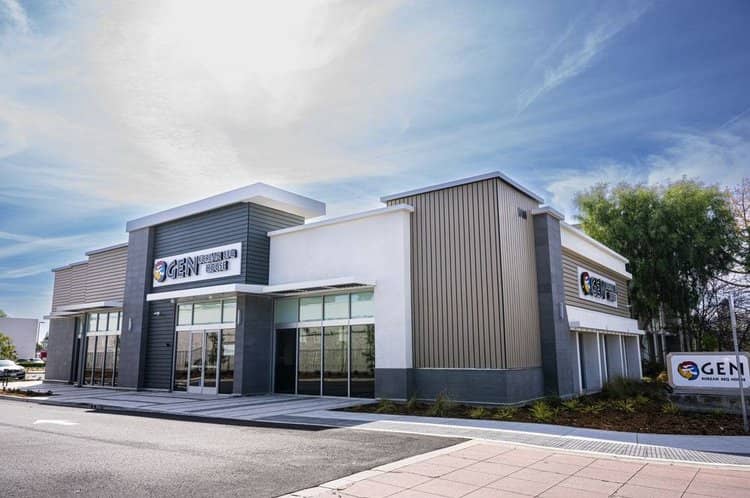
Gen Restaurant Group sells all 47 Gen Korean BBQ locations to Chubby Cattle Group for $100 million, keeping its brand and CPG business.
Oct 14, 2026
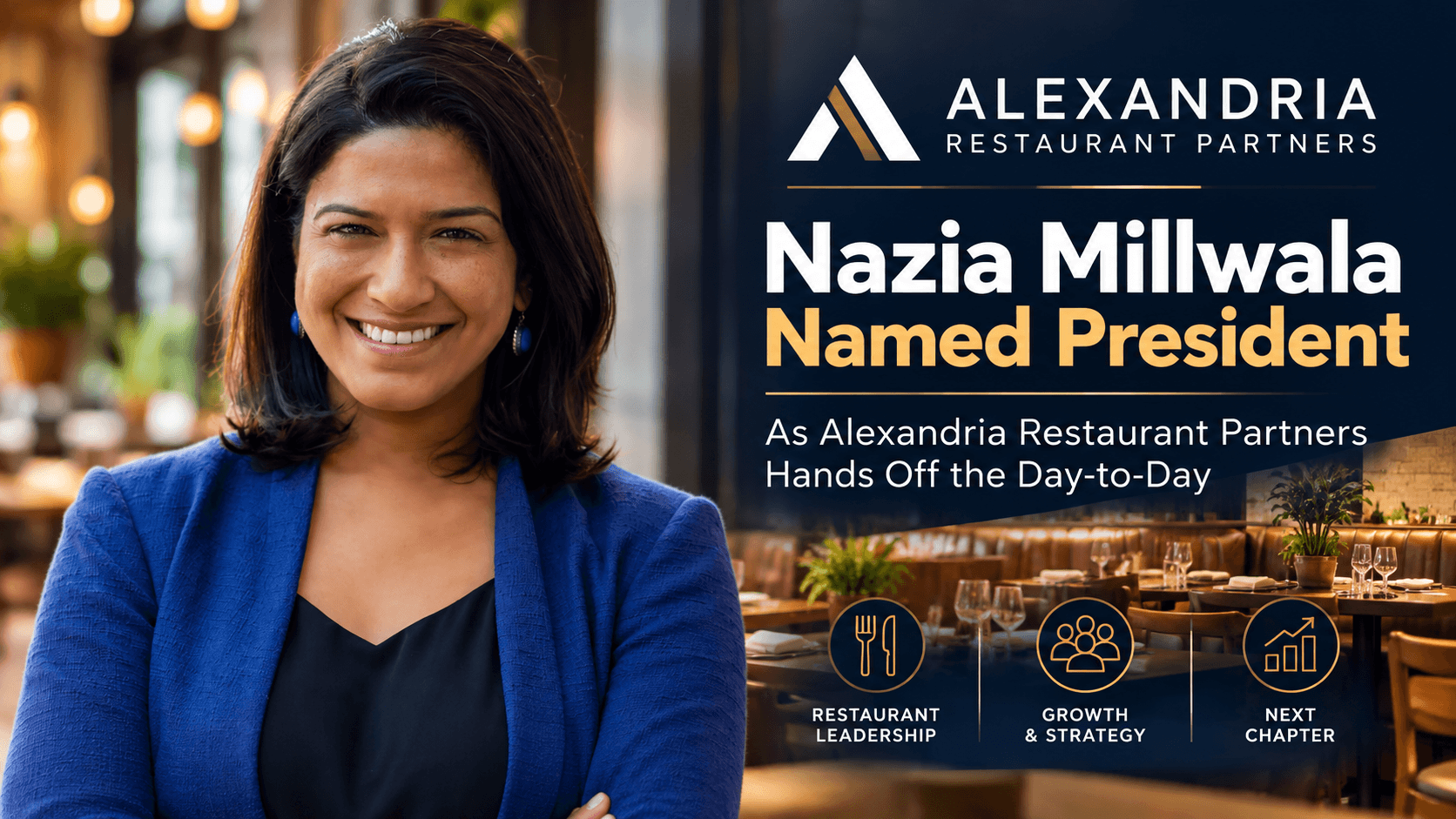
Alexandria Restaurant Partners names Nazia Millwala president, succeeding founders in a planned leadership transition across Virginia and Orlando.
Oct 14, 2026
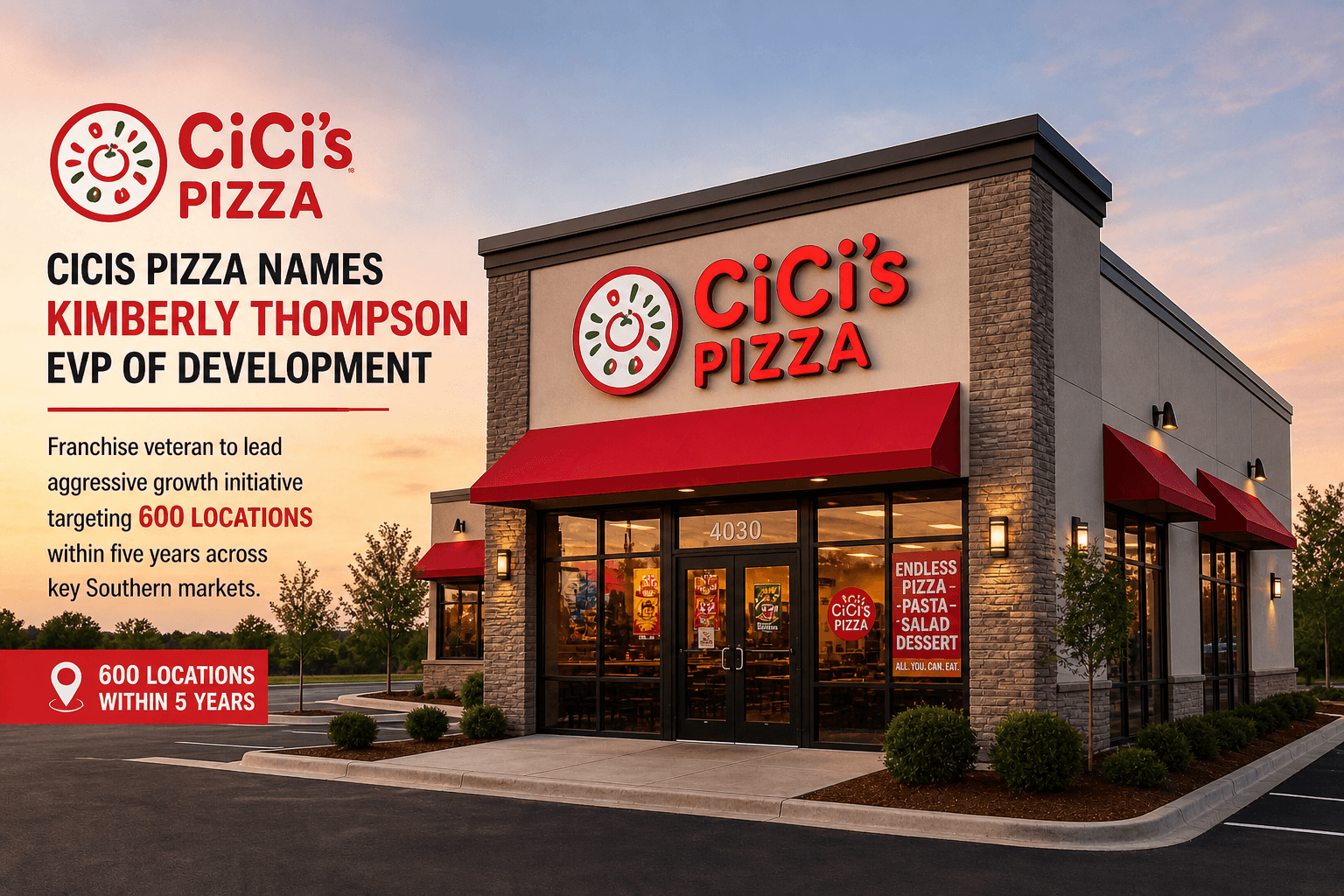
Cicis Pizza names franchise veteran Kimberly Thompson EVP of Development, targeting 600 locations within five years across key Southern markets.
Oct 14, 2026
Savory Fund closes Fund III at $201.5 million, drawing bank capital for the first time as it bets on repeating the success of Swig and Mo' Bettahs.
Oct 13, 2026
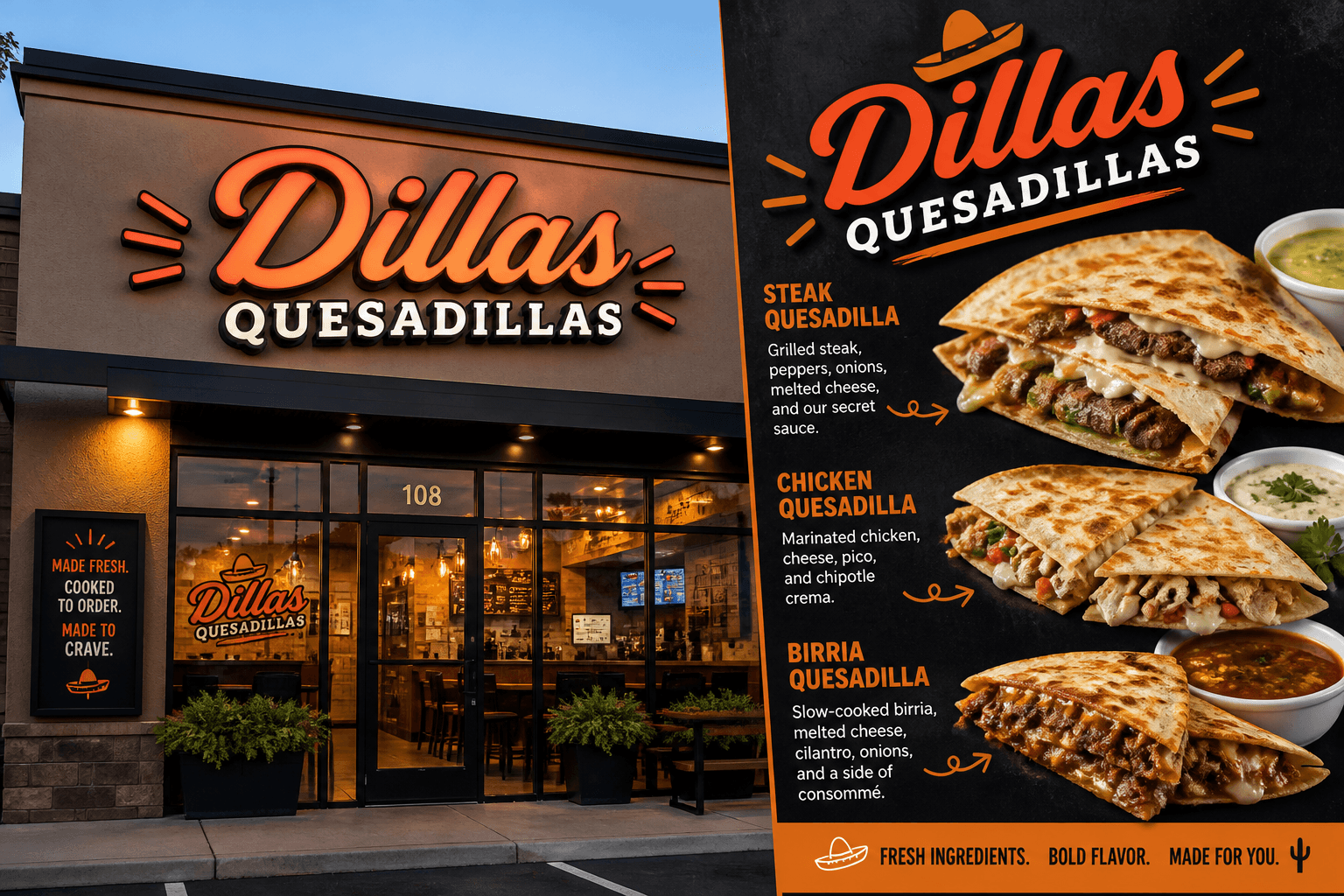
Dillas Quesadillas hires Michael Mabry as its first-ever COO to lead operations, marketing and franchise sales on the path to 50 locations by 2028.
Oct 13, 2026

Unlock Exclusive Access To Webinars, Events, And The Latest News For Free!
Freddy's celebrates 600 restaurants with a smaller, drive-thru-free format in Beaufort, SC, reshaping its real estate, tech, and pricing strategy.
On a warm fall morning in October, Freddy's leadership gathered with oversized red scissors and a long ribbon to cut in the brand's first restaurant in Beaufort, South Carolina. Staff members and C-suite executives posed beside three golden balloons shaped into numerals marking a company-wide milestone: 600 units systemwide, for a chain that traces its roots back to Wichita, Kansas, in 2002. The Beaufort restaurant itself tells a different story than the number does. It's a 2,300-square-foot endcap with no drive-thru, seating 65 guests, with an outdoor patio, run by longtime franchisee Charleston Custard.
Smaller doesn't mean stripped down, at least not by design. Freddy's worked to preserve its dine-in character inside the compact footprint, installing movable seating built to flex for families, teams, and larger groups. CEO Chris Dull points to dine-in transactions approaching 40 percent of sales as proof the brand has recovered from the pandemic-era lurch toward off-premises ordering. That detail recasts the Beaufort opening as something more than a round-number celebration. It's a live test of whether a shrunken box can still deliver the full Freddy's experience.
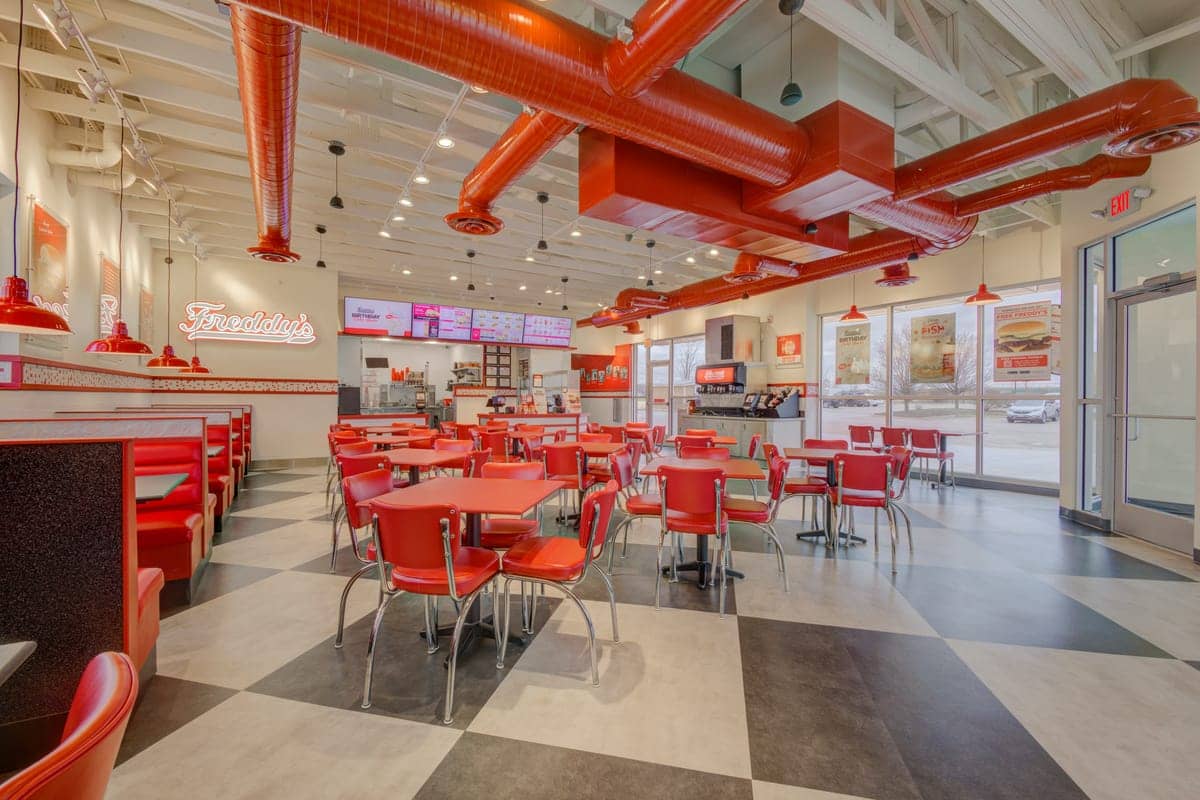
Running a restaurant without a drive-thru required rewriting pieces of the operational playbook. Executive chef and vice president of training and innovation Rick Petralia says the Beaufort location devotes more space to digital order pickup and leans harder on front-counter staffing, since customer interaction now carries weight that a drive-thru window would normally absorb. Kitchen training materials were customized for the restaurant's different equipment layout, and experienced trainers were sent in ahead of opening day to run simulated high-volume shifts alongside cross-training. Petralia boils the philosophy down to one line: "All they care about is getting the great food and great hospitality they came for." Treating a 2,300-square-foot endcap as a fully realized restaurant rather than a scaled-down compromise is, in its own quiet way, the whole point.
The format shift traces back to a deliberate rethinking of real estate. Opening a Freddy's used to mean buying land and building from the ground up, a path that was slow and expensive by nature. Dull puts the old math plainly: "Six years ago, Freddy's was a franchise opportunity for folks who could afford to buy an acre of land and build a building, and that's a very meaningful investment. Whereas, today, with a format like this restaurant, you don't have to buy an acre of land, you don't have to build a building. You have to finish out an interior, bringing that investment level meaningfully down." Chief development officer Andrew Thengvall says roughly half of the current development pipeline now consists of endcap, inline, or second-generation spaces, up from just 10 to 15 percent a year earlier. Changes to construction methods and equipment procurement have trimmed another $200,000 to $300,000 off building costs without altering the customer experience, he says. "It's quicker to open. It's a lower investment, and frankly, it's easier to operate." Among Freddy's roughly 40 corporate restaurants, the six most recently developed have used non-ground-up formats, and more than 50 franchised locations now sit in buildings they didn't construct from scratch.
Cheaper real estate doesn't just save money, it opens doors into trade areas the old model effectively locked out. Freddy's had historically clustered on the outskirts of growing communities, where land was easier to assemble. Leasing existing retail space lets the brand compete for established urban and suburban addresses it once couldn't afford to chase. "The landscape of opportunities for us is 10x what it was just a few years ago," Dull says. The scale backs him up: Freddy's ranks as the 14th-largest burger chain in America, with $1.04 billion in U.S. systemwide sales last year, and the company opened a net of 124 restaurants across 2023, 2024, and 2025, with roughly 60 more planned for 2026. More than 450 restaurant commitments sit in the development backlog, spread across roughly 80 franchise operating groups in markets including Washington, California, Florida, South Carolina, and the Philadelphia area. Thengvall says new and existing franchisees are splitting those commitments roughly evenly. Growth still has guardrails, though. "There's nothing that hinders your growth more than an unprofitable franchisee or an unprofitable location, so we try to avoid those," he says. Dull thinks the lower barrier to entry could eventually push annual openings closer to 100 restaurants, pointing to rising interest from operators already running other concepts.
Supporting that pace falls to the technology side of the business. Chief information officer Todd Paladini says Freddy's now uses visual kitchen display systems that walk employees through prep instructions step by step, shortening training time across restaurants that no longer share identical layouts. The company is also exploring artificial intelligence for sales forecasting, employee scheduling, and proactive equipment support, the kind of behind-the-scenes applications meant to catch problems before they become visible to a guest. A pilot of self-service ordering kiosks is set to begin at a corporate restaurant in University City, Missouri, the week after the Beaufort opening, and Paladini sees eventual room for AI-powered voice ordering layered into digital platforms, provided it earns its place rather than just adding novelty. His summary of the IT philosophy is almost understated: "We try to make it predictable in terms of IT. It's repeatable, it's scalable, and at the end of the day, it's secure."
All of this sits alongside a pricing strategy built for a pressured consumer, and a product the company refuses to touch. Traffic has trended positive year over year even as sales stayed roughly flat, a pattern Dull attributes to spending pressure that's pushed Freddy's toward affordability rather than traditional discounting. The Steakburger Taco, launched earlier this year and priced from about $2.99 to $4.49 depending on market, now anchors a four-item Everyday Value menu being tested in nearly 100 restaurants ahead of a planned systemwide rollout in the first quarter of 2027. Dull says the value items are pulling double duty, bought as standalone meals by some guests and tacked onto bigger orders by others. Beverage innovation is the other growth lever Petralia is watching closely, with tests underway involving energy drinks, additional soda flavors, and fruit or boba add-ins; a recently opened restaurant in Kalamazoo, Michigan, has reportedly been selling about 100 Freddy's refreshment beverages a day. Menu simplification will continue into 2027, guided by a line Petralia keeps close: "We need to do things that don't mess with the overall flow. It can't hinder the experience of 95 percent of guests." Everything else, Dull insists, stays exactly as it was. "We haven't changed a single spec of anything that we sell to our guests, from our buns to our beef to our produce," he says. "We've kept everything exactly the same because I think you would be foolish to start monkeying with something that had built 20 years of fan base." As Freddy's closes in on its 25th anniversary in 2027, that's the line the company seems intent on holding: rethink the box, the tech, and the price point as much as growth demands, but leave the food that built the fan base alone.