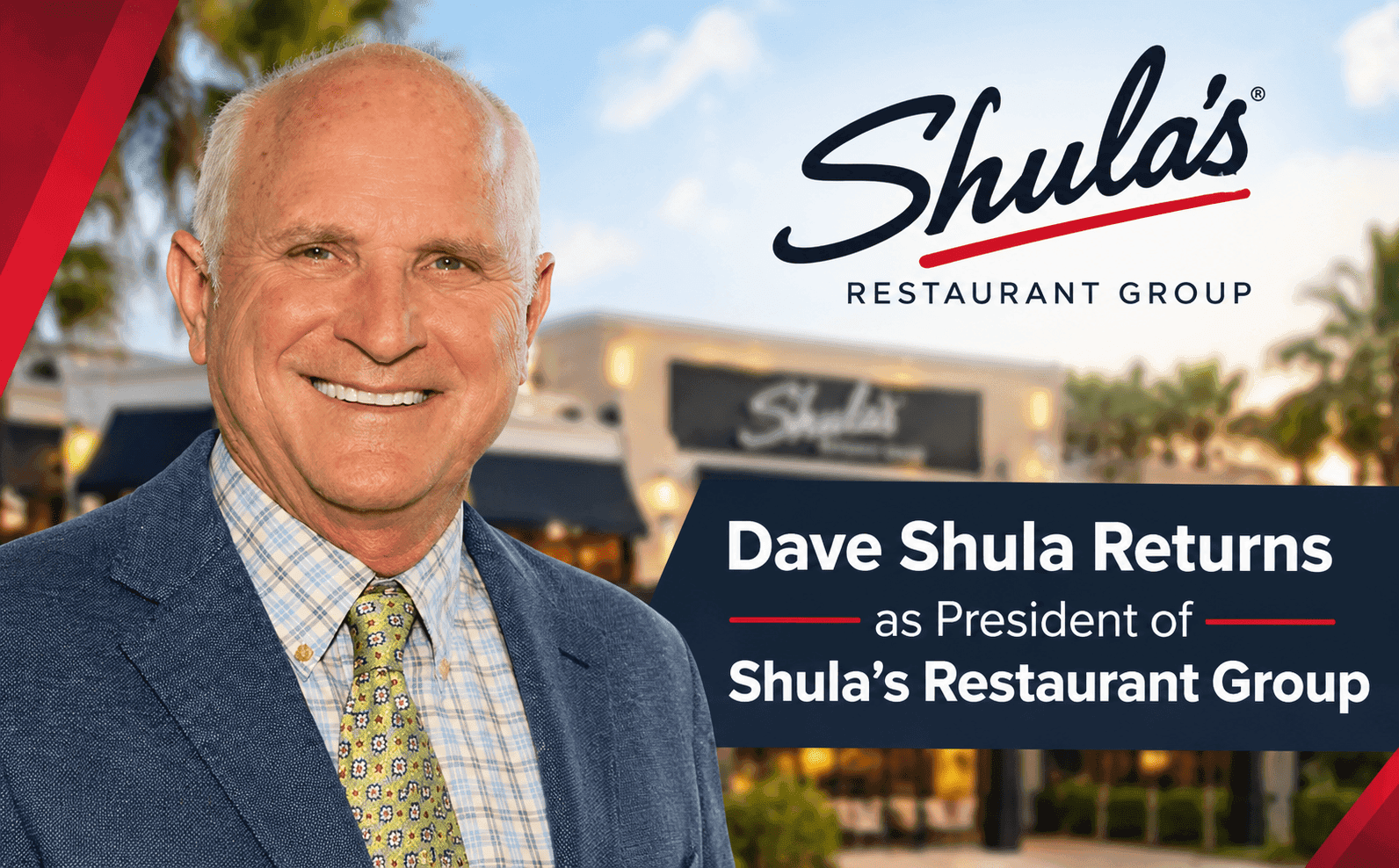
Dave Shula Returns as President of Shula's Restaurant Group
Dave Shula rejoins Shula's Restaurant Group as president, leading growth into Palm Beach Gardens and a 2027 Thomasville, Georgia expansion.
News
Sep 23, 2026
Dave Shula rejoins Shula's Restaurant Group as president, leading growth into Palm Beach Gardens and a 2027 Thomasville, Georgia expansion.
Sep 23, 2026
McDonald's commits $8.5 billion through 2036 to modernize restaurants, boost cash flow by $100,000 per store, and grow chicken and beverage sales.
Sep 23, 2026
WKS Restaurant Group promotes Jay Spongberg to president and COO after he helped grow the company from 65 to 382 restaurants over 16 years.
Sep 23, 2026

Smokey Mo's BBQ names Von Dawson, a Dine Brands veteran, as VP of Franchise Development to lead its Texas expansion strategy.
Sep 23, 2026
.png&w=3840&q=70)
Meritage Hospitality's Chapter 11 filing pulls 5% of Wendy's U.S. stores into bankruptcy, exposing cracks in franchising's bigger-is-safer bet.
Sep 21, 2026
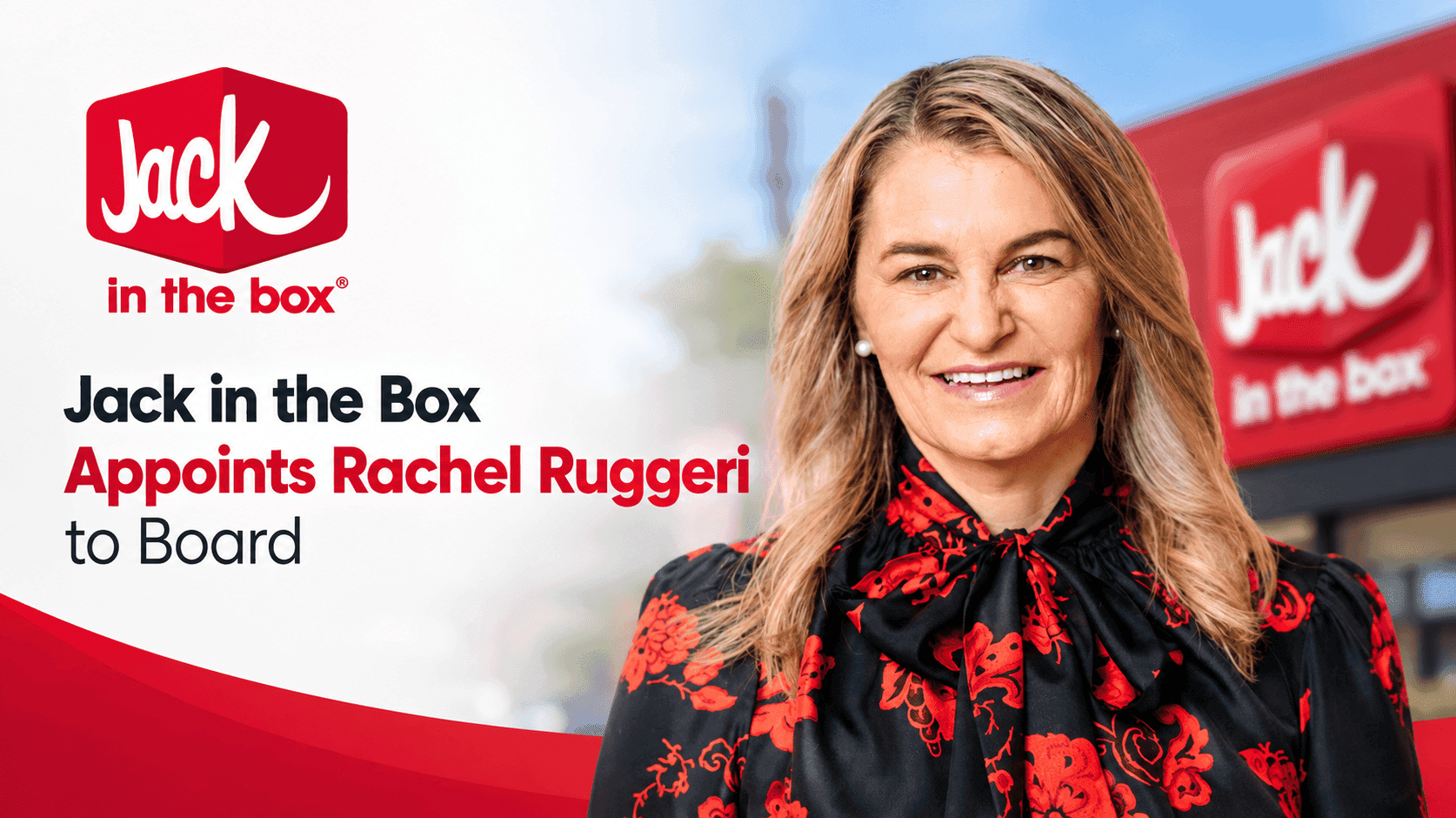
Jack in the Box names Rachel Ruggeri to its board as Michael Murphy retires, amid a CEO transition and deal with investor GreenWood.
Sep 21, 2026
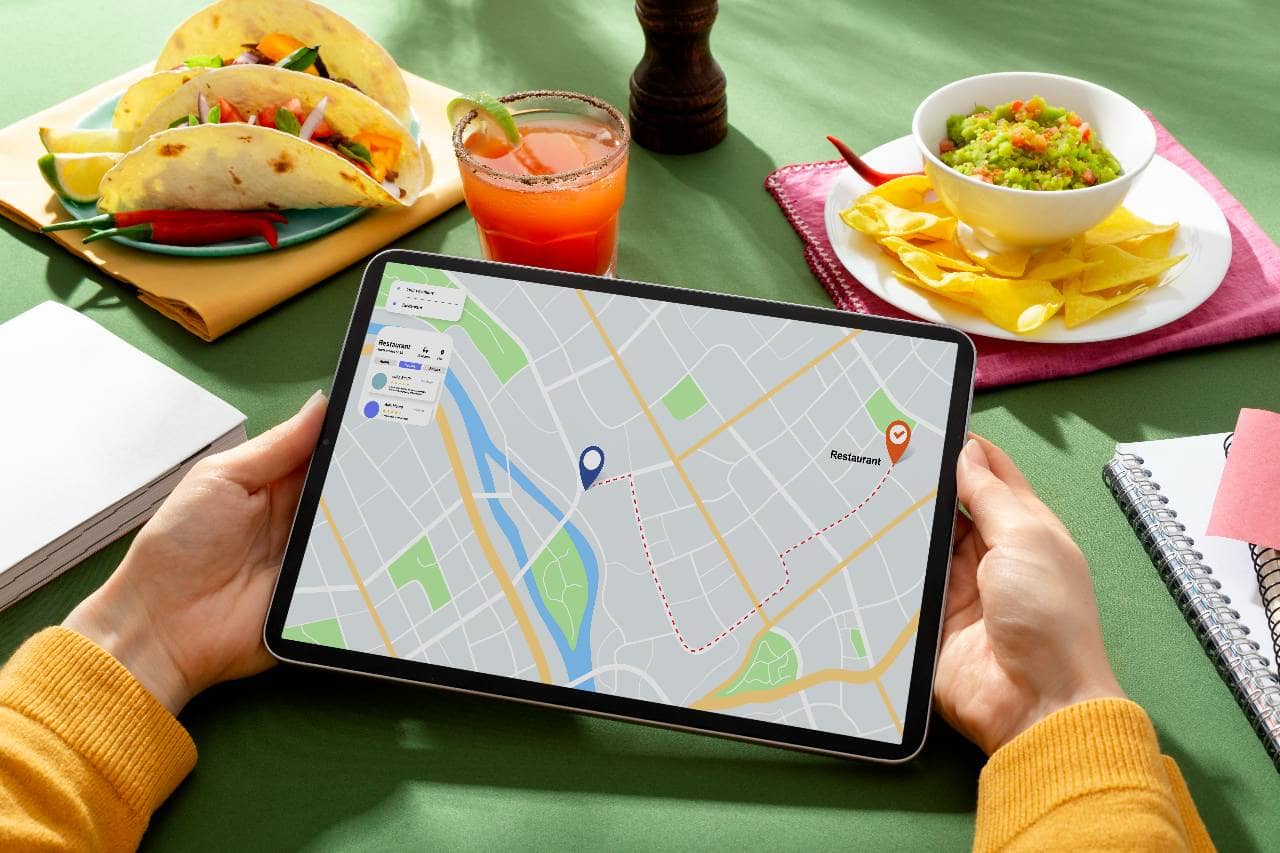
Improve restaurant Google Maps rankings by optimizing your business profile, selecting accurate categories, gathering reviews, adding photos, and strengthening local relevance signals.
Sep 21, 2026

Restaurant inventory tracking helps owners monitor stock, control food costs, reduce waste, improve purchasing, and make informed operational decisions.
Sep 21, 2026

Restaurant owners can significantly reduce restaurant costs by leveraging technology across inventory, labor, procurement, forecasting, and administrative operations for better profit margins.
Sep 18, 2026

Understand how to forecast restaurant revenue and expenses with methods for sales projection, cost scaling, fixed-cost planning, and risk buffering.
Sep 18, 2026

Unlock Exclusive Access To Webinars, Events, And The Latest News For Free!
Brian Niccol launches a four-point turnaround to restore Starbucks' welcoming coffeehouse feel, speed, and storytelling.

Photo by Hieu Tran
Brian Niccol has begun his first week as CEO of Starbucks, stepping into a moment when momentum has slipped and the brand's rhythm wobbles. He addressed customers, employees, and investors in an open letter that lays bare a blunt truth: the company has drifted from its core identity as a welcoming coffeehouse. The message is plain, and it's a signal of intent. While many customers still feel the chain's signature magic daily, the experience in too many U.S. locations has started to feel transactional, with menus that overwhelm, products that deviate, and waits that drag on. Niccol is here to reanchor the brand, fast.
Niccol inherits a company that has endured leadership churn since 2022 and has just weathered two quarters of weaker sales and traffic in its two largest markets. His background from Chipotle is cited as a credible marker for turning scale and service discipline into real, repeatable results. “Bloomberg described the appointment as a pivotal leadership change,” and the early outreach aims to build credibility with customers and managers alike. The first days are about setting expectations, not slogans: a turnaround that is outward-facing and grounded in front-line action across thousands of stores.
Four-point plan centers on four pillars: empowering baristas with the best tools and decision rights; meeting customer expectations on quality and service; elevating in-store experience to recapture the welcoming atmosphere; and refining brand storytelling to sharpen the public narrative. Each pillar targets gaps from front-line execution to the story told outside the four walls. “These moments are opportunities for us to do better,” Niccol says, framing a customer-first cadence for the months ahead.
- Empowering partners – invest in people and processes, not just equipment, to build long-term loyalty.
- Quality and service discipline – streamline menus, improve consistency, and reduce waits.
- Welcoming store environment – recapture the cafe as a community hub with speed and warmth.
- Brand storytelling clarity – ensure actions align with messages, both in-store and publicly.
These steps become measurable targets tied to customer experience metrics and service timing.
Niccol's onboarding package drew strong attention as a clear signal that Starbucks is serious about a rapid, high-impact turnaround. The package is reported around $85 million in value, designed to secure a leader capable of executing changes across thousands of stores. Axios summarized the components, detailing a base salary of $1.6 million per year, a $10 million sign-on bonus, and a one-time equity replacement grant estimated at $75–$80 million, among other awards. The emphasis on equity-based compensation signals the bid to align leadership with long-term performance.
Beyond the money, early signals matter: investors and analysts are watching for a tangible cadence that translates plan talk into day-to-day store performance. Coverage noted that the market will judge on the speed of service, order accuracy, and the alignment of field leadership with the new strategy. In the weeks ahead, the company will need to show store-level discipline, a clearer brand voice, and a measurable lift in traffic as a result. The first 100 days are framed as a critical period to prove that the backers' confidence is earned, not promised.
Beyond the United States, Niccol has signaled a global lens for Starbucks’ turnaround. China is a priority market where momentum had slowed, and renewed emphasis on store experience, service quality, and product relevance could help regain growth. The global view also respects local contexts, notably in the Middle East, where brand perception intersects with regional realities. Starbucks frames its global plan as a balance between speed, modernization, and cultural nuance, aiming to keep the cafe as a community hub even as formats and seating capacity evolve.

Investor-day presentations in 2026 highlighted modernization: newer store formats, retrofitting, and faster espresso production. AP coverage noted Starbucks intends to open hundreds of new U.S. stores and add seating to thousands of existing locations, signaling a broader footprint refresh. Niccol’s leadership is framed as a vehicle to deliver near-term improvements and longer-term returns for shareholders, with a global push that ties operational discipline to a clearer, more inviting customer experience.
If Niccol’s blueprint translates into tangible improvements in store atmosphere, service speed, and brand storytelling, Starbucks could reestablish its role as a community coffeehouse rather than a transactional pit stop. Early signals from investor-day coverage suggest a willingness to accelerate modernization, new store formats, retrofitting programs, and faster espresso production, while preserving the core social appeal that has drawn customers for decades. The broader industry will watch how the company balances scale with human connection at the point of sale.
The test, in the end, is whether the magic Niccol seeks to revive becomes a consistent, observable reality in daily store visits and digital interactions. If execution catches up to rhetoric, the reset could ripple through the industry, shaping staffing models, menu philosophy, and the pace of modernization, without sacrificing the human connection that defines Starbucks at its best.
