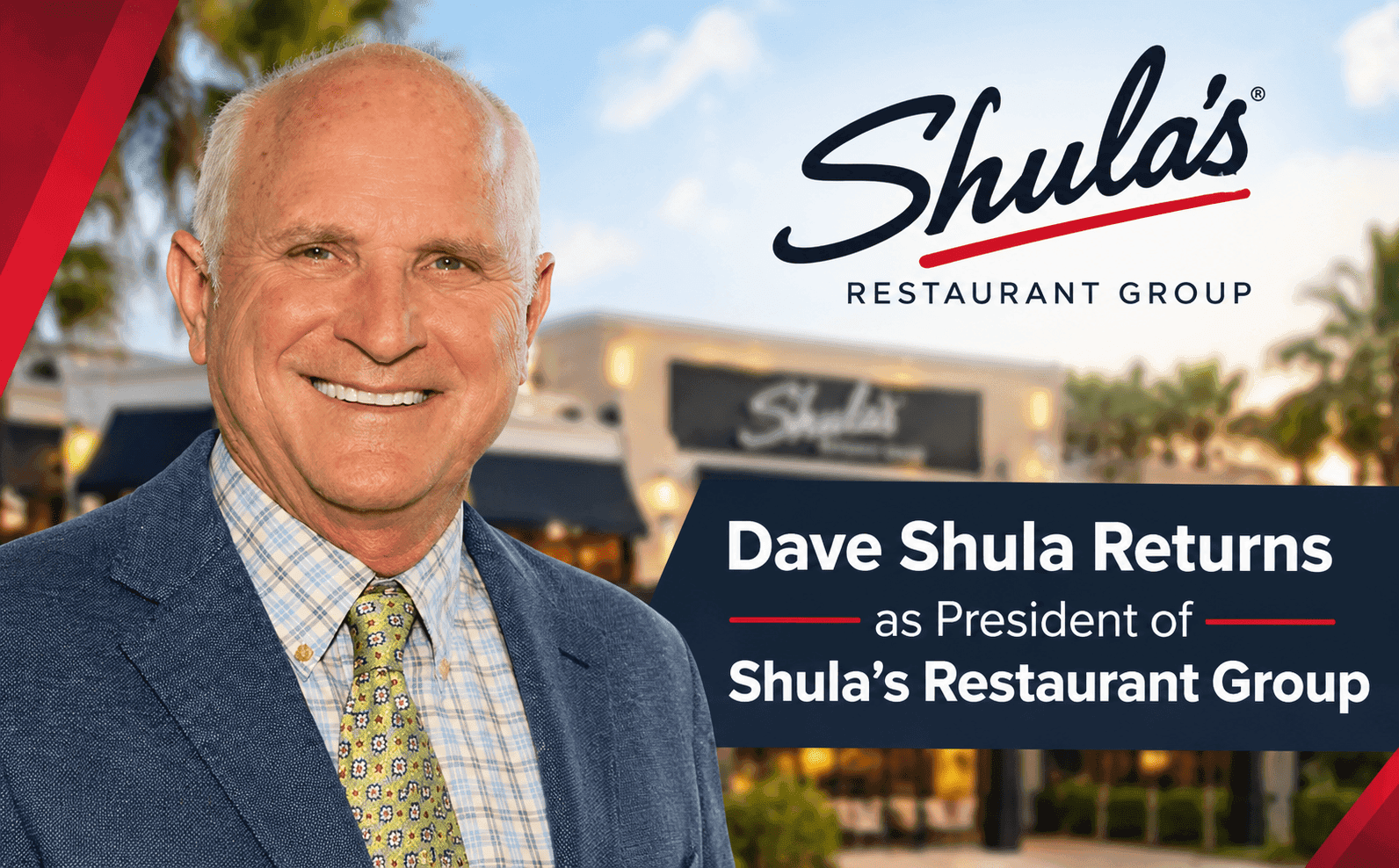
Dave Shula Returns as President of Shula's Restaurant Group
Dave Shula rejoins Shula's Restaurant Group as president, leading growth into Palm Beach Gardens and a 2027 Thomasville, Georgia expansion.
News
Sep 23, 2026
Dave Shula rejoins Shula's Restaurant Group as president, leading growth into Palm Beach Gardens and a 2027 Thomasville, Georgia expansion.
Sep 23, 2026
McDonald's commits $8.5 billion through 2036 to modernize restaurants, boost cash flow by $100,000 per store, and grow chicken and beverage sales.
Sep 23, 2026
WKS Restaurant Group promotes Jay Spongberg to president and COO after he helped grow the company from 65 to 382 restaurants over 16 years.
Sep 23, 2026

Smokey Mo's BBQ names Von Dawson, a Dine Brands veteran, as VP of Franchise Development to lead its Texas expansion strategy.
Sep 23, 2026
.png&w=3840&q=70)
Meritage Hospitality's Chapter 11 filing pulls 5% of Wendy's U.S. stores into bankruptcy, exposing cracks in franchising's bigger-is-safer bet.
Sep 21, 2026
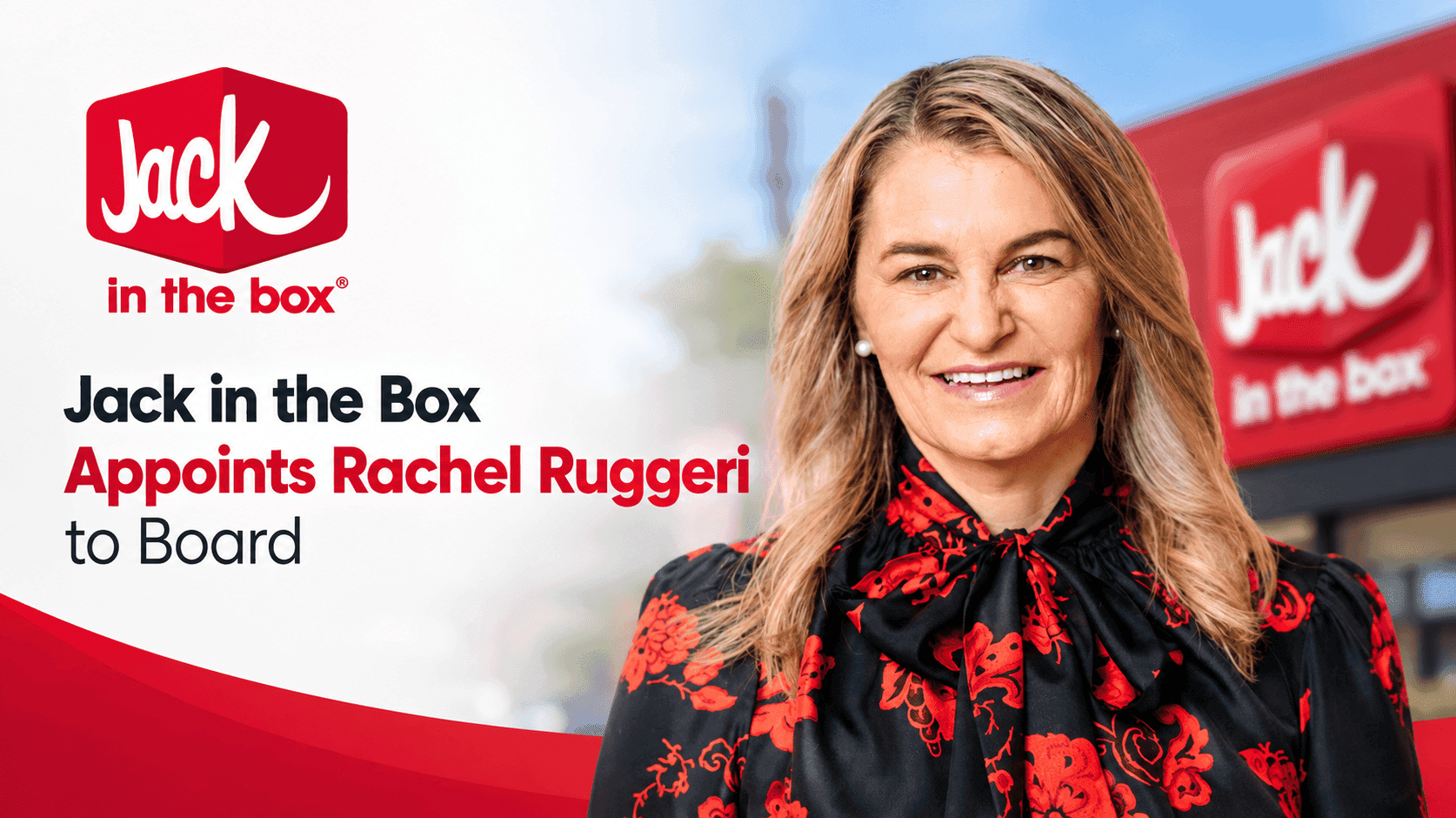
Jack in the Box names Rachel Ruggeri to its board as Michael Murphy retires, amid a CEO transition and deal with investor GreenWood.
Sep 21, 2026

Improve restaurant Google Maps rankings by optimizing your business profile, selecting accurate categories, gathering reviews, adding photos, and strengthening local relevance signals.
Sep 21, 2026

Restaurant inventory tracking helps owners monitor stock, control food costs, reduce waste, improve purchasing, and make informed operational decisions.
Sep 21, 2026

Restaurant owners can significantly reduce restaurant costs by leveraging technology across inventory, labor, procurement, forecasting, and administrative operations for better profit margins.
Sep 18, 2026

Understand how to forecast restaurant revenue and expenses with methods for sales projection, cost scaling, fixed-cost planning, and risk buffering.
Sep 18, 2026

Unlock Exclusive Access To Webinars, Events, And The Latest News For Free!
Rising rates push restaurants toward sale-leasebacks to unlock cash while keeping operations steady and service warm.

Photo by Vitaly Gariev
Across the dining world, interest rates have climbed, nudging operators to rework how capital moves through kitchens and dining rooms. In a business where margins feel as delicate as a flaky pastry, sale-leasebacks have emerged as a gentle, practical solution that preserves day-to-day operations while freeing cash tied up in real estate. The model is familiar: a restaurant sells owned property to an investor and immediately continues to lease it under a long-term agreement. The result is liquidity without disruption, a quiet reserve that can fund menu updates, staff development, or expansion, without changing the brand footprint. It’s a humane, almost comforting way to balance the books when markets feel unsettled. But what does this look like in practice, and why is it attracting renewed attention now?
Notable deals illustrate the path the model can take in real life. Red Robin has executed the sale and leaseback of 27 properties in the last twelve months, raising $84 million to reduce debt, fund capital investments, and support share repurchases. In late 2022, Taco Bell completed a sale‑leaseback portfolio in Ohio valued at $18 million across seven units; a separate 2022 transaction involved a Zaxby’s portfolio in the Southeast for $13.4 million across six units. These examples show how freeing cash tied to real estate can catalyze growth, acquisitions, and debt reduction. As deals accumulate, the market gains momentum and a clearer playbook begins to emerge.
Across the industry, momentum is visible not just in headlines but in the cadence of deals that pair steady tenancy with capital flexibility. Operators who own real estate see a clear path: convert locked-up equity into free cash while preserving the brand footprint and guest experience intact. Investors are drawn to durable, income-producing tenants that can ride economic shifts, anchored by long-term leases and transparent cash flow. The Red Robin example demonstrates scale’s amplification: when a portfolio grows, so does the ability to finance new sites, upgrade equipment, or accelerate acquisitions. In kitchens and boardrooms, the sense is calm, as if a steady stream of rent payments has become a reliable companion to expansion.

Still, the broader market tilts on terms and timing. Across deals, the framework relies on long-term occupancy paired with market cap rates that reflect the price of real estate and the risk of the tenant. The result is an arbitrage for well-positioned chains: steady rent and retained operating flexibility can outpace the cost of traditional debt in a higher-rate environment. Some transactions cross the line of traditional pricing, with cap rates responding more slowly than base borrowing costs, and the byproduct being a smoother path to M&A, portfolio optimization, and development.
Higher borrowing costs have compressed profitability and constrained expansion for many operators. Today, liquidity tools that bundle long-term occupancy with ongoing operations look especially appealing. While prevailing rates sit roughly 300 to 400 basis points higher due to monetary tightening, the implied cap rates on sale-leasebacks have risen by a smaller margin, typically about 150 to 200 basis points, keeping the structure competitive with traditional debt for well-positioned chains. In practice, the market often sees sale-leasebacks trading around 13 to 15x EBITDA, with some deals edging above 16x, creating an arbitrage opportunity for quality issuers.
That pricing delta translates into meaningful choices: fund growth, accelerate unit development, or pursue acquisitions without sacrificing cash flow. For brands with stable earnings and strong real estate, the model can deliver a cost-structural edge that traditional debt simply cannot provide in a higher-rate era.
The Red Lobster episode has reignited a public conversation about real estate‑driven finance. Critics point to the risk of rent obligations gnawing at cash flow, while observers emphasize that the Red Lobster case reflects a broader set of pressures, including competitive dynamics, inflationary costs, and pandemic-era adjustments, not a verdict on sale-leasebacks themselves. Across the industry, however, the sale‑leaseback channel remains open for operators with high‑quality real estate and solid credit, even as individual stories illustrate unique dynamics.
Looking ahead, sale-leasebacks are likely to stay part of the capital toolkit for restaurants that own their real estate. They offer a path to liquidity, flexibility, and steady cash flow for M&A, branding initiatives, and growth, provided underwriting is rigorous and capital is allocated with discipline. In the warm glow of a busy kitchen, it is comforting to know there is a patient, enduring option for getting to the next round of growth without turning off the oven.