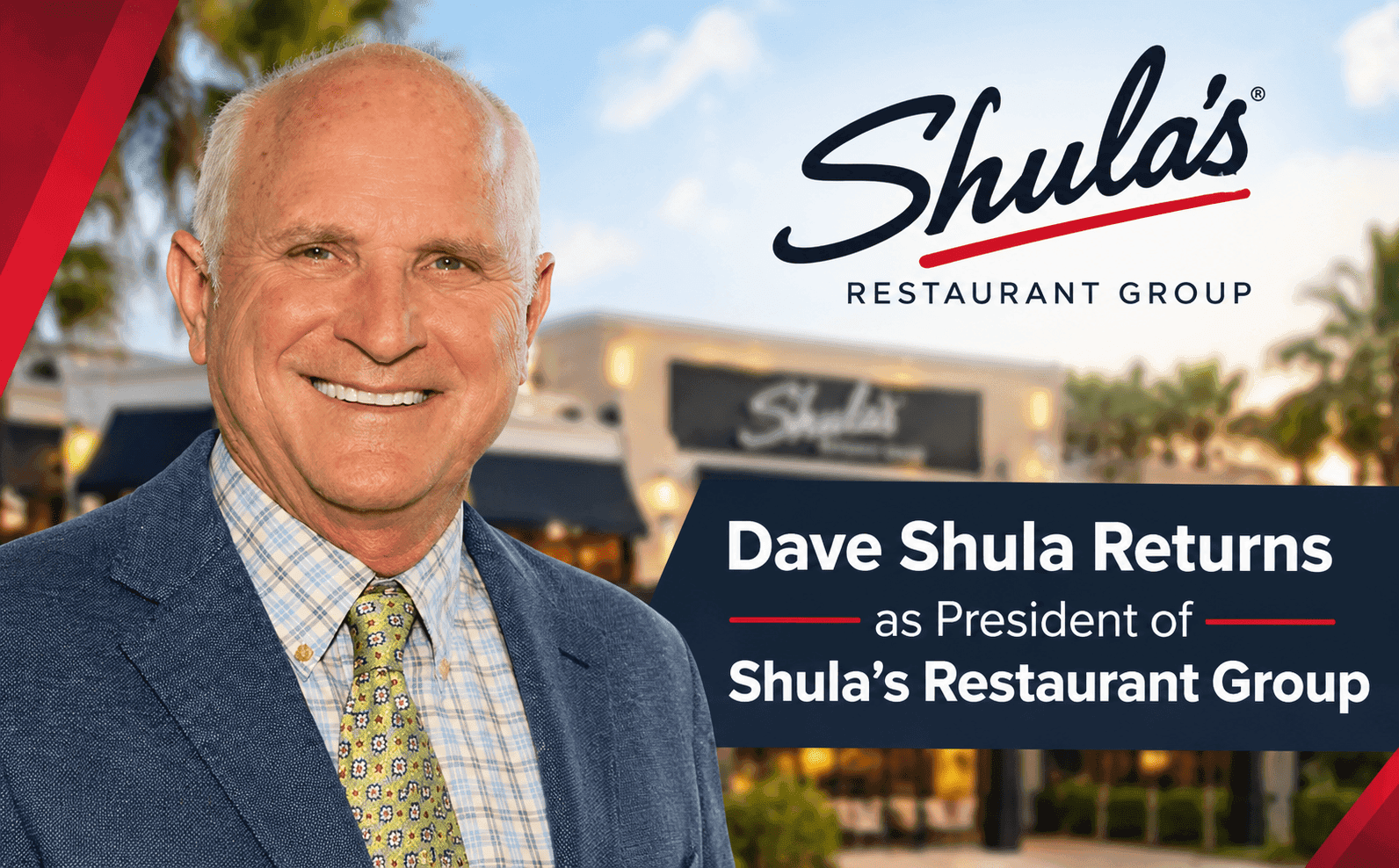
Dave Shula Returns as President of Shula's Restaurant Group
Dave Shula rejoins Shula's Restaurant Group as president, leading growth into Palm Beach Gardens and a 2027 Thomasville, Georgia expansion.
News
Sep 23, 2026
Dave Shula rejoins Shula's Restaurant Group as president, leading growth into Palm Beach Gardens and a 2027 Thomasville, Georgia expansion.
Sep 23, 2026
McDonald's commits $8.5 billion through 2036 to modernize restaurants, boost cash flow by $100,000 per store, and grow chicken and beverage sales.
Sep 23, 2026
WKS Restaurant Group promotes Jay Spongberg to president and COO after he helped grow the company from 65 to 382 restaurants over 16 years.
Sep 23, 2026

Smokey Mo's BBQ names Von Dawson, a Dine Brands veteran, as VP of Franchise Development to lead its Texas expansion strategy.
Sep 23, 2026
.png&w=3840&q=70)
Meritage Hospitality's Chapter 11 filing pulls 5% of Wendy's U.S. stores into bankruptcy, exposing cracks in franchising's bigger-is-safer bet.
Sep 21, 2026
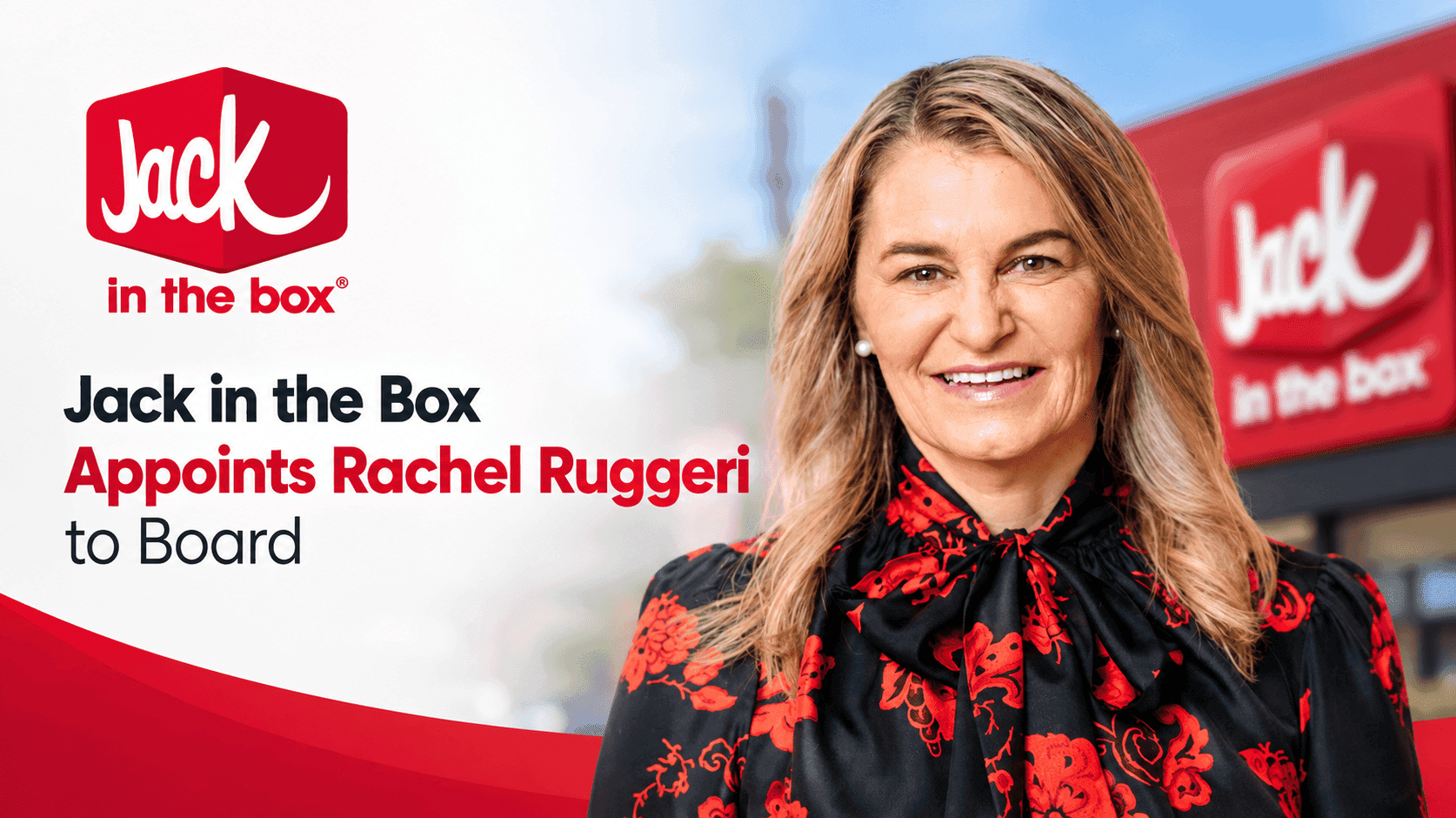
Jack in the Box names Rachel Ruggeri to its board as Michael Murphy retires, amid a CEO transition and deal with investor GreenWood.
Sep 21, 2026

Improve restaurant Google Maps rankings by optimizing your business profile, selecting accurate categories, gathering reviews, adding photos, and strengthening local relevance signals.
Sep 21, 2026

Restaurant inventory tracking helps owners monitor stock, control food costs, reduce waste, improve purchasing, and make informed operational decisions.
Sep 21, 2026

Restaurant owners can significantly reduce restaurant costs by leveraging technology across inventory, labor, procurement, forecasting, and administrative operations for better profit margins.
Sep 18, 2026

Understand how to forecast restaurant revenue and expenses with methods for sales projection, cost scaling, fixed-cost planning, and risk buffering.
Sep 18, 2026

Unlock Exclusive Access To Webinars, Events, And The Latest News For Free!
Ice cream brand Salt & Straw explores a sale valuing it at $200M, tapping Piper Sandler as advisor while emphasizing culture, growth, and majority ownership.

Photo by Courtney Cook
Salt & Straw is weighing a sale that could value the scoop shop darling at more than $200 million, and has engaged investment bank Piper Sandler to advise on a capital transaction. The company counts roughly 60 shops across the United States and reports annual revenues exceeding $100 million. Cofounders Kim Malek and Tyler Malek say this is part of a steady growth playbook, not a pivot. As Tyler Malek put it, “Over the years, our investment partners have helped us grow while staying true to who we are,” a point paired with a vow to keep people, culture, and the guest experience at the center.
The path to this moment traces back to a single ice cream cart in Portland, Oregon, in 2011. The cousins built a following on locally inspired flavors, seasonal creativity, and a knack for telling community stories with a pint. Their team culture runs deep, with around ninety percent of management roles filled internally. A new rewards program brings loyalists closer, offering members exclusive access to seasonal launches, invitation-only events, and a buy-four-get-one-free pint promotion. Partnerships have long been part of the fun, from chefs and artisanal producers to major restaurant companies, feeding a reputation for craft and experimentation that anchors the brand.
Piper Sandler is running an advisory-led process that is familiar to growth brands and their suitors. The bank will distribute a confidential information memorandum and solicit nonbinding bids, followed by a period of diligence that probes store-level performance, supply agreements for locally sourced ingredients, loyalty program metrics, and the health of digital sales channels.
From there, credible bidders are shortlisted, a letter of intent is negotiated, and the parties enter exclusivity to finalize definitive agreements and obtain any needed regulatory clearances before closing. Throughout, the founders have emphasized that preserving majority ownership and core values remains paramount. The Maleks are signaling continuity for their team and communities. Tyler Malek said, “We are currently in the early stages of exploring a capital transaction, as we have at other points in our history, to support the next chapter of Salt & Straw’s growth.
[Cofounder Tyler Malek] and I remain fully committed to building this company for the long term, and to the people, culture, and guest experience that have made Salt & Straw what it is, and the communities we’ve called home since day one.” Ownership today blends purpose and star power, with investors such as Dwayne “the Rock” Johnson, private equity firm KarpReilly, and Danny Meyer’s Enlightened Hospitality Investments alongside majority stakes held by the Maleks.

A firm timetable has not been set, though comparable processes in food and beverage often run three to six months, shaped by the depth of diligence, negotiation over terms that could include earn-out provisions, and any antitrust or regulatory reviews. This move arrives as premium dessert and dairy brands keep attracting capital. In June 2023, Unilever acquired ice cream brand Yasso to expand its frozen portfolio.
Van Leeuwen Ice Cream rebounded in 2025 by securing roughly $17 million in venture funding and opening 29 new shops, with plans to reach 100 locations by mid-October. Alec’s Ice Cream closed an $11 million Series A round in October 2025 to support its functional Culture Cups launch.

Beyond frozen treats, Chobani raised $650 million in equity financing late in 2025, boosting its valuation to around $20 billion. These deals frame an active market, though shifting preferences toward plant-based or health-driven desserts could sway investor appetite and valuation multiples.
Plenty remains unwritten. Potential buyers and deal structures are still under wraps, and the degree of operational control the Maleks will retain has yet to be decided. Integration risk, supply chain resilience, and protecting brand authenticity at scale all sit on the checklist, and the nonbinding nature of early bids gives Salt & Straw room to pause if terms do not fit its stewardship goals.
If the right partner steps in, new capital could support fresh shop openings, expanded production capacity, and stronger digital and wholesale channels to meet off-premise demand. Fans will be watching how the company invests, whether that means deeper menu experimentation, a wider geographic footprint, or a more robust loyalty and omni-channel platform, all while keeping the community-first spirit that built the line out the door in the first place.
