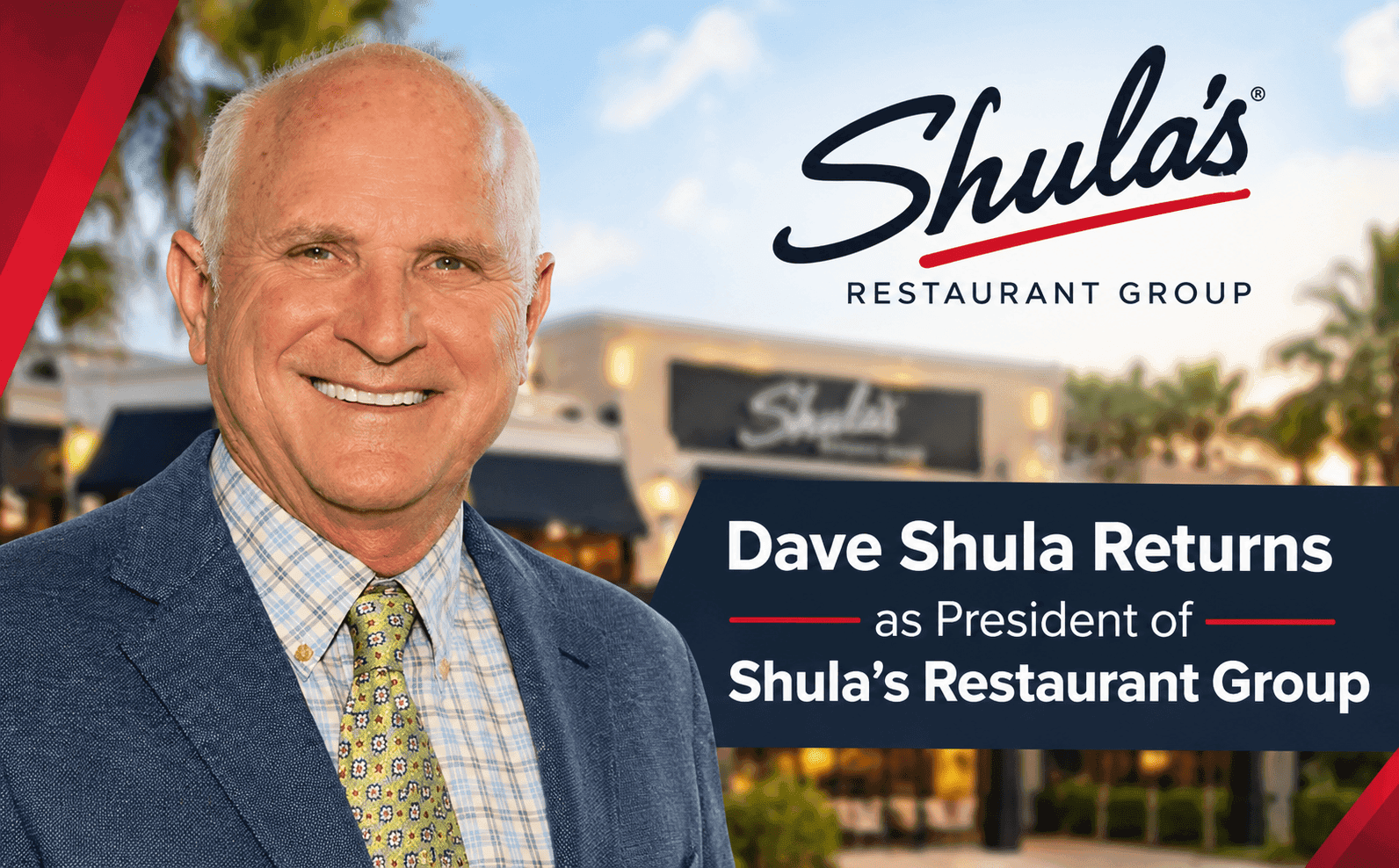
Dave Shula Returns as President of Shula's Restaurant Group
Dave Shula rejoins Shula's Restaurant Group as president, leading growth into Palm Beach Gardens and a 2027 Thomasville, Georgia expansion.
News
Sep 23, 2026
Dave Shula rejoins Shula's Restaurant Group as president, leading growth into Palm Beach Gardens and a 2027 Thomasville, Georgia expansion.
Sep 23, 2026
McDonald's commits $8.5 billion through 2036 to modernize restaurants, boost cash flow by $100,000 per store, and grow chicken and beverage sales.
Sep 23, 2026
WKS Restaurant Group promotes Jay Spongberg to president and COO after he helped grow the company from 65 to 382 restaurants over 16 years.
Sep 23, 2026

Smokey Mo's BBQ names Von Dawson, a Dine Brands veteran, as VP of Franchise Development to lead its Texas expansion strategy.
Sep 23, 2026
.png&w=3840&q=70)
Meritage Hospitality's Chapter 11 filing pulls 5% of Wendy's U.S. stores into bankruptcy, exposing cracks in franchising's bigger-is-safer bet.
Sep 21, 2026
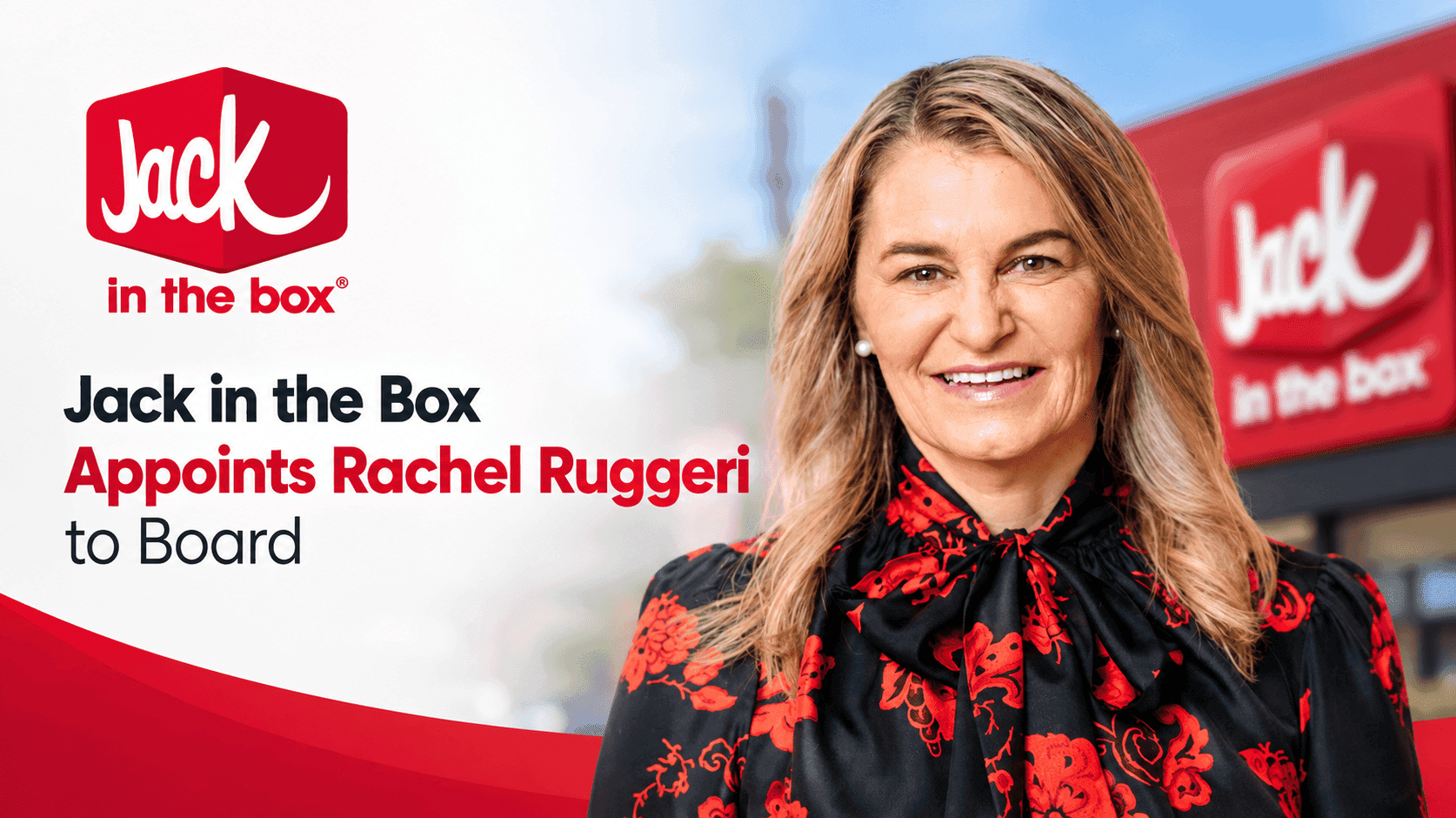
Jack in the Box names Rachel Ruggeri to its board as Michael Murphy retires, amid a CEO transition and deal with investor GreenWood.
Sep 21, 2026
Improve restaurant Google Maps rankings by optimizing your business profile, selecting accurate categories, gathering reviews, adding photos, and strengthening local relevance signals.
Sep 21, 2026

Restaurant inventory tracking helps owners monitor stock, control food costs, reduce waste, improve purchasing, and make informed operational decisions.
Sep 21, 2026

Restaurant owners can significantly reduce restaurant costs by leveraging technology across inventory, labor, procurement, forecasting, and administrative operations for better profit margins.
Sep 18, 2026

Understand how to forecast restaurant revenue and expenses with methods for sales projection, cost scaling, fixed-cost planning, and risk buffering.
Sep 18, 2026

Unlock Exclusive Access To Webinars, Events, And The Latest News For Free!
Texas Roadhouse sustains momentum through everyday value, tech-enabled operations, and disciplined growth, offering a blueprint for resilience in a value-focused industry.

Photo by amin ramezani
Texas Roadhouse has chosen a rare path in a landscape where discounting often writes the narrative. The second quarter reveals a quiet ascent: a 9.3% year-over-year rise in same-store sales, powered by a 4.5% gain in guest traffic and a 4.8% rise in the average check. In a sector primed for promotions, the leadership frames value as a durable attribute rather than a episodic stunt. On the earnings call, Jerry Morgan, the chief executive, offered a measured forecast and a quiet confidence: “There has been significant discussion within the restaurant industry concerning the health of the consumer, as well as the increased focus on promotions and discounting from others in the industry. Through the first half of the year, we have not seen a measurable impact on our overall business from these issues. Our guests continue to recognize the quality and value we offer and do not appear to be changing their dining habits.”
That momentum hardened into the early third quarter, when executives reported a still-healthy trajectory: comparable sales up about 8% so far, a sign that appetite remains resilient even as rivals wrestle with inflationary headwinds. CFO Chris Monroe stressed that the mix remained “basically flat”, with a modest tilt toward entrees, add-ons and soft beverages, even as the alcohol mix remained negative but improved versus earlier quarters. Taken together, the figures sketch a brand navigating calmer seas while many peers flail. It is a narrative of discipline and precision, where flavor quality and the rhythm on the floor translate into predictable momentum, even amid industry chatter about discounting.
Everyday value is not a slogan but a framework for growth. Michael Bailen, the chain’s head of investor relations, insists that promotions do not drive the trajectory: “Our everyday value speaks for itself. We don’t do any promotions ... We feel very good about where our prices are and the value we offer.” The message matters as much as the metrics: a policy designed to attract guests across a spectrum, trading up, trading down, or staying within a broad dining milieu, without leaning on episodic deals. In the current climate, industry observers note that sustainable value-led growth has a different, steadier cadence than spike-focused promotions. Roadhouse’s stance, clear, deliberate, durable, offers a quiet counterpoint to the discount-fueled chorus.
“Our everyday value speaks for itself...” is not merely rhetoric; it underpins a broader strategy that observers describe as value-led growth rather than episodic price wars. Bailen has highlighted that a substantial portion of customers perceive Roadhouse as value-driven, an insight that helps explain why demand has held even as the industry weighs promotions. The synthesis of pricing discipline and quality, portions, timing, and service, creates a durable appeal that resonates across guest segments and sustains momentum when competitors recalibrate their offers.
People and technology emerge as linchpins of Roadhouse’s growth. Behind the dining-room theater, the chain has prioritized labor stability and the modernization of operations through digital tools. The scheduling-and-workforce platform, Roadie First, has become company-wide, while a digital kitchen system is being rolled out across locations. This tandem aims to reduce paper clutter on the line, streamline order flow, and lower staff stress, translating into faster service. The leadership frames these investments as foundational, an anchor that will support momentum and help attract and retain talent for years to come.

Morgan has framed these investments as foundational to sustaining momentum and attracting and retaining talent, calling the innovation an anchor for years to come. Industry coverage notes that Roadie First is completed company-wide, and the digital kitchen rollout is progressing with roughly half of the 230 planned conversions completed this year and an expectation that nearly all restaurants will convert by the end of 2025. The operational uplift, fewer tickets, clearer workflow, and steadier service, reads as a practical argument that technology can enhance hospitality without eroding the brand’s service standards.
Financials, Acquisitions, and Dividends illuminate a trajectory of scale pursued with discipline. The quarter marks an 800th system-wide restaurant and signals plans to acquire eight domestic franchise restaurants as of the start of Q4 2025 and Q1 2026, subject to due diligence. Management also reaffirms its 2025 guidance, maintaining margins and capital-expenditure targets within a framework of measured capital allocation, prioritizing new-store development and strategic franchise acquisitions. The shareholder-friendly posture is underscored by a quarterly cash dividend of $0.68 per share declared in August 2025. The math suggests growth that can tolerate commodity and wage pressures while preserving margin discipline.

Together, the top-line strength and a scaled-capital plan create a framework to weather macro headwinds. The 800th restaurant milestone is more than a milestone; it is a signal that the culture of growth remains anchored in cautious expansion and smart stewardship, even as commodity costs and wage pressures persist.
Industry Context: Value Wars and Resilience places Roadhouse within a broader panorama of value-driven promotions and cost constraints. Across the sector, operators have leaned into discounts and bundles to attract guests, with NRA surveys and industry coverage noting a substantial share planning to add discounts in 2025, even as some brands faced traffic declines in other segments. Observers stress that, while value messaging remains essential, not all brands can sustain discount-driven volume without eroding margins. In this environment, Roadhouse’s blend of everyday value, disciplined pricing, and operational efficiency stands out as a differentiator that aims to endure beyond trend cycles.
If Roadhouse sustains its trajectory, the story could influence how other casual-dining brands think about value, staffing, and technology investments. The convergence of a clear everyday-value proposition, robust guest traffic, and efficiency-focused tech deployments offers a blueprint for growth without resorting to perpetual price wars. As inflationary pressures persist and consumer preferences shift, Roadhouse’s emphasis on consistency, service quality, and operational excellence may become a lodestar for stability in a volatile industry.
Gaps and Uncertainties remain a practical truth in a growth story of this kind. The Q2 2025 results outline expectations for commodity-cost inflation around 5% and wage inflation near 4%, alongside an effective tax rate near 15%. Moreover, the timing and integration of planned franchise acquisitions and the full conversion of locations to digital kitchens carry execution risk. The company itself cautions that results depend on external factors, including tariffs, labor markets, and discretionary spending, and it lays out these risk factors in its SEC disclosures.

Within that balance sheet of hedges and culture, Roadhouse’s story remains instructive: value, quality, and a steady hospitality rhythm can weather a volatile climate when paired with a humane workplace and thoughtful technology. If the trajectory holds, other brands may take cues about growth that is measured, not pressured, and about investing in people and systems that support service as a competitive edge.