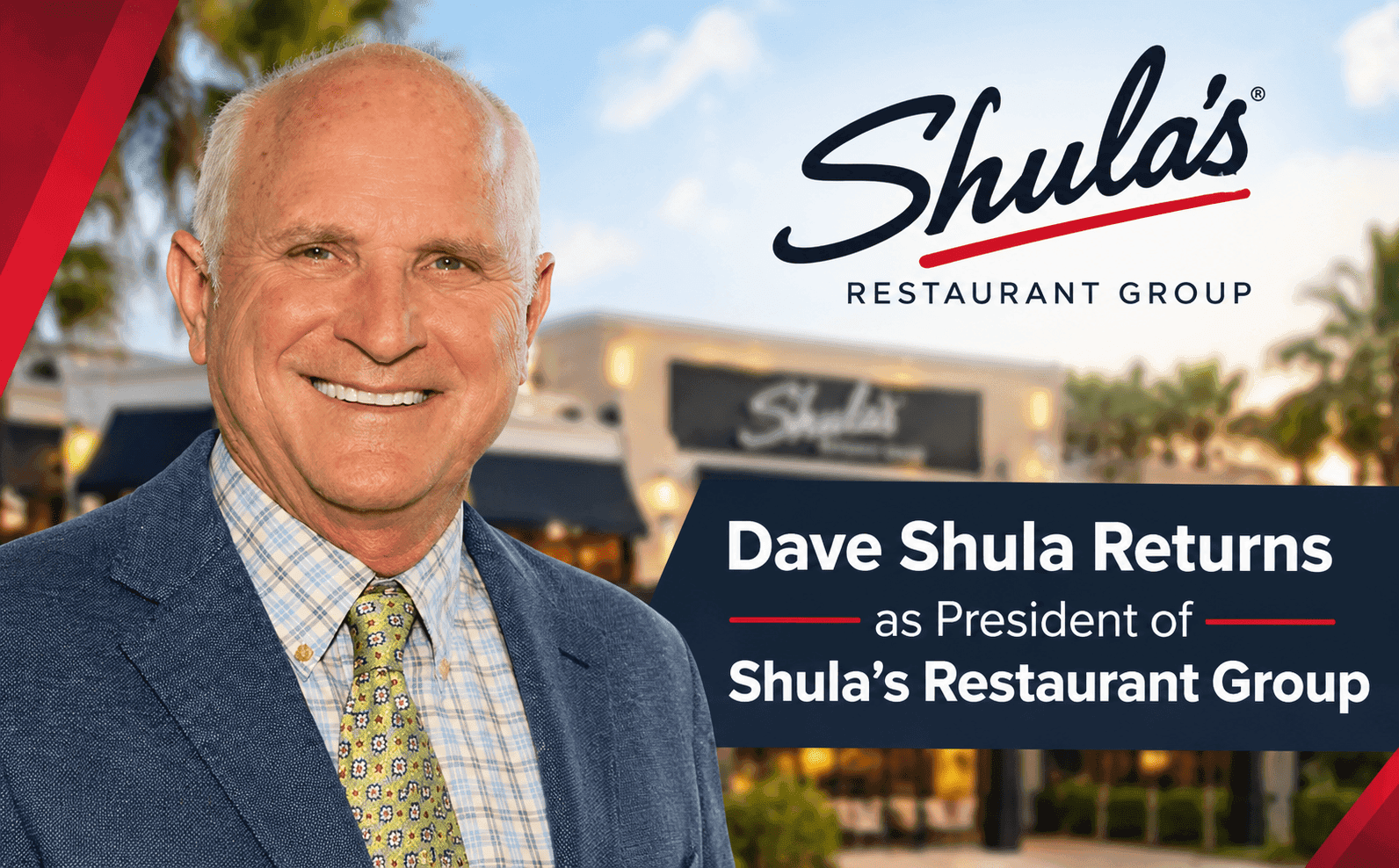
Dave Shula Returns as President of Shula's Restaurant Group
Dave Shula rejoins Shula's Restaurant Group as president, leading growth into Palm Beach Gardens and a 2027 Thomasville, Georgia expansion.
News
Sep 23, 2026
Dave Shula rejoins Shula's Restaurant Group as president, leading growth into Palm Beach Gardens and a 2027 Thomasville, Georgia expansion.
Sep 23, 2026
McDonald's commits $8.5 billion through 2036 to modernize restaurants, boost cash flow by $100,000 per store, and grow chicken and beverage sales.
Sep 23, 2026
WKS Restaurant Group promotes Jay Spongberg to president and COO after he helped grow the company from 65 to 382 restaurants over 16 years.
Sep 23, 2026

Smokey Mo's BBQ names Von Dawson, a Dine Brands veteran, as VP of Franchise Development to lead its Texas expansion strategy.
Sep 23, 2026
.png&w=3840&q=70)
Meritage Hospitality's Chapter 11 filing pulls 5% of Wendy's U.S. stores into bankruptcy, exposing cracks in franchising's bigger-is-safer bet.
Sep 21, 2026
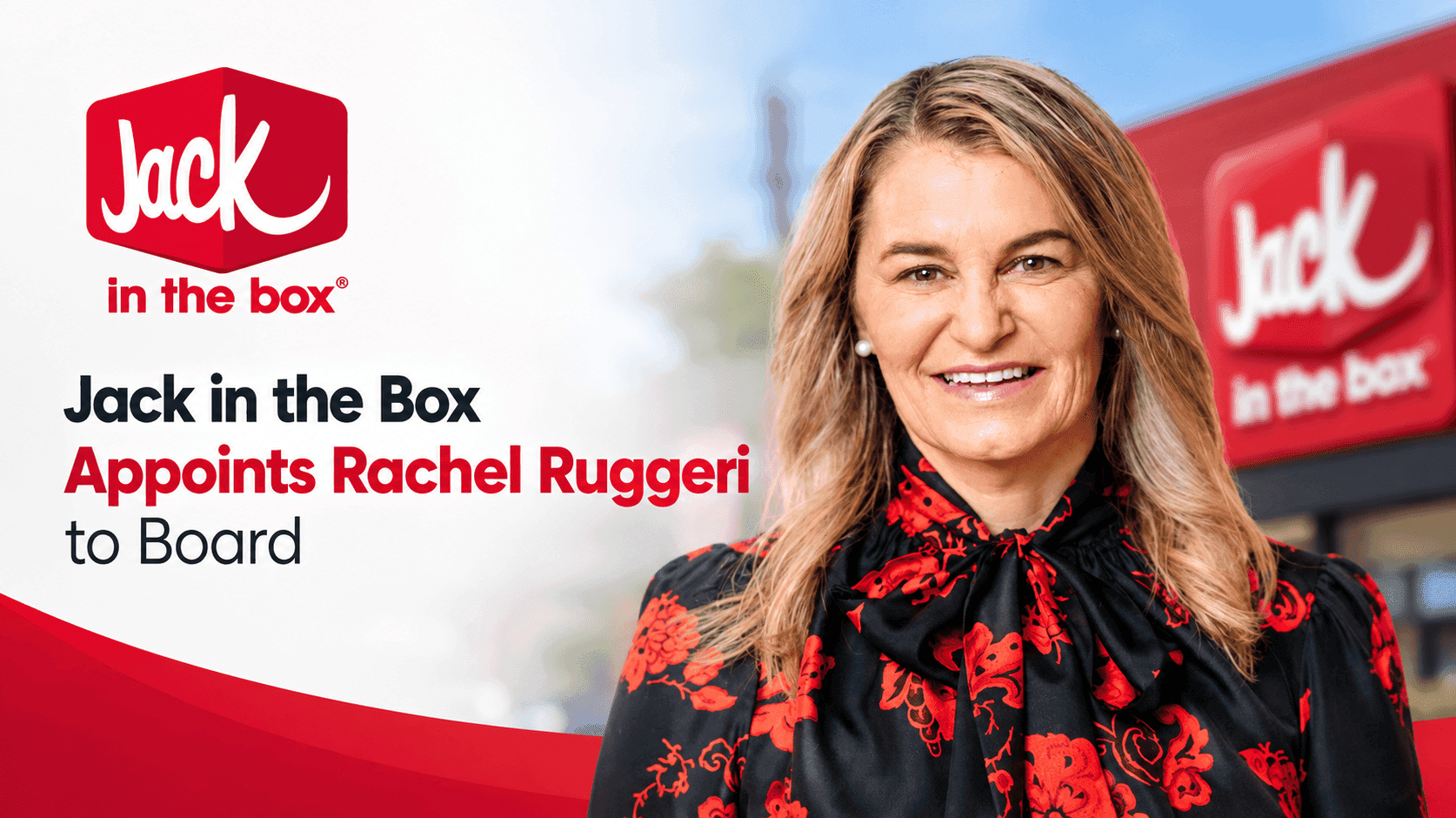
Jack in the Box names Rachel Ruggeri to its board as Michael Murphy retires, amid a CEO transition and deal with investor GreenWood.
Sep 21, 2026
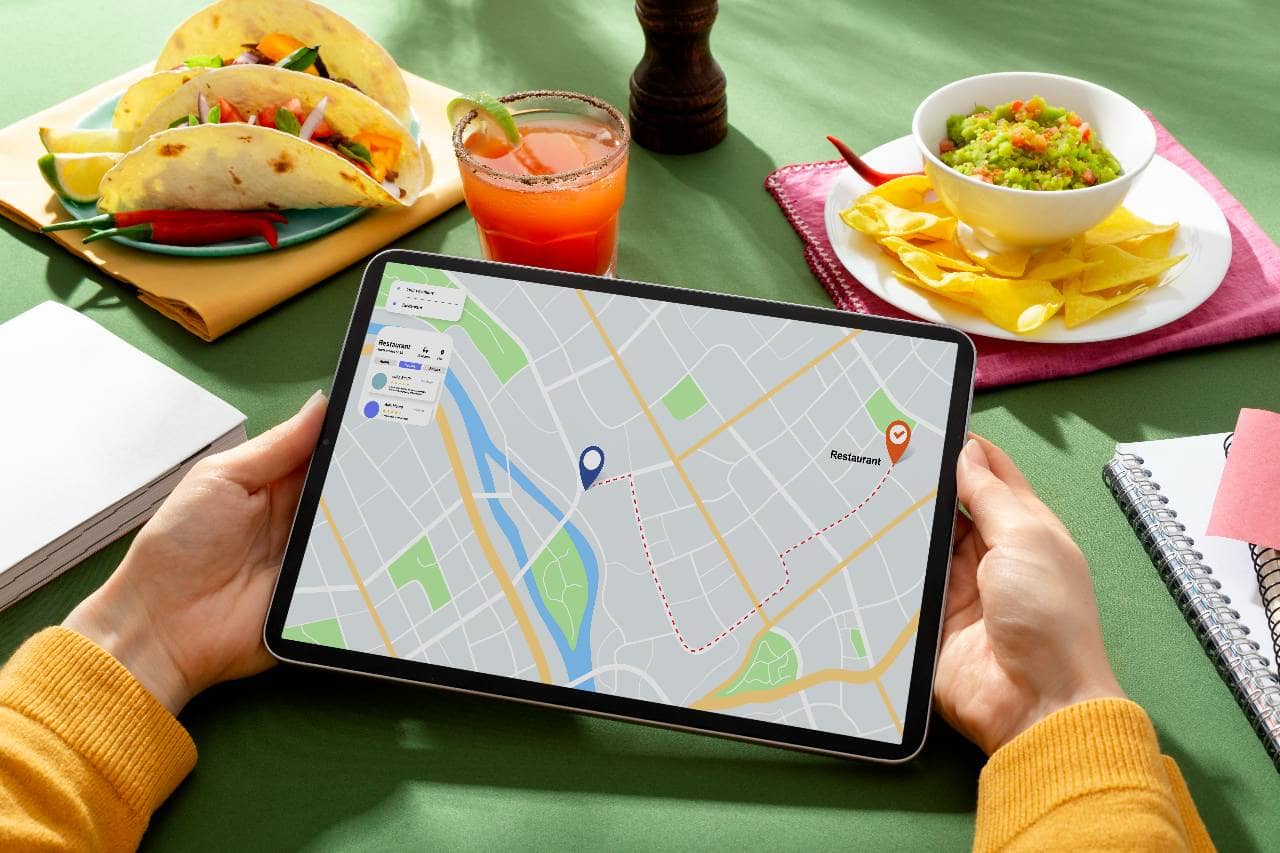
Improve restaurant Google Maps rankings by optimizing your business profile, selecting accurate categories, gathering reviews, adding photos, and strengthening local relevance signals.
Sep 21, 2026

Restaurant inventory tracking helps owners monitor stock, control food costs, reduce waste, improve purchasing, and make informed operational decisions.
Sep 21, 2026

Restaurant owners can significantly reduce restaurant costs by leveraging technology across inventory, labor, procurement, forecasting, and administrative operations for better profit margins.
Sep 18, 2026

Understand how to forecast restaurant revenue and expenses with methods for sales projection, cost scaling, fixed-cost planning, and risk buffering.
Sep 18, 2026

Unlock Exclusive Access To Webinars, Events, And The Latest News For Free!
Disciplined site selection, mixed footprints, and digital formats propel The Great Greek’s urban growth amid real estate headwinds.

Photo by Ernests Vaga
Site selection remains a core driver of restaurant success, shaping customer traffic, brand visibility, and the portfolio’s long-term health. The Great Greek Mediterranean Grill illustrates how a concept adapts to growth by blending traditional locations with smaller formats and digital Kitchen concepts, designed to fit fast-paced urban environments while widening geographic reach. The footprint details cited by industry reporting show a dine-in footprint of roughly 1,700–2,000 square feet; a To Go footprint of 500–900 square feet; and a Digital Kitchen space of 190–220 square feet. The first Great Greek To Go opened at 8900 Baltimore Ave. in College Park, Maryland, near the University of Maryland. This portfolio isn’t an afterthought; it’s a deliberate, scalable map for urban life:
A multi-format footprint – The The Great Greek To Go and The Great Greek Digital Kitchen formats are designed to fit high-density urban markets while extending reach. The stand-alone dine-in footprint runs roughly 1,700–2,000 square feet, while the To Go footprint clocks in at 500–900 square feet, and a Digital Kitchen sits at 190–220 square feet. The first To Go site opened at 8900 Baltimore Ave. in College Park, Maryland, close to the University of Maryland, signaling a test-bed for quick-service formats in student-dense corridors. Taken together, these spaces enable rapid trials, lower capital risk, and a nimble footprint that can be replicated across cities with similar density and transit access. This deliberate mix is a foundation for scaled urban life.
What this means in practice is a thoughtful, balanced approach to growth. By pairing traditional dining with compact, digital-enabled formats, The Great Greek preserves brand hospitality in larger spaces while extending reach into neighborhoods that favor convenience and speed. The result is a nourished portfolio that speaks to urban life with intention and care.
Behind the strategy lies a market where inventory remains tight and competition for prime sites is intense. Operators must stay in active search mode, deeply understand the brand’s sweet spot, and rigorously analyze data on every potential site. The Great Greek’s disciplined stance on site selection foregrounds not simply costs or convenience, but alignment of locations with brand experience and business goals. Franchisors often provide dedicated site selection resources to mitigate costly missteps, while collaborations between Real Estate and Franchise-Group support multi-unit operators. This context underscores the practical realities behind smart expansion in a tight market.
“The development of our three new non-traditional formats began almost two years ago as we sought to identify changes in the habits and behaviors of our customers,” said Bob Andersen, President of The Great Greek Mediterranean Grill. He added that the formats “combine the best of both worlds for our brand; they offer the convenience of on-the-go dining for our customers while also giving existing and prospective franchise owners the opportunity to more cost effectively seize opportunities in prime areas while capturing more market share and increasing brand exposure.” This voice from the field anchors the section’s sense of purpose: expansion through formats that respect both guest rhythm and operator feasibility.
So what this means for growth is a disciplined balance between test and scale. The non-traditional formats are not mere experiments; they are deliberate moves to keep pace with changing consumer habits while preserving the integrity of the brand experience in crowded urban landscapes.
Relationships with developers, brokers, and landlords are central to securing desirable sites in a competitive market. Much of the best real estate is never listed publicly, reserved for operators with established connections. Networking within target markets ensures access to off-market opportunities and the agility to act when a site becomes available. Franchisors frequently have such networks, lightening the burden on individual operators. The Great Greek, for example, leverages a comprehensive real estate and construction team through its affiliation with United Franchise Group, with Starpoint Brands coordinating real estate and financing, site setup, and ongoing franchise support. This network-driven approach helps brands move swiftly to secure prime locations and optimize terms.

What this translates to on the ground is faster access to coveted sites and more favorable terms, because the network ecosystem reduces friction in every step, from scouting to lease negotiation to site readiness. For operators, that means more confident pacing and a more reliable launch calendar, even when market chatter grows uncertain.
In practice, a network-driven model lightens the burden on individual franchisees while enabling rapid, quality-driven growth across markets with shared standards of execution and ongoing franchise support.
Timeline and milestones The Great Greek’s origins trace back to the Henderson, Nevada location, which opened on May 5, 2011. A second location followed on June 7, 2017, with subsequent openings in Las Vegas and South Florida. The brand’s 2023 year was marked by rapid growth: it signed 27 franchise agreements and opened 15 new restaurants, with 10 more projected by year-end. In 2024, industry reporting noted multiple openings and international expansion plans, and by 2025 the company continued to add locations, maintaining strong trajectory in states like Florida, California, and Texas. By 2026, public franchise disclosures and trade coverage highlighted continued aggressive growth, with the potential to surpass a hundred locations.

1. The Henderson Debut – The 2011 opening in Henderson, Nevada signaled a foothold in desert markets with a Mediterranean twist.
2. Second Wave & Growth – 2017 expansion to Las Vegas and South Florida, followed by continued openings.
3. 2023 Growth Surge – 27 franchise agreements and 15 openings, with 10 more projected.
4. 2024–2026 Trajectory – Ongoing openings, international push, and a path toward 100+ locations.
These milestones illustrate a disciplined pattern of expansion, one that stays mindful of market cycles while leaning into formats and networks that shorten the distance between concept and scale.
Industry context: real estate headwinds Beyond individual brands, casual-dining real estate dynamics show broader pressures: vacancies and softer transactions in some markets contrast with high demand for premium sites in others. Industry sources note that overall price realization and cap rates have shifted as lenders adjust to higher interest rates, affecting how quickly deals close and the scale at which brands can expand. In this context, real estate strategy, especially the use of smaller footprints, digital kitchens, and non-traditional format venues, becomes a key lever for sustaining growth in a tighter market.
Implications for the future Real estate strategy remains central to restaurant growth. The Great Greek offers a blueprint for balancing traditional and non-traditional footprints with technology-enabled formats. By combining disciplined site selection, strong franchisor networks, and flexible formats, brands can expand more nimbly in urban markets where space is scarce. The industry’s trajectory toward digital integration, pop-up testing, and enhanced tenant-landlord collaboration suggests that smart expansion will hinge on aligning site type, brand experience, and operational dexterity with evolving consumer preferences.
For operators watching the Great Greek model, the key takeaway is the integration of real estate acumen with brand promise and operational dexterity to sustain growth through cycles of tightness and volatility, guided by a thoughtful, nourishing approach to growth.
