
8 Steps in the Restaurant Payroll Process
Learn the eight essential steps of the restaurant payroll process, from tracking hours and calculating wages to payments and recordkeeping.
Payroll
Aug 17, 2026
Learn the eight essential steps of the restaurant payroll process, from tracking hours and calculating wages to payments and recordkeeping.
Aug 17, 2026

Explore the main types of ordering technology restaurants use to improve accuracy, speed, payments, customer convenience, and operational efficiency daily.
Aug 17, 2026
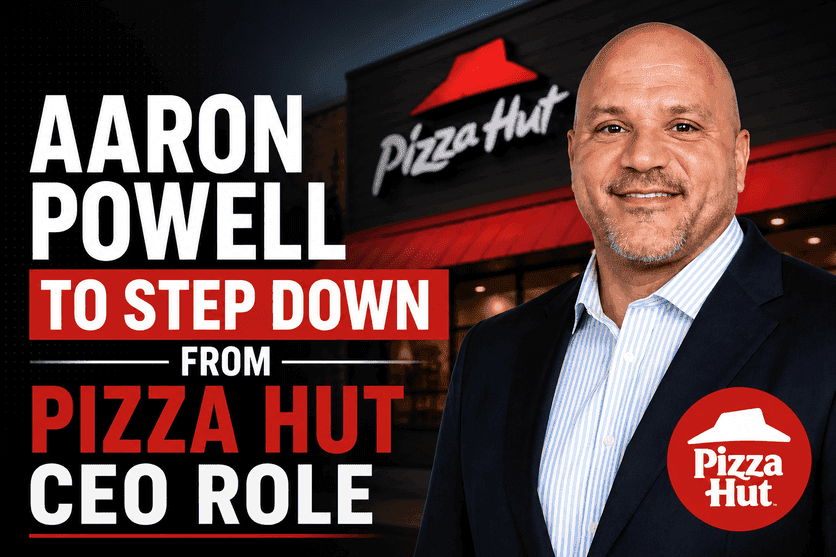
The transition of Pizza Hut's CEO, Aaron Powell, marks a pivotal moment for the chain and offers valuable leadership lessons for restaurant owners. Here’s what this executive change could mean for your business.
Aug 17, 2026

Discover how restaurant SMS marketing works, from building subscriber lists and creating campaigns to improving engagement and measuring marketing performance.
Aug 14, 2026
Panera Bread welcomes Andrew Rebhun as its new CMO to spearhead strategic brand growth and transformation, bolstering its vision for 2028.
Aug 17, 2026

Learn how to manage cash flow in your restaurant by tracking finances, controlling costs, forecasting needs, and building cash reserves.
Aug 14, 2026

Increase online orders by simplifying checkout, optimizing menus, improving Google visibility, promoting ordering channels, and encouraging customers to order again.
Aug 12, 2026
Streamline restaurant back office operations by standardizing workflows, automating repetitive tasks, integrating systems, centralizing data, and improving accountability and efficiency.
Aug 12, 2026
Freddy’s Frozen Custard & Steakburgers promotes Rick Petralia to Executive Chef & VP of Training & Innovation, signaling a strategic focus on culinary excellence and franchisee support.
Aug 12, 2026
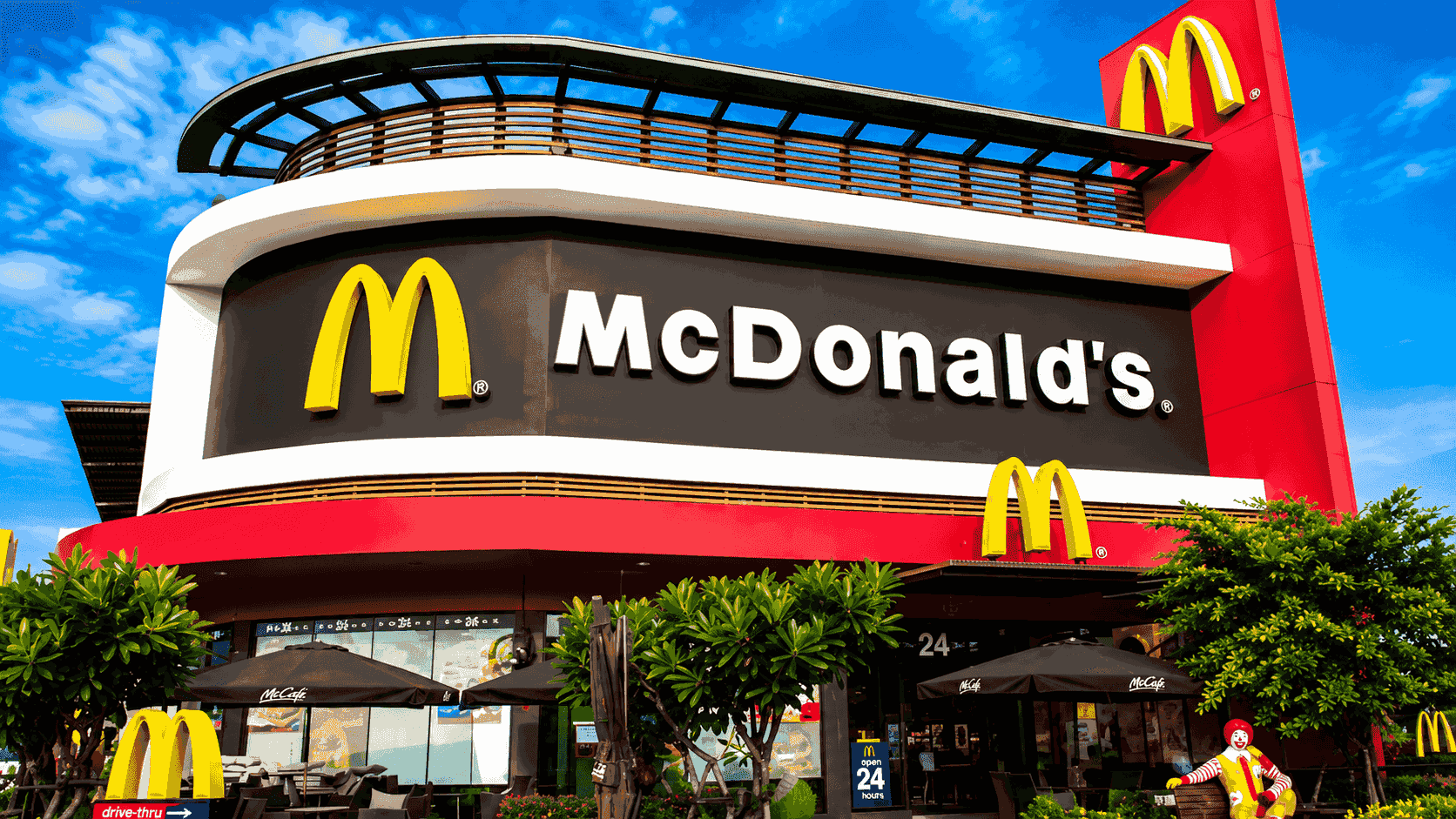
McDonald’s USA has appointed Patrick Gerber as chief restaurant officer, leveraging his decades of global experience to boost operations, food quality, and customer satisfaction in the U.S. market.
Aug 11, 2026

Unlock Exclusive Access To Webinars, Events, And The Latest News For Free!
How Dave’s crossed 400 units with tight unit economics, aligned leadership, and a challenger ethos—without watering down the guest experience.

Photo by Alaundra Alford
Urgency can be messy or it can be meticulous. For Dave’s Hot Chicken, the latest burst of growth leans toward the latter. On April 16, 2026, the brand cut ribbons in eight markets on the same day, including Oneonta, New York; Edina, Minnesota; and Waterford, Connecticut, a carefully sequenced sprint that pushed the system past 400 restaurants worldwide. New VP of franchise development Joshua Liggins describes a company that “works with relentless urgency,” yet reads as disciplined rather than frenetic. The question is less about speed and more about coordination: what does it take to expand this fast and keep the guest experience intact?
Leadership points to system-wide alignment in site selection, training, and operations as the quiet muscle behind the headlines. CEO Jim Bitticks called the eight-openings week “a testament to the strength of our system and the commitment of our franchise partners,” while Chief Restaurant Officer Juan Lopez underscored that “every part of the system has to be aligned to deliver a consistent experience from day one.” These are the unglamorous steps that keep a challenger brand’s promise feeling balanced and thoughtful at the counter. The cadence suggests a playbook that prizes repeatable execution, urgent, yes, but still nourishing for both guests and operators.

The DNA was cast in a parking lot. In early 2017, childhood friends Dave Kopushyan, Arman Oganesyan, and Tommy Rubenyan launched a late-night pop-up in East Hollywood with just $900. That scrappiness found a megaphone through early backers like Drake, Michael Strahan, and Samuel L. Jackson, and the brand soon tapped veteran operator Bill Phelps as CEO to ignite franchising. Momentum followed: within a year, Dave’s jumped from seven to 40 outlets, at one point opening seven units in a single day. In June 2025, Roark Capital took a majority stake at a $1 billion valuation, keeping Dave’s a standalone concept.
Leadership has evolved without losing that challenger edge. After more than five years as president and COO, and as a franchisee himself, Jim Bitticks moved into the CEO role in January 2026, with Bill Phelps transitioning to executive chair. The throughline is a culture that channels pop-up hunger into disciplined scale. The brand’s rise reads like a carefully composed plate: the heat and hype of its origins balanced by measured systems that make rapid replication feel thoughtful rather than rushed.
Franchisees often chase clarity, clear math, clear operations, clear brand identity. Dave’s pitches all three. Industry observers cite best-in-class unit economics, with third-party estimates placing average unit volume near $3 million per store, even as the chain declines to publish a formal Item 19. Joshua Liggins emphasizes that every venue decision centers on return on invested capital, giving operators a way to model payback and margins before signing. A simple, on-trend menu and streamlined operations round out the value proposition, practical tools that fuel growth while keeping the guest experience consistent and, importantly, balanced.
Entry paths and cost ranges
Dave’s lays out multiple on-ramps for operators seeking fit-to-market builds.
- In-line or endcap build: Total initial investment starting at $616,800.
- Area development agreement: Up to $4.162 million; franchisor fees range $41,680–$123,400.
- Non-traditional venues: Food trucks modeled at $263,150–$688,500 broaden access.
- ROI-first mindset: Site decisions hinge on projected payback and sustainable margins.
That disciplined framing helped produce a net gain of 120 restaurants in the past year, lifting the system to 358 sites by year-end 2025, proof that thoughtful economics can scale with urgency.

Dave’s expansion cadence is anchored by operators who have worn the multi-unit shoes. Joshua Liggins points to a leadership bench steeped in scale, from Carolyne Canady’s track record of moving Blaze Pizza from one unit to 350, to COO Juan Lopez’s seven years across Blaze and CKE Restaurants. That lived experience shapes a team that could, in Liggins’s words, “act like a fast-paced growth concept before it became one,” ensuring earlier accelerator bursts didn’t overwhelm the organization but, instead, codified playbooks for what came next.
This foundation makes the eight-in-a-week milestone feel less like a stunt and more like a system check. With development, training, and restaurant operations moving in lockstep, the brand’s challenger ethos translates into daily routines, scripts, standards, and rhythms that travel well. It’s the operational equivalent of a composed platter: each component distinct, yet tied together in a way that feels consistent for guests and sustainable for franchisees as markets multiply.
Growth at Dave’s has been punctuated by decisive moments. Inflection points include the 2020 acquisition of Inspire Brands’ franchising platforms, recruitment of Bill Phelps as CEO in 2023, and Roark Capital’s majority investment at a $1 billion valuation in June 2025. After that deal, the brand opened 75 restaurants in 2024 and another 120 in 2025. The 2026 FDD projects 131 new franchised outlets (gross), with 52 agreements signed and one corporate store in development. State-by-state, Massachusetts and New York lead with ten openings each, followed by Florida (nine) and North Carolina (eight).
Context matters. In 2025, the quick-service chicken segment grew sales by 5.3%, outpacing the industry’s 3% yet moderating from prior double-digit gains. Outlet counts swelled roughly 46% over the past decade, a net 6,200 units, as guests pursued protein-forward menus and customization. Within that crowd, Dave’s ranked as the second fastest-growing chain in 2025, delivering a 51% sales lift and leaping 25 spots in Technomic’s Top 500. The takeaway: disciplined expansion can win share even as category tailwinds ease, so long as ROI guardrails remain intact.
Rapid growth invites scrutiny, and Dave’s leaves some blanks unfilled. The FDD omits a formal Item 19 earnings claim, pushing prospective operators to lean on third-party AUV estimates. The touted four-digit pipeline remains opaque on conversion rates, particularly as some markets mature and competition climbs. Category signals are cooling, too: after double-digit surges, chicken-chain sales growth slowed from 12% in 2023 to 5.3% in 2025. Stakeholders will be watching how the brand balances the thrill of rapid openings with sustained per-store performance that feels consistent, considered, and genuinely guest-forward.
Next, the brand is testing non-traditional venues, from a July 2025 Las Vegas airport unit to evaluations of campuses, military bases, malls, and casinos, with the same ROI thresholds as brick-and-mortar. As Dave’s eyes a potential four- to five-fold increase in U.S. units, success hinges on preserving simplicity, consistent training, and franchisee alignment. The promise is growth that stays composed: heat intact, operations streamlined, and expansion thoughtful enough to remain nourishing for the system it serves.