Dan Harmon Takes the Helm at Pizzana
Veteran restaurant leader Dan Harmon is now CEO of Pizzana and is driving the brand’s national expansion, franchising plans, and operational innovation.
Jun 29, 2026
Veteran restaurant leader Dan Harmon is now CEO of Pizzana and is driving the brand’s national expansion, franchising plans, and operational innovation.
Jun 29, 2026
Southpaw's strategic acquisition of 43 Taco Bell stores in Ohio pushes their restaurant count to 180, highlighting their people-first approach and strong growth in the quick-service space.
Jun 29, 2026
Discover how Cicis Pizza's rewards program skyrocketed to over one million members in under a year, driving customer engagement and retention. See the lessons for restaurant loyalty programs.
Jun 26, 2026
The fallout of Pizza Hut's mandated AI delivery system rollout has ignited a $100 million lawsuit from a leading franchisee, highlighting crucial franchisor-franchisee lessons for all restaurant owners.
Jun 26, 2026
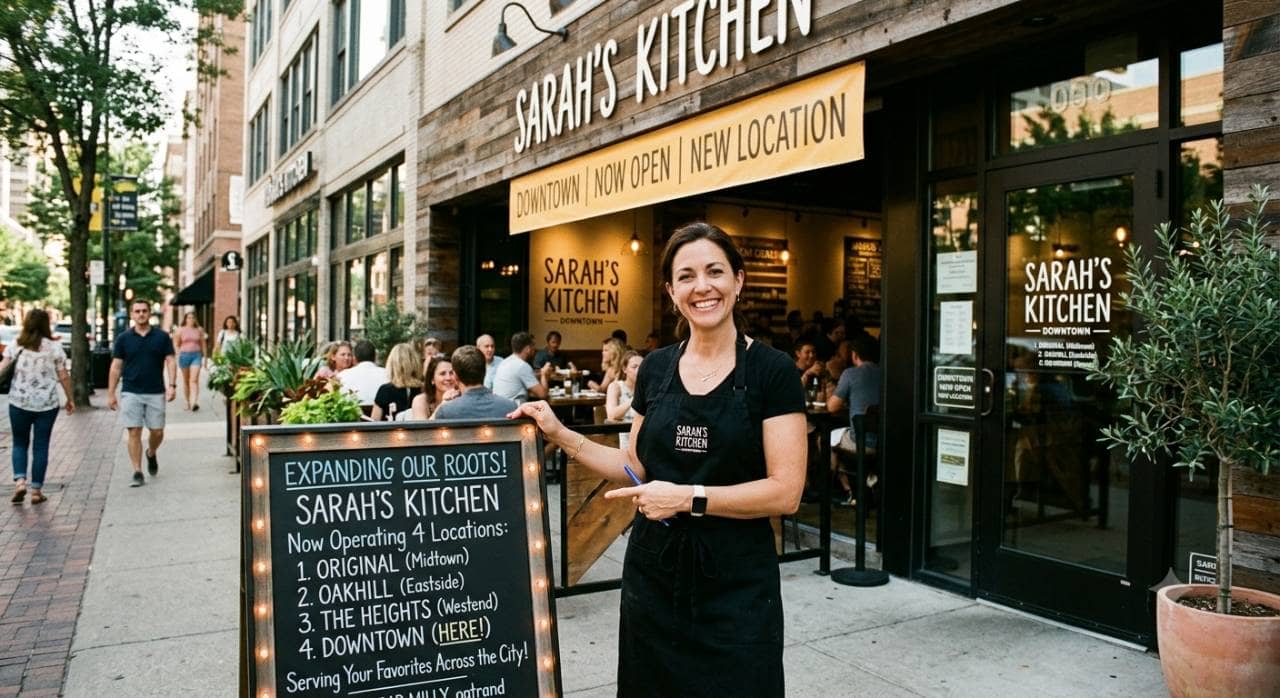
Expanding to multiple locations requires clear systems, strong managers, smart financing, market research, and performance tracking to protect restaurant profits.
Jun 26, 2026
Southpaw adds 43 Ohio Taco Bell restaurants to its impressive portfolio, highlighting franchise growth and strengthening the Midwest QSR landscape.
Jun 26, 2026
World Cup knockout games help restaurants boost sales with food and drink specials, group bundles, takeout offers, and timely promotions.
Jun 26, 2026
Darden Restaurants surpassed $13 billion in sales, fueled by robust performance at LongHorn Steakhouse and innovative menu changes at Olive Garden. Explore the strategies driving this industry giant’s continued dominance.
Jun 26, 2026
Founders Table Restaurant Group acquires fast-casual leader Hopdoddy Burger Bar, expanding its reach to over 200 restaurants and accelerating operational growth across the platform.
Jun 25, 2026
Inspire Brands is preparing for an IPO aiming for a $20B valuation. Discover how giants like Arby’s, Sonic, and Dunkin’ are performing as part of this dynamic portfolio.
Jun 25, 2026
Expanding to multiple locations requires clear systems, strong managers, smart financing, market research, and performance tracking to protect restaurant profits.

Before opening another location, restaurant owners need to confirm that the first restaurant is strong enough to support growth. Expansion should not happen just because sales are busy or customers are asking for another location. A restaurant can have full tables and still struggle with cash flow, labor costs, food waste, inconsistent service, or weak management systems. A good starting point is profitability. The current location should generate steady sales and enough profit after food costs, labor costs, rent, utilities, debt payments, repairs, taxes, and owner compensation. If the first restaurant is only breaking even, a second location may increase pressure instead of creating growth. More revenue does not always mean more profit if expenses grow faster than sales. Restaurant owners should also look at consistency. Are sales stable across weekdays, weekends, and seasons? Are food cost percentages staying within target range? Is labor cost controlled during both slow and busy periods? Are customer reviews mostly positive? Are employees following the same service standards every shift? These details show whether the business model is repeatable or still dependent on constant owner involvement. Another important sign is management strength. A restaurant is usually more ready to expand when the owner can step away from daily operations without service quality falling apart. That means managers can handle scheduling, ordering, staff training, customer issues, opening and closing duties, and basic financial reporting. Owners should also review demand. A strong first location may prove that customers like the concept, but the next location needs its own customer base. Expansion works best when the brand has clear positioning, strong menu demand, loyal customers, and a market where the concept can attract enough traffic. In simple terms, a restaurant is ready to expand when it has stable profits, documented systems, trained managers, consistent customer experience, and enough capital to absorb the cost of growth. Without those pieces, opening another location can multiply existing problems instead of multiplying success.
Standard operating procedures are what turn one successful restaurant into a repeatable business model. When a restaurant has only one location, many tasks may happen through habit, verbal instructions, or owner involvement. But once the business expands, informal systems become harder to control. Each new location adds more employees, more shifts, more inventory decisions, more customer interactions, and more chances for inconsistency. For restaurant owners, the goal is to make daily operations measurable and repeatable. A recipe should produce the same taste, portion size, plating style, and food cost at every location. A prep list should tell the kitchen exactly how much to prepare based on expected sales. A cleaning checklist should reduce food safety risk. A training process should help new employees reach productivity faster. Without these systems, two locations under the same brand can quickly deliver different customer experiences. For example, if one location uses 6 ounces of chicken per entree and another uses 7 ounces, the difference may look small. But if that item sells 1,000 times per month, the second location uses 1,000 extra ounces, or 62.5 extra pounds of chicken. If chicken costs $3 per pound, that one portioning mistake adds about $187.50 in monthly cost for one menu item. Across several ingredients and locations, small inconsistencies can become a major margin problem. Restaurant owners should document procedures in key areas - 1. Recipes and portion control - Each menu item should have exact ingredient amounts, prep steps, cooking times, plating instructions, and expected food cost. 2. Inventory and ordering - Locations should follow clear par levels, ordering schedules, waste tracking, vendor rules, and receiving procedures. 3. Labor and scheduling - Managers should schedule based on sales forecasts, peak hours, labor targets, employee availability, and overtime risk. 4. Training and service standards - Every role should have a training checklist, performance expectations, guest service standards, and opening and closing duties. 5. Cleaning and food safety - Checklists should cover temperature logs, sanitation tasks, equipment cleaning, storage rules, and manager verification. 6. Reporting and accountability - Owners should track sales, labor cost percentage, food cost percentage, waste, voids, discounts, customer complaints, reviews, and employee performance by location. Strong procedures help reduce guesswork. They also make it easier to train managers, compare location performance, identify problems, and protect the brand as the business grows. Before opening another restaurant, owners should ask one important question - can this location run the same way tomorrow, even if the owner is not there? If the answer is no, the business may need stronger systems before expansion.

Choosing the next location is one of the most important decisions in restaurant expansion. A strong restaurant concept can struggle if it opens in the wrong market, while a well-matched market can make sales growth easier. Restaurant owners should not choose a new location only because rent looks affordable, a space is available, or customers have requested it. The decision should be based on demand, cost, competition, access, and long-term profit potential. The first metric to review is customer demand. Owners should study the area's population, income levels, household size, daytime traffic, tourism activity, office density, student population, and dining habits. A lunch-focused concept may need office workers, hospitals, schools, or business parks nearby. A dinner and bar concept may perform better in areas with nightlife, residential density, entertainment venues, or weekend foot traffic. A quick-service restaurant may need high visibility, parking, delivery demand, and strong traffic counts. Competition also needs to be measured carefully. A market with many restaurants is not always bad. It may show strong dining demand. The real question is whether the area has space for the concept. Owners should compare menu type, price point, service model, customer reviews, delivery presence, hours of operation, and promotional activity. If five similar restaurants already serve the same audience at the same price point, the new location may need a stronger reason to win customers. Restaurant owners should also calculate location economics before signing a lease. Rent should make sense based on expected sales, not just square footage. For example, if a restaurant projects $90,000 in monthly sales and rent is $9,000, rent equals 10% of sales. If sales fall to $60,000, that same rent becomes 15% of sales, which can put pressure on profit margins. This is why conservative sales forecasting matters. Key market factors to review include - 1. Customer demographics - Look at age, income, family size, lifestyle, dining habits, and spending power. 2. Traffic and visibility - Review foot traffic, vehicle counts, signage opportunities, parking, public transit, and nearby anchors. 3. Competition level - Compare similar restaurants, price points, reviews, menu overlap, delivery rankings, and customer demand gaps. 4. Labor availability - Make sure the area has enough cooks, servers, cashiers, bartenders, shift leads, and managers to support daily operations. 5. Rent and occupancy cost - Estimate rent, common area charges, utilities, insurance, property taxes, maintenance, and buildout requirements. 6. Delivery and takeout demand - Check whether the market has strong online ordering, delivery app activity, catering demand, and off-premise sales potential. 7. Local regulations - Review permits, zoning, alcohol license rules, signage restrictions, health department requirements, and labor laws. 8. Growth potential - Consider whether the market can support long-term sales, repeat customers, brand awareness, and future nearby locations. The best market is not always the busiest or cheapest. It is the market where the restaurant's concept, price point, operations, labor model, and customer base fit together. Before opening another location, owners should compare multiple sites using the same data points. This helps reduce emotional decision-making and gives the business a better chance of growing profitably.
Opening another restaurant location requires more than enough money for the lease and buildout. Restaurant owners need a full financial plan that covers startup costs, operating costs, working capital, cash flow gaps, and the time it may take for the new location to become profitable. Without this plan, expansion can put pressure on both the new location and the original restaurant. The first step is estimating the total cost to open. This may include lease deposits, construction, kitchen equipment, furniture, signage, permits, licenses, technology, smallwares, initial inventory, uniforms, training, insurance, and pre-opening marketing. Owners should also include professional costs such as legal, accounting, design, architecture, and contractor fees. A new location can become more expensive than expected if plumbing, electrical, ventilation, fire safety, or health department requirements need upgrades. The second step is planning for working capital. A restaurant may open its doors before sales are strong enough to cover payroll, food purchases, rent, utilities, loan payments, and vendor bills. For example, if a new location needs $75,000 per month to cover operating expenses and takes four months to reach stable sales, the owner may need at least $300,000 in working capital just to protect cash flow during the early ramp-up period. Restaurant owners should also build conservative sales forecasts. A new location may not match the first restaurant right away. If the original location generates $120,000 in monthly sales, the new location may start at $60,000 to $80,000 per month while brand awareness grows, employees improve, and repeat customers develop. Planning only for the best-case scenario can create serious cash pressure. Key financial areas to calculate include - 1. Startup investment - Estimate buildout, equipment, permits, deposits, furniture, technology, signage, opening inventory, and launch marketing. 2. Monthly fixed costs - Include rent, insurance, utilities, software, loan payments, accounting, pest control, maintenance, and other recurring expenses. 3. Variable costs - Project food cost, beverage cost, packaging, supplies, credit card fees, delivery fees, and hourly labor based on sales volume. 4. Labor budget - Forecast manager salaries, hourly wages, training hours, overtime risk, payroll taxes, benefits, and onboarding costs. 5. Break-even sales - Calculate how much revenue the new location must generate each month to cover all costs before producing profit. 6. Cash reserve - Set aside money for slow opening months, repairs, hiring delays, supplier issues, marketing adjustments, and unexpected expenses. 7. Debt and repayment schedule - Review loan terms, interest rates, payment timing, personal guarantees, and how debt affects monthly cash flow. 8. Location-level profit targets - Define target food cost percentage, labor cost percentage, prime cost, average order value, guest count, and net profit margin. A financial plan also helps owners protect the first location. If the original restaurant must fund the new unit for too long, both businesses can become weaker. Expansion should improve the company's overall financial position, not drain the profitable location that made growth possible. Before signing a lease or starting construction, owners should ask - what happens if sales are 20% lower than expected for the first six months? If the business can still cover costs, pay employees, support vendors, and protect cash flow, the expansion plan is stronger. If not, the owner may need more capital, lower costs, better financing, or a slower growth timeline.

Multi-location growth depends on people, not just real estate. A restaurant owner may be able to personally manage one location, but that model breaks down as soon as the business expands. Each new restaurant needs leaders who can make daily decisions, protect service standards, control costs, train employees, and solve problems without waiting for the owner to step in. For restaurant owners, the most important question is not only, "Can we open another location?" It is, "Who will run it every day?" A new location needs a general manager, shift leaders, kitchen leads, trainers, and employees who understand the brand's standards. If the management team is weak, the owner may spend most of the week fixing scheduling issues, handling complaints, checking inventory, covering shifts, and reviewing mistakes. A strong manager can directly affect profitability. For example, if a location generates $100,000 in monthly sales and labor is targeted at 30%, the labor budget is $30,000. If poor scheduling pushes labor to 35%, labor cost increases to $35,000. That extra 5 percentage points equals $5,000 in additional monthly labor expense for one location. Across three locations, the same issue could cost $15,000 per month. Managers also influence food cost. If portion control, waste tracking, ordering, and prep planning are not managed carefully, small errors can reduce margins. A kitchen manager who orders too much product may create spoilage. A shift leader who fails to track waste may hide recurring problems. A general manager who does not review reports may miss trends until they become expensive. Restaurant owners should build a management system around clear roles - 1. General manager - Responsible for sales, labor, food cost, staffing, guest experience, reporting, and location-level profitability. 2. Assistant manager - Supports daily operations, shift coverage, training, scheduling, customer issues, and opening or closing routines. 3. Kitchen manager - Controls prep, recipes, food safety, inventory, ordering, waste, portioning, and kitchen labor. 4. Shift supervisor - Manages service flow, employee breaks, cash handling, customer concerns, and shift execution. 5. Certified trainers - Help new employees learn the correct procedures before habits become inconsistent. Training should also be measured, not assumed. Owners should track how long it takes a new employee to become productive, how many training hours each role requires, how often mistakes happen, and whether customer service scores improve after training. A server training plan may include menu knowledge, POS use, upselling, allergy procedures, service timing, and guest recovery. A cook training plan may include recipes, portion control, prep standards, equipment safety, sanitation, and ticket speed. The aim is to create managers who can protect the brand when the owner is not present. Before opening another location, owners should ask whether the current team can support expansion or whether leadership hiring needs to happen first. More locations require more accountability. Without trained managers, expansion can turn the owner into the only person holding the business together.

Technology becomes more important as a restaurant grows from one location to several. When an owner operates one restaurant, it may be possible to check sales, labor, inventory, schedules, and customer issues by walking the floor or talking directly with managers. But with multiple locations, that approach becomes harder. The owner cannot be in every kitchen, dining room, office, and shift at the same time. A multi-location restaurant needs real-time visibility. Without it, problems can go unnoticed until they affect profit. For example, one location may be overstaffed during slow hours, another may be running out of key ingredients, and another may be discounting too many orders. If the owner only sees reports at the end of the week, the business may lose money for several days before action is taken. Technology helps owners compare performance by location. If three restaurants use the same POS, scheduling system, inventory platform, and reporting dashboard, the owner can track the same metrics across every unit. This makes it easier to identify which location is performing well, which one needs support, and which operational issue is affecting margins. For example, if Location A has a labor cost of 28%, Location B is at 32%, and Location C is at 37%, the owner can quickly investigate the difference. Location C may be scheduling too many employees, missing sales forecasts, approving too much overtime, or failing to adjust staffing during slow periods. Without location-level reporting, that problem may be hidden inside total company sales. Restaurant owners should use technology to track key areas - 1. Sales performance - Monitor daily sales, hourly sales, average order value, guest count, menu item sales, discounts, voids, refunds, and payment trends. 2. Labor management - Track scheduled hours, actual hours, overtime, labor cost percentage, sales per labor hour, missed punches, breaks, and employee attendance. 3. Inventory control - Review ingredient usage, waste, stockouts, vendor orders, receiving records, cost changes, and food cost percentage by location. 4. Scheduling and forecasting - Build schedules based on expected demand, historical sales, weather, events, seasonality, and employee availability. 5. Food safety and checklists - Digitize temperature logs, cleaning tasks, opening duties, closing duties, equipment checks, and manager approvals. 6. Customer feedback - Track reviews, complaints, ratings, service issues, refund reasons, and repeat customer trends across locations. 7. Financial reporting - Compare revenue, prime cost, controllable expenses, cash flow, profit margins, and break-even performance by unit. 8. Manager accountability - Give each location clear targets for labor, food cost, service scores, waste, sales growth, and compliance tasks. The value of technology is not only automation. It creates consistency. When every location follows the same reporting structure, owners can make faster decisions and reduce guesswork. A manager may feel that labor is under control, but the numbers may show overtime rising. A kitchen team may believe waste is low, but inventory data may show high variance on certain ingredients. Before opening more locations, restaurant owners should ask whether their systems can support growth. If sales, payroll, scheduling, inventory, and reporting are still managed manually, expansion may create confusion. Technology gives owners the data they need to protect margins, support managers, and run multiple restaurants with more control.
Opening multiple restaurant locations is not only about growth. It is about controlled growth. A new location may increase total revenue, but revenue alone does not prove that expansion is working. Restaurant owners need to track whether each location is producing healthy profit, consistent service, strong customer demand, and stable operations. The biggest mistake owners can make is expanding faster than their systems can support. One new location can usually be managed with extra attention from the owner. But once the business grows to three, four, or five locations, weak processes become harder to hide. Labor issues, food cost problems, inconsistent training, cash flow gaps, and customer complaints can spread quickly if performance is not measured carefully. Each location should be reviewed as its own profit center. For example, if Location A generates $120,000 in monthly sales with a 12% net profit margin, it produces $14,400 in monthly profit. If Location B generates $100,000 in sales but only has a 3% net profit margin, it produces $3,000 in profit. Even though both locations add revenue, they do not create the same financial value. This is why owners should look beyond top-line sales. Restaurant owners should monitor these key metrics - 1. Same-store sales - Track whether existing locations are growing, flat, or declining before adding more units. 2. Food cost percentage - Compare ingredient costs, waste, portion control, vendor pricing, and menu profitability by location. 3. Labor cost percentage - Review scheduled hours, actual hours, overtime, sales per labor hour, and manager scheduling decisions. 4. Prime cost - Measure food cost plus labor cost. If prime cost is too high, profit margins can shrink even when sales are strong. 5. Average order value - Track whether guests are buying higher-value items, add-ons, drinks, desserts, bundles, or catering orders. 6. Guest count and traffic patterns - Measure how many customers each location serves by daypart, weekday, weekend, and season. 7. Customer reviews and complaints - Watch ratings, service issues, food quality feedback, refund reasons, and repeat complaints by location. 8. Employee turnover - Track hiring, training completion, call-outs, resignations, overtime, and manager stability. 9. Cash flow - Review whether each location can cover payroll, rent, vendor bills, debt payments, taxes, and emergency costs. 10 Location-level profitability - Compare revenue, controllable expenses, net profit, break-even sales, and return on investment. Scaling at the right pace means using performance data before making the next move. If the newest location is not stable yet, opening another one may stretch the business too thin. Owners should wait until managers are trained, systems are consistent, customer demand is proven, and cash flow is strong enough to support the next investment. A good expansion strategy should answer one question clearly - does each new location make the business stronger? If the answer is yes, the restaurant can continue growing with more confidence. If the answer is no, the owner may need to fix operations, improve profitability, strengthen leadership, or slow the expansion timeline before opening another location.