
California Penalizes Dickey's for Franchise Disclosure Violations
California shifts to public enforcement strategy against Dickey's for deceptive franchise disclosures, signaling stricter state-level franchise oversight.
Franchising
Sep 10, 2026
California shifts to public enforcement strategy against Dickey's for deceptive franchise disclosures, signaling stricter state-level franchise oversight.
Sep 10, 2026
Paul Brown temporarily steps away from Inspire Brands as Scott Murphy assumes interim CEO role during confidential IPO filing process targeting late 2026.
Sep 10, 2026

Learn how to reduce food waste in restaurants through smarter purchasing, storage, preparation, and service strategies that cut costs.
Sep 9, 2026
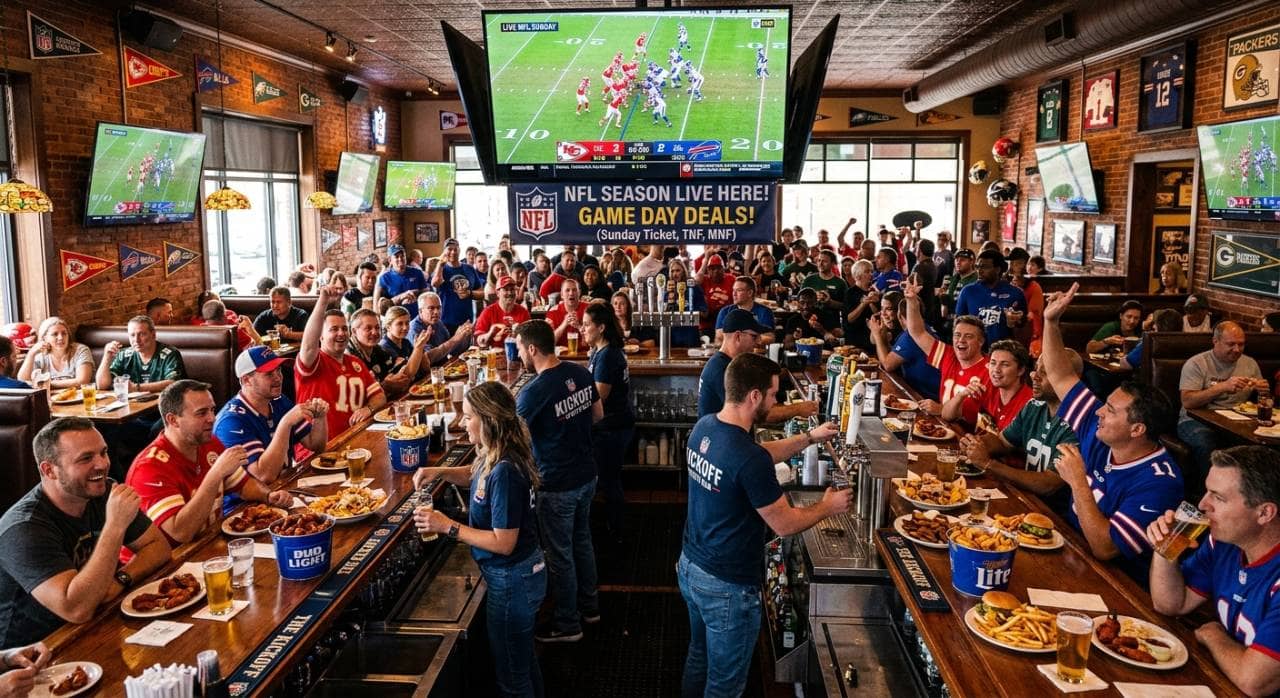
Prepare your restaurant for NFL season with smart menu planning, staffing, marketing, technology, and atmosphere strategies that boost season-long revenue.
Sep 9, 2026
Swig signs franchise agreement for 11 South Denver locations, marking Colorado entry and validating its national expansion strategy.
Sep 8, 2026

QR code menus let restaurants replace paper menus digitally, enabling instant updates, contactless browsing, ordering, and payment through simple smartphone scanning.
Sep 7, 2026

Complete guide helping restaurant owners choose essential kitchen equipment - covering cooking, refrigeration, prep, sanitation, ventilation, safety, and long-term maintenance planning.
Sep 7, 2026

Avoiding common restaurant payroll mistakes - misclassification, tip credit errors, overtime miscalculations - protects businesses from costly penalties, back pay, and compliance risks.
Sep 4, 2026
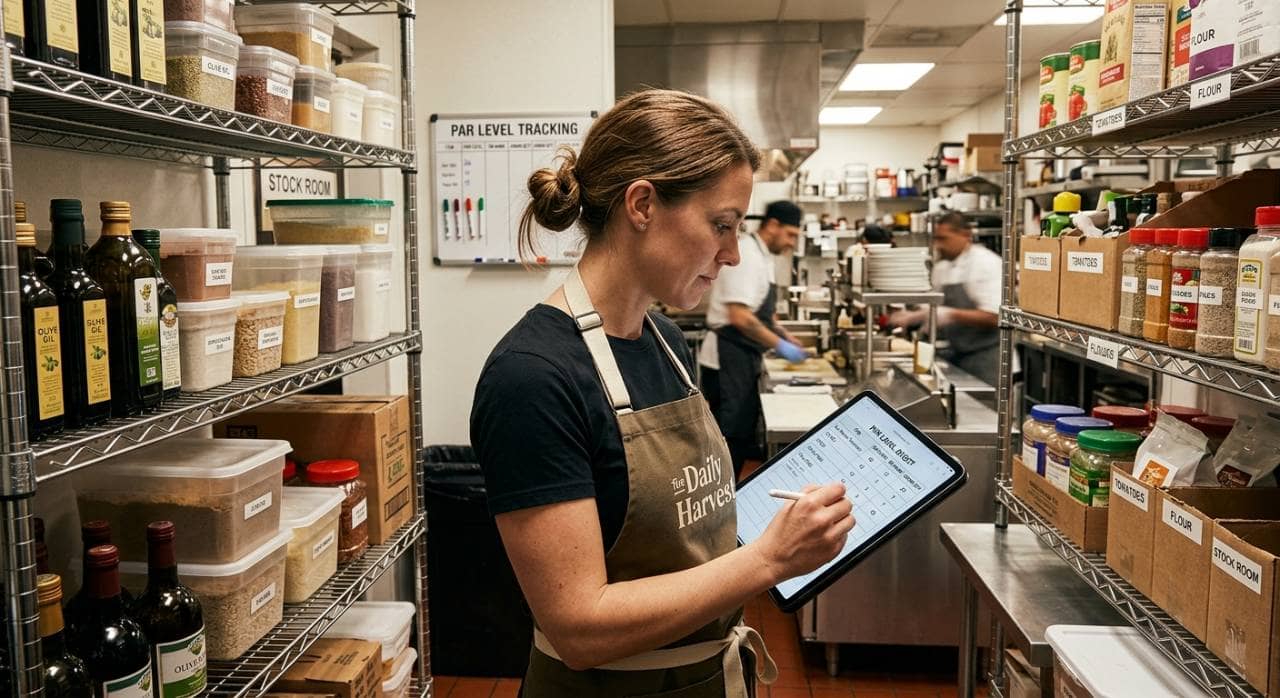
Learn to calculate par levels for restaurant food, beverages, and packaging inventory, preventing stockouts and waste through proper formulas.
Sep 4, 2026
Caribou Coffee appoints Zane Thomas-Rogers as Chief Operations Officer to strengthen execution across its expanding coffeehouse network.
Sep 4, 2026

Unlock Exclusive Access To Webinars, Events, And The Latest News For Free!
Engaged Capital pushes governance-led changes at Portillo’s, signaling asset-light real estate moves and board realignment.

Photo by Patrick Tomasso
In a brand universe where growth is a chorus and margins a discreet whisper, Portillo’s stands at a strategic fork following the disclosure that Engaged Capital has a stake of at least 9.9%. This is more than curiosity; it marks a shift from passive ownership toward active governance. The Chicago-born chain, tracing its roots to 1963 and now operating 88 restaurants across 10 states, confronts a moment when scale and constraint pull in opposite directions. The question is not only what investors want, but how the company will allocate capital, reshape its asset base, and recalibrate its store footprint without sacrificing service, brand, or the discipline of operating with balance. What comes next is a quiet, precise negotiation of direction: can governance flex without hollowing out the spirit of Portillo’s?
CNBC and industry chatter have begun to crystallize the activist’s blueprint: move away from owning and developing real estate, and shrink the footprint of each unit to boost capital efficiency. Such steps are not merely cost cuts, but a reimagining of how reserved capital is deployed. Engaged’s approach, calibrating governance with asset optimization, would compress fixed costs, unlock latent value, and potentially accelerate returns on invested capital. The implications extend beyond real estate: a governance blueprint that aligns strategy with a leaner units may enable faster reallocation of capital to growth initiatives while preserving the Portillo’s experience. The real question remains how management and a new board would translate theory into practice.

Engaged Capital has built a recognizable playbook: anchor governance changes, then leverage expertise to sharpen operations. Its recent moves with Shake Shack in May 2023, adding Jeffrey Lawrence, the former CFO of Domino’s Pizza, to the board and delivering governance and operating support, have become a reference point. The pattern shows a willingness to escalate if progress stalls but to anchor changes in governance as a lever for performance. With Portillo’s now in the orbit of a similar approach, observers see a deliberate test case: can a brand anchored in comfort translate governance into measurable value? The answer, for the moment, is being negotiated in boardrooms and investor calls.
Looking beyond Shake Shack, Engaged’s 2019 engagement with Del Frisco’s Restaurant Group helped catalyze shifts culminating in a sale, a chapter cited as a template for how value might be created at Portillo’s if momentum stalls. These campaigns reveal a consistent emphasis on governance-led value creation and strategic realignment rather than reckless expansion. As Portillo’s negotiates with its shareholder peers, the lesson is clear: governance, more than rhetoric, becomes the accelerant that can reframe asset allocation and unlock latent potential within a familiar brand.

At the heart of Engaged Capital’s proposed blueprint lies a conviction about real estate and store footprint. The activist has urged Portillo’s to step away from owning and developing its real estate and to shrink the physical footprint of its restaurants, arguing that capital can be deployed more dynamically elsewhere. The motive is not to diminish the Portillo’s ritual, sunlit dining rooms, bustling takeout, and the warm service, but to temper risk, free capital, and invite a more asset-light framework that rewards disciplined investment.
Observers describe the potential impact as a shift in profitability calculus and growth cadence. A smaller footprint and greater real estate discipline would redirect capital toward operating improvements and selective expansion. CNBC’s reporting frames the model as part of a broader appetite for restaurant operators that redeploy real estate capital more aggressively, a change that could ripple through unit economics, occupancy costs, and competitive positioning. If executed, the move would mark a notable departure from tradition and could recalibrate how Portillo’s balances ambition with capital discipline.

In March 2025, Engaged Capital and its affiliate signaled plans to nominate two independent director candidates to Portillo’s board, seeking to influence oversight and strategic direction. In parallel, Portillo’s announced a cooperation framework with Engaged Capital in April 2025 to identify a new director with restaurant operations experience and to harmonize governance and strategy. The steps illustrate a deliberate alignment between an asset-light, efficiency-driven operating model and the people charged with guiding it. The governance shift is not theatrical; it is designed to embed the change in leadership, process, and accountability.
Together, the moves signal more than a boardroom rearrangement; they reflect a broader ambition to reframe how Portillo’s allocates capital and manages growth. Investors will judge not only the proxy count but the pace with which governance translates a blueprint into better margins and steadier earnings. The balance, between autonomy for management and discipline from the board, will determine whether Portillo’s can sustain momentum in a tighter capital environment and whether 88 restaurants can translate into durable returns.
Gaps, Uncertainties, And What Lies Ahead. The public record shows a cooperative path, yet fundamental questions linger: How exactly will Portillo’s restructure its asset base? Will real estate divestitures occur, or will joint ventures surface as a compromise? What is the timing, scope, and financial consequence of any footprint optimization? Industry observers caution that execution risk depends on management alignment, access to capital markets, and the tempo at which a leaner operating model proves sustainable. The dialogue has moved beyond rhetoric into a practical planning stage, but the precise contours remain to be negotiated.
While the cooperation framework marks progress, the ultimate shape of change at Portillo’s remains unsettled. The enduring question is whether governance-led value creation can coexist with the brand’s hospitality ethos. As Portillo’s reconsiders its footprint and capital allocation, the next chapters will reveal how management, the activist shareholder, and the market converge on a path that preserves Portillo’s identity while delivering disciplined growth. The story is not finished, but the narrative has clearly entered a new scene.
