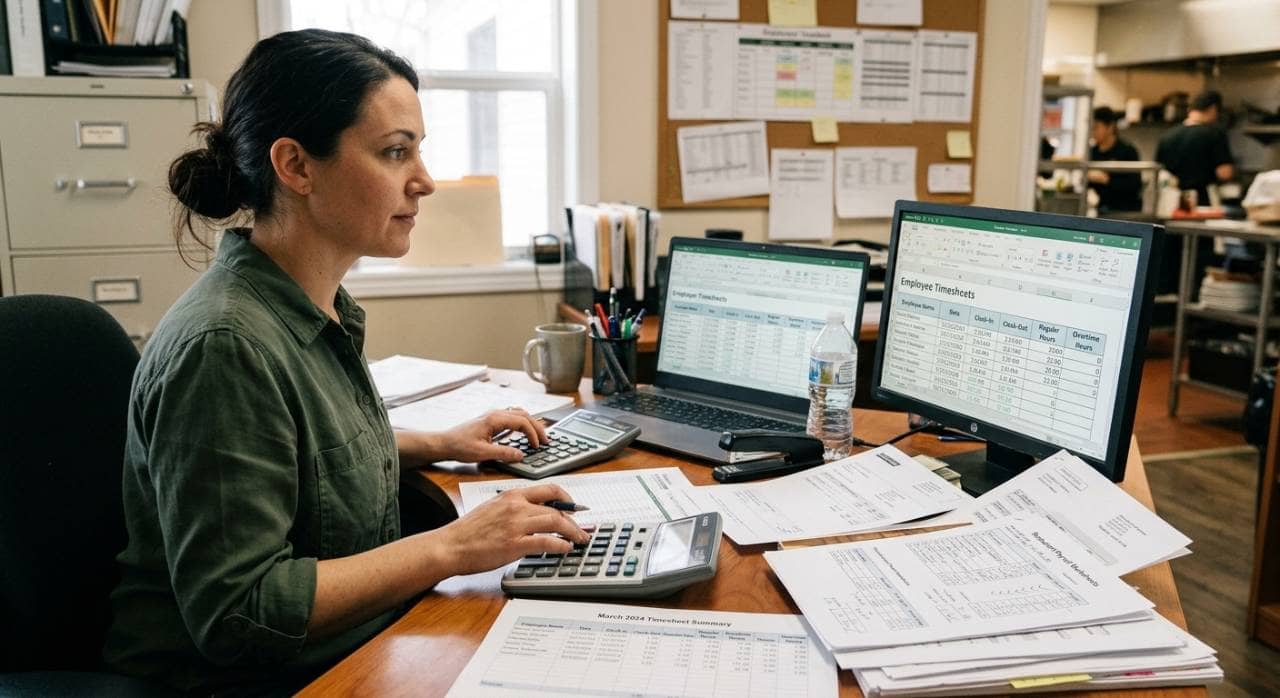
How to Calculate Overtime Pay for Restaurant Employees
Learn how to calculate overtime pay for restaurant employees, apply correct rates, avoid payroll mistakes, comply with labor laws, and control labor costs.
Payroll
Oct 16, 2026
Learn how to calculate overtime pay for restaurant employees, apply correct rates, avoid payroll mistakes, comply with labor laws, and control labor costs.
Oct 16, 2026

Learn how to prepare an accurate balance sheet by organizing financial records, valuing assets, recording liabilities, reconciling accounts, and preventing accounting errors.
Oct 19, 2026

Coffee shops can boost sales by combining happy hours, bundles, limited-time drinks, seasonal menus, loyalty rewards, and friendly upselling, while tracking results and avoiding over-discounting.
Oct 19, 2026

Build a structured training program covering onboarding, roles, service, food safety, and growth to boost consistency, retain staff, and deliver reliably excellent guest experiences.
Oct 16, 2026
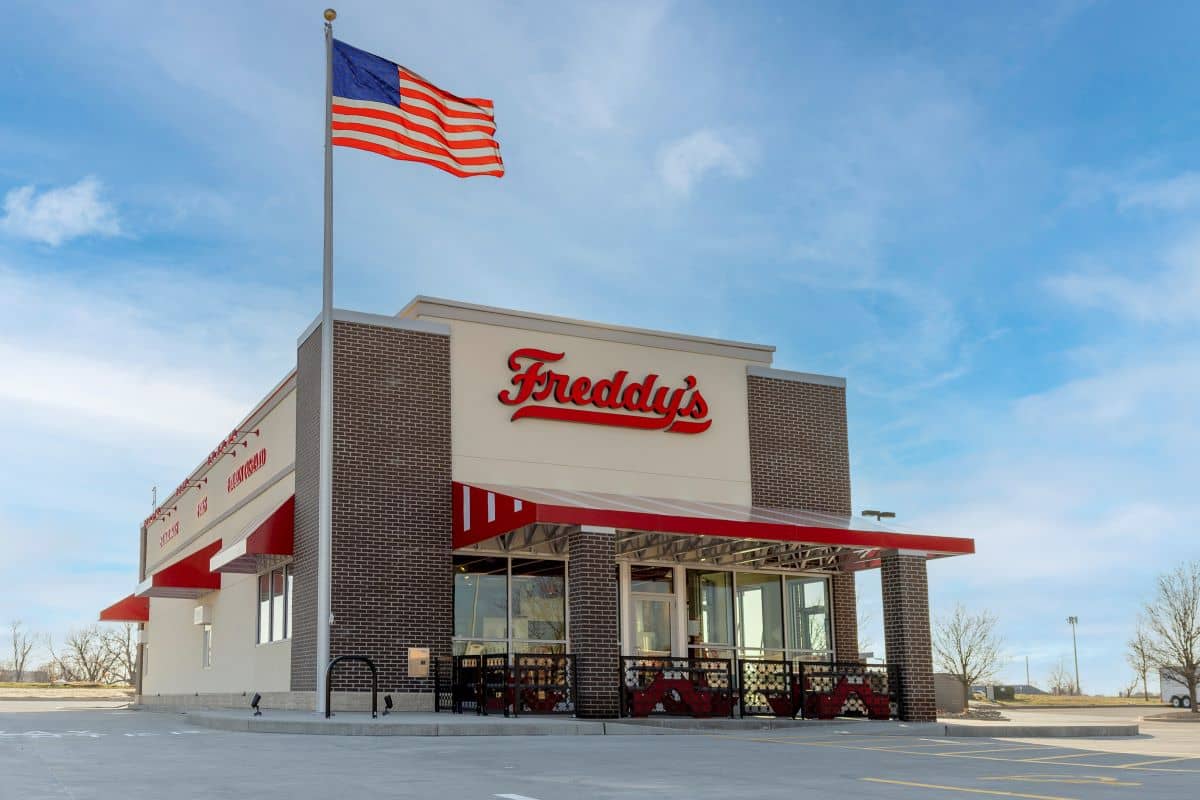
Freddy's celebrates 600 restaurants with a smaller, drive-thru-free format in Beaufort, SC, reshaping its real estate, tech, and pricing strategy.
Oct 16, 2026
Inspire Brands taps Jenna Bromberg as Arby's new CMO while Jeff Baker shifts to lead culinary innovation in a quiet leadership reshuffle.
Oct 16, 2026

Five Guys partners with Full Day Productions and Lost Tribe Creative for On The Line, a docuseries on Prime Video following its global crew competition.
Oct 16, 2026
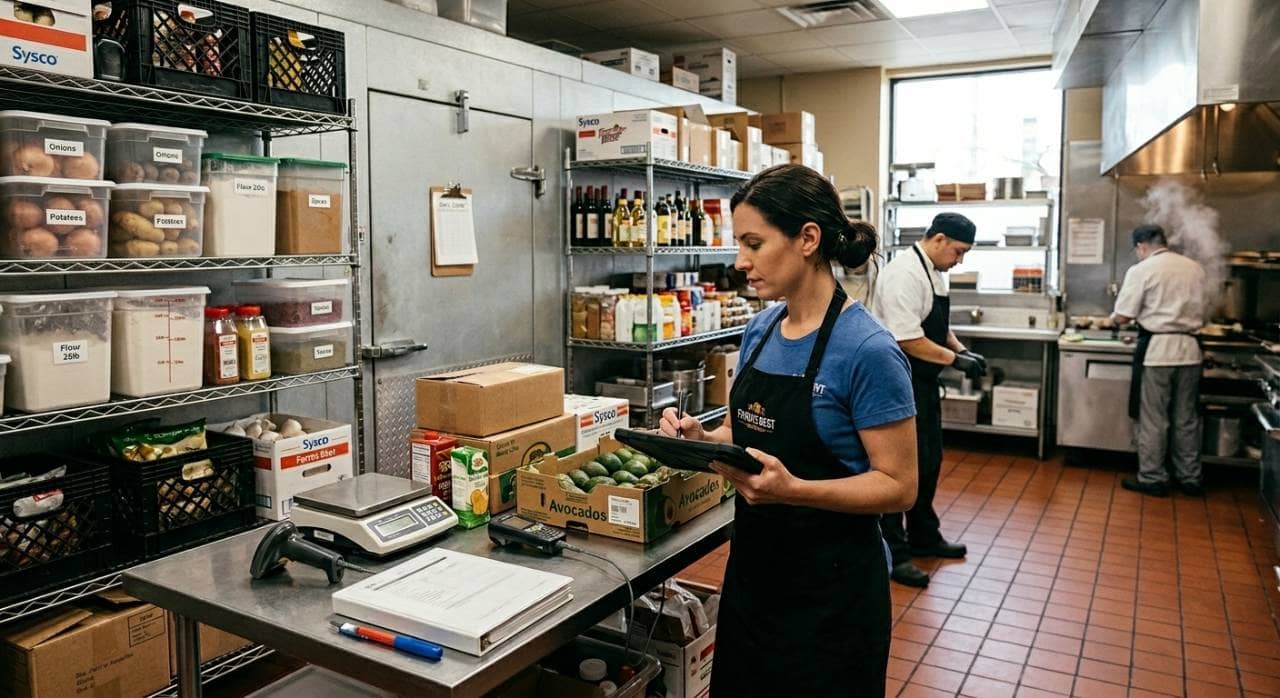
Learn how to forecast restaurant inventory using sales data, demand trends, and stock tracking to reduce food waste, control costs, and improve profitability.
Oct 14, 2026

AI helps restaurant owners streamline back-office management, automate administrative tasks, improve accuracy, control costs, and make smarter business decisions.
Oct 14, 2026

Gen Restaurant Group sells all 47 Gen Korean BBQ locations to Chubby Cattle Group for $100 million, keeping its brand and CPG business.
Oct 14, 2026

Unlock Exclusive Access To Webinars, Events, And The Latest News For Free!
Learn how to prepare an accurate balance sheet by organizing financial records, valuing assets, recording liabilities, reconciling accounts, and preventing accounting errors.
A restaurant balance sheet provides a clear picture of a restaurant's financial position at a specific point in time. It shows what the business owns, what it owes, and how much value remains for the owner after accounting for outstanding obligations. Preparing an accurate balance sheet helps restaurant owners understand their financial standing and make better decisions about daily operations, future investments, and business growth. Unlike an income statement, which tracks revenue and expenses over a period, a balance sheet focuses on financial balances as of a particular date. For example, a restaurant owner might prepare a balance sheet at the end of each month to review available cash, unpaid supplier invoices, outstanding loans, and the value of kitchen equipment. Understand the Three Main Components Every restaurant balance sheet consists of three essential components - assets, liabilities, and owner's equity. Each plays a different role in measuring the business's financial position. 1. Assets - These are the resources a restaurant owns or controls that have economic value. Common examples include cash, food and beverage inventory, accounts receivable, kitchen equipment, furniture, and point-of-sale systems. 2. Liabilities - These represent the restaurant's financial obligations to other parties. They include unpaid supplier invoices, outstanding loan balances, credit card debt, accrued payroll, and taxes payable. 3. Owner's equity - This represents the owner's residual interest in the business after liabilities are subtracted from assets. It can include owner contributions and accumulated profits, less owner withdrawals and other applicable adjustments. These three components must follow a fundamental accounting equation - Assets = Liabilities + Owner's Equity For example, if a restaurant has $250,000 in total assets and $150,000 in total liabilities, its owner's equity is $100,000. This equation must balance for the financial statement to be correctly prepared, although a balanced equation alone does not guarantee that every account is accurate. Why Accuracy Matters for Restaurant Owners An accurate balance sheet helps restaurant owners determine whether the business has enough short-term resources to cover upcoming obligations. It also provides insight into debt levels, asset values, and the amount of capital invested in the business. This information becomes particularly useful when deciding whether to purchase new kitchen equipment, renovate the dining area, open another location, or take on additional debt. Inaccurate balances can distort these decisions by making the restaurant appear financially stronger or weaker than it actually is. Before preparing the balance sheet, establish a clear reporting date and ensure that all financial records reflect the restaurant's position on that date. This creates a reliable starting point for collecting financial data, calculating asset values, recording liabilities, and verifying the final statement.
Preparing an accurate restaurant balance sheet starts with collecting complete and reliable financial records. Every asset, liability, and equity balance must be supported by documentation that shows what the restaurant owns, what it owes, and how its financial position has changed. Missing invoices, outdated bank balances, or incomplete loan records can lead to errors that affect the entire balance sheet. Before entering figures into the accounting system, choose a specific reporting date, such as the last day of the month. Then gather the documents needed to verify each account balance as of that date. Collect Essential Financial Documents Restaurant owners should organize the following records before preparing the balance sheet - 1. Bank statements - Collect statements for all business checking and savings accounts to verify available cash and identify transactions that have not been recorded. 2. Supplier invoices and payment records - Review outstanding invoices, payment confirmations, and vendor statements to determine how much the restaurant owes suppliers. 3. Loan and credit card statements - Gather current balances, repayment schedules, and interest statements to verify outstanding debt and upcoming obligations. 4. Inventory reports - Obtain records of food, beverages, packaging, and other supplies held on the reporting date. 5. Equipment purchase records - Collect receipts, invoices, and asset registers for kitchen equipment, furniture, POS systems, and other business property. 6. Payroll and tax records - Review unpaid wages, payroll taxes, sales taxes payable, and other outstanding obligations. 7. Accounts receivable records - Identify outstanding amounts owed to the restaurant by catering customers, corporate clients, or other parties. Organize Records in One Place Once the documents are collected, organize them by account category. Keep cash records separate from inventory records, supplier balances, loans, and fixed assets. A structured filing system makes it easier to locate supporting documents and verify figures during the preparation process. Restaurant owners should also ensure that all business accounts are included. If the restaurant operates multiple locations, maintain records for each location while consolidating the balances appropriately for the overall business. Avoid combining personal and business transactions without proper documentation and classification. Verify the Reporting Period Check that transactions are recorded in the correct accounting period. For example, a supplier invoice received in March for ingredients delivered in March may need to be recorded as a liability at the March reporting date, even if payment will not occur until April. Similarly, payroll earned by employees before the reporting date may need to be recorded as an accrued liability if it remains unpaid. The goal is to establish a complete, verifiable financial record before calculating any balance sheet figures. Reliable documentation makes it easier to identify missing transactions, confirm outstanding obligations, and produce a balance sheet that accurately reflects the restaurant's financial position.

Restaurant assets represent the resources a business owns or controls that have economic value. Identifying and calculating these assets correctly is essential for preparing an accurate balance sheet. If cash, inventory, equipment, or other assets are missing or incorrectly valued, the balance sheet may not reflect the restaurant's true financial position. Restaurant owners should organize assets into two main categories - current assets and noncurrent assets. This classification helps distinguish resources that can generally be converted into cash within a year from those intended for longer-term use. Identify Current Assets Current assets are resources expected to be converted into cash, sold, or consumed during the normal operating cycle or within the applicable current-asset classification period. Common examples in restaurants include - 1. Cash and bank balances - Record available cash in registers, petty cash funds, and business bank accounts. Verify these amounts against cash counts and bank statements, accounting for outstanding transactions. 2. Food and beverage inventory - Calculate the value of ingredients, beverages, packaging, and other supplies on hand at the reporting date. Use a consistent inventory costing method and exclude items that no longer have recoverable value, as appropriate under the applicable accounting rules. 3. Accounts receivable - Include payments owed by catering clients, corporate customers, or other parties for goods and services already provided. Review overdue balances and assess whether any amounts may be uncollectible. 4. Prepaid expenses - Record qualifying payments made in advance for future benefits, such as insurance premiums, rent, or software subscriptions. Review each category carefully to ensure that all balances are supported by records and reflect the restaurant's actual financial position on the reporting date. Calculate Noncurrent Assets Noncurrent assets are resources the restaurant expects to use for more than one year. They typically support daily operations rather than being held for immediate sale. Examples include ovens, refrigerators, freezers, furniture, kitchen appliances, POS hardware, and qualifying leasehold improvements. To calculate their balance sheet values, review the original purchase cost, the date each asset was placed into service, accumulated depreciation, and any applicable impairment or disposal adjustments. For example, if a restaurant purchased a commercial refrigerator for $12,000 and has accumulated $3,000 in depreciation, its carrying amount would be $9,000, assuming no other adjustments are required. Carrying amount = Original Cost - Accumulated Depreciation - Applicable Impairment Losses Use the appropriate accounting treatment for each asset. Routine repairs are generally treated differently from improvements that qualify for capitalization, so owners should avoid automatically recording every equipment-related payment as a long-term asset. Verify Asset Values Before Recording Them After identifying all assets, compare the recorded balances with supporting documentation. Match cash to bank statements, inventory to physical counts, and equipment to purchase invoices and the fixed-asset register. Check for duplicate entries, missing purchases, disposed equipment that remains on the books, and assets mistakenly recorded as expenses. It is also important to distinguish between owning an asset and having access to it. For example, leased equipment may require different balance sheet treatment depending on the lease agreement and the accounting standards that apply. Accurate asset valuation gives restaurant owners a reliable foundation for assessing liquidity, calculating equity, and understanding the resources available to operate the business.
Recording all outstanding debts and liabilities is essential for preparing an accurate restaurant balance sheet. Liabilities represent amounts the restaurant owes to suppliers, employees, lenders, government agencies, and other parties. If these obligations are missing or understated, the balance sheet may overstate the restaurant's financial strength and provide a misleading picture of its available resources. Restaurant owners should review every financial obligation that existed on the reporting date, including expenses that have been incurred but not yet paid. Organizing liabilities correctly also helps owners understand upcoming payment requirements and manage cash flow more effectively. Identify Current Liabilities Current liabilities are generally obligations expected to be settled within the next 12 months or during the restaurant's normal operating cycle, as applicable under the relevant accounting standards. Common examples include - 1. Accounts payable - Record unpaid invoices from food distributors, beverage suppliers, cleaning companies, and other vendors. Compare the accounting records with supplier statements to identify missing invoices or outstanding balances. 2. Accrued payroll - Include wages, salaries, and other employee compensation earned before the reporting date but not yet paid. 3. Taxes payable - Record outstanding sales taxes, payroll taxes, and other applicable tax obligations. 4. Credit card balances - Include unpaid business credit card charges, such as ingredient purchases, equipment supplies, and operating expenses. 5. Accrued expenses - Account for expenses already incurred but not yet invoiced or paid, such as utilities and certain service fees. 6. Current portions of loans - Include principal repayments due within the next 12 months when classifying loan balances. Review invoices, payroll reports, tax records, and payment schedules to confirm that these obligations are complete and correctly recorded. Record Long-Term Liabilities Long-term liabilities are obligations that extend beyond the current reporting period, such as the noncurrent portion of business loans or qualifying lease liabilities. Restaurant owners should review loan agreements and lender statements to determine the outstanding principal balance at the reporting date. Separate the amount due within the next 12 months from the remaining balance when required by the applicable accounting framework. For example, if a restaurant has $80,000 remaining on an equipment loan, with $15,000 in principal due within the next 12 months, the balance sheet would generally show $15,000 as a current liability and $65,000 as a long-term liability, assuming the classification criteria are met. Lease obligations also require attention. Depending on the applicable accounting standards and lease arrangement, a restaurant may need to recognize a lease liability for its premises or equipment. Owners should review the lease terms and consult an accountant when the appropriate treatment is unclear. Verify That No Obligations Are Missing Before finalizing the liability section, compare the accounting ledger against supplier statements, loan balances, payroll records, tax filings, and subsequent payments. Payments made after the reporting date can sometimes help identify obligations that existed at the end of the reporting period but were not recorded. Pay particular attention to invoices received after month-end for goods or services already provided. The date an invoice is paid does not necessarily determine when the liability should be recognized. Accurate liability reporting ensures that the restaurant's debts are fully represented on the balance sheet. Once current and long-term obligations have been verified, restaurant owners can move on to valuing inventory and equipment carefully to ensure that their asset figures are equally reliable.
Inventory and equipment are important assets on a restaurant balance sheet, but their values must be calculated carefully to avoid overstating or understating the business's financial position. Inventory changes as ingredients are purchased, used, spoiled, or discarded, while equipment loses value over time through depreciation and may require adjustments when damaged or no longer usable. Restaurant owners should establish consistent procedures for counting inventory, reviewing equipment records, and verifying asset values at each reporting date. Conduct a Physical Inventory Count Start by counting all food, beverages, packaging, and other supplies available on the balance sheet date. Include inventory stored in refrigerators, freezers, dry storage areas, bars, and other locations used by the restaurant. Use a standardized inventory sheet that records each item's name, quantity, unit of measurement, and cost. Assign responsibility for counting specific storage areas to reduce duplicate entries and omissions. When calculating inventory value, consider the following steps - 1. Count actual quantities - Compare physical stock with inventory records and investigate significant differences. 2. Apply a consistent costing method - Use an appropriate method, such as first-in, first-out (FIFO) or weighted-average cost, in accordance with the applicable accounting standards and the restaurant's established policy. 3. Identify damaged or spoiled stock - Review expired ingredients, spoiled produce, and damaged packaging. Write down inventory when required if its recoverable value has fallen below its recorded cost. 4. Include relevant inventory costs - Apply the appropriate accounting treatment to purchase costs and other costs that qualify for inclusion in inventory value. For example, if a restaurant holds 100 pounds of an ingredient with a recorded cost of $4 per pound, its inventory value would be $400 before any required adjustments for spoilage or reduced recoverable value. Review Equipment and Fixed Assets Restaurant equipment often represents a significant investment. Ovens, refrigerators, freezers, dishwashers, furniture, and qualifying technology purchases should be checked against the restaurant's fixed-asset register. For each asset, verify the original cost, purchase date, date placed into service, useful life, accumulated depreciation, and any applicable impairment or disposal adjustments. The balance sheet should generally report qualifying fixed assets at their carrying amounts rather than simply listing their original purchase prices. For example, a restaurant purchases a commercial oven for $20,000. If accumulated depreciation is $5,000 and no other adjustments apply, the oven's carrying amount is $15,000. Restaurant owners should also remove disposed assets from the records when appropriate. Equipment that has been sold, discarded, or otherwise retired should not remain incorrectly listed as an active asset. Once the values have been calculated, compare them with purchase invoices, inventory reports, equipment registers, and the general ledger. Investigate unexplained differences, duplicate asset entries, missing purchases, and inventory quantities that do not match physical counts. Accurate inventory and equipment valuation helps restaurant owners understand the true value of their operating resources.

Reconciling accounts is an essential step in preparing an accurate restaurant balance sheet. Even when financial records appear complete, errors can occur because of missing transactions, duplicate entries, incorrect classifications, or differences between accounting records and external statements. Account reconciliation helps restaurant owners identify these problems before finalizing the financial statement. Reconcile Bank Accounts and Credit Cards Begin by comparing the cash balances recorded in the accounting system with the restaurant's bank statements. Review deposits, withdrawals, electronic payments, bank fees, and outstanding checks to identify differences. Some discrepancies result from timing differences rather than accounting errors. For example, a supplier payment may have been recorded in the restaurant's books but not yet cleared the bank. These differences should be documented and handled appropriately. Next, reconcile business credit card accounts. Compare recorded purchases and payments with the credit card statements to confirm that all transactions have been captured. Check for duplicate charges, unrecorded fees, and purchases assigned to the wrong expense category. Verify Supplier Balances, Loans, and Receivables Restaurant owners should compare accounts payable records with supplier statements and unpaid invoices. This helps identify missing bills, duplicate entries, and payments that have not been applied correctly. Loan balances should be checked against lender statements and repayment schedules. Confirm that principal repayments, accrued interest, and current versus long-term portions are recorded appropriately. For accounts receivable, compare outstanding customer invoices with the general ledger and investigate overdue balances. If certain amounts are unlikely to be collected, assess whether an allowance or write-down is required under the applicable accounting standards. Check Payroll, Taxes, and Accrued Expenses Review payroll records to confirm that unpaid wages, employer payroll taxes, and other employee-related obligations are recorded correctly. Compare tax liabilities with relevant filings and payment records. Also check expenses incurred before the reporting date but paid afterward. For example, if the restaurant received an electricity service in September but paid the bill in October, the September financial records may need to reflect the obligation at the end of September. These checks help prevent liabilities from being understated simply because the related invoices or payments were processed later. Confirm That the Balance Sheet Balances After reconciling the individual accounts, verify the fundamental accounting equation - Assets = Liabilities + Owner's Equity If total assets do not equal total liabilities plus owner's equity, investigate the difference before finalizing the statement. Possible causes include missing transactions, incorrect account classifications, duplicate entries, or errors in opening balances. However, a balance sheet can satisfy this equation and still contain inaccurate figures. Each account must therefore be verified independently against its supporting records. Make account reconciliation part of the regular month-end closing process. Consistent reviews help restaurant owners catch errors early, maintain reliable financial records, and prepare balance sheets that support sound business decisions.
Even with organized financial records and regular account reconciliation, mistakes can affect the accuracy of a restaurant balance sheet. Incorrect asset values, missing liabilities, and misclassified transactions can make a restaurant appear more financially stable than it actually is. Identifying these errors early helps owners maintain reliable financial statements and make informed business decisions. Avoid Missing or Understated Liabilities One common mistake is recording expenses only when payments are made. This approach can leave outstanding obligations off the balance sheet at the reporting date. For example, a restaurant may receive ingredients in October but pay the supplier in November. If the ingredients were delivered before the October reporting date, the corresponding liability generally needs to be recorded in October, even if the invoice or payment is processed later. Restaurant owners should review supplier invoices, payroll records, tax obligations, loan statements, and accrued expenses to confirm that all outstanding liabilities have been recognized in the appropriate period. Separate Personal and Business Transactions Mixing personal and business finances makes it difficult to determine the restaurant's actual financial position. Personal purchases made with a business credit card, for example, should not automatically be classified as restaurant operating expenses. Similarly, owner contributions and withdrawals must be recorded correctly. Depending on the business structure, personal transactions may affect owner's equity, distributions, or amounts due to and from the owner. Maintain separate business bank accounts and credit cards whenever possible. Document transactions involving the owner and classify them according to the applicable accounting rules. Prevent Inventory and Equipment Valuation Errors Inventory errors can occur when restaurant owners rely solely on purchasing records instead of conducting physical counts. Ingredients may have been used, spoiled, damaged, or discarded without the inventory records being updated. Establish a consistent inventory-counting schedule and investigate significant differences between recorded quantities and actual stock. Apply the restaurant's established inventory costing method consistently, and account for losses in value when required. Equipment records also need regular review. Avoid recording the full purchase price of every item as a current expense when the item qualifies as a capital asset. Conversely, do not leave sold, discarded, or fully disposed-of equipment on the balance sheet without appropriate adjustments. Apply depreciation and other required accounting treatments consistently. Use Consistent Accounting Methods Changing accounting methods or classifications without proper justification can make financial statements difficult to compare over time. For example, inconsistent inventory costing or depreciation practices may distort changes in reported asset values. Restaurant owners should document their accounting policies and apply them consistently, subject to the applicable accounting standards. They should also maintain invoices, receipts, loan agreements, inventory records, and reconciliation reports to support reported balances. Establish a Review Process Before approving the balance sheet, check for duplicate entries, missing accounts, unusual fluctuations, incorrect classifications, and unsupported figures. Compare balances with previous periods and investigate significant changes. For complex transactions, tax-related questions, or uncertainty about accounting treatment, consult a qualified accountant. Preventing accounting errors is just as important as recording financial information correctly. A consistent review process helps restaurant owners maintain dependable records and reduces the risk of making decisions based on misleading financial figures
Preparing an accurate restaurant balance sheet does not end when all assets, liabilities, and owner's equity have been recorded. Restaurant owners must review the completed statement, verify that all figures are supported by reliable records, and establish a routine for keeping financial information up to date. Regular reviews help identify changes in the restaurant's financial position, uncover potential accounting errors, and provide useful information for future business decisions. Review the Completed Balance Sheet Before finalizing the statement, examine each major account category to confirm that the recorded figures are accurate and properly classified. Use the following checklist to review the completed balance sheet - 1. Verify total assets - Confirm that cash, inventory, accounts receivable, equipment, and other assets are supported by current records. 2. Confirm outstanding liabilities - Ensure that supplier invoices, payroll obligations, taxes payable, credit card balances, and loan amounts are fully recorded. 3. Check owner's equity - Verify that owner contributions, withdrawals, retained earnings, and other relevant equity adjustments are properly reflected. 4. Confirm the accounting equation - Make sure total assets equal total liabilities plus owner's equity. 5. Investigate unusual changes - Compare the current statement with previous periods and review significant increases or decreases in individual accounts. Remember that a balanced accounting equation does not automatically guarantee an accurate statement. Each balance must still be verified against supporting documentation. Establish a Regular Reporting Schedule Restaurant owners should prepare balance sheets consistently, often monthly, to maintain an up-to-date understanding of the business's financial position. The appropriate frequency depends on the restaurant's size, complexity, reporting requirements, and management needs. A monthly closing process can include recording outstanding invoices, reconciling bank accounts, updating inventory values, reviewing loan balances, and recording depreciation and other necessary adjustments. Assign responsibility for each task and set clear deadlines. For restaurants with multiple locations, establish consistent reporting procedures across all locations to support reliable comparisons and consolidated financial reporting. Use the Balance Sheet to Guide Business Decisions Once finalized, the balance sheet can help restaurant owners evaluate liquidity, debt levels, working capital, and the resources available to support operations. For example, comparing current assets with current liabilities helps owners assess whether the restaurant has sufficient short-term resources to meet upcoming obligations. Reviewing outstanding loans alongside assets and equity can also help identify whether additional borrowing may place pressure on the business. Use these insights alongside the income statement and cash flow statement. The balance sheet shows financial position at a specific date, while the other statements provide additional information about profitability and cash movements. Maintain Accurate Records Between Reporting Periods Keep financial documents organized throughout the month rather than waiting until the reporting deadline. Record transactions promptly, retain supporting invoices and receipts, update asset registers, and investigate discrepancies as they arise. Accounting software can help organize transactions and generate reports, but the output still depends on accurate data entry, appropriate account classifications, and regular reconciliation. An effective restaurant balance sheet is the result of consistent financial recordkeeping, careful verification, and regular review. By following a structured preparation process, restaurant owners can maintain more reliable financial statements, identify potential risks earlier, and make better-informed decisions about their restaurant's future.