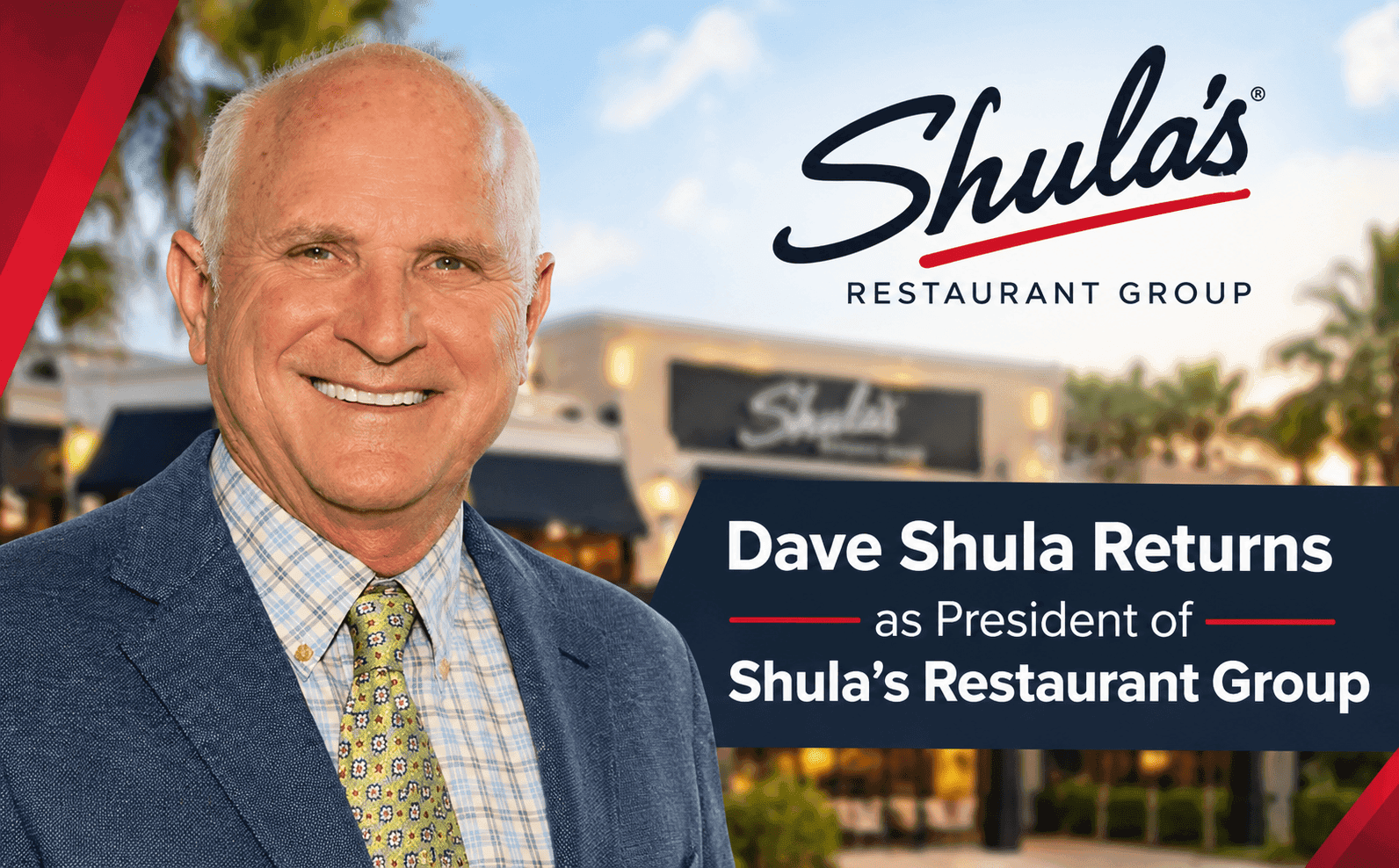
Dave Shula Returns as President of Shula's Restaurant Group
Dave Shula rejoins Shula's Restaurant Group as president, leading growth into Palm Beach Gardens and a 2027 Thomasville, Georgia expansion.
News
Sep 23, 2026
Dave Shula rejoins Shula's Restaurant Group as president, leading growth into Palm Beach Gardens and a 2027 Thomasville, Georgia expansion.
Sep 23, 2026
McDonald's commits $8.5 billion through 2036 to modernize restaurants, boost cash flow by $100,000 per store, and grow chicken and beverage sales.
Sep 23, 2026
WKS Restaurant Group promotes Jay Spongberg to president and COO after he helped grow the company from 65 to 382 restaurants over 16 years.
Sep 23, 2026

Smokey Mo's BBQ names Von Dawson, a Dine Brands veteran, as VP of Franchise Development to lead its Texas expansion strategy.
Sep 23, 2026
.png&w=3840&q=70)
Meritage Hospitality's Chapter 11 filing pulls 5% of Wendy's U.S. stores into bankruptcy, exposing cracks in franchising's bigger-is-safer bet.
Sep 21, 2026
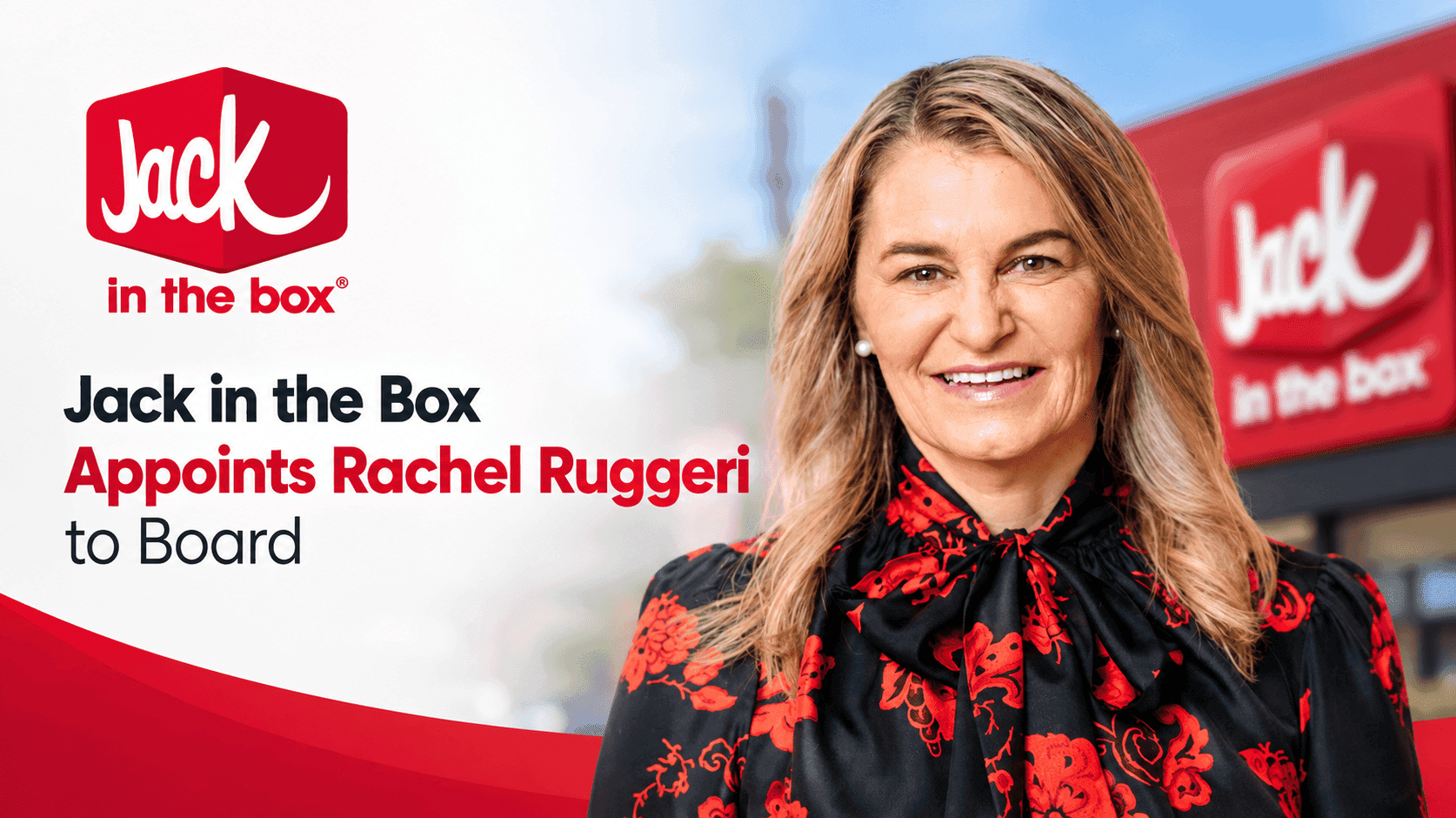
Jack in the Box names Rachel Ruggeri to its board as Michael Murphy retires, amid a CEO transition and deal with investor GreenWood.
Sep 21, 2026
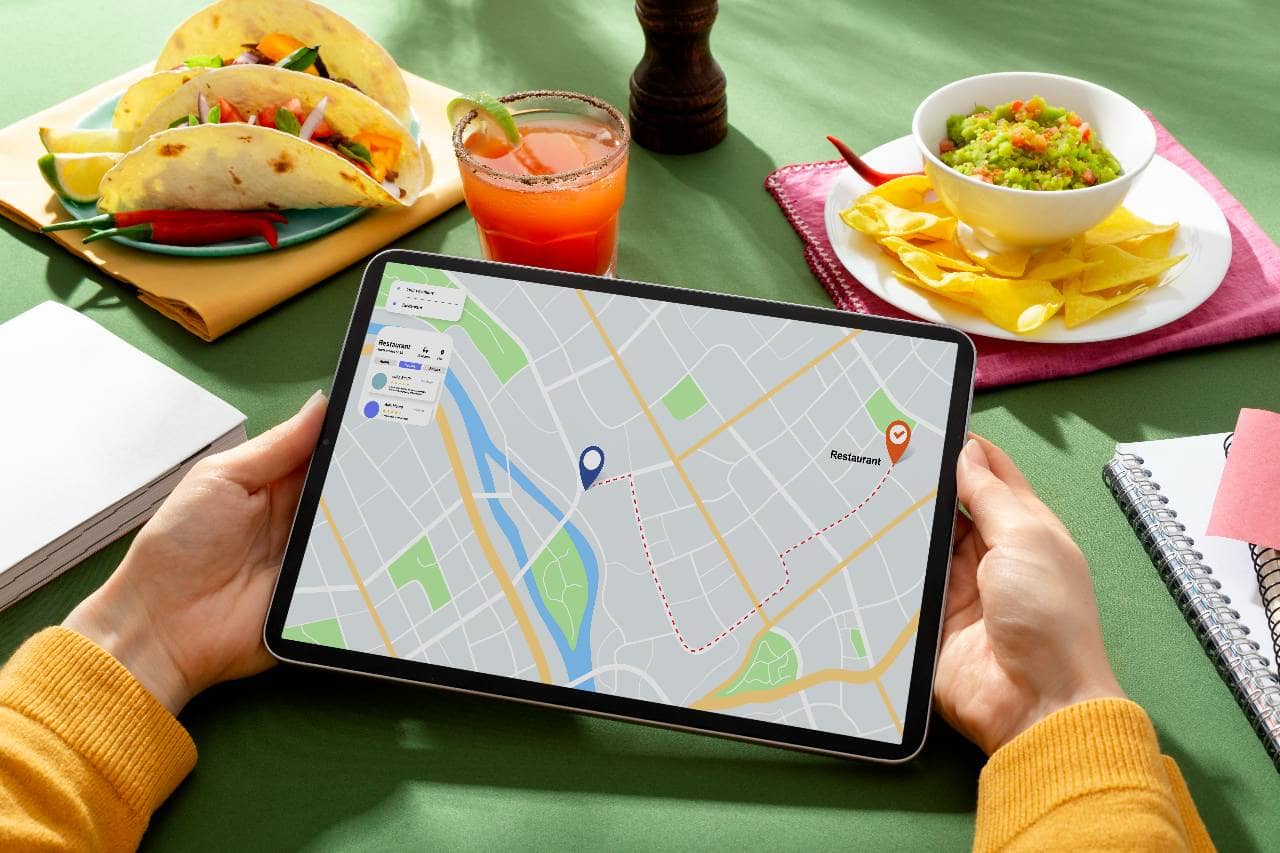
Improve restaurant Google Maps rankings by optimizing your business profile, selecting accurate categories, gathering reviews, adding photos, and strengthening local relevance signals.
Sep 21, 2026

Restaurant inventory tracking helps owners monitor stock, control food costs, reduce waste, improve purchasing, and make informed operational decisions.
Sep 21, 2026

Restaurant owners can significantly reduce restaurant costs by leveraging technology across inventory, labor, procurement, forecasting, and administrative operations for better profit margins.
Sep 18, 2026

Understand how to forecast restaurant revenue and expenses with methods for sales projection, cost scaling, fixed-cost planning, and risk buffering.
Sep 18, 2026

Unlock Exclusive Access To Webinars, Events, And The Latest News For Free!
Bars face rising 2025 costs and turn to inventory software. See projections, top platforms, and user feedback shaping adoption.

Photo by Christiann Koepke
Margins are under strain, and bars are answering with precision. Food and labor, utilities, insurance and credit card fees are all pushing costs higher in 2025, so operators are zeroing in on liquor inventory to align pricing, reduce variance and keep shelves full when the room is packed. A recent comparative evaluation assessed 11 inventory providers across 29 data points, spanning pricing, general and advanced features, support and user sentiment, to identify the best bar inventory management software for the year.
The dollars backing this shift are real. Grand View Research projects the global restaurant management software market will reach USD 6.60 billion in 2025, a sign that digital tools are becoming a core defense against volatility. The urgency has a clear origin. Food and labor alone have climbed more than 30 percent since 2019, pressing many operators to adjust menu prices or trim hours to stay solvent. Bars, with high-cost back bars and variable pour costs, are exposed to theft, waste and invoice discrepancies that can quietly erode profit.
Nearly half of operators plan to invest in inventory management software this year, reflecting a shared push for better control. Future Market Report estimates the restaurant inventory management purchasing software market at USD 610.75 million in 2025, with forecasts calling for USD 1.19 billion by 2033 at an 8.2 percent CAGR.

Broader restaurant inventory and purchasing software is set to expand from USD 4.55 billion in 2025 to USD 9.18 billion by 2030, a telling arc for systems that promise cleaner counts, tighter costing and steadier pricing. The leading platforms meet that need with real-time tracking, POS integration, offline counting and automated ordering.
WISK tops the 2025 rankings with an overall expert and user score of 3.5/5, pricing at 4.38/5, general features at 5/5, advanced features at 4.48/5 and support at 4.63/5. It syncs sales data from any POS to automate inventory adjustments, flags invoice discrepancies via barcode and scale scans, and uses internal scales for kegs and partial bottles to calculate precise dollar values. WISK’s automated ordering analyzes beverage sales to generate par-level purchase suggestions and its liquor cost calculator tracks per-cocktail profitability, alerting operators to price shifts.

Freepour by MarginEdge scored 3.73/5 overall, with pricing at 3.5/5, and emphasizes multi-unit reporting, cost projections and offline counts that sync once connectivity is restored. Its variance tracker isolates partial bottle costs and inventory gaps to pinpoint waste, while price history charts support vendor negotiations. xtraCHEF by Toast, with an expert score of 2.86/5, integrates natively with Toast POS for auto-coding of invoices, recipe costing and dynamic dashboards, though bar-specific depth trails specialty peers and offline mode is limited. Backbar leads with a 5/5 pricing score and a comprehensive free plan, including UPC scanning, variance dashboards, distributor management and shift notes for smaller or startup bars. AI integration and forecasting, planned by 28 percent of operators for 2025, add predictive ordering and waste reduction to the mix.
User feedback shows promise with caveats. Operators praise WISK for live inventory and pour cost monitoring across multiple sites, even as early-stage feature tests have caused occasional workflow slowdowns. One App Store reviewer called WISK “the best bar and restaurant management app hands down,” citing time savings at a major Las Vegas club where manual counts once overwhelmed staff. Freepour users highlight the ease of offline counts and centralized order guides, with several noting the absence of trial options and the requirement of a MarginEdge subscription as barriers for standalone bars.

Toast xtraCHEF supporters value the seamless POS integration and responsive onboarding, yet recurring interface updates have drawn complaints about learning curves. Backbar reviewers, while limited in number, credit the no-cost entry and user-friendly setup, with some advanced features gated behind paid tiers. Operators also flag real operational constraints that shape adoption, from wide variability in support hours that do not always match late-night bar service to opaque pricing for add-ons and customizations. Offline counting ranges from very limited in xtraCHEF, where functionality is paused until reconnection, to full counts in Freepour that later sync.
Tech budgets are following the same path. With 47 percent of operators earmarking funds for inventory management in 2025, these apps now sit alongside cybersecurity and POS upgrades on the priority list. Grand View Research points to digital transformation in foodservice as a driver of demand for inventory management, recipe costing, supplier management and analytics modules.

Future Market Report projects that adoption of cloud-based inventory tools in bars will accelerate through 2033, supported by multi-location needs, AI-driven forecasting and links to accounting platforms like QuickBooks. That scale of adoption gives operators more leverage to manage pour cost and safeguard margins, even as prices shift week to week.
The right fit still depends on the room you run. Larger or multi-unit bars benefit from centralized reporting, automated ordering and stronger AI forecasting, while smaller venues often gravitate to intuitive interfaces, free plans and basic POS syncing. Critical checkpoints remain the same: confirm POS compatibility for automatic sales-to-inventory syncing, secure off-hours support that mirrors service times, and balance cloud subscription fees against contract length and add-on costs.
Weekly reporting, supported by bi-weekly audits and deeper monthly analyses, continues to be a practical rhythm for catching waste and theft early. With precision tools like WISK, described by users as “hands-down the best,” and approachable options like Backbar, bars can protect each pour, keep teams prepped for peak shifts and price with confidence as 2025 unfolds.