How Much Does It Cost to Open a Sports Bar?
Understand sports bar startup expenses, including location, construction, kitchen equipment, televisions, licenses, insurance, staffing, supplies, and cash reserves for operations.
operations
Jul 16, 2026
Understand sports bar startup expenses, including location, construction, kitchen equipment, televisions, licenses, insurance, staffing, supplies, and cash reserves for operations.
Jul 16, 2026
Learn how to increase restaurant sales during the World Cup final through smarter planning, staffing, promotions, inventory, menus, and operations.
Jul 16, 2026

Mother-daughter duo Ciara Boyce and Tracey Pidge bring Hotworx to Wasilla, the first of four Alaska studios, extending a fast-growing 800+ location brand.
Jul 16, 2026
One of the largest U.S. Cyclospora outbreaks hits 34 states; Taco Bell pulls produce in Michigan as FDA and CDC trace the source.
Jul 16, 2026

Chick-fil-A will refresh 200+ multi-sensory playgrounds by 2026 to boost dine-in traffic and loyalty, adding app content and toys as rivals upgrade experiences.
Jul 16, 2026

Ex-consultant Michael Creatore acquires six Mold Medics territories across central Ohio, partnering with Threshold Brands amid a growing mold remediation market.
Jul 16, 2026

Pizza Hut launches a Throwback Value Menu, app rewards, and a streetwear drop as ownership shifts and the brand bets on nostalgia to steady sales.
Jul 16, 2026
Domino's adds strategic expertise to its Board by appointing leaders from major brands. Learn what this means for restaurant owners' competitive growth.
Jul 16, 2026
Wonder’s $650 million funding round at a $9 billion valuation signals a new era in restaurant tech, expansion, and automation. Here’s what operators need to know.
Jul 16, 2026
Chipotle’s $1 million burrito giveaway during the World Cup final hydration break takes fan engagement and promotional creativity to new heights, setting a best-in-class example for restaurant marketers.
Jul 16, 2026
Understand sports bar startup expenses, including location, construction, kitchen equipment, televisions, licenses, insurance, staffing, supplies, and cash reserves for operations.
Opening a sports bar in the United States can require approximately $100,000 to more than $1 million, depending on the location, property condition, business size, and overall concept. A small operation that moves into an existing restaurant space may remain near the lower end of the range. A large sports bar requiring extensive construction, premium equipment, dozens of televisions, and a full commercial kitchen can easily reach the upper end. Published estimates vary considerably. Sports-bar startup costs are commonly estimated at $100,000 to $500,000 or more, while broader restaurant startup estimates range from about $95,000 to over $2 million. Another industry estimate places average restaurant opening costs between $275,000 and $425,000. These ranges should be treated as initial planning benchmarks rather than guaranteed budgets. A sports bar usually costs more than a simple neighborhood bar because it combines several business models. Owners must create a restaurant kitchen, operate an alcohol program, install entertainment technology, and design a space capable of serving large crowds during major games. The total startup budget generally includes - 1. Property expenses - Lease deposits, advance rent, utility deposits, and legal fees 2. Construction and renovations - Plumbing, electrical work, flooring, restrooms, ventilation, signage, and interior design 3. Kitchen and bar equipment - Cooking appliances, refrigeration, draft systems, glassware, furniture, and smallwares 4. Entertainment technology - Televisions, projectors, speakers, control systems, internet equipment, and installation 5. Licenses and permits - Business registration, liquor licensing, food permits, inspections, and music licensing 6. Pre-opening expenses - Hiring, training, inventory, marketing, insurance, and professional services 7. Working capital - Cash needed to cover payroll, rent, utilities, inventory, and other bills after opening Startup budgets are often underestimated when owners focus only on construction and equipment. A complete estimate must also account for POS systems, signage, opening inventory, payroll, marketing, permits, and working capital.
The location and condition of the property can significantly affect the total cost of opening a sports bar. Owners must budget for more than monthly rent because occupancy expenses may also include deposits, common-area fees, insurance, taxes, utilities, legal costs, and renovation work. Calculate the Full Lease Cost Commercial rent depends on the city, neighborhood, square footage, visibility, parking, and customer traffic. A location in a busy entertainment district may have higher rent, while a suburban property may provide lower occupancy costs and easier customer access. Before signing a lease, owners should calculate the full financial commitment, including - 1. Base monthly rent 2. Security deposits and prepaid rent 3. Common-area maintenance charges 4. Property tax and insurance contributions 5. Utility and waste-removal expenses 6. Broker and legal fees 7. Scheduled annual rent increases Some commercial properties use triple-net leases, which require tenants to pay property taxes, building insurance, and maintenance costs in addition to base rent. Owners should also confirm that the location permits food preparation, alcohol service, exterior signage, late operating hours, live entertainment, and the expected customer capacity. Estimate Renovation and Build-Out Expenses Restaurant construction costs can range from approximately $100 to $800 per square foot, depending on the building's condition, local labor rates, design requirements, and existing infrastructure. For a 3,000-square-foot sports bar, limited cosmetic improvements at $100 per square foot could cost around $300,000. A moderate renovation involving new flooring, lighting, plumbing, electrical work, bar construction, and kitchen upgrades at $200 per square foot could reach approximately $600,000. A major build-out at $400 per square foot could cost about $1.2 million, especially when the property requires extensive structural work, ventilation systems, restrooms, commercial kitchen installation, soundproofing, and electrical upgrades for multiple televisions and audio equipment. These figures are planning examples, and actual costs may vary by market and project complexity. Consider a Second-Generation Restaurant Space A second-generation restaurant or bar may already include a kitchen hood, grease trap, plumbing, floor drains, restrooms, and sufficient electrical capacity. Reusing these features can reduce construction costs and shorten the opening timeline. However, owners should inspect all systems before signing the lease. Outdated wiring, damaged plumbing, poor ventilation, or unusable equipment can eliminate expected savings. The lease should clearly state who owns the equipment, who pays for repairs, whether the landlord provides a tenant-improvement allowance, and which improvements must remain when the lease ends. Owners should also reserve 10% to 20% of the renovation budget for unexpected damage, permit delays, design changes, and code upgrades.
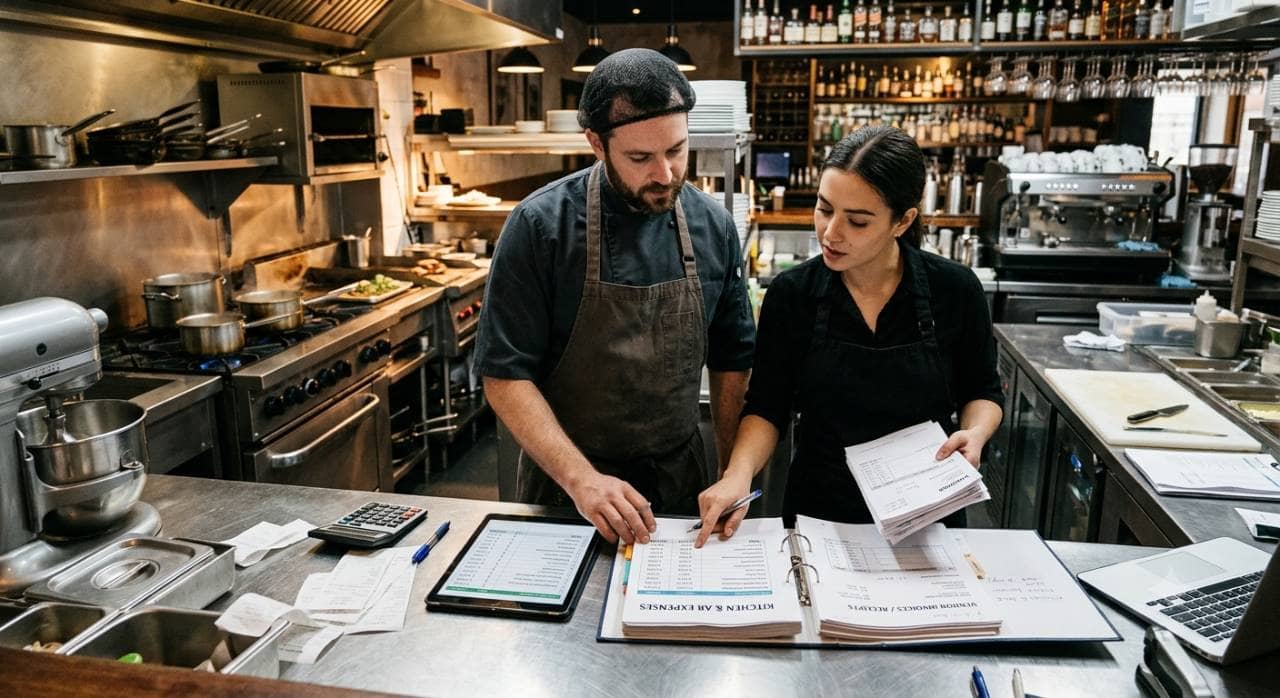
Kitchen and bar equipment can represent one of the largest startup expenses when opening a sports bar. A complete commercial kitchen may cost approximately $75,000 to $250,000 or more, depending on the menu, customer capacity, equipment quality, and installation requirements. Full-service restaurants generally need a larger investment because they prepare multiple menu categories and serve high volumes during busy periods. Build the Equipment List Around the Menu Owners should finalize the menu before purchasing equipment. A sports bar serving burgers, wings, fries, pizza, and appetizers may require several fryers, a flat-top grill, a charbroiler, commercial ovens, holding equipment, and extensive refrigeration. Common kitchen purchases include - 1. Commercial ranges, grills, fryers, and ovens 2. Walk-in or reach-in refrigerators and freezers 3. Food preparation tables and stainless-steel shelving 4. Commercial dishwashers and three-compartment sinks 5. Ventilation hoods and fire-suppression systems 6. Ice machines and beverage dispensers 7. Food processors, mixers, slicers, and smallwares Individual equipment prices vary widely. Commercial ovens may range from approximately $1,000 to $10,000, while refrigeration units can cost around $2,000 to $15,000 each. Larger walk-in coolers, specialized cooking systems, and high-capacity dishwashers can increase the budget considerably. Budget for the Bar Setup A sports bar also needs equipment designed for fast beverage service. The budget may include undercounter refrigerators, bottle coolers, ice bins, glasswashers, sinks, speed rails, liquor displays, blenders, glassware, POS terminals, and storage racks. A draft beer system can become a major expense when the bar offers numerous taps. Cost depends on the number of beer lines, cooler location, line distance, cooling method, installation requirements, and cleaning equipment. A long-draw system that carries beer from a remote cooler generally costs more than a direct-draw system located behind the bar. Include Installation and Maintenance Costs The equipment purchase price is not always the final cost. Owners may also need to pay for freight, assembly, plumbing, electrical connections, gas lines, ventilation, calibration, inspections, and staff training. Used equipment can reduce the initial investment, but it should be inspected for condition, energy consumption, warranty coverage, and replacement-part availability. Refrigeration, ice machines, and dishwashing equipment require particular caution because unexpected failures can interrupt service and create expensive food losses. A practical equipment budget should include a reserve for repairs, replacement parts, water filters, cleaning supplies, and preventive maintenance. Purchasing only what the opening menu requires can help owners protect cash and add specialized equipment later as sales volume increases.
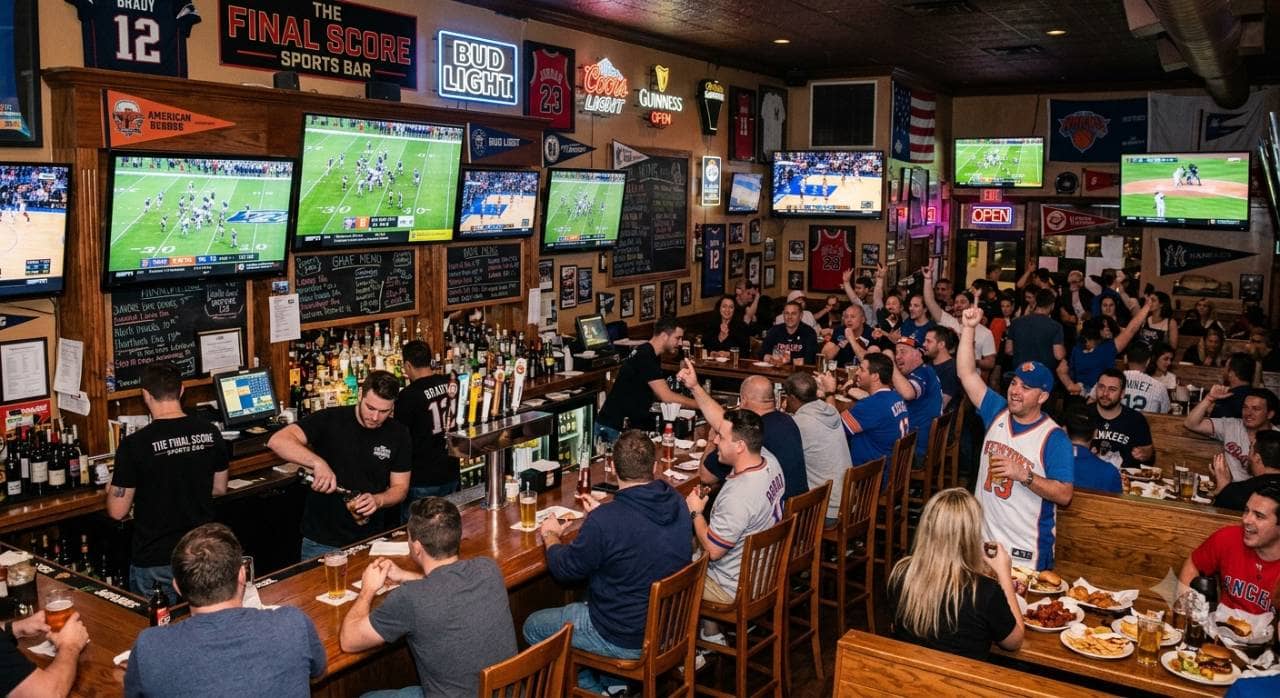
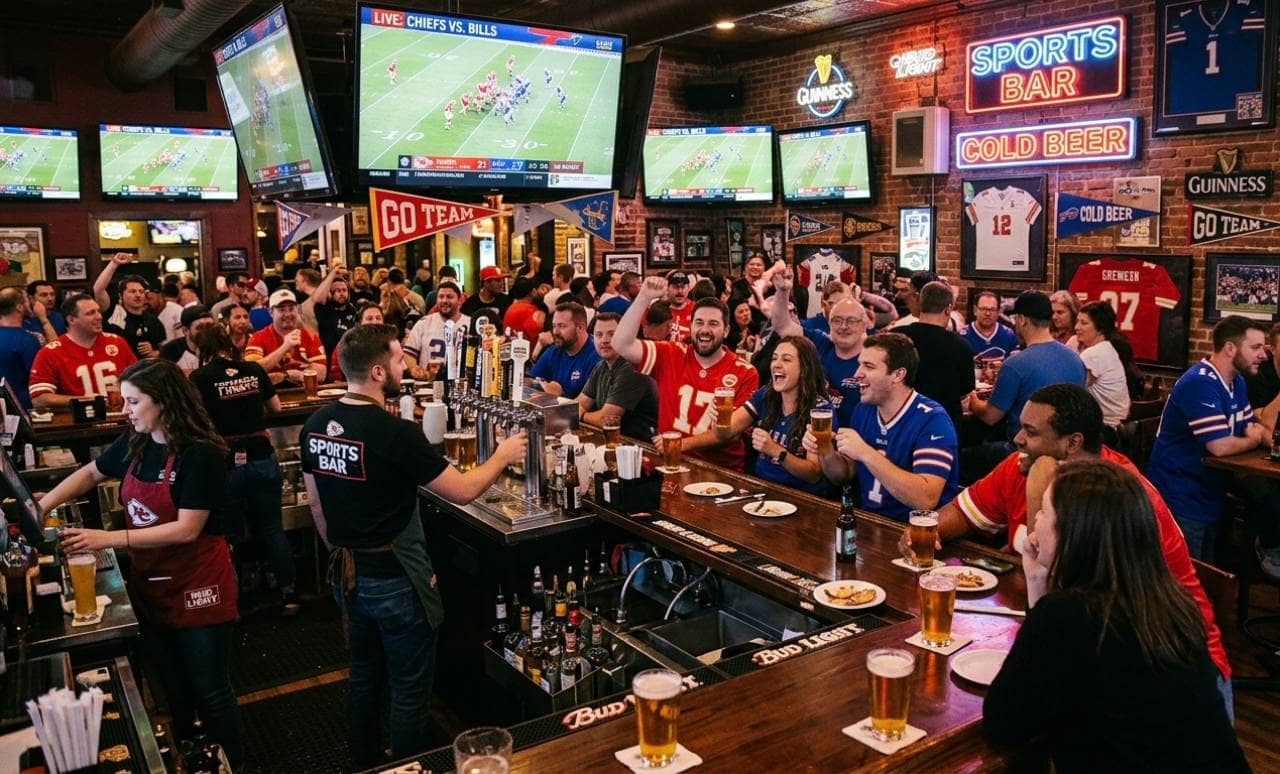
Televisions and audiovisual equipment are defining expenses for a sports bar. Customers expect clear views of live games, understandable audio, and access to several sporting events at the same time. Depending on the number of screens and the complexity of the system, a typical sports bar with eight to 15 televisions may spend approximately $15,000 to $40,000 on audiovisual equipment and installation. Larger systems with video walls, multiple audio zones, and centralized controls may cost $25,000 to $80,000 or more. Plan the Television Budget The television budget depends on screen count, display size, operating hours, placement, and whether the bar purchases consumer televisions or commercial displays. Commercial displays generally cost more but are designed for longer operating periods and business environments. For example, Samsung currently lists a 55-inch commercial 4K display at approximately $1,010 and a 65-inch model at about $1,260 before mounting, cabling, installation, or volume discounts. A sports bar purchasing 12 commercial displays at an average cost of $1,000 each could spend around $12,000 on screens alone. The owner would still need to budget for wall mounts, electrical outlets, cables, receivers, installation labor, and protective equipment. Outdoor patios may require weather-resistant displays with greater brightness and protection from heat, moisture, and glare. These models can cost considerably more than standard indoor televisions. Include Audio and Control Systems Installing several televisions is only part of the project. Staff must be able to select which games appear on each screen and control the sound in different areas without interrupting service. A complete system may require - 1. Ceiling or wall-mounted speakers 2. Amplifiers and audio processors 3. Video receivers and transmitters 4. Matrix switchers or AV-over-IP equipment 5. Central control software or tablets 6. Equipment racks, network switches, and backup power 7. Separate audio zones for the bar, dining room, and patio AV control systems allow employees to manage multiple screens and audio zones from one interface. Entry-level control equipment may cost several thousand dollars, while advanced systems become more expensive as the number of televisions and video sources increases. Budget for Sports Programming and Internet A sports bar must use television and streaming services designed for commercial establishments. DIRECTV currently advertises a restaurant and bar package with more than 95 channels starting at $74.99 per month, but premium sports subscriptions may require additional payments. Some package pricing is based on the property's fire-code occupancy, meaning larger venues may pay more for access to certain sports. Finally, the technology budget should include maintenance, replacement remotes, surge protection, software subscriptions, equipment warranties, and professional technical support. Designing the system before construction begins can reduce exposed wiring, unnecessary wall repairs, and expensive last-minute installation changes.
Licenses, permits, and insurance are essential expenses when opening a sports bar. The exact requirements depend on the state, county, city, building, menu, and type of alcohol sold. The U.S. Small Business Administration notes that licensing requirements and fees vary according to a company's activities and location, so owners should research the property before signing a lease. Budget for the Liquor License The liquor license is often the most significant regulatory expense for a sports bar. Owners may need different licenses depending on whether they plan to sell beer, wine, or distilled spirits and whether customers will consume alcohol on the premises. License costs vary substantially between markets. Florida's annual retail alcohol license fees, for example, range from $28 to $1,820, depending on the license type and county. Pennsylvania charges many licensees annual fees ranging from $125 to $700, but licenses in quota-controlled markets may involve auctions, transfers, and additional fees that are considerably higher. Owners should budget for more than the initial application. Possible liquor-related expenses include - 1. Application and investigation fees 2. Annual license and renewal fees 3. License transfer or brokerage costs 4. Fingerprinting and background checks 5. Public-notice or hearing expenses 6. Alcohol-server training 7. Legal and consulting services Alcohol retailers must also register with the federal Alcohol and Tobacco Tax and Trade Bureau before beginning sales. The TTB requires retail beverage alcohol dealers to file the applicable registration and maintain required records, although state and local authorities generally control retail licensing. Purchase the Required Insurance A sports bar generally needs several forms of business insurance. Common policies include - - General liability insurance - Commercial property insurance - Liquor liability insurance - Workers' compensation insurance - Equipment-breakdown coverage - Business interruption insurance - Cyber liability insurance Insurance marketplace data indicates that bars pay average monthly premiums of approximately $218 for general liability, $276 for a business owner's policy, $121 for workers' compensation, and $115 for liquor liability. These are averages rather than guaranteed quotes, and a high-volume sports bar may pay considerably more. Premiums are influenced by alcohol sales, annual revenue, operating hours, seating capacity, location, security procedures, claims history, employee count, and coverage limits. Owners should request quotes based on the actual concept rather than relying only on industry averages. The budget should also include annual renewals and possible premium increases. Maintaining a calendar of application deadlines, inspections, policy renewals, and license expiration dates can help prevent late fees or interruptions to alcohol and food service.
Before opening, a sports bar must purchase enough food, alcohol, beverages, and operating supplies to serve customers without overloading storage or tying up too much cash. Initial food and beverage inventory for a restaurant commonly ranges from approximately $5,000 to $25,000, depending on the business size and menu complexity. A sports bar with numerous beer taps, premium spirits, and a large food menu may exceed this general range. Estimate the Opening Food Inventory The first food order should support staff training, recipe testing, soft-opening service, and the initial days of normal operations. Common purchases may include - 1. Meat, poultry, seafood, and plant-based proteins 2. Bread, buns, tortillas, and pizza dough 3. Frozen appetizers, fries, and prepared products 4. Produce, dairy products, sauces, and condiments 5. Cooking oils, spices, garnishes, and dry ingredients 6. Nonalcoholic drinks, coffee, tea, and mixers 7. Disposable packaging, napkins, straws, and cleaning supplies Owners should avoid ordering excessive amounts of perishable food before demand patterns are established. A sports bar may experience large sales increases during major games but considerably lower demand on ordinary weekdays. Opening inventory should therefore reflect realistic early sales rather than the restaurant's maximum seating capacity. Food prices also remain an important budgeting risk. As of May 2026, the Producer Price Index for all foods was approximately 35% higher than its February 2020 level, showing why owners should confirm supplier prices shortly before finalizing the startup budget. Build the Alcohol Inventory Strategically Alcohol inventory may require a larger investment than food because owners often purchase numerous brands, bottle sizes, beer varieties, wines, and cocktail ingredients before making the first sale. The opening bar order may include - - Draft and bottled beer - Wine and sparkling wine - Vodka, tequila, whiskey, rum, and gin - Premium and well liquors - Liqueurs, bitters, syrups, and cocktail garnishes - Soft drinks, juices, tonic water, and other mixers - Kegs, backup stock, and seasonal beverages Owners do not need to offer every available brand. A focused beverage list can lower startup costs, simplify purchasing, reduce storage requirements, and make inventory counting easier. The selection should reflect the target customer, menu prices, local preferences, and the sporting events the bar expects to promote. Bar pricing should be completed before inventory is purchased. Many bars and restaurants aim for an overall beverage cost between 18% and 24% of beverage sales, although the appropriate target depends on the drink type, portion size, supplier price, and concept. Calculate Every Menu Item Before Opening Menu development includes more than choosing popular sports-bar foods. Owners must create recipes, determine serving sizes, calculate ingredient costs, test preparation times, and establish selling prices. Each menu item should have a standardized recipe showing - 1. Every ingredient and its quantity 2. The current cost of each ingredient 3. The total portion cost 4. Expected preparation and cooking time 5. Required equipment and labor 6. Recommended selling price 7. Expected food-cost percentage Restaurant food costs commonly fall within a broad range of approximately 28% to 35% of food sales, although the appropriate percentage varies by restaurant format, ingredients, portion size, and pricing strategy.
Staffing costs begin before a sports bar serves its first paying customer. Managers may need to be hired early to create schedules, establish operating procedures, interview employees, coordinate vendors, and supervise training. Hourly employees must also be paid while learning the menu, alcohol policies, POS system, service standards, and game-day procedures. Estimate the Opening Team The number of employees needed depends on the sports bar's seating capacity, operating hours, menu, service model, and expected event traffic. A full-service sports bar may need - 1. General and assistant managers 2. Kitchen managers or head cooks 3. Line cooks and preparation cooks 4. Bartenders and barbacks 5. Servers, hosts, and food runners 6. Dishwashers and cleaning staff 7. Security personnel for major events 8. Administrative or bookkeeping support Owners should calculate staffing for ordinary shifts and high-demand game days separately. Scheduling every shift at peak staffing levels can create unnecessary payroll expenses, while operating with too few employees can slow service and reduce sales. The Bureau of Labor Statistics tracks bartenders, restaurant cooks, servers, supervisors, dishwashers, and hosts as separate occupations. Owners should therefore research current local wages for each position rather than applying one hourly rate across the entire team. Calculate Pre-Opening Payroll Pre-opening payroll should cover recruiting, orientation, training, menu testing, cleaning, inventory organization, and practice shifts. Owners can estimate hourly training payroll with this formula - Number of employees x training hours x average hourly wage For example, hiring 25 hourly employees for 30 hours of paid training at an average rate of $18 per hour would create $13,500 in pre-opening wages. If two managers are each paid $1,500 per week for four weeks before opening, management payroll would add another $12,000. The combined pre-opening wage expense in this example would be $25,500 before payroll taxes, insurance, and benefits. For 2026, employers generally pay a 6.2% Social Security tax and a 1.45% Medicare tax on covered wages. Together, these employer contributions equal 7.65%, subject to applicable wage limits and tax rules. Applying 7.65% to the $25,500 example would add approximately $1,951 in employer Social Security and Medicare taxes. The owner would still need to budget for federal and state unemployment taxes, workers' compensation, payroll processing, benefits, and any local employer obligations. Add Other Pre-Opening Expenses Owners must also budget for expenses that support the launch but do not fit into construction, equipment, or inventory categories. These may include website development, menu printing, professional photography, exterior banners, online advertising, local sponsorships, opening promotions, accounting services, legal support, and POS software setup. Restaurant marketing budgets are often planned as a percentage of expected revenue, with one industry guideline recommending approximately 3% to 6% of revenue. A new sports bar may need to spend more heavily before and immediately after opening because it has not yet built local awareness or a customer database. Finally, owners should avoid using the entire startup fund before opening day. Payroll, utilities, inventory replenishment, marketing, and loan payments will continue even if early sales are below projections. Maintaining enough working capital to cover several months of operating expenses can prevent a slow opening period from creating an immediate cash shortage.
A complete sports bar startup budget should combine every expense required to secure the property, prepare the building, purchase equipment, hire employees, and continue operating after opening. Owners should not rely on one general cost estimate because expenses vary widely by location, property condition, concept size, and licensing requirements. The most accurate approach is to create a detailed budget using quotes from landlords, contractors, equipment suppliers, insurance providers, attorneys, and local government agencies. Organize Costs Into Major Categories Owners should separate startup expenses into the following categories - 1. Location and occupancy - Lease deposits, advance rent, utility deposits, legal fees, and broker costs 2. Construction and renovations - Design, permits, plumbing, electrical work, flooring, restrooms, kitchen installation, and bar construction 3. Kitchen and bar equipment - Cooking equipment, refrigeration, draft systems, ice machines, glassware, and smallwares 4. Entertainment technology - Televisions, speakers, control systems, internet equipment, commercial sports packages, and installation 5. Licenses and insurance - Liquor licenses, food permits, business registration, music licensing, inspections, and insurance policies 6. Opening inventory - Food, alcohol, beverages, cleaning products, packaging, and operating supplies 7. Staffing and launch costs - Recruiting, training payroll, uniforms, marketing, professional services, and software setup 8. Working capital - Cash reserved for payroll, rent, utilities, inventory replenishment, loan payments, and unexpected expenses Separating these costs makes it easier to identify which purchases are essential before opening and which can be postponed. Calculate the Total Investment Owners can estimate the total startup requirement with this formula - Property costs + construction + equipment + technology + permits + inventory + pre-opening payroll + working capital = total startup budget For example, a sports bar may require $80,000 for property deposits and professional fees, $350,000 for renovations, $150,000 for kitchen and bar equipment, $40,000 for entertainment technology, $30,000 for licenses and insurance, $25,000 for opening inventory, and $75,000 for hiring and marketing. These categories would produce an initial investment of $750,000 before adding working capital and a contingency reserve. This is only an illustration. Actual costs may be considerably lower or higher depending on the project. Include a Contingency Reserve Unexpected costs are common during restaurant construction. Contractors may discover damaged plumbing, inadequate electrical capacity, ventilation problems, accessibility requirements, or code violations after work begins. Owners should generally reserve 10% to 20% of the construction and equipment budget for unexpected expenses. A $500,000 build-out and equipment plan, for example, may require an additional contingency fund of $50,000 to $100,000. The reserve should not be used for unnecessary upgrades. It is intended to protect the project when essential costs exceed the original estimate. Finally, owners should review the budget regularly as quotes and project requirements change. Tracking planned spending against actual spending can reveal cost overruns early and help prevent the business from using all available cash before it begins generating consistent sales.
