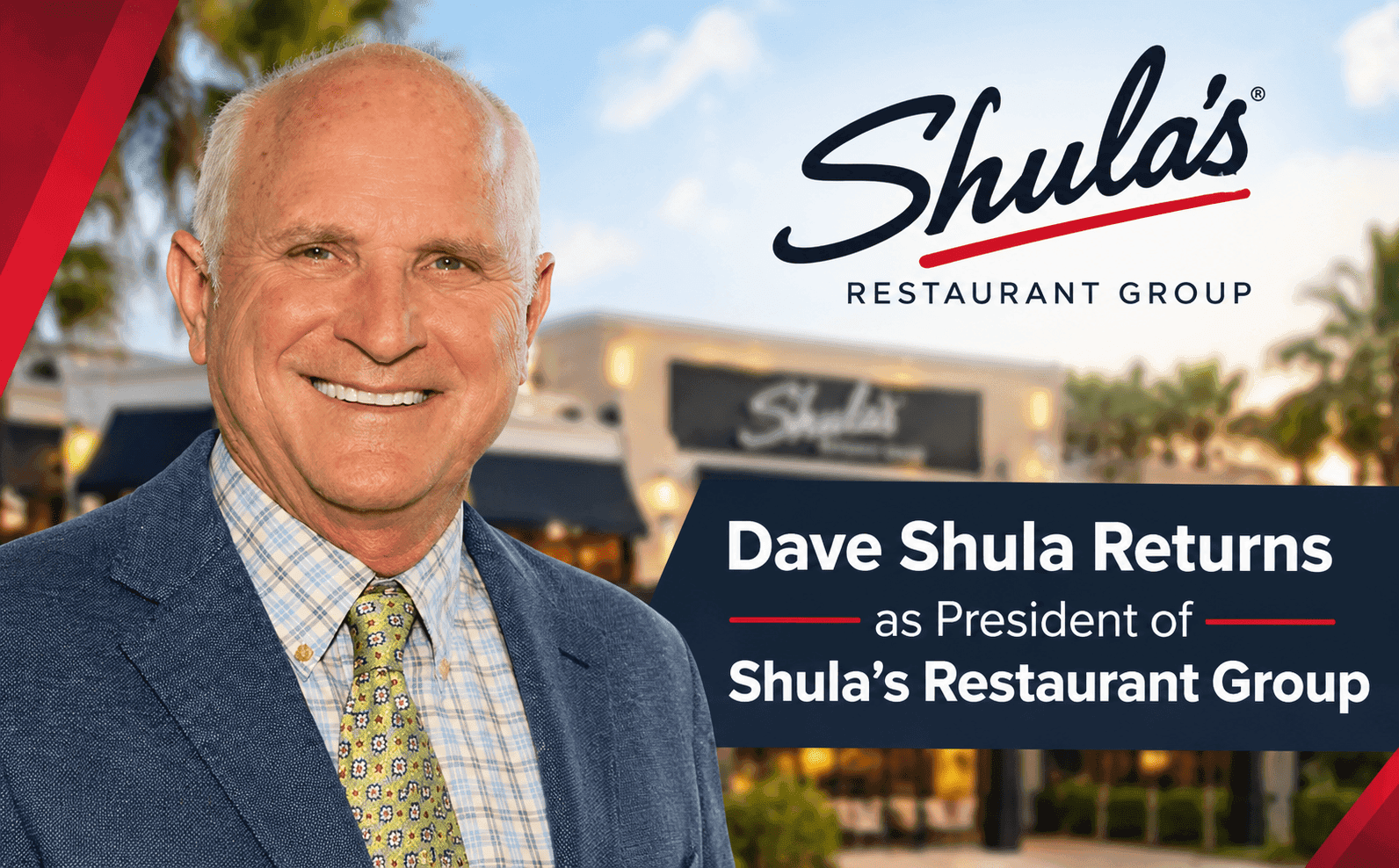
Dave Shula Returns as President of Shula's Restaurant Group
Dave Shula rejoins Shula's Restaurant Group as president, leading growth into Palm Beach Gardens and a 2027 Thomasville, Georgia expansion.
News
Sep 23, 2026
Dave Shula rejoins Shula's Restaurant Group as president, leading growth into Palm Beach Gardens and a 2027 Thomasville, Georgia expansion.
Sep 23, 2026

McDonald's commits $8.5 billion through 2036 to modernize restaurants, boost cash flow by $100,000 per store, and grow chicken and beverage sales.
Sep 23, 2026

WKS Restaurant Group promotes Jay Spongberg to president and COO after he helped grow the company from 65 to 382 restaurants over 16 years.
Sep 23, 2026

Smokey Mo's BBQ names Von Dawson, a Dine Brands veteran, as VP of Franchise Development to lead its Texas expansion strategy.
Sep 23, 2026
.png&w=3840&q=70)
Meritage Hospitality's Chapter 11 filing pulls 5% of Wendy's U.S. stores into bankruptcy, exposing cracks in franchising's bigger-is-safer bet.
Sep 21, 2026

Jack in the Box names Rachel Ruggeri to its board as Michael Murphy retires, amid a CEO transition and deal with investor GreenWood.
Sep 21, 2026
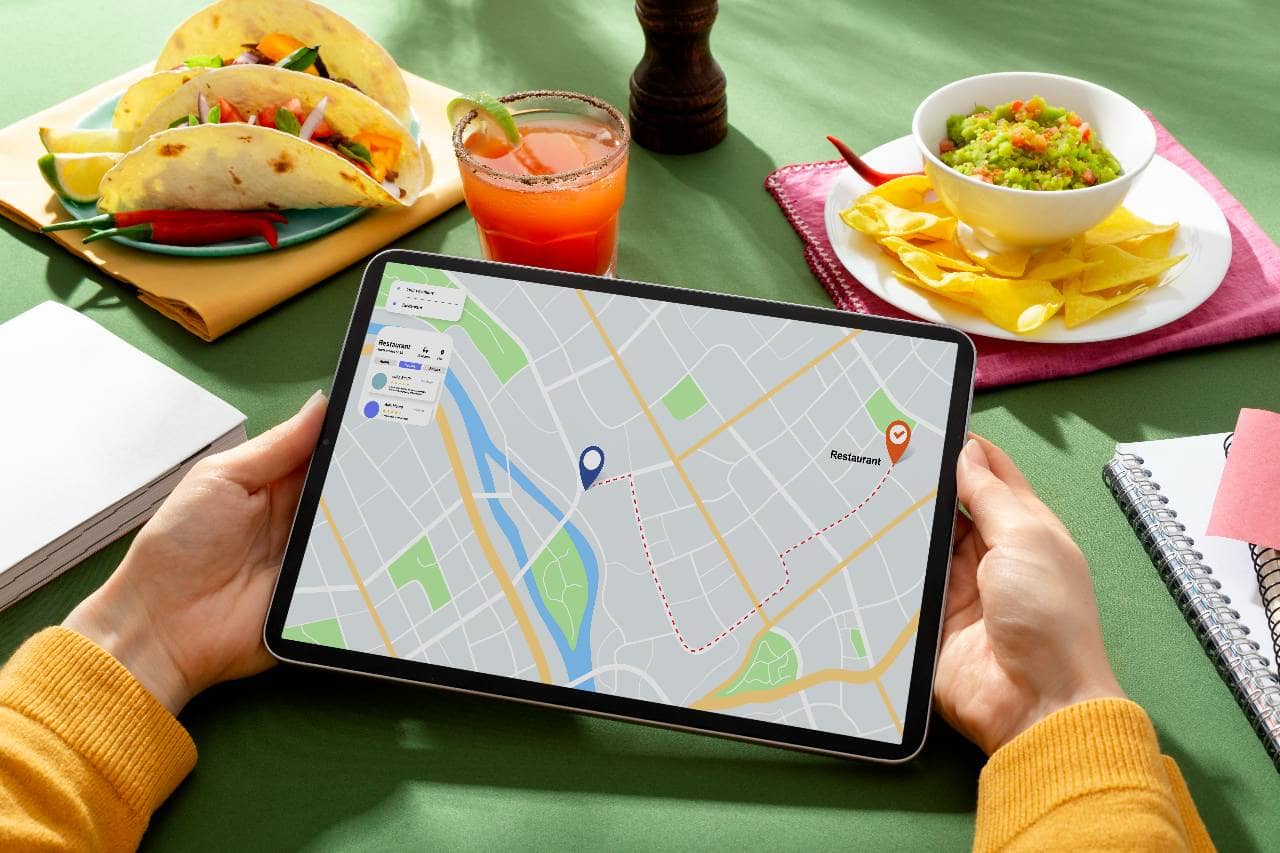
Improve restaurant Google Maps rankings by optimizing your business profile, selecting accurate categories, gathering reviews, adding photos, and strengthening local relevance signals.
Sep 21, 2026

Restaurant inventory tracking helps owners monitor stock, control food costs, reduce waste, improve purchasing, and make informed operational decisions.
Sep 21, 2026

Restaurant owners can significantly reduce restaurant costs by leveraging technology across inventory, labor, procurement, forecasting, and administrative operations for better profit margins.
Sep 18, 2026

Understand how to forecast restaurant revenue and expenses with methods for sales projection, cost scaling, fixed-cost planning, and risk buffering.
Sep 18, 2026

Unlock Exclusive Access To Webinars, Events, And The Latest News For Free!
A refined portrait of Candace Nelson's shift from Sprinkles' cupcakes to Pizzana's pizza, illustrating how focused craft and scalable systems redefine brands.

Photo by Nick Hillier
From the sunlit streets of Beverly Hills, Candace Nelson's career unfolds like a tasting menu, each move measured and deliberate. Sprinkles Cupcakes opened in 2005 as the world’s first cupcakes-only bakery, a bold wager on a single product that would become a nationwide obsession. The opening was electric: a tiny 600-square-foot shop, a line that unfurled into the afternoon, and media attention that treated a simple vanilla cake as a meticulously choreographed moment. The concept was not merely sweet; it was theatre, a retail ritual that made dessert feel like a daily luxury. The economy of the idea, one product, one promise, helped spark a cultural craze and even popularized a cupcake ATM. The arc would bend, pivot, and eventually close, yet the lesson remains: such clarity can ignite a broader conversation.
Nelson’s path is not merely about confectionery; it reads like a case study in reinvention. After a career grounded in finance and a dot-com downturn, she and her husband, Charles, founded Sprinkles with a stubborn belief in confection as experience. Pastry school unlocked a childhood fascination; design-forward retail made dessert feel like theatre. The narrative benefited from media visibility and the public craving for fancier treats, including Nelson’s later roles as a judge on Cupcake Wars and Sugar Rush. Oprah Winfrey’s anecdotes and broader media signals amplified the concept’s reach in its earliest days, helping transform a simple shop into a nationwide dialogue about premium, experiential retail. In that environment, Sprinkles thrived on a bold, curated moment.
Nelson's leap from finance to flour crystallized after the dot-com downturn, when a secure corporate path ceased to feel purposeful. After college she moved through investment banking and a stint at a tech startup, only to confront a reckoning that nudged her toward baking, a childhood passion reawakened, refined by pastry school and the audacious decision to found Sprinkles with her husband. The shift was more than appetite; it was a cultural signal: dessert could be a lifestyle, not merely a commodity. The timing aligned with a broader appetite for premium, photo-ready confections and experiences that looked as good as they tasted.
The cultural acceleration owed much to media visibility, Nelson later became a judge on Cupcake Wars and Sugar Rush, plus a broader curiosity among consumers for ‘fancier’ treats that transcended grocery-store fare. Oprah Winfrey’s anecdotes and other media signals helped amplify the concept’s reach in its early days, according to contemporary profiles. In this way, Sprinkles became less a bakery than a statement about premium desserts as accessible luxury, a narrative that would invite imitators and investors alike.
Sprinkles’ ascent hinged on a contrarian bet: resist the crowd that doubted a single-item bakery and prove it could scale. The founders did not begin with a grand exit plan; they aimed simply to survive in a market hostile to carbs and single-product shops. The secret lay in operations: meticulous financial records, documented procedures, consistent training, and readiness for due diligence, elements that would later become a blueprint for others seeking to commercialize breakthrough restaurant ideas. The early growth phase was intense and improvisational, building the plane as they flew, an ethos that forged a culture of speed, precision, and constant refinement.
Growth pressures emerged: governance questions, expanding complexity, and the expectation that a creative idea must mature into a repeatable engine. In 2012 Sprinkles sold to a private equity firm, signaling maturation and a different form of oversight. By late 2025 the chain closed its doors, marking the end of a two-decade run that reshaped retail dessert culture. Nelson redirected energy toward Pizzana, a Neo-Neapolitan concept that translates core discipline into a new culinary frame, evidence that the brand’s DNA could travel beyond cupcakes.
Sprinkles’ story is as much about atmosphere as batter. The line, the packaging, and the sense that dessert could be a daily luxury fused into an experience, the essence of experiential branding. The retail concept, engineered with intention, made Sprinkles a destination rather than a mere storefront. Nelson’s public persona blended judge-fig, founder, and storyteller, steadily weaving the brand into the contemporary conversation around design, hospitality, and taste. Even as markets shifted, the conversation around Sprinkles endured, a reminder that the most enduring brands are built on more than menus; they are crafted experiences.
Behind the applause lay the quiet drama of entrepreneurship, the highs and the lows Nelson has recounted in talks and interviews. The arc, from launch to media attention to market shifts, illustrates how a distinctive retail concept can stay relevant even as channels evolve. In that light, Sprinkles remains a landmark in the power of media signals paired with a bold retail concept to amplify a product-driven venture.
Pizzana marks Nelson’s deliberate second act, a chef-led expansion built on Daniele Uditi’s Neapolitan dough and a scalable model. The Los Angeles–based concept has grown to seven locations: five in California, plus Dallas and Houston, a testament to how a catalyzing idea can mature into durable form across adjacent formats. The enterprise fuses hands-on culinary craft with disciplined training and standardized systems, allowing a narrative of refinement to travel across markets. Pizzana has earned attention within the broader pizza landscape, signaling a readiness for reinvention that respects craft while embracing growth.
This arc offers more than biography; it is a template for founders who seek lasting impact. The transformation from cupcake icon to pizza innovator demonstrates that hands-on culinary excellence can marry scalable systems to redefine a category. Nelson’s path offers a quiet blueprint for brands pursuing reinvention without discarding their essential identity.
