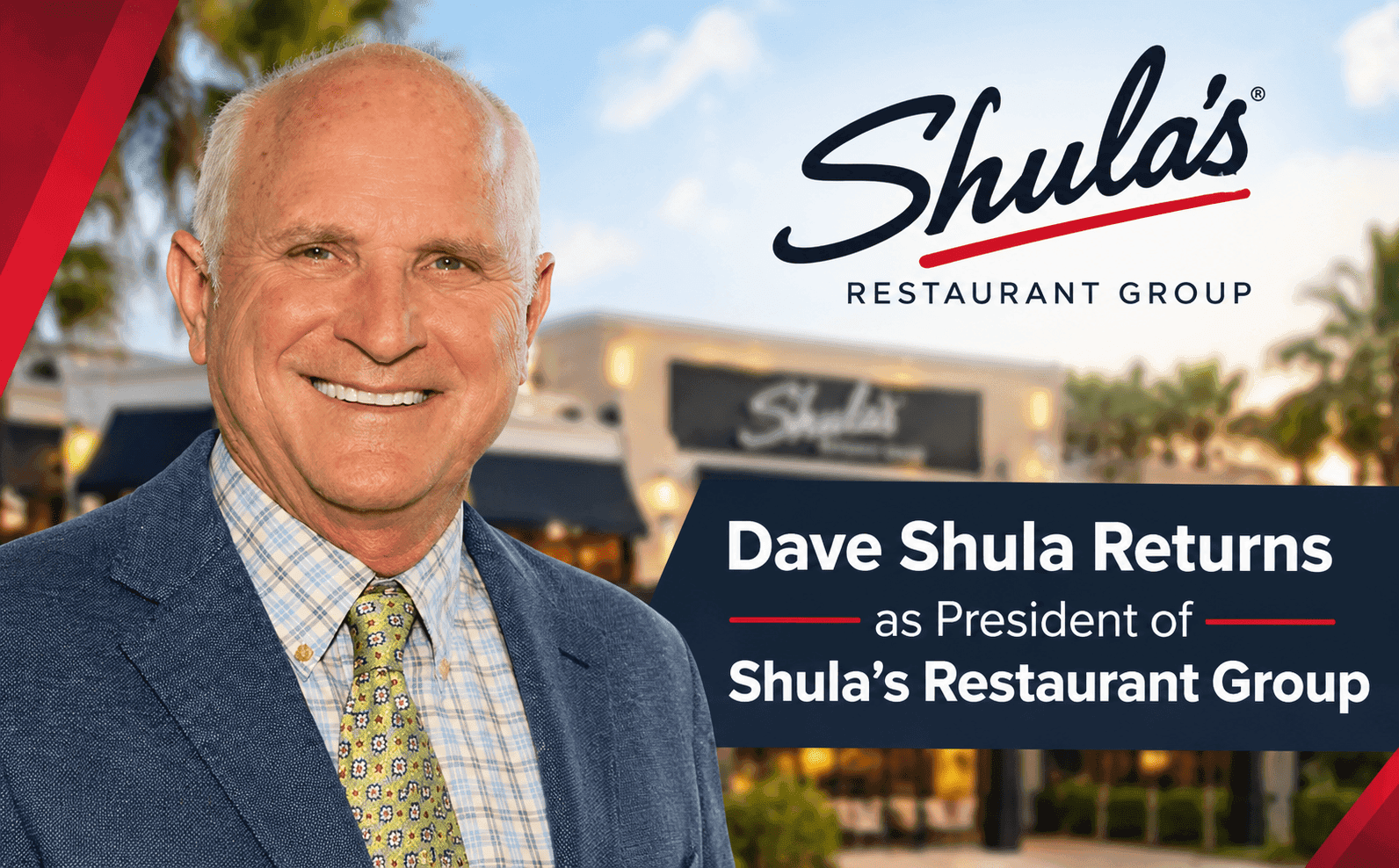
Dave Shula Returns as President of Shula's Restaurant Group
Dave Shula rejoins Shula's Restaurant Group as president, leading growth into Palm Beach Gardens and a 2027 Thomasville, Georgia expansion.
News
Sep 23, 2026
Dave Shula rejoins Shula's Restaurant Group as president, leading growth into Palm Beach Gardens and a 2027 Thomasville, Georgia expansion.
Sep 23, 2026
McDonald's commits $8.5 billion through 2036 to modernize restaurants, boost cash flow by $100,000 per store, and grow chicken and beverage sales.
Sep 23, 2026
WKS Restaurant Group promotes Jay Spongberg to president and COO after he helped grow the company from 65 to 382 restaurants over 16 years.
Sep 23, 2026

Smokey Mo's BBQ names Von Dawson, a Dine Brands veteran, as VP of Franchise Development to lead its Texas expansion strategy.
Sep 23, 2026
.png&w=3840&q=70)
Meritage Hospitality's Chapter 11 filing pulls 5% of Wendy's U.S. stores into bankruptcy, exposing cracks in franchising's bigger-is-safer bet.
Sep 21, 2026
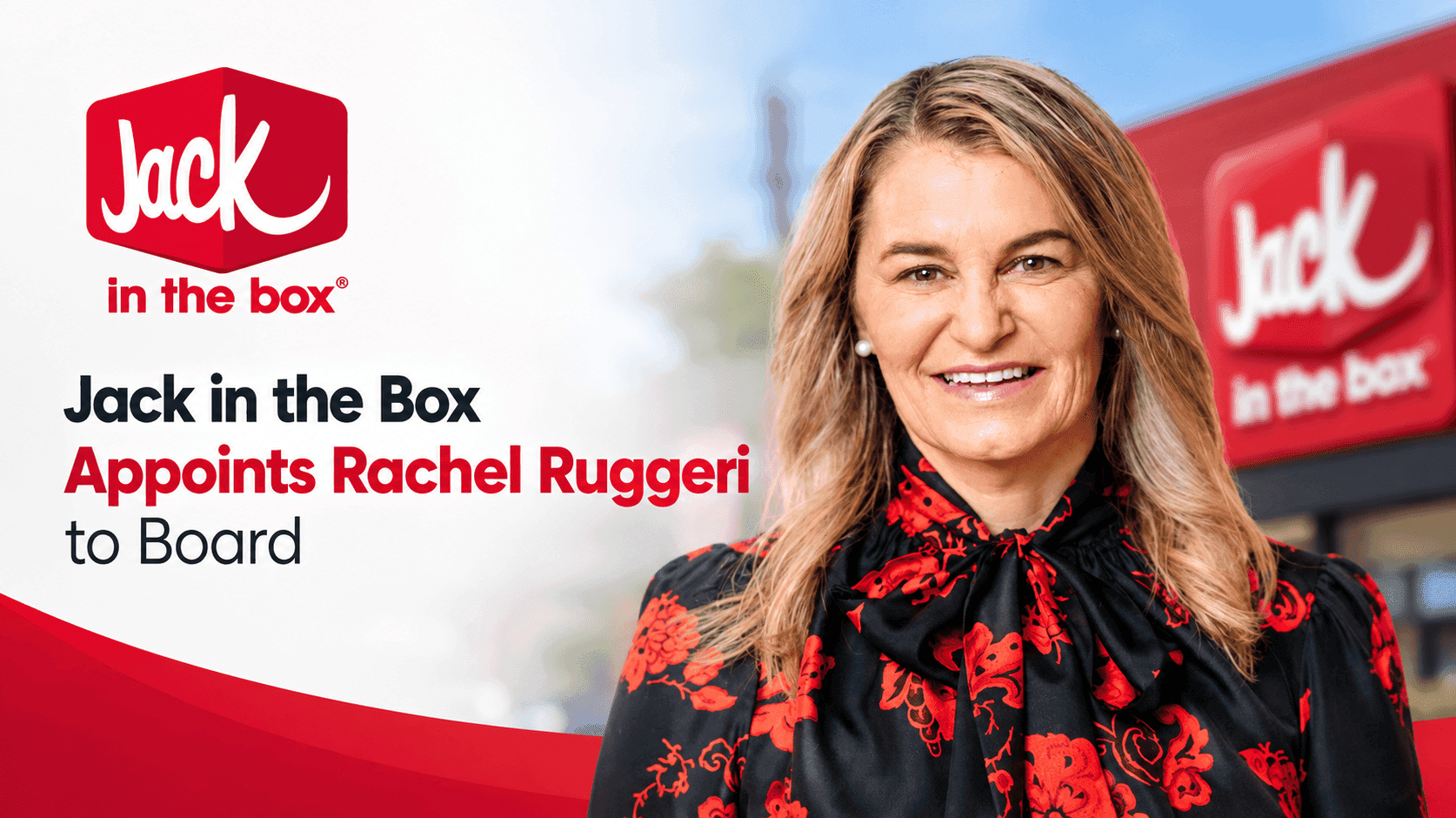
Jack in the Box names Rachel Ruggeri to its board as Michael Murphy retires, amid a CEO transition and deal with investor GreenWood.
Sep 21, 2026

Improve restaurant Google Maps rankings by optimizing your business profile, selecting accurate categories, gathering reviews, adding photos, and strengthening local relevance signals.
Sep 21, 2026

Restaurant inventory tracking helps owners monitor stock, control food costs, reduce waste, improve purchasing, and make informed operational decisions.
Sep 21, 2026

Restaurant owners can significantly reduce restaurant costs by leveraging technology across inventory, labor, procurement, forecasting, and administrative operations for better profit margins.
Sep 18, 2026

Understand how to forecast restaurant revenue and expenses with methods for sales projection, cost scaling, fixed-cost planning, and risk buffering.
Sep 18, 2026

Unlock Exclusive Access To Webinars, Events, And The Latest News For Free!
DC settles wage-theft case with Swahili Village, restoring wages to workers and enforcing a three-year compliance period.

Photo by Sasha Matveeva
Washington, DC rarely lands a case with a clean finish, but the Swahili Village settlement lands with the heft of a well-aimed knife cut. The District’s Office of the Attorney General sets in motion a three-year frame that pairs money back to workers with a disciplined watch over payroll practices. The numbers are tangible: more than $526,973 in total. Of that, over $260,000 goes directly to 72 workers, and roughly $197,614 is directed as penalties to the District. The deal binds Swahili Village M Street LLC and owner Kevin Onyona to stay compliant with wage-and-hour laws for three years and to provide ongoing documentation to the OAG, with an independent claims administrator overseeing payouts. It’s precise, no-frills enforcement.
What the settlement covers tallies the structure: restitution to workers, oversight funds, and penalties to the District. Specifically, more than $260,000 will be delivered to 72 workers, while the District receives about $197,614 in penalties. An independent claims administrator will locate eligible workers and ensure they receive the wages owed. The remaining balance covers the administration of the settlement and the ongoing compliance documentation to the OAG. These elements create a framework for accountability beyond a single payout.
The 2023 complaint framed the case as systematic wage theft at Swahili Village DC, including paying servers as little as $5 per hour when tips were counted, failure to pay overtime, misdistribution of tips, and violations of paid sick leave and payroll-recordkeeping requirements. The suit alleged omitted or miscalculated wages for hundreds of workers and highlighted staff vulnerable to exploitation. The investigation named leadership and executives in misclassification and payroll irregularities, underscoring a pattern the District moved to halt.
What the numbers show in the filing point to a broad pattern: 72 workers affected, with wages that did not reflect hours or tips. The Washington Post summarized the gravity, noting the case as part of a larger wage-theft pattern that persisted for years. The report also highlighted leadership involvement in misclassification and tip handling, echoing the enforcement trajectory that followed in the District.
The mechanics are straightforward on paper but deliberate in practice. The settlement requires Swahili Village to pay more than $260,000 to workers, fund the restitution process, and send about $197,614 in penalties to the District. A separate allocation covers the cost of a claims administrator who will locate eligible workers and distribute the money owed. The agreement binds Swahili Village M Street LLC to comply with all District wage-and-hour laws for three years, with ongoing compliance reports to the OAG and documentation proving adherence throughout the period.
Three-year frame signals ongoing oversight rather than a one-off fix and aligns with the district’s broader enforcement approach against wage theft. The arrangement creates a deliberate cadence for monitoring, including submission of documentation and periodic reporting, so regulators can assess adherence and adjust as needed. In practice, this means tighter payroll discipline, transparent tip handling, and timely wage payments long after the initial payout.
Rowles Adams, a former Swahili Village bartender, describes the human side of the case: 'For months, I saw managers mistreat my coworkers, including many young immigrants who did not even realize that what was happening was wrong. I spoke out, but it didn't change things.' Adams's account anchors the worker-centered posture of the settlement, emphasizing how vulnerable staff can be in a high-demand restaurant environment. The attorney general’s release frames the relief as a victory grounded in voices finally heard, not just numbers on a ledger. It’s a stark reminder of the stakes behind every paycheck.

Timeline and significance pull the narrative forward: the case began with a 2023 complaint and reached a public July 16, 2024 settlement. The Washington Post coverage noted the settlement as the district’s largest restaurant wage-theft recovery since the OAG gained enforcement authority, reflecting growing oversight. The three-year monitoring period keeps the pressure on practice patterns, while workers’ stories underscore the real-world impact of the legal process.
Industry signals point in the same direction: the DC OAG’s 2024 impact report highlights Swahili Village as a notable recovery, noting that more than $525,000 was recouped for workers and the District. The broader national landscape adds momentum: in late Sept. 2023, a federal court ordered 14 Subway locations in the San Francisco Bay Area to pay nearly $1 million in back wages and damages and to sell or close those stores. In March 2024, Subway franchisees in Washington state agreed to pay more than $218,000; in January 2024, the Department of Labor sued Entre Nous French Bistro in Pasadena for withholding tips and misclassifying workers. These actions illustrate the scale and speed of wage-theft enforcement across venues.

Gaps and ongoing oversight remain the next chapter. The three-year monitoring window provides a controlled view, but it does not definitively fix every practice. The reliance on a third-party administrator to locate and disburse funds is powerful, yet operational hurdles can persist in locating eligible workers and ensuring timely payouts. Regulators will demand continuous reporting to gauge whether patterns reemerge beyond Swahili Village and across the District’s restaurant ecosystem. For operators, the lesson is blunt: fortify payroll, make tip handling transparent, and document everything to align with the law and avoid a repeat.
