








Tasty Chick'n's $87M Bankruptcy Collapse Explained
Tasty Chick'n, operator of 84 KFC and KFC/Taco Bell restaurants, filed Chapter 11 after sales fell 15.6% in three years and debts topped $87 million.

A Major Franchisee Files for Chapter 11
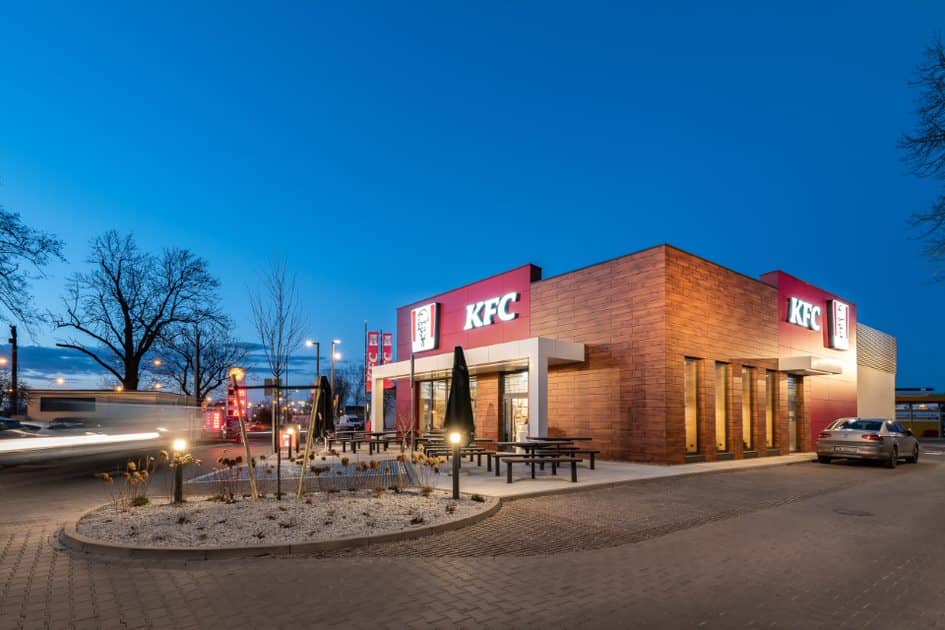
Tasty Chick'n, the operator behind 84 KFC and KFC/Taco Bell restaurants across 10 states, filed for Chapter 11 bankruptcy in Houston on Monday, a filing that turns one of the larger franchisees in the Yum! Brands system into a cautionary tale about what happens when acquisition-fueled growth meets three straight years of shrinking sales.
CEO Thomas M. Scott said the move was meant to protect the value of the company's restaurants and to run a court-supervised sale process, while Tasty Chick'n also tries to find a path to restructure on its own terms. The portfolio includes 75 standalone KFC locations and nine co-branded KFC/Taco Bell stores, concentrated most heavily in Florida (23 restaurants) and Tennessee (22), with the rest spread across Virginia, Arkansas, Kentucky, Illinois, Missouri, Alabama, Mississippi and Indiana. About 1,646 employees now have their jobs tied to whatever the bankruptcy court decides in the months ahead.
How Two Deals Built a Near-$200 Million Operator
The company's rise was fast, and it had little to do with opening new restaurants one at a time. Formed in 2021, Tasty Chick'n built its footprint almost entirely through two acquisitions: 90 restaurants purchased from Fowler Foods that same year, followed by 64 more locations bought from JRN, Inc. in 2024.
That buildout turned a new company into a near-$200 million revenue operation within a few years, a scale that made it one of the more notable names inside the KFC and Taco Bell network. It also meant the company carried the financial fingerprints of two separate deals, and the debt that came with them, into a period when sales started moving in the wrong direction.
Three Years of Falling Sales Crushed Margins
The slide started almost as soon as the expansion finished. Scott said sales fell every year since the buildout: down 11.4 percent in 2024, another 1.4 percent in 2025, and 2.8 percent more so far this year, a cumulative drop of roughly 15.6 percent over three years.
Costs did not cooperate. Food, labor, operating expenses and rent all rose while revenue contracted, and the combination hit margins hard. Restaurant profit margin fell from 11.8 percent in 2023 to just 4 percent this year, and trailing 12-month store-level earnings dropped from $12.4 million to about $7.1 million. The company pulled in roughly $194 million in revenue for the year through September, yet it walked into bankruptcy with only about $3.1 million in cash on hand, the kind of gap that shows how little room thin quick-service margins leave for error.

Missed Royalties Triggered a Default Notice
As cash tightened, Tasty Chick'n began delaying royalty payments to Yum! Brands in mid-2025 and had largely stopped paying altogether by November 2025. Yum! issued a default notice in December, then escalated on September 15 with a notice of intent to terminate the franchise agreements, asserting the company owes $15.68 million, split between $7.9 million in unpaid advertising contributions and $5.6 million in royalties.
Yum! also alleged Tasty Chick'n fell short on the franchise agreement's financial reporting requirements, layering a compliance dispute on top of the money already owed.
Losing the Franchise Could Trigger a Bank Default
Losing that franchise relationship would not just be a setback. Scott said termination would strip the company of its right to use the KFC and Taco Bell names entirely, wiping out the value of the business, and that loss would cascade immediately into a default on the company's bank loan.
That loan adds a second, larger pressure point: roughly $67.2 million owed to a lender group led by MidCap Financial Trust, plus a separate $5 million note owed to JRN, the very company whose restaurants fueled the 2024 expansion. Scott said the company spent more than a year negotiating with both MidCap and Yum! without reaching an agreement on either front, which left bankruptcy as the mechanism now deciding whether a sale moves forward or a self-directed restructuring takes hold.
A Debt Load That Outgrew the Business
What remains unresolved is substantial. It is not clear from the available record how close either negotiation came to a deal, or what terms either side was willing to accept before talks broke down.
What is clear is the math: $15.68 million claimed by Yum!, $67.2 million owed to the MidCap-led lender group, and $5 million owed to JRN, a debt stack that would strain even a healthy operator and became unmanageable once margins compressed from 11.8 percent to 4 percent in just three years.
A Cautionary Tale for Acquisition-Driven Growth
For an industry that has leaned on acquisition as a growth strategy, Tasty Chick'n's case lands as a pointed data point. A company built through two deals in three years, scaled to $200 million in revenue, and brought down by soft same-store sales colliding with rising costs and franchisor obligations that could not be deferred forever, offers a fairly stark read on how exposed a multi-state franchisee can become when growth outruns the fundamentals underneath it.
The bankruptcy court's next moves, whether that means a sale of the 84 restaurants or some version of the self-directed restructuring Scott is pursuing, will determine not just the fate of those 1,646 jobs, but whether other fast-scaling franchisees take a harder look at their own margin trajectories before the next downturn arrives.