



Papa John's Franchisee Collapse Tracks Pizza Price War
A celebrated Papa John's franchisee's Chapter 11 filing reveals the debt and sales pressure squeezing the pizza industry.

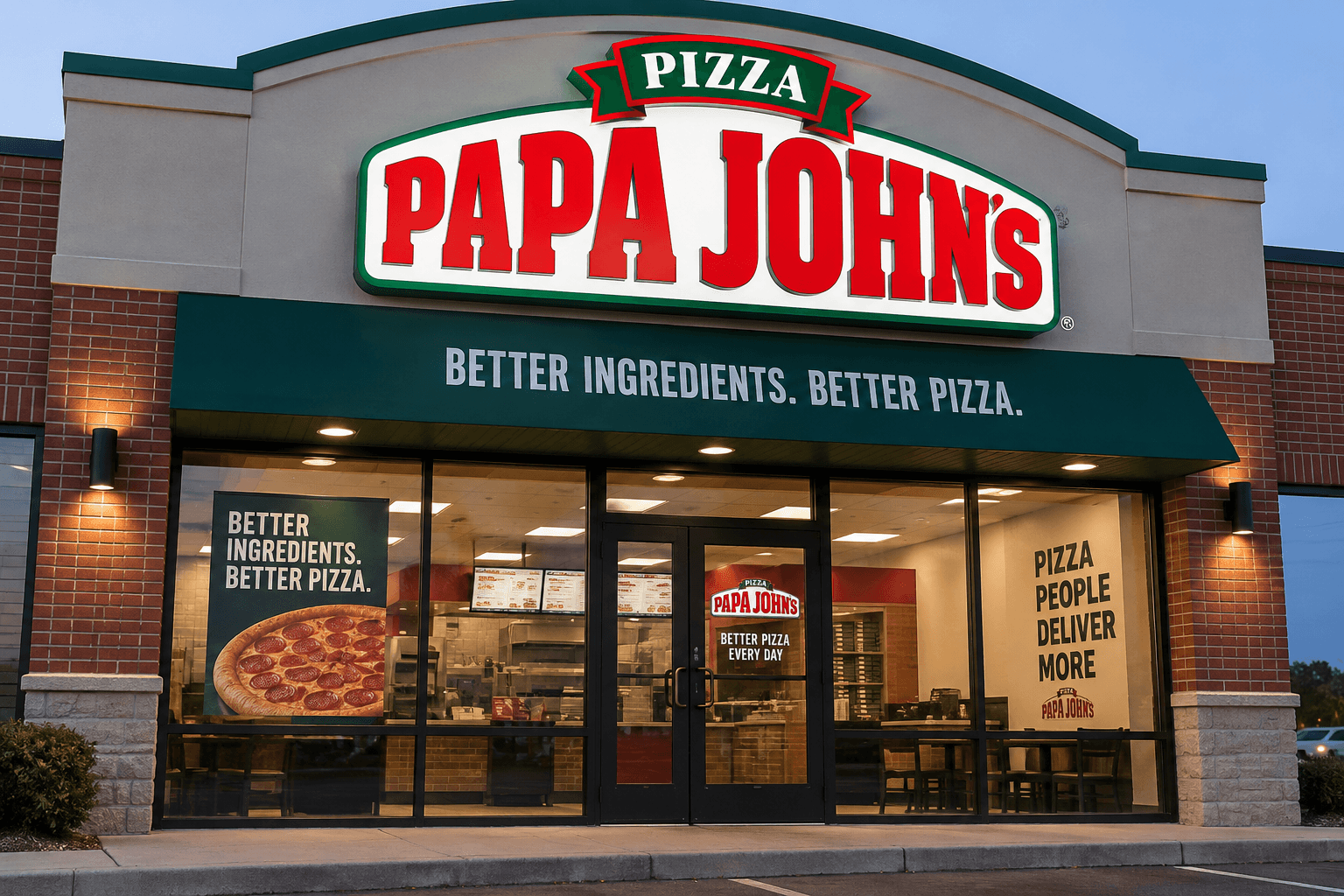
A Milestone Franchisee Falls Fast
Nine months after Papa John's celebrated him for opening the chain's 6,000th restaurant, Yasir Hussain filed for Chapter 11 bankruptcy protection. The filing, made on November 9 through his company Papa ZHS LLC alongside four affiliated entities, listed assets of between $100,000 and $500,000 against liabilities running from $1 million to $10 million, including more than $2.9 million owed to unsecured creditors.
The gap between those two moments, celebrated milestone franchisee in February, bankruptcy petitioner in November, says less about one man's missteps than about how quickly the ground can shift beneath even a seasoned operator.
A Career Built From the Bottom Up
Hussain's story began far from the executive suite. He started in the pizza business as a dishwasher two decades ago, spending six years working his way up to restaurant manager before eventually acquiring his first Papa John's franchise in 2019.
"For me, it was never about the title," he said, reflecting on those early years. "It was about doing my job to the best of my ability. I wanted to be the best dishwasher in the company." That same drive fueled seven years of steady expansion.
By February 2025 he operated 12 restaurants and was preparing to open a 13th in Cleveland, Ohio, a location that would later appear on his bankruptcy filing rather than in a press release. "Growth is something I love," Hussain said of his approach to building the business. "I can't live without it."
Layers of Debt Behind the Growth
The debt behind that growth tells its own story. Papa ZHS's creditor list reads like a cross-section of the alternative lending world that has come to underwrite franchise expansion in recent years.
- Itria Ventures LLC: owed $909,000 across three separate loans
- The Small Business Administration: owed over $811,000 on two loans
- Bizcap: owed $275,000
- CFG: owed $270,000
- Ascentium Capital: owed over $259,000 across three loans
- Balboa Capital: owed over $194,000
That spread of lenders, government-backed financing sitting alongside multiple commercial capital firms, points to an operation that had layered debt on debt as it scaled from a single store in 2019 to thirteen by early this year.
A Filing Timed to Falling Sales
The timing of the collapse is hard to read as coincidence. Papa ZHS filed just days after Papa John's released weakened third-quarter 2026 results on November 5.
In the fiscal year ended December 28, 2025, North American company-owned restaurant sales had already fallen 3% year-over-year, with franchised restaurant sales down 2%. By the nine months ended September 27, 2026, those numbers had deteriorated sharply: comparable sales at domestic company-owned restaurants were down 7.4%, and franchised restaurant sales had dropped 7.8%.
For franchised locations, the rate of decline nearly tripled between the two reporting periods. On a business carrying the kind of layered debt Papa ZHS had taken on, that kind of swing is not a rounding error. It is the difference between making payroll and filing a petition.
A Chain Contracting in Real Time
Papa John's own footprint has been contracting in step with those numbers. The chain, founded in 1984, operates 5,969 locations across 50 countries as of the end of the third quarter, but it has already closed 239 restaurants worldwide this year, 146 of them in North America, as part of a stated goal to shutter 300 units by the end of 2027.
That target was reaffirmed during the third-quarter 2026 earnings call, even as the sales decline between reporting periods suggests whatever corrective steps the 42-year-old chain has tried so far have not worked.
Papa ZHS's collapse did not happen apart from that corporate contraction. It happened inside it, with one operator trying to keep thirteen stores solvent while the parent company worked simultaneously to shrink its own footprint.
Pizza Hut Faces the Same Squeeze
None of this is confined to Papa John's. Pizza Hut's parent, Yum Brands, has set its own target of closing 250 underperforming restaurants by the first half of 2026, a plan that runs on a near-identical timeline to Papa John's 300-unit closure goal.
Two of the category's largest players retrenching at once is not a brand-specific problem. It points to pressure built into the pizza business itself, competitive and cost-driven, that is pushing chains to prioritize stabilization over growth for the first time in years.
An Uncertain Road Ahead for Thirteen Stores
What happens next for Hussain's thirteen locations, including the Cleveland store that once symbolized his continued ambition, remains unresolved. A Chapter 11 filing is a request to reorganize, not a final judgment, and the record does not yet show how the court will rule, whether Itria Ventures and the SBA will recover what they're owed, or which of those stores will still have their doors open a year from now.
What the filing does make plain is how little operational history or symbolic standing within a brand now protects a franchisee from the numbers above him. As Papa John's and Pizza Hut both work through hundreds of planned closures over the next two years, Hussain's filing may prove to be less an isolated misfortune than an early entry in a longer list.