Dave's Hot Chicken Franchisee Files Chapter 11
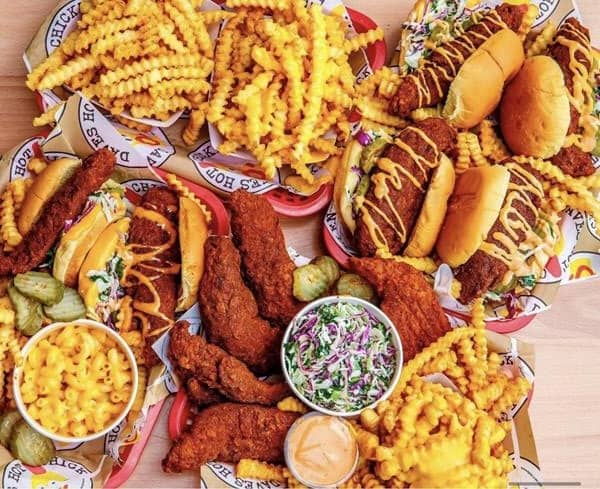
TIG Reaper LLC, a multi-unit Dave's Hot Chicken franchisee, filed Chapter 11 amid a bitter dispute with lender Bank Midwest over alleged defaults.
Legal
Sep 28, 2026
TIG Reaper LLC, a multi-unit Dave's Hot Chicken franchisee, filed Chapter 11 amid a bitter dispute with lender Bank Midwest over alleged defaults.
Sep 28, 2026
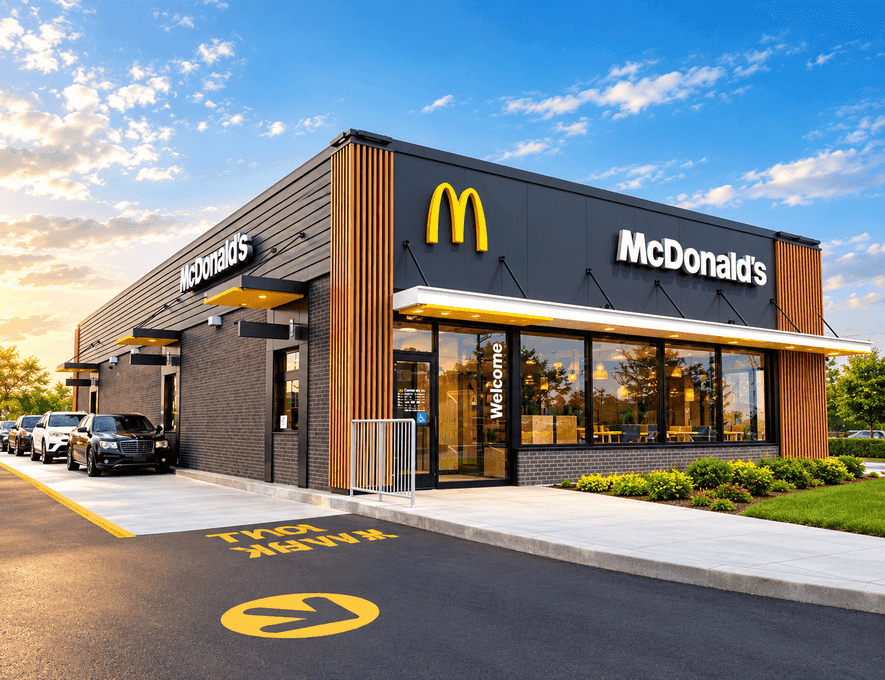
McDonald's ArchIQ platform blends voice AI, automation, and predictive data to reshape drive-thrus and kitchens. Here's how it works and what's next.
Sep 28, 2026
The full-service concept, which posted 10% growth in same-store sales during fiscal Q1 2027, plans to open 13 new stores during the ongoing fiscal year.
Sep 28, 2026

Learn how average inventory is calculated and use inventory data to identify purchasing trends, manage stock levels, and reduce waste.
Sep 25, 2026

Understand employee scheduling principles for restaurants, including workforce planning, shift assignments, availability management, compliance considerations, and scheduling technology.
Sep 25, 2026
Starbucks is closing 250 North America stores even as sales climb, revealing a strategic push to trim weak locations and fund renovations.
Sep 25, 2026

A restaurant chart of accounts separates sales, costs, and labor, uses logical numbering, and stays maintained, producing clearer financial reports.
Sep 23, 2026
This restaurant inventory count checklist helps owners track food, beverages, packaging, and supplies, cutting waste, controlling costs, improving purchasing decisions.
Sep 23, 2026
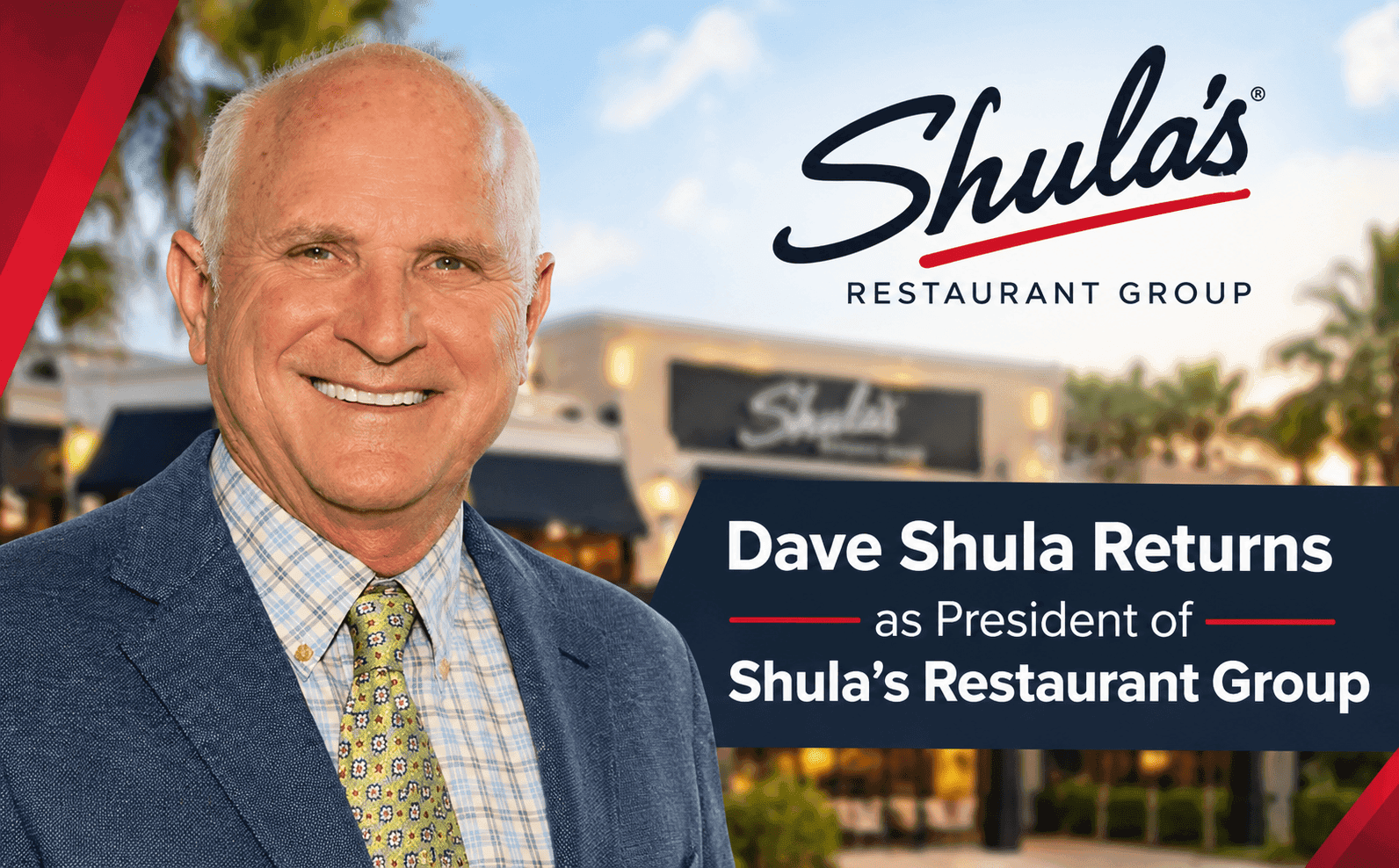
Dave Shula rejoins Shula's Restaurant Group as president, leading growth into Palm Beach Gardens and a 2027 Thomasville, Georgia expansion.
Sep 23, 2026
McDonald's commits $8.5 billion through 2036 to modernize restaurants, boost cash flow by $100,000 per store, and grow chicken and beverage sales.
Sep 23, 2026

Unlock Exclusive Access To Webinars, Events, And The Latest News For Free!
McDonald's ArchIQ platform blends voice AI, automation, and predictive data to reshape drive-thrus and kitchens. Here's how it works and what's next.
There is something almost tender about watching a company try to teach a machine to listen. That is, in essence, what McDonald's has spent years quietly building toward with ArchIQ, a new AI platform meant to stitch together automation, diagnostics, predictive alerts, and coaching into a single system that touches every layer of the restaurant, from the crew member bagging fries to the franchisee reviewing weekly numbers.
Rice, the McDonald's executive who described the project, was careful to frame it not as a gadget or an app but as connective tissue: something that lets data and instructions move in real time between the front counter, the kitchen, and corporate operations. The ambition here is not modest. McDonald's appears to be treating artificial intelligence less like a novelty feature bolted onto the drive-thru and more like an operating system for the entire business.
None of this happened overnight. The groundwork traces back to 2023, when McDonald's partnered with Google to deploy Google Edge technology across thousands of restaurants in seven major markets. Rice confirmed that edge computing will not reach the U.S. until 2027, which tells you something about how far out this timeline really stretches, even as the rollout continues abroad.
Alongside that cloud work, McDonald's built a unified point-of-sale system now spanning nearly all of its global markets, a shift Rice described as moving from "fragmented, bespoke local systems to a consistent platform built for rapid innovation." That single backbone matters more than it might sound. A consistent point-of-sale system is what allows new AI features to be tested once and scaled across thousands of locations at once, instead of being rebuilt restaurant by restaurant, market by market.

Underneath all of it sits what Rice calls a "lake" of standard restaurant data, wired directly into restaurant-level operations. "This allows our AI models to make accurate split-second decisions," he said, before adding the number that gives the whole project its scale: "By interconnecting the operational heartbeat of over 46,000 restaurants worldwide, our data lake captures billions of data points daily."
Pulling that much operational information from tens of thousands of locations is no small technical feat on its own, and it may be the thing that lets McDonald's move faster on operational AI than its competitors.
The most visible piece of ArchIQ, the part customers will actually hear, is Archy, McDonald's voice AI built for the drive-thru window. It takes orders in English and Spanish and hits an accuracy rate above 90%, according to Rice.
Early signs have been good: "In our early test restaurants with Archy, drive-thru customer satisfaction is above national trends," he said, and he expects the labor savings to be substantial too, projecting the system "will free at least 50 labor hours per week," which he called "one of the most significant and tangible benefits of ArchIQ."
Voice ordering is only one thread. ArchIQ also automates inventory counting through Bluetooth Low Energy tags, letting crew track stock in real time rather than by hand, a change Rice said will save roughly five labor hours per week while cutting food waste by 15%.
Connected equipment paired with computer vision is meant to improve food quality and catch maintenance issues before they become breakdowns, driving what Rice called close to a 50% improvement in equipment and menu availability per restaurant, a result he described as "unprecedented." Order-verification scales add another layer, checking millions of orders daily and, in Rice's words, letting "our crew catch and correct 10% of those orders before they ever reach the customer."
Taken together, these pieces touch labor costs, waste, equipment reliability, and order accuracy all at once, and the combined effect on a restaurant's bottom line could end up being larger than any one feature suggests by itself.
For all that detail, McDonald's has been notably vague about timing. There is no firm date for a full national rollout. McDonald, describing the approach as "conditions based," said individual restaurants must clear specific technology prerequisites before ArchIQ arrives. "We verify restaurant readiness before anything scales," he said. "Every deployment is held to our global operating and investment standards, so we deliver the expected execution, quality and returns."
That caution reads like a lesson learned the hard way. McDonald's tried AI once before, acquiring Dynamic Yield in 2019 to generate weather- and time-based menu suggestions at drive-thrus and kiosks, only to sell it off to Mastercard in 2021. A separate voice AI partnership with IBM, launched that same year to test drive-thru ordering, ran into accuracy problems and was shut down in 2024. Trial, sale, termination: it is a pattern that makes ArchIQ look less like a rushed announcement and more like a carefully staged second attempt, one built specifically to avoid the accuracy failures that sank the IBM effort.
McDonald's is hardly alone at this table. Yum Brands rolled out its own centralized platform, Byte, in 2025, and continues expanding voice AI at Taco Bell's drive-thrus. Burger King has taken its own path with "Patty," a voice-AI headset tool that helps staff manage point-of-sale operations, kitchen equipment, inventory, and digital ordering.
Voice AI has quietly become one of the real competitive fronts in fast food, with each chain building its own branded system rather than converging on a shared standard. ArchIQ still looks broader than what its rivals have shown so far, tying voice ordering through Archy together with inventory automation, computer vision, and order verification, all running on McDonald's global data lake and its Google-built edge infrastructure.
Whether that scale, drawn from more than 46,000 restaurants and years of investment dating back to 2023, actually translates into a faster or more reliable rollout than what Yum Brands and Burger King are building is still an open question, and given McDonald's own history with Dynamic Yield and IBM, it is one worth taking seriously rather than assuming away.
What comes next depends entirely on how patient McDonald's is willing to be. The conditions-based framework means expansion will move restaurant by restaurant, tied to readiness benchmarks the company hasn't fully spelled out, rather than a calendar date customers or franchisees can circle.
If it works the way Rice describes, freed labor hours, less waste, fewer order mistakes, and equipment that rarely goes dark, the counter experience at McDonald's could look genuinely different within a few years. If it stumbles the way Dynamic Yield and the IBM partnership did, it will join a growing list of ambitious restaurant-tech bets that looked inevitable right up until they weren't.
For now, ArchIQ is McDonald's most serious wager yet that scale in data and infrastructure can succeed where smaller, earlier experiments couldn't.
