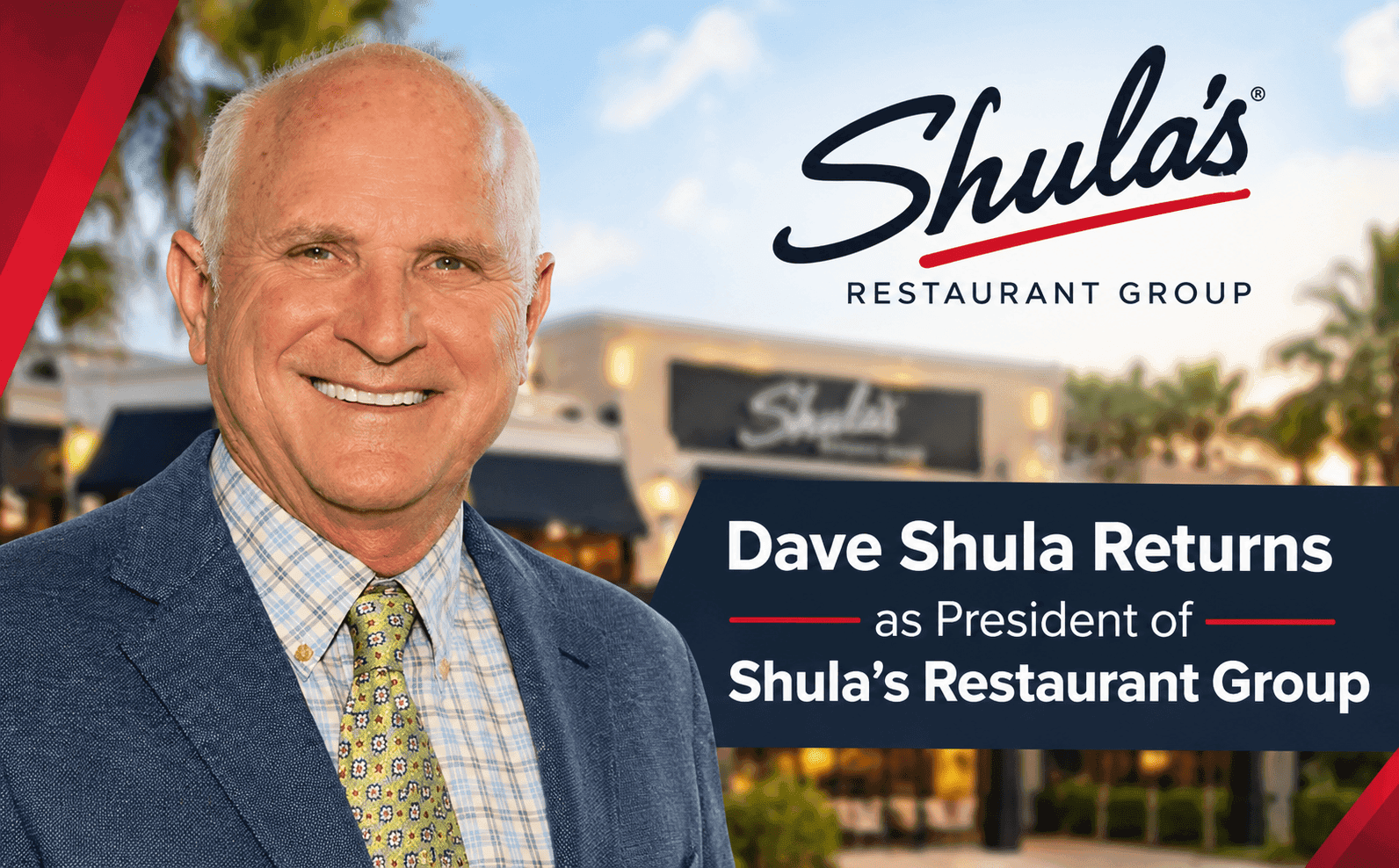
Dave Shula Returns as President of Shula's Restaurant Group
Dave Shula rejoins Shula's Restaurant Group as president, leading growth into Palm Beach Gardens and a 2027 Thomasville, Georgia expansion.
News
Sep 23, 2026
Dave Shula rejoins Shula's Restaurant Group as president, leading growth into Palm Beach Gardens and a 2027 Thomasville, Georgia expansion.
Sep 23, 2026
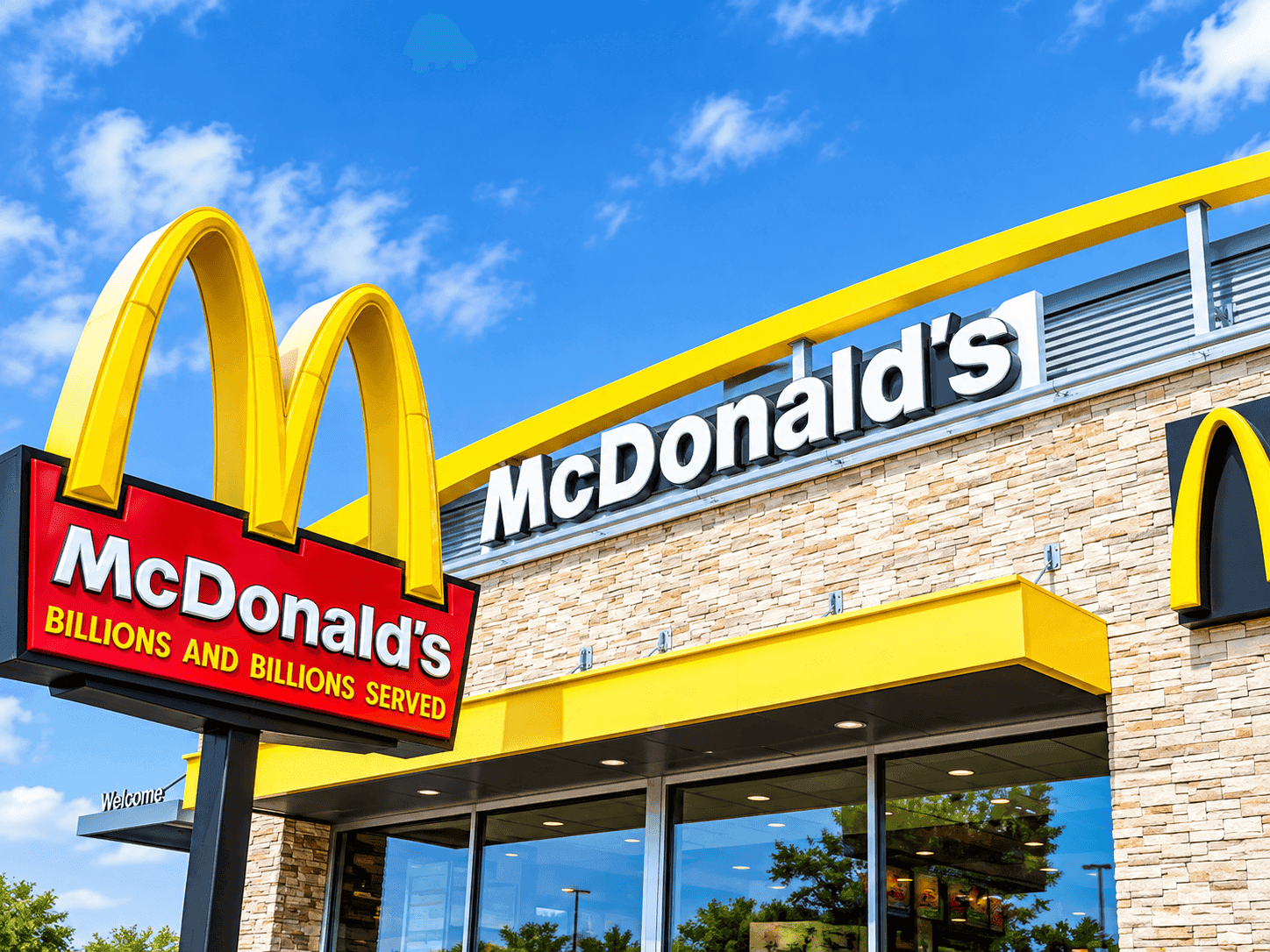
McDonald's commits $8.5 billion through 2036 to modernize restaurants, boost cash flow by $100,000 per store, and grow chicken and beverage sales.
Sep 23, 2026
WKS Restaurant Group promotes Jay Spongberg to president and COO after he helped grow the company from 65 to 382 restaurants over 16 years.
Sep 23, 2026

Smokey Mo's BBQ names Von Dawson, a Dine Brands veteran, as VP of Franchise Development to lead its Texas expansion strategy.
Sep 23, 2026
.png&w=3840&q=70)
Meritage Hospitality's Chapter 11 filing pulls 5% of Wendy's U.S. stores into bankruptcy, exposing cracks in franchising's bigger-is-safer bet.
Sep 21, 2026

Jack in the Box names Rachel Ruggeri to its board as Michael Murphy retires, amid a CEO transition and deal with investor GreenWood.
Sep 21, 2026

Improve restaurant Google Maps rankings by optimizing your business profile, selecting accurate categories, gathering reviews, adding photos, and strengthening local relevance signals.
Sep 21, 2026

Restaurant inventory tracking helps owners monitor stock, control food costs, reduce waste, improve purchasing, and make informed operational decisions.
Sep 21, 2026

Restaurant owners can significantly reduce restaurant costs by leveraging technology across inventory, labor, procurement, forecasting, and administrative operations for better profit margins.
Sep 18, 2026

Understand how to forecast restaurant revenue and expenses with methods for sales projection, cost scaling, fixed-cost planning, and risk buffering.
Sep 18, 2026

Unlock Exclusive Access To Webinars, Events, And The Latest News For Free!
Amid record turnover and policy headwinds, Audrey Benet’s Miss Pat Mindset reframes culture as the industry’s most reliable lever for retention.

Photo by Clay Banks
The dining room feels brisk again, tickets stack, seats turn, receipts rise. Yet beneath the hum is a fragile rhythm, a brigade forever rehearsing because the players keep changing. Restaurants posted roughly $1.1 trillion in sales in 2023, a 9.3 percent lift from the prior year. Still, a stubborn labor crisis erodes that bright figure, with churn so high that experience and trust drain from the room just when they’re most needed. Into this tension steps hospitality educator Audrey Benet with a deceptively simple provocation she calls the “Miss Pat Mindset”: what if culture, not perks, not scripts, became the house specialty?
Operators are replacing nearly three-quarters of their teams every year, an exhausting carousel that frays service and siphons training dollars just as quickly as they’re spent. Margins already feel pinched by food inflation and wage pressure; the cost of constantly onboarding new hands only tightens the vise. Benet’s model doesn’t deny the math, it seeks to calm it. By centering belonging, signaling care with intention, and elevating real-world readiness over rigid perfection, the ethos promises something rare in a volatile market: steadiness. The claim is daring in its restraint, do less posturing, offer more humanity, and watch operational strain soften at the edges.
The parable arrives not from a dining room but a Florida street corner. Miss Pat, an elementary school crossing guard, transforms a mundane commute with greetings tailored to the faces she knows, concern for those she doesn’t, and a presence that makes people feel seen. At the National Restaurant Association Show session, “Making Hospitality Hospitable (Again)”, Audrey Benet linked that daily ritual to the fatigue facing our industry: long shifts, mental and physical strain, and guests who often ask for too much. The question lingered like steam over a pot, if we’re honest, would we usher our own children toward this work?

“Everybody in this city loves to drive through there because Miss Pat gets to know you. She greets you intentionally. She makes sure that you feel like you belong,” Benet told operators, cautioning that such grace cannot be faked; it must emanate from genuine people placed in positions to practice it. Citing a restaurateur’s maxim that business mirrors life in how it makes people feel, she added, “It’s that simple and it’s that hard.” Attendees affirmed that daily feedback loops and recognition strengthen the muscle memory of care, small gestures that travel swiftly from back of house to table, and reflect back as higher guest satisfaction.
Benet’s framework resists grand theory in favor of four plainspoken spokes, the kind of mise en place that steadies a rush. Identify a teammate with Miss Pat’s instinct or cultivate it broadly; then align the operation around belonging, psychological safety, clarity and consistency, and communication, connection and support. The aim is not polish for its own sake but readiness: shed silos, embrace missteps as training moments, and share authority so people can act with purpose. The question for leaders becomes simple and exacting: what do we want our team to feel, and how do we practice it daily?
- Belonging: Seat every teammate at the table of purpose. Names learned, strengths noticed, contributions tied to the guest experience, this is how people root themselves in the work.
- Psychological safety: Normalize mistakes as tuition. Treat errors as case studies and rehearsal, so initiative grows rather than retreats.
- Clarity and consistency: Replace one-size-fits-all perfection with real-world scenarios. Train for chaos with simple priorities, not brittle scripts.
- Communication, connection and support: Collapse front- and back-of-house divides. Delegate authority where knowledge lives, and create tight feedback loops that keep the line, the floor, and the door in conversation.
When teams feel empowered and accountable, service acquires that quiet sheen guests notice but cannot name.
Every departure ripples through the P&L like a pan tossed at the wrong moment, heat lost, timing thrown, a dish suddenly off tempo. The hidden costs of turnover extend beyond a help-wanted ad: they compound through recruiting, onboarding, and diminished productivity, taxing already-thin profit margins. The industry’s revolving door is no longer a quirk; it is an entrenched expense sabotaging consistency. Layer in demographic drift and thorny regulations, and the calculus grows more unforgiving. To treat culture as ornamental under such conditions is to confuse garnish for sustenance. The case for rigor, and for care, tightens:
Research from the Cornell University’s Center for Hospitality Research places the direct cost of replacing a single hourly employee between $2,000–$5,000. Project5Pi pegs the average at $5,864, as much as 10 percent of total revenue per location. With average turnover lingering around 72 percent in 2023, operators are effectively spending millions on the revolving door. Meanwhile, the UC Berkeley Food Labor Research Center notes that mass deportations since March 2025 removed an estimated 1.7 million immigrant workers from the U.S. labor force, straining kitchens and service teams. A proposed Department of Labor joint-employer rule, unveiled May 6, 2026, would also extend liability unless control can be disproven. Against this backdrop, culture stops being soft; it becomes a lever.
The appetite for culture as strategy has grown, but measurement trails the mood. Hard-nosed ROI remains elusive; evidence skews toward operator surveys and small pilots rather than broad, longitudinal studies. That leaves benchmarks for belonging initiatives, whether psychological safety training or cross-silo empowerment, still settling, like a sauce that needs one more quiet simmer. For many operators, the most immediate dials are morale on the floor and what returns on the check: guest comments, fewer walkouts, tighter handoffs in the pass. The question persists: how to count what’s felt, without numbing it?

Even without perfect instruments, the path is legible. The Miss Pat Mindset offers a replicable blueprint: match the attentiveness lavished on guests with equal care for employees’ belonging and growth. That exchange, time for trust, clarity for confidence, reduces churning, elevates service quality, and steadies a restaurant’s financial footing. As Benet distilled it, “Treat the team right, they will take care of your guests.” Few promises in this business are truly simple. This one is spare, demanding, and eminently practical, exactly the kind of recipe worth standardizing.