

.png&w=3840&q=70)






The Different Kinds of Food Safety Services Offered
Depending on your business and the size of your team, you may need different services. Here's a brief overview of the different food safety services available.


What Are The Different Food Safety Services Offered?
Food Safety is an important business as it impacts all of us every day. The food network starts from producers, goes through the supply chain till it reaches consumers. The United States has nearly dozen federal agencies that are responsible for overseeing food production, processing and selling abides by the safety standards. The four important federal agencies that majorly monitor the food production and the supply chain areUnited States Food and Drug Administration (US FDA) , Food Safety and Inspection Service (FSIS), Environmental Protection Agency (EPA) and National Marine Services (NMS). These federal agencies mandate food safety courses and training for food handlers. There are several institutes providing training and Consulting services on food safety and food service . These food safety service and training courses include --
- HACCP course
- Food Defense
- Legal Labelling
- Managing food allergens
HACCP Certification
HACCP or Hazard Analysis Control Care Points provides the food protection plan, right from harvesting, all along the supply chain to consumption, to keep foodborne illness at bay. It aims to provide preventive controls so to minimize the possibility of any food safety hazard. The food industry, including the food service sector, follows the HACCP to reduce the risk of foodborne illness. Back in year 1998, the US federal agencies instructed that all seafood dealers shipping products across states were required to follow HACCP plan. The very same year, the United States Department Agriculture required all meat and poultry processing plants to have an HACCP plan. HACCP is mandatory for meat, poultry , seafood and juice businesses. While Food Safety Modernization Act (FSMA) requires a Food Safety Plan for all other food processing units. However, FDA is urging that HACCP should be applicable across retail and food service sector. HACCP certification shows the company's commitment to ensure food protection and provide safe food to the customers. HACCP has seven steps- 1. Conduct Hazard Analysis- 2. Determine Critical Care Control Points- 3. Set Critical limits 4. Establish Monitoring Procedures 5. Set Corrective Actions 6. Establish Verification Procedure 7. Record-keeping and Documentation
Food Risk Assessment
To reduce the possibility of unsafe food and strengthen food protection , food businesses, including the entire food service sector , to take up risk analysis. Risk analysis has three elements- Risk Assessment, Risk Management and Risk Communication. As per the article published by the North Dakota State University, Risk Assessment includes hazard identification which means identifying chemical, physical or biological agents capable of causing adverse health effects. It further includes hazard characterization, exposure assessment and risk characterization. Risk Management is the process of weighing policy alternatives, in consultation with the interested parties, to protect of customer health and promote fair trade practices. 1. Preliminary risk management activities is the initial process. It includes establishing risk profile and provide sufficient information to guide further action. 2. Evaluation of risk management options is weighing available options for managing a food safety issue using a scientific approach on risks to reach on a certain level of consumer protection. It includes optimizing food control measures in terms of their efficiency, effectiveness, technological feasibility and practicality at selected points throughout the food-chain. 3. Preliminary risk management activities comprise the initial process. It includes the establishment of a risk profile to facilitate consideration of the issue within a particular context, and provides as much information as possible to guide further action. As a result of this process, the risk manager may commission a risk assessment as an independent scientific process to inform decision-making. 4. Evaluation of risk management options is the weighing of available options for managing a food safety issue in light of scientific information on risks and other factors, and may include reaching a decision on an appropriate level of consumer protection. Optimization of food control measures in terms of their efficiency, effectiveness, technological feasibility and practicality at selected points throughout the food-chain is an important goal. 5. Implementation of the risk management decision involves regulatory Food Safety measures and preventive controls and may include the use of HACCP. The article from North Dakota State University, defines Risk Communication as the exchange of information and opinions throughout the risk analysis process concerning hazards and risks, risk-related factors and risk perceptions, among risk assessors, risk managers, consumers, industry, the academic community and other interested parties, including the explanation of risk assessment findings and the basis of risk management decisions.
On-Site Food Safety Training
Like every other subject, in food business too, theory is a sheer waste without on-field practice. You can take online courses on food safety plan or food handling , but unless you are equipped to perform on site, all the learning is in vain. Several certified consulting services agencies in New York and across United States provide training on how to maintain Food Safety along the supply chain. These food safety consulting services agencies provide on-site training on-
- Principles of Internal Audit- This teaches the fundamentals of internal auditing for food growers, manufacturers, packagers and distributors. This enables learners or food safety employees to conduct your audit and document the findings.
- FSPCA Preventive Controls for Animal and Human Food -The Preventive Controls for Human Food/Animal Food training prepares food service staff to meet the FSMA PCQI (Preventive Controls Qualified Individual) requirements.
- Food Plan- This course trains staff on how to develop and implement a Food Fraud Plan that includes how to complete a vulnerability assessment and plan mitigation strategies.
RFID Tracking System
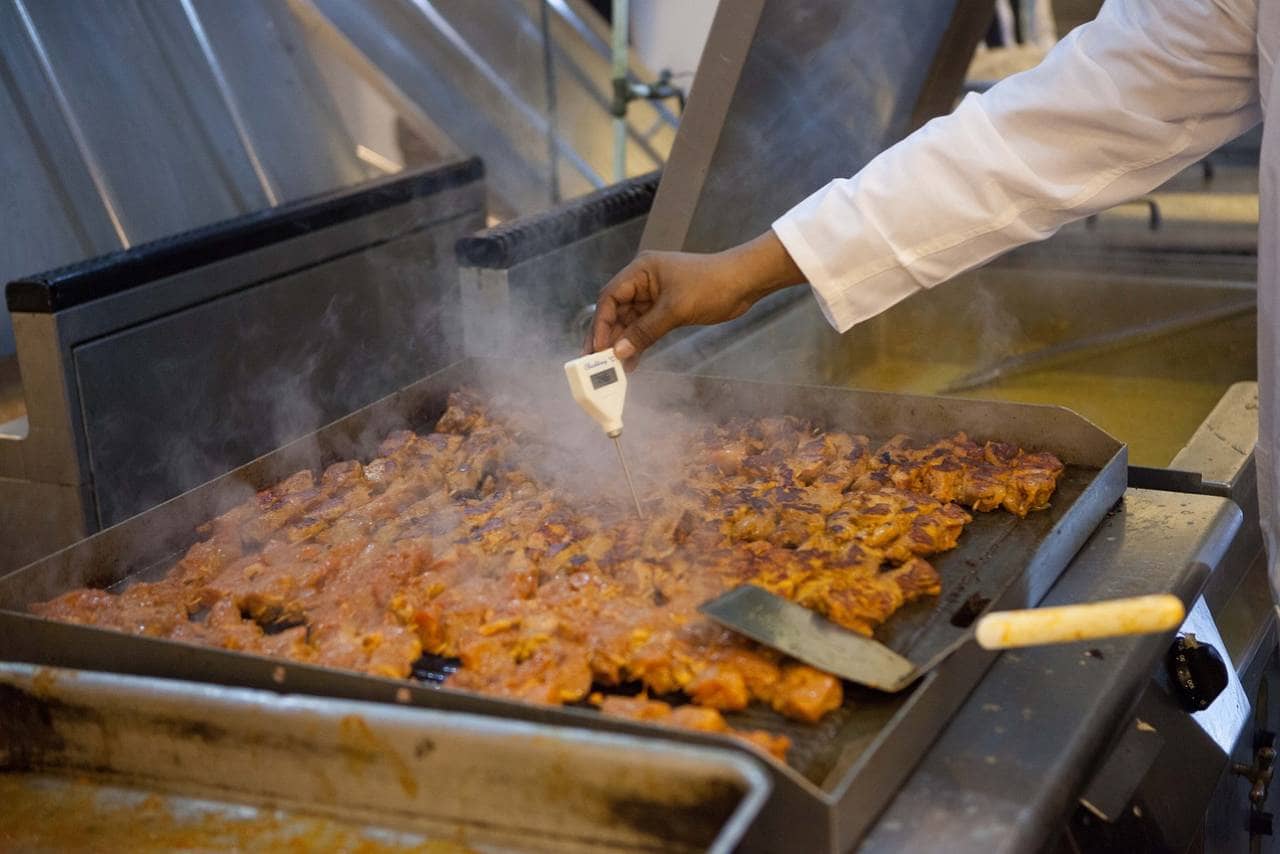
The pandemic has made consumer more consucious about what they eat and the safety measures followed along the food supply chain. Understanding this customers' concern, the food service sector is exploring Radio Frequency Identification Technology (RFID) to trace food items throughout the supply chain . RFID is estimated to slash down labor costs by 50%.
Staff LPI Training
LPI (Learning Performance Institute) provides accreditation to institutes providing training and consulting services on Food Safety Hazard Analysis Control Care Points (HACCP) with special courses on Food allergens. LPI assess these institutes on several criteria, some of them are- Delivery capability, Quality and Performance management, sales and marketing.
Summary
It is essential to follow Food Safety practice right from production to consumption. The federal agencies have listed food safety standards to be followed by producers and all involved throughout the supply chain. The Food Safety plan includes Hazard Analysis Control Care Points to state likeliness of hazards and preventive controls, risk analysis and more. This food safety plan aims to offer higher food protection , promoting public health.