California Penalizes Dickey's for Franchise Disclosure Violations
California shifts to public enforcement strategy against Dickey's for deceptive franchise disclosures, signaling stricter state-level franchise oversight.
Franchising
Sep 10, 2026
California shifts to public enforcement strategy against Dickey's for deceptive franchise disclosures, signaling stricter state-level franchise oversight.
Sep 10, 2026
Paul Brown temporarily steps away from Inspire Brands as Scott Murphy assumes interim CEO role during confidential IPO filing process targeting late 2026.
Sep 10, 2026

Learn how to reduce food waste in restaurants through smarter purchasing, storage, preparation, and service strategies that cut costs.
Sep 9, 2026
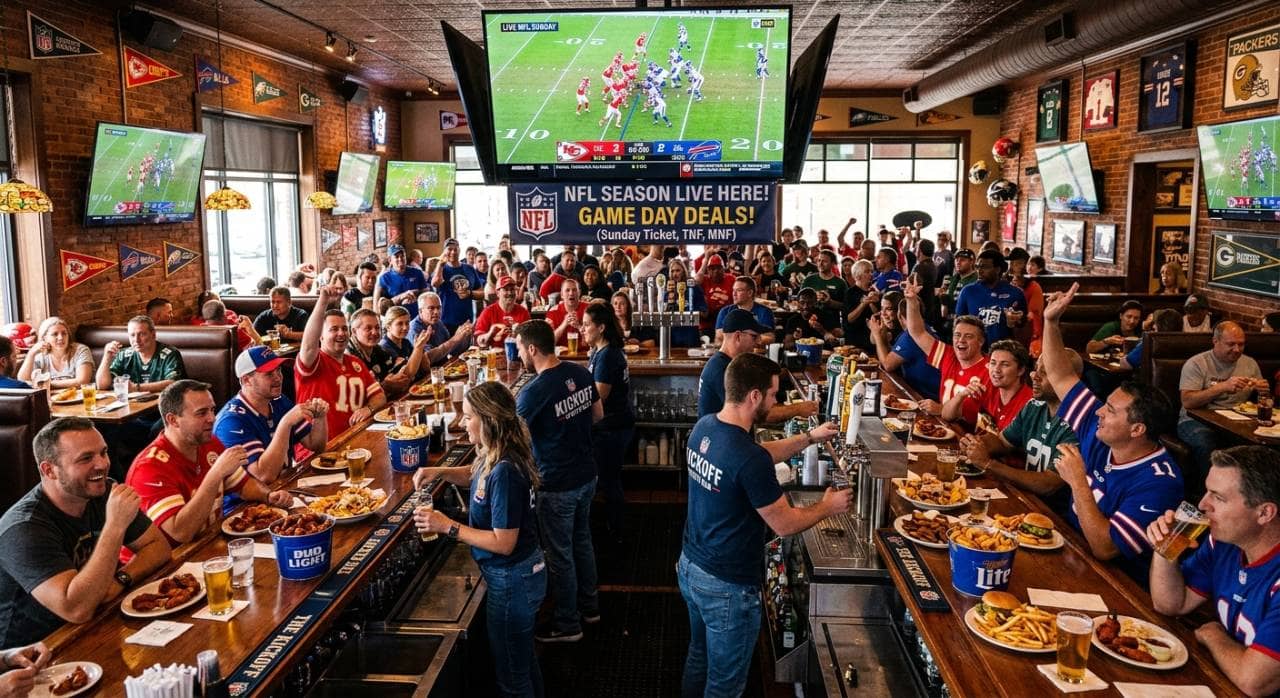
Prepare your restaurant for NFL season with smart menu planning, staffing, marketing, technology, and atmosphere strategies that boost season-long revenue.
Sep 9, 2026
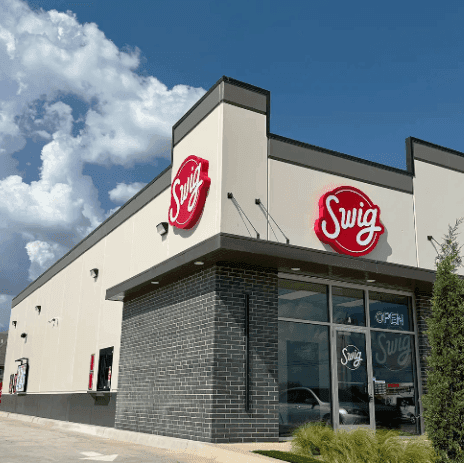
Swig signs franchise agreement for 11 South Denver locations, marking Colorado entry and validating its national expansion strategy.
Sep 8, 2026

QR code menus let restaurants replace paper menus digitally, enabling instant updates, contactless browsing, ordering, and payment through simple smartphone scanning.
Sep 7, 2026

Complete guide helping restaurant owners choose essential kitchen equipment - covering cooking, refrigeration, prep, sanitation, ventilation, safety, and long-term maintenance planning.
Sep 7, 2026

Avoiding common restaurant payroll mistakes - misclassification, tip credit errors, overtime miscalculations - protects businesses from costly penalties, back pay, and compliance risks.
Sep 4, 2026

Learn to calculate par levels for restaurant food, beverages, and packaging inventory, preventing stockouts and waste through proper formulas.
Sep 4, 2026

Caribou Coffee appoints Zane Thomas-Rogers as Chief Operations Officer to strengthen execution across its expanding coffeehouse network.
Sep 4, 2026

Unlock Exclusive Access To Webinars, Events, And The Latest News For Free!
California shifts to public enforcement strategy against Dickey's for deceptive franchise disclosures, signaling stricter state-level franchise oversight.
Photo by Marek Mucha
The California Department of Financial Protection and Innovation uncovered a critical gap in Dickey's barbecue franchise filings: the company reported 20 franchisees had ceased operations when the actual number was 36. A second violation emerged: Dickey's failed to disclose all California former franchisees by missing sixteen on Exhibit O due to clerical errors. Between November 2023 and March 2026, regulators examined franchisee termination notices, franchise agreements, and compliance documents, determining this underreporting grossly misrepresented business model success and misled small business owners investing their savings.
The DFPI ordered Dickey's to pay $36,800 in penalties and refrain from further violations of the Franchise Investment Law. What distinguishes this action is its deliberate public amplification. State leaders issued sharp statements warning companies to comply or face consequences, departing from California's historical quiet enforcement practice.

The $36,800 penalty appeared modest for a company generating over $200 million in system sales. The real significance lay in strategic visibility designed to reach both franchisors and prospective franchisees. This visibility carries weight because Dickey's faces mounting operational headwinds: the company did not file an updated franchise disclosure document in 2025 across nine registration states, though its 2024 filing reported 386 domestic locations.
From 2023 to year-end 2024, Dickey's closed 98 net restaurants. Back in 2017, the chain had 564 locations; unit count declined every year since, except for a 12-store increase in 2021. The company has essentially halted franchising in California and registration states. Concurrent litigation amplifies this pattern: an arbitrator awarded a former Illinois franchisee $700,000 for Franchise Disclosure Act violations.

Franchise regulation in the U.S. is a haphazard collection of state and federal rules, supplemented by legal action. Regulations are not broadly enforced, and when they are, penalties are often weak. The Burgerim case exemplifies these structural weaknesses: the fast-casual burger franchise received $56 million in penalties in 2024 after selling over 1,500 franchises on a barely workable brand. Yet founder Oren Loni paid only $1,000, while $44 million remained suspended.
The FTC shows more aggressive enforcement in Burgerim, pursuing individual liability against franchise sellers. However, resource constraints force prioritization. This enforcement asymmetry—where headline penalties remain suspended or uncollected—undermines deterrence when violators cease franchise recruitment before paying consequences, leaving thousands of franchisees harmed with minimal accountability.
California's Dickey's enforcement reflects a deliberate pivot toward combining penalties with public communication and prospective remedies for harmed franchisees. The state recognizes that traditional penalty structures have failed to prevent deceptive disclosure practices. By integrating public communication with substantive remedies, California is testing whether visibility can create deterrence where financial penalties alone have historically failed. These efforts formalized July 18, 2025, when DFPI published notice to amend Title 10 of the CCR.
Governor Gavin Newsom signed Senate Bill 919 on September 24, 2024, amending California's Franchise Investment Law to regulate franchise brokers and sales organizations. DFPI stated this work is critical considering slowdowns in federal franchise protection enforcement, signaling state determination to fill regulatory gaps.

On July 12, 2024, the Federal Trade Commission released a policy statement warning that contract provisions prohibiting franchisees from communicating with government about legal violations are unlawful. The FTC also published staff guidance on prohibitions against undisclosed fees by franchisors, signaling increased focus on franchisor-franchisee relationships. The FTC's efforts to amend the Franchise Rule will continue in 2025, focusing on relationship governance issues beyond disclosure alone.
Maryland and California are reputations as the toughest states on franchise enforcement. In announcing Burgerim litigation, the FTC thanked the California DFPI and Maryland Attorney General for assistance. This collaborative dynamic suggests state and federal regulators are coordinating more aggressively on franchise oversight, filling enforcement gaps and strengthening protection for operators.
Whether publicized penalties can succeed where monetary fines have failed remains an open question. Dickey's decision to halt franchise disclosures in registration states may reflect genuine business contraction or strategic avoidance of regulatory exposure—a distinction affecting whether enforcement has truly deterred or merely displaced risk. Individual franchisees retain private remedies outside the regulatory system, yet such suits require personal capital and legal sophistication most small operators lack.
The FTC identified a structural problem: franchisees are reluctant to report violations, even when suspecting wrongdoing. Removing communication barriers may increase reporting, but translation from complaints to enforcement remains constrained by resource limitations. California's commitment to prospective remedies—including refunds and restitution—addresses past harm but does not guarantee protection for future investors still evaluating documents.
The Dickey's enforcement action signals a broader shift in how states approach franchise oversight during periods of constrained federal capacity. California's strategy of combining statutory penalties with public communication and targeted remedies represents a structural experiment: can reputational damage and visibility substitute for weak monetary deterrence? The Burgerim comparison suggests headline penalties without credible collection or individual accountability produce minimal deterrent effect.
The Dickey's case demonstrates how disclosure violations persist while systems remain operational, with harm accruing to new investors continuously. Effective enforcement requires action while recruitment remains active, paired with sufficient publicity to inform both prospective franchisees and franchise companies. California's emerging model will likely influence how other states design oversight mechanisms, particularly as federal enforcement remains stretched. The broader question—whether state coordination and transparency can compensate for fragmented federal enforcement—will test what sub-federal regulators can achieve in an industry where violations are systematic but enforcement has historically been inconsistent.