
How to Calculate Cost of Goods Sold for a Restaurant
Learn how to calculate restaurant cost of goods using inventory, purchases, COGS percentage, variance reviews, and regular tracking for profitability.
Accounting
Aug 31, 2026
Learn how to calculate restaurant cost of goods using inventory, purchases, COGS percentage, variance reviews, and regular tracking for profitability.
Aug 31, 2026

Explore restaurant technology trends in 2026, including AI, automation, digital ordering, workforce tools, connected kitchens, personalization, and profitability strategies today.
Aug 28, 2026
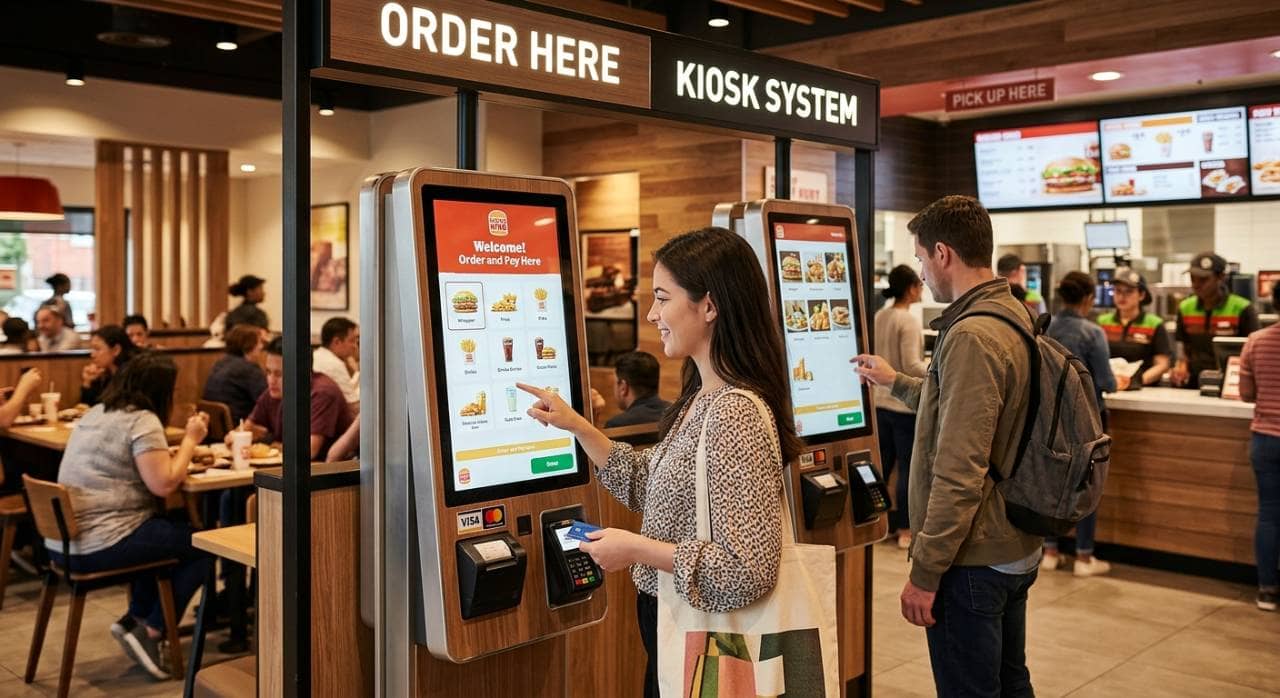
Understand how to evaluate a Kiosk system using key criteria including features, POS integration, hardware, pricing, customer experience, and support.
Aug 31, 2026

Learn the startup costs of opening an ice cream shop, including rent, equipment, renovations, permits, inventory, labor, marketing, and reserves.
Aug 28, 2026

A restaurant P&L statement reveals sales, expenses, and profits, helping owners manage costs, improve margins, and plan finances more effectively.
Aug 26, 2026
RaceTrac has appointed Jill Pemberton as chief financial officer, succeeding Karla Ahlert, who moves into the newly created role of chief administrative officer.
Aug 26, 2026
Learn practical ways to reduce labour costs through smarter scheduling, forecasting, productivity, cross-training, automation, overtime control, and performance monitoring strategies.
Aug 26, 2026

A payroll advance policy helps restaurant owners define eligibility, limits, repayment, documentation, approval procedures, and compliance requirements for employee advances.
Aug 24, 2026

Create a practical restaurant marketing plan by setting goals, targeting customers, choosing channels, budgeting wisely, scheduling campaigns, and measuring results.
Aug 24, 2026

Levain Bakery appoints Lorna Sommerville and Taya Stenson as co-CEOs, blending operational and marketing expertise to power national expansion and innovation while staying rooted in its brand values.
Aug 25, 2026

Unlock Exclusive Access To Webinars, Events, And The Latest News For Free!
Amid policy cross-currents, consumers favor protein-forward, clean-label options—reshaping morning routines, menus, and messaging from suppliers to beverage giants.

Photo by Mockup Free
"There are several elements like tariffs, immigration policy, and the narrative around the purity and quality of our food supply that seem to make the future uncertain. But despite the uncertainty, there are signs that consumers and the economy are resilient," said David Portalatin, Circana’s senior vice president and industry advisor for food and foodservice. The remark reads like a chef’s note in the margin: the market is under heat, yet the structure holds. Consumer food spending has not buckled; it has adapted. A subtle but potent spark is the morning commute, rising with office occupancy from "49% to 52% this year", a modest gain with marked operational consequences. That incremental return to routine reintroduces the daily cadence of purchases on the move, inviting operators to design for need states rather than nostalgia. The morning period, once starved of traffic, is breathing again. That breath carries the scent of pragmatism. Diners reach for items that promise function as clearly as flavor: energy, satiety, ease. Restaurants and manufacturers who stage their offerings for this revived daypart are not merely catching passing trade; they are reinstating habits. Resilience, in this case, is not thunderous, it is measured, habitual, and quietly profitable, like a well-proofed dough ready to rise when warmed by weekday rituals.

The reassembled workday is changing where and when diners spend. As more teams return with predictable cadence, the morning daypart emerges again as a tactical battleground. Portable foods and beverages, those that travel elegantly and tuck neatly into commute-bound hands, now wield disproportionate influence. Speed is necessary, but speed alone no longer satisfies; the offer must also whisper of wellness and transparency. Menus and merchandising are recalibrating to recapture weekday occasions and nestle into the rituals tied to commuting. Items that move as seamlessly as the traveler, packaged, sturdy, and uncompromised, earn their place. In this pragmatic renaissance, convenience is not a garnish but the deciding ingredient. Brands that foreground swiftness without abandoning perceived healthfulness and ingredient clarity will convert this modest occupancy uptick into repeatable, morning-first loyalty. It is a design challenge akin to mise en place at dawn: meticulous, anticipatory, and tuned to the rhythm between the home doorway and the office threshold.
"Protein demand continues to surge, with 41% of adults actively seeking to increase their protein intake, fueling sales growth for products with protein claims compared to those without such claims," the release stated. There is both simplicity and potency in that signal. Clear, front-footed protein claims function like a sommelier’s deft pairing note, concise, confidence-inspiring, and immediately useful. Satiety and energy are the functional benefits consumers can name and navigate. In the revived morning daypart, these cues align precisely with commuter needs: an item that satisfies, travels well, and holds one steady through meetings and miles. The mechanics are as much about message as formulation; packaging and menu boards that surface protein content early and unmistakably make choice easier in the rush of a weekday morning. This, then, is a playbook built on clarity. The products themselves must merit the claim, but their stagecraft, placement, labeling, and repetition at the point of decision, cements the conversion. When protein content is treated not as a fine print flourish but as the headline, diners respond with speed and conviction.

The trend is surfacing in the places with the heaviest footfall. Starbucks is launching protein lattes and protein cold foam "at the end of this month," an elegant grafting of function onto a ritual that already commands morning attention. By fusing established coffee habits with protein-forward positioning, the brand aims to convert commute traffic into higher-value orders, where the reason to buy is stated with precision, not suggestion. While the timing is pointed at weekday momentum, the details of nutritional profiles and pricing are not provided here. What is provided is a clear strategic arc: use the morning’s built-in cadence, layer functional benefit atop familiar formats, and make the claim a beacon rather than a footnote. For operators more broadly, the lesson is to place such offerings at the natural chokepoints of the day, between transit and desk, so that the purchase feels less like a detour and more like the day’s necessary first course.

Alongside protein, a complementary current is quickening: a "return to purity" that resists ingredients perceived as unhealthy. "This movement is gaining momentum alongside broader ‘Make America Healthy Again’ initiatives, as 28% of adults now avoid artificial sweeteners and 25% avoid artificial colors and flavors," the press release stated. The signal is evident both upstream and on the front line. Campbell’s has removed synthetic colors from products, an ingredient-level decision that allows cleaner claims downstream. In April, McDonald’s issued a press release highlighting the lack of artificial colors and ingredients in many of its menu items, translating supply-side work into guest-facing trust. With these adjustments, the ingredient list has become as persuasive as flavor notes; the clarity of what is not included now influences choice as surely as the promise of protein. Purity, in other words, is no longer a fringe virtue, it is a menu architecture principle, a quiet constraint that shapes what earns a place in the commuter’s hand.

Meeting the dual mandate, protein-forward and clean-label, requires choreography from procurement to packaging to point-of-sale. Brands can align with avoidance behaviors by verifying claims and communicating them with the same rigor given to formulation. The operational playbook favors items that travel beautifully, support energy across packed schedules, and sidestep additives a growing share of consumers prefer to avoid. That discipline should be legible where decisions are made. Front-of-pack cues and menu boards ought to surface protein content plainly, while ingredient statements should be tidy and transparent. Where artificial sweeteners, colors, and flavors can be removed, doing so clears the path for trust; where that is not yet feasible, candor keeps credibility intact. "The credibility test is simple, ensure every claim, whether about protein or purity, stands up to scrutiny." In the end, trust is plated before taste, if the promise is clear and true, the purchase follows.

Recent moves by household names offer a coherent throughline. Campbell’s work at the ingredient level unlocks cleaner claims for finished goods. McDonald’s April messaging translates that supply shift into consumer-facing assurance around the absence of artificial colors and ingredients in many menu items. Starbucks’ protein lattes and cold foam extend the protein narrative into a beverage channel primed by habit and morning footfall. "None of these examples provide comparative performance metrics here, but the alignment is clear: satiety, portability, and label simplicity are being built into products and promotions that target the morning daypart and weekday habits." What binds these efforts is not novelty but precision: functional benefits expressed without ornament; portability engineered as a first principle; simplicity treated as strategy rather than slogan. In this composition, the commuter is the protagonist, and the winning items are those that travel lightly while delivering substance.
The road ahead is constructive, though not frictionless. Tariffs, immigration policy, and debates about the purity and quality of the food supply remain live variables, able to influence costs, labor, and sentiment in ways operators cannot script. The office occupancy lift from "49% to 52% this year" is a tailwind, but its durability is not quantified here. Likewise, the shares of adults avoiding certain ingredients, "28%" and "25%", and the portion seeking more protein, "41%", establish momentum without defining how it varies by region, income, or channel. Even in this partial light, the contour is visible. Starbucks’ protein launch arrives "at the end of this month," though scale and rollout cadence are not detailed. What can be stated more firmly is the pattern: consumers reconcile uncertainty with practical choices that honor function and clarity, particularly in the morning hours. The closing counsel is not theatrical; it is disciplined and direct: "The lesson is straightforward: products that deliver functional benefits without additives consumers want to avoid, fit into morning commutes, and communicate claims crisply are positioned to benefit as resilience holds, and to adapt if the headwinds intensify." In other words, design with restraint and purpose, and the weekday palate will do the rest.