How to Calculate Cost of Goods Sold for a Restaurant
Learn how to calculate restaurant cost of goods using inventory, purchases, COGS percentage, variance reviews, and regular tracking for profitability.
Accounting
Aug 31, 2026
Learn how to calculate restaurant cost of goods using inventory, purchases, COGS percentage, variance reviews, and regular tracking for profitability.
Aug 31, 2026
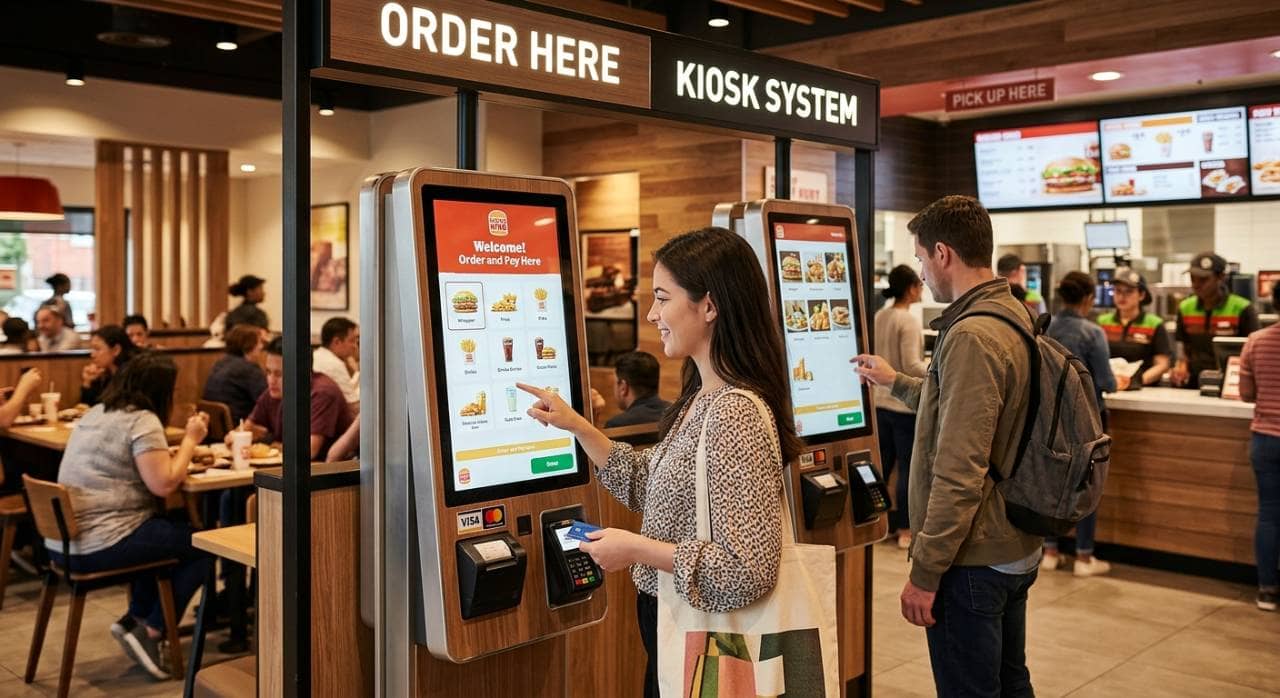
Understand how to evaluate a Kiosk system using key criteria including features, POS integration, hardware, pricing, customer experience, and support.
Aug 31, 2026

Explore restaurant technology trends in 2026, including AI, automation, digital ordering, workforce tools, connected kitchens, personalization, and profitability strategies today.
Aug 28, 2026

Learn the startup costs of opening an ice cream shop, including rent, equipment, renovations, permits, inventory, labor, marketing, and reserves.
Aug 28, 2026
RaceTrac has appointed Jill Pemberton as chief financial officer, succeeding Karla Ahlert, who moves into the newly created role of chief administrative officer.
Aug 26, 2026

A restaurant P&L statement reveals sales, expenses, and profits, helping owners manage costs, improve margins, and plan finances more effectively.
Aug 26, 2026

Learn practical ways to reduce labour costs through smarter scheduling, forecasting, productivity, cross-training, automation, overtime control, and performance monitoring strategies.
Aug 26, 2026

A payroll advance policy helps restaurant owners define eligibility, limits, repayment, documentation, approval procedures, and compliance requirements for employee advances.
Aug 24, 2026

Blaze Pizza welcomes Tracy Stockard as Chief Marketing Officer, bringing decades of brand and franchise experience to drive strategic growth and guest engagement.
Aug 25, 2026

Create a practical restaurant marketing plan by setting goals, targeting customers, choosing channels, budgeting wisely, scheduling campaigns, and measuring results.
Aug 24, 2026

Unlock Exclusive Access To Webinars, Events, And The Latest News For Free!
Learn how to schedule restaurant staff during peak and slow seasons using sales forecasting, labor matrices, cross-training, and workforce planning strategies that reduce labor costs and improve operational efficiency.
It is a rainy Tuesday at 3 PM in late January. You walk into your dining room and see three servers leaning on the host stand, mindlessly folding the same stack of napkins for the third time. In the back of house, two line cooks are staring at their phones. The restaurant is completely dead. Every minute that ticks by on the clock is draining your bank account. Conversely, think back to the first patio weekend of the summer - the ticket machine never stopped printing, you were down a bartender, and ticket times pushed past 45 minutes because you underestimated the dinner rush. Operating a profitable foodservice business requires walking a razor-thin line. You cannot afford to guess who needs to be in the building. Learning The Right Way to Schedule Restaurant Staff During Peak and Slow Seasons is the single most critical operational skill a general manager can possess to protect margins. Let’s break down exactly how to stop burning cash, stop burning out your staff, and start scheduling with mathematical precision.
In the restaurant industry, your Prime Cost the grand total of your Cost of Goods Sold (food and beverage) plus your Total Labor Cost dictates your survival. For a healthy, independent restaurant, your Prime Cost should sit strictly between 60% and 65% of your total gross sales. Labor is your most volatile, yet most controllable, expense. When you overstaff during a slow season, you are actively paying people to stand around. This destroys your labor percentage and eats your net profit before the food even hits the plate. When you understaff during a peak season, the financial damage is even worse. Ticket times drag, food sits dying in the expo window, guests leave angry Yelp reviews, and your overworked staff quits in frustration. The cost of hiring and training a replacement line cook is vastly more expensive than scheduling correctly in the first place. You must stop treating scheduling like a chore you rush through on a Thursday afternoon. It is the financial steering wheel of your business.
You cannot build an effective schedule based on your "gut feeling." You must build it based on hard data. The foundation of professional scheduling is the Labor Matrix, which dictates exactly how many bodies you need based on forecasted sales volume.
When the weather gets warm and the patio opens, the natural instinct of a fearful manager is to just "throw bodies at the problem." This leads to chaotic floor plans, people tripping over each other, and catastrophic overtime.
January and February are the graveyards of the restaurant industry. Sales plummet, and cash reserves dry up. However, if you simply slash everyone's hours to zero, your absolute best bartenders and lead line cooks will quit to find restaurants that can feed them. You must protect your "A-Team."
Writing the schedule should not take a manager six hours. Follow this exact weekly timeline to build a bulletproof matrix. Step 1 - The Tuesday Data Pull (14 Days Out) Great operators write schedules two weeks in advance. On Tuesday morning, pull your historical sales data and weather forecast for the upcoming period. Determine if you are running Volume A, B, or C templates for each day. If you utilize an API bridge like AnyConnector, your POS sales data should pipe directly into your scheduling software, giving you the precise sales target. Step 2 - Build the Skeleton Structure Do not look at employee names yet. Build the "Skeleton" of the schedule based purely on the roles needed. "I need 1 Grill Cook from 3 PM to 11 PM." "I need 1 Bartender from 10 AM to 5 PM." Map out the required hours before you start accommodating staff preferences. Step 3 - Stagger the In-Times (The Wave) Never schedule four line cooks to clock in at 3 - 00 PM. They will clock in, go to the bathroom, make a coffee, and stand around talking until 3 - 45 PM. You are paying for dead time. Stagger the arrivals. Cook 1 (Prep & Setup) - In at 2 - 00 PM. Cook 2 (Hot Line) - In at 3 - 30 PM. Cook 3 (Fry/Expo) - In at 4 - 30 PM. Bring the labor in like a wave, matching the exact trajectory of your incoming reservations. Step 4 - Fill the Roles and Post Now, drop the employee names into the skeleton based on their skill level and approved availability. Post the schedule electronically by Thursday evening, giving your staff a full 10 days' notice before the work week begins.
A perfect schedule falls apart if your staff does not respect the system. You must establish strict boundaries and train your team on how to interact with the labor matrix.
How do you know if you are actually mastering The Right Way to Schedule Restaurant Staff During Peak and Slow Seasons? You track the specific Key Performance Indicators (KPIs) associated with labor efficiency.