







7 Inventory Forecasting Mistakes That Cost Restaurants Money
Avoid costly inventory forecasting mistakes by analyzing sales data, tracking waste, adjusting purchasing plans, and using technology to improve restaurant profitability.

Overview
Inventory forecasting is essential for restaurant owners who want to control food costs, maintain ingredient availability, and protect profit margins. It involves estimating how much food and how many supplies a restaurant needs to meet customer demand without purchasing unnecessary quantities. Inaccurate forecasts can result in excess inventory, unexpected shortages, and wasted money on ingredients that expire before they can be used. Poor inventory planning affects profitability in several ways. Overstocking increases storage expenses and food spoilage, while understocking can cause menu shortages, missed sales, and costly emergency purchases. Both problems make it harder to manage food costs and maintain consistent operations. Accurate inventory forecasting requires analyzing historical sales, ingredient consumption, seasonal demand, supplier lead times, menu changes, and current stock levels. These factors help restaurant owners make informed purchasing decisions and maintain appropriate inventory levels. However, even restaurants with established inventory management processes can make costly forecasting mistakes. Relying on guesswork, overlooking food waste, ignoring supplier delivery schedules, and using outdated records can undermine purchasing accuracy. Identifying these mistakes helps restaurant owners improve inventory planning, reduce unnecessary spending, minimize food waste, prevent stockouts, and maintain better control over restaurant profitability.
Mistake 1. Relying on Guesswork Instead of Historical Sales Data
Estimating inventory requirements based on intuition rather than actual sales data can lead to inaccurate purchasing decisions. Restaurant owners who rely on guesswork may order more ingredients than necessary during slow periods or underestimate demand when customer traffic increases. Without reliable information about previous sales and ingredient consumption, it becomes difficult to determine how much inventory the restaurant needs. Historical sales data provides a foundation for more accurate inventory forecasting. By reviewing past transactions, restaurant owners can identify which menu items sell consistently, when demand increases, and how customer purchasing patterns change over time. This information helps estimate future ingredient requirements instead of relying on assumptions. To avoid this mistake, restaurant owners should - 1. Review historical sales reports. Analyze daily, weekly, and monthly sales to identify demand patterns and estimate future ingredient requirements. 2. Track ingredient consumption. Monitor how much of each ingredient is used during specific periods to understand actual purchasing needs. 3. Compare sales across similar periods. Use previous weeks, months, or comparable business periods to identify recurring demand trends. 4. Monitor menu item performance. Identify popular and low-selling dishes to avoid purchasing excessive quantities of ingredients that are rarely used. 5. Compare forecasts with actual results. Evaluate estimated inventory requirements against actual sales and ingredient usage to identify forecasting gaps. Restaurant owners should also connect sales information with recipe specifications and portion sizes. For example, knowing how many burgers a restaurant typically sells is useful, but understanding how much ground beef, cheese, and other ingredients each burger requires makes the forecast more precise. Using historical sales data gives restaurant owners a measurable starting point for inventory forecasting. It reduces dependence on assumptions, improves purchasing accuracy, and helps prevent unnecessary food costs.

Mistake 2. Ignoring Seasonal Demand and Sales Fluctuations
Restaurant demand changes throughout the year due to seasonal preferences, holidays, weather conditions, and local events. Ignoring these fluctuations when forecasting inventory can result in purchasing too many ingredients during slow periods or running out of essential supplies when customer demand increases. Using the same purchasing quantities year-round makes it difficult to maintain appropriate inventory levels. For example, a restaurant may experience higher demand for cold beverages, salads, and lighter meals during warmer months. During colder seasons, customers may prefer soups, hot beverages, and comfort foods. Holidays and local events can also increase demand for specific menu items, requiring restaurants to adjust ingredient orders ahead of time. To avoid this mistake, restaurant owners should - 1. Analyze seasonal sales patterns. Review previous sales records to identify how ingredient demand changes throughout the year. 2. Prepare for holidays and special events. Estimate additional inventory requirements based on expected customer traffic and popular menu items. 3. Monitor weather-related demand. Consider how temperature, rainfall, and seasonal conditions influence customer preferences. 4. Adjust purchasing quantities. Increase or decrease ingredient orders based on projected demand instead of maintaining fixed purchasing levels. 5. Review seasonal menu performance. Evaluate which dishes become more or less popular during different times of the year and adjust ingredient forecasts accordingly. Restaurant owners should also distinguish between predictable seasonal changes and unexpected sales fluctuations. Historical data can help identify recurring trends, while regular sales monitoring allows managers to respond to sudden changes in customer demand. Accounting for seasonal demand makes inventory forecasting more responsive to actual restaurant conditions. It helps prevent excess purchases during slower periods, reduces the risk of shortages during busy seasons, and keeps food purchasing costs aligned with expected sales.
Mistake 3. Failing to Account for Food Waste and Ingredient Spoilage
Food waste and ingredient spoilage can significantly increase restaurant operating costs when they are not included in inventory forecasts. Ordering ingredients based solely on expected sales without considering how much food gets discarded can result in purchasing quantities that exceed actual usage. Perishable products such as fresh vegetables, dairy, seafood, and meat are particularly vulnerable because they have limited shelf lives and require proper storage. Restaurant owners must understand the difference between the amount of food purchased and the amount that can actually be used to prepare menu items. Ingredients may be lost through over-preparation, improper storage, expired products, incorrect portioning, and food preparation mistakes. If these losses are not tracked, inventory forecasts may consistently underestimate purchasing requirements or encourage unnecessary overordering. To avoid this mistake, restaurant owners should - 1. Track daily food waste. Record ingredients discarded because of spoilage, expiration, overproduction, or preparation errors to identify recurring losses. 2. Consider ingredient shelf life. Adjust purchasing quantities based on how quickly ingredients expire and how frequently they are used. 3. Use historical waste data. Include previous waste levels when calculating future ingredient requirements to make forecasts more realistic. 4. Apply FIFO inventory practices. Follow the First In, First Out method to ensure older ingredients are used before newer deliveries. 5. Improve portion control. Standardize recipes and serving sizes to prevent excessive ingredient consumption during food preparation. 6. Adjust orders for perishable products. Purchase smaller quantities of short-shelf-life ingredients more frequently when supplier delivery schedules allow. Restaurant owners should also distinguish between unavoidable food waste and preventable losses. Some trimming and preparation waste is expected, but excessive spoilage or overproduction may indicate problems with purchasing quantities, storage practices, or demand forecasting. Incorporating food waste records into inventory forecasting helps restaurants estimate their actual ingredient requirements more accurately. By accounting for spoilage and preparation losses, owners can reduce unnecessary purchases, improve ingredient utilization, and protect their food cost margins.
Mistake 4. Overlooking Supplier Lead Times and Delivery Schedules
Supplier lead times and delivery schedules directly affect how much inventory a restaurant needs to maintain. Ignoring these factors when forecasting inventory can cause unexpected shortages, emergency purchases, and disruptions to daily operations. Even when a restaurant accurately predicts ingredient demand, failing to account for how long suppliers take to deliver orders can leave essential products unavailable when needed. For example, a restaurant that uses fresh seafood daily may receive deliveries several times a week, while specialty ingredients or imported products may require longer ordering periods. If managers forecast inventory without considering these differences, they may place orders too late or maintain insufficient stock to cover the waiting period. To avoid this mistake, restaurant owners should - 1. Track supplier lead times. Record how long each supplier takes to process and deliver orders so purchasing decisions reflect actual delivery timelines. 2. Adjust reorder points. Establish minimum inventory levels that trigger new orders before ingredients run out. 3. Consider delivery frequency. Account for whether suppliers deliver daily, weekly, or on specific days when calculating purchasing quantities. 4. Monitor supplier reliability. Track delayed deliveries, incomplete orders, and product availability to identify potential supply disruptions. 5. Maintain backup suppliers. Identify alternative vendors for essential ingredients to reduce the risk of shortages when primary suppliers cannot fulfill orders. 6. Account for order minimums. Include minimum purchase quantities and supplier ordering requirements when planning inventory levels. Restaurant owners should also consider safety stock when forecasting inventory. Safety stock is the additional inventory maintained to protect against unexpected demand increases or supplier delays. However, these quantities should be carefully calculated to avoid tying up money in excess inventory or increasing spoilage risks. Incorporating supplier lead times and delivery schedules into inventory forecasting helps restaurants determine when to order and how much stock to maintain. This creates a more reliable purchasing process, reduces emergency buying, and helps ensure essential ingredients remain available without unnecessary overstocking.

Mistake 5. Not Accounting for Menu Changes and Ingredient Usage
Menu changes and ingredient usage patterns can significantly affect restaurant inventory requirements. When restaurants introduce new dishes, remove existing items, adjust recipes, or change portion sizes, their ingredient demand also changes. Failing to update inventory forecasts accordingly can lead to purchasing the wrong quantities, accumulating unused ingredients, or running out of products needed for popular menu items. Another common problem is forecasting inventory based on total menu item sales without understanding the ingredients required for each dish. Two menu items may have different sales volumes but share several ingredients. Without accounting for recipe specifications and ingredient quantities, restaurant owners may struggle to estimate how much of each product they actually need. To avoid this mistake, restaurant owners should - 1. Review menu changes regularly. Update inventory forecasts whenever dishes are introduced, removed, or modified to reflect changing ingredient requirements. 2. Standardize recipes and portion sizes. Maintain consistent ingredient quantities for each menu item to improve purchasing estimates and control food costs. 3. Analyze ingredient overlap. Identify ingredients used across multiple dishes to understand total demand and avoid duplicate or inaccurate purchasing estimates. 4. Monitor menu item popularity. Use sales reports to identify high-performing dishes and adjust ingredient forecasts based on their demand. 5. Account for promotional offers. Consider how discounts, limited-time offers, and special menus may increase demand for specific ingredients. 6. Update ingredient requirements. Recalculate purchasing needs when suppliers, recipes, or portion sizes change. Restaurant owners should connect menu performance with ingredient-level forecasting. For example, if a restaurant promotes a chicken sandwich, managers should estimate the additional demand for chicken, bread, sauces, and other ingredients used in the recipe. This provides a more complete picture of the inventory needed to support increased sales. Accurately accounting for menu changes and ingredient usage helps restaurants align purchasing decisions with actual kitchen requirements. It reduces excess stock, prevents ingredient shortages, and ensures inventory forecasts reflect what customers are ordering rather than relying on outdated menu assumptions.
Mistake 6. Failing to Update Inventory Forecasts Regularly
Restaurant inventory forecasts should reflect current business conditions rather than rely on purchasing estimates created weeks or months earlier. Customer demand, ingredient availability, supplier prices, and operating conditions can change quickly. When restaurant owners fail to review and update their forecasts, they risk making purchasing decisions based on outdated information. For example, an ingredient that consistently sells well during one month may experience lower demand the following month due to menu changes or shifting customer preferences. Similarly, an unexpected increase in customer traffic can quickly reduce available stock. Without regular forecasting adjustments, restaurants may order too much of certain ingredients while running short of others. To avoid this mistake, restaurant owners should - 1. Review inventory levels regularly. Conduct daily checks of essential ingredients and schedule full inventory counts to maintain accurate stock records. 2. Compare forecasted and actual demand. Evaluate projected ingredient requirements against actual sales and consumption to identify discrepancies. 3. Update forecasts after sales changes. Adjust purchasing estimates when customer traffic, menu performance, or ordering patterns change. 4. Monitor ingredient price fluctuations. Review supplier price changes and availability to make informed purchasing decisions. 5. Establish forecasting schedules. Set daily, weekly, and monthly review routines based on ingredient shelf life, demand variability, and delivery frequency. 6. Account for unexpected events. Update inventory plans when weather conditions, local events, promotions, or operational disruptions affect customer demand. Restaurant owners should also measure forecast accuracy to understand whether their inventory planning methods are working. Comparing projected demand with actual ingredient consumption helps identify recurring errors and determine which products require more frequent adjustments. Regular forecasting reviews allow restaurants to respond to changing demand before inventory problems affect daily operations. By keeping purchasing estimates current, owners can reduce unnecessary stock, prevent shortages, and maintain better control over food costs.
Mistake 7. Relying on Manual Inventory Tracking and Disconnected Data
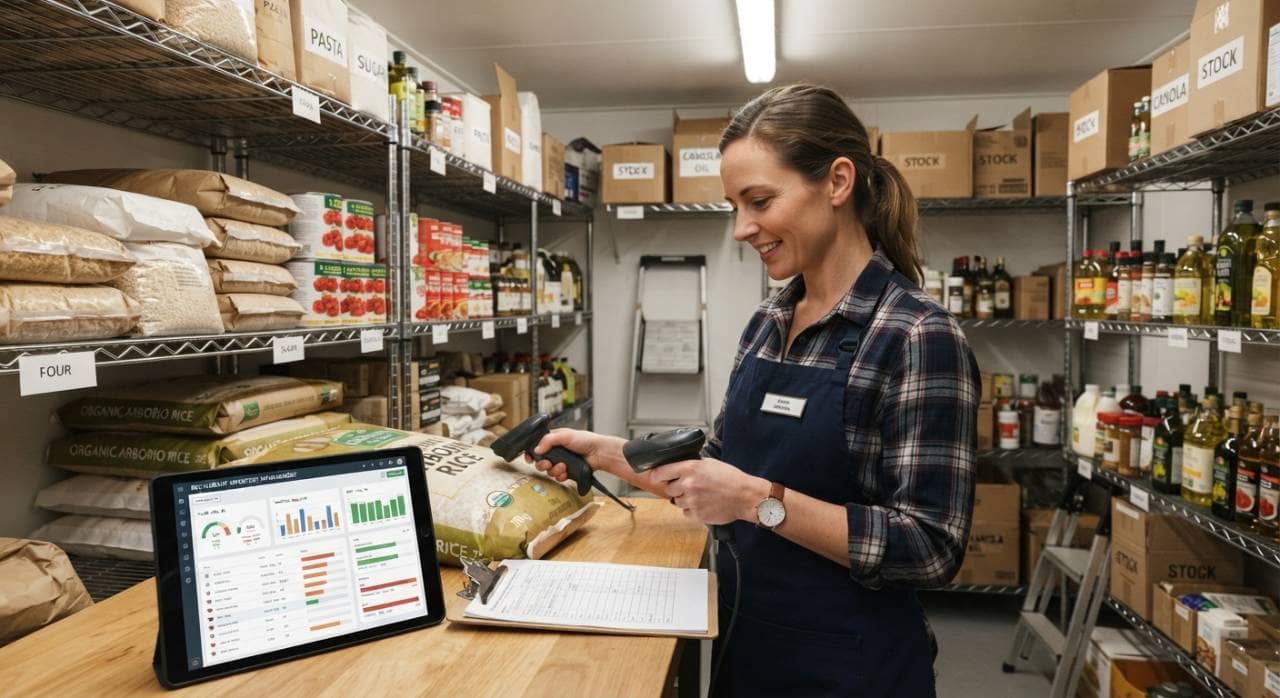
Manual inventory tracking and disconnected business systems can make restaurant inventory forecasting more difficult and time-consuming. When managers rely on spreadsheets, handwritten records, or separate platforms to monitor sales, purchases, and ingredient usage, important information may become inconsistent or outdated. These gaps make it harder to calculate accurate inventory requirements and identify purchasing problems before they increase operating costs. Manual processes also increase the risk of human error. Incorrect data entry, missed inventory counts, duplicate records, and delayed updates can cause discrepancies between recorded stock levels and the ingredients actually available in the kitchen. As a result, restaurant owners may place unnecessary orders, overlook shortages, or make purchasing decisions based on inaccurate information. To avoid this mistake, restaurant owners should - 1. Centralize inventory information. Use a consistent system to manage ingredient quantities, purchases, stock levels, and supplier information. 2. Connect POS and inventory data. Integrate sales records with inventory tracking to understand how menu item sales affect ingredient consumption. 3. Automate inventory calculations. Reduce manual work by using technology to calculate stock usage, purchasing requirements, and reorder points. 4. Monitor inventory discrepancies. Compare recorded stock levels with physical counts to identify data entry errors, unexplained losses, and inaccurate usage records. 5. Use real-time inventory updates. Maintain current stock information as ingredients are received, consumed, transferred, or discarded. 6. Evaluate forecasting technology. Consider inventory management systems with demand forecasting capabilities to identify purchasing patterns and estimate future ingredient requirements. AI-powered inventory forecasting can further improve purchasing decisions by analyzing historical sales, ingredient usage, seasonal trends, and other demand indicators. These capabilities help restaurant managers anticipate changes in ingredient requirements and adjust purchasing plans before shortages or excess inventory become costly problems. Technology does not eliminate the need for accurate inventory counts or management oversight. However, integrating sales, purchasing, and inventory information reduces reliance on disconnected records and provides a more consistent foundation for forecasting. By moving away from fragmented manual processes, restaurant owners can improve inventory visibility, reduce administrative work, and make more informed purchasing decisions.
How to Improve Restaurant Inventory Forecasting
Avoiding inventory forecasting mistakes requires a consistent process that connects purchasing decisions with actual restaurant demand. Restaurant owners need accurate sales records, reliable inventory counts, and a clear understanding of ingredient usage to determine how much stock they should maintain. Improving these processes helps reduce unnecessary purchases, prevent shortages, and control food costs. Here are several practical ways to improve restaurant inventory forecasting - 1. Establish a consistent inventory counting schedule. Conduct regular inventory counts to maintain accurate records of available ingredients. Monitor high-value and perishable products more frequently to identify discrepancies before they affect purchasing decisions. 2. Use historical sales and consumption data. Review previous sales reports and ingredient usage to estimate future demand. Consider daily, weekly, and seasonal patterns when calculating purchasing requirements. 3. Track food waste and spoilage. Record discarded ingredients, expiration-related losses, and preparation waste. Incorporate this information into future forecasts to avoid ordering quantities that exceed actual usable requirements. 4. Set appropriate par levels and reorder points. Establish minimum and maximum stock levels for essential ingredients based on expected demand, storage capacity, shelf life, and supplier lead times. 5. Account for supplier delivery schedules. Adjust purchasing plans according to delivery frequency, supplier reliability, and order processing times. Maintain sufficient inventory to cover expected usage until the next delivery. 6. Review forecast accuracy regularly. Compare projected ingredient requirements with actual consumption and sales. Identify recurring forecasting errors and adjust purchasing estimates accordingly. 7. Use integrated inventory management technology. Consider systems that connect POS sales, purchasing, and inventory records. Automated reporting and demand forecasting capabilities can help managers identify trends and make more accurate ordering decisions. Restaurant owners should also establish clear responsibilities for inventory management. Managers and kitchen staff need consistent procedures for recording ingredient usage, receiving deliveries, tracking waste, and reporting stock discrepancies. When everyone follows the same process, inventory records become more reliable and forecasting decisions improve.