Portillo's Loses Culture Chief Amid Turnaround
Portillo's chief people officer Jill Waite departs as new CEO Brett Patterson reshapes leadership with layoffs and fresh executive hires.
Workforce
Oct 6, 2026
Portillo's chief people officer Jill Waite departs as new CEO Brett Patterson reshapes leadership with layoffs and fresh executive hires.
Oct 6, 2026
Uber is paying $2.3 billion to acquire ezCater, merging its catering network into Uber Eats and Uber for Business to enter workplace catering.
Oct 6, 2026
A new lawsuit claims McDonald's pricing tool pressures franchisees into algorithmic price-fixing, raising fresh antitrust questions for the chain.
Oct 6, 2026

True Food Kitchen filed for Chapter 11 bankruptcy, closing 12 locations and shrinking to 34 restaurants across 14 states amid $42.1 million in debt.
Oct 5, 2026

Snooze Eatery names industry veteran Amy Hom as COO, starting Sept. 28, to strengthen hospitality and operations ahead of its next growth phase.
Oct 5, 2026
Improve restaurant visibility with local SEO by optimizing Google Business Profile, targeting local keywords, managing reviews, and maintaining accurate online information.
Oct 5, 2026
Restaurants can control operating costs by tracking food, labor, rent, utilities, technology, marketing, and other expenses against sales.
Oct 5, 2026

Opening a second restaurant location requires readiness, clear goals, financial planning, funding, smart strategy, standardized operations, strong teams, and careful launch monitoring for sustainable growth.
Sep 30, 2026

Evaluate restaurant industry performance in Q3 2026 through key trends affecting restaurant sales, traffic, consumer spending, labor, costs, and technology.
Oct 2, 2026

Understand tip pooling rules, employee eligibility, distribution methods, compliance requirements, recordkeeping practices, and policies restaurant owners need for proper tip management.
Oct 2, 2026

Unlock Exclusive Access To Webinars, Events, And The Latest News For Free!
A growing number of restaurants and commercial food retailers are adopting new technology to make their operations smoother. It also means an increased demand for commercial kitchen equipment.
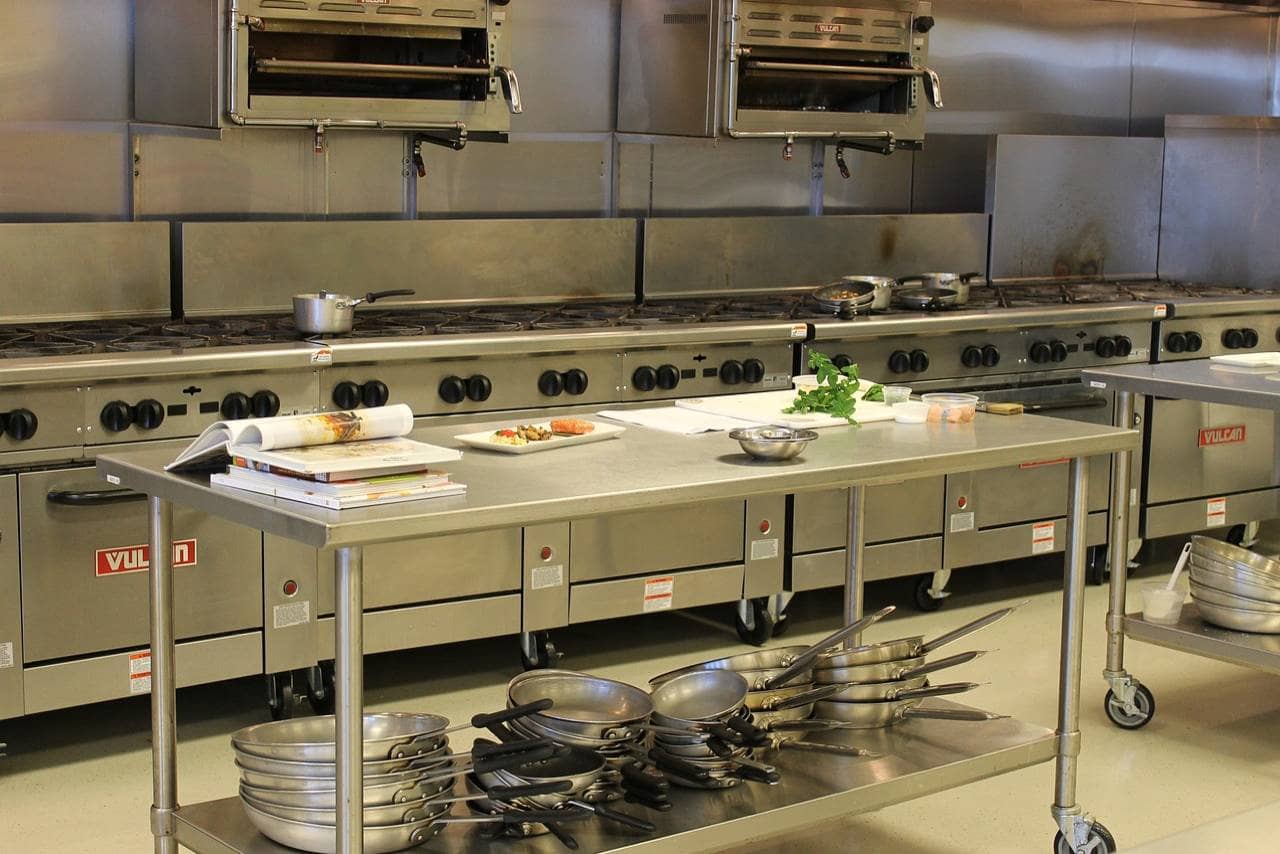
In the popular K-Drama Wok Of Love, the protagonist Seo Poong (Lee Jun-ho), a young and popular chef, is possessive about his wok. When he leaves his job as a chef at a high-end hotel to run an independent Chinese restaurant, the only thing he carries along is his wok. Emotionally attached to the cooking utensil, he believes it is the most important part of his cooking process. Throughout the show, there are close-up shots of the wok and of Seo Poong's techniques to move it to make his favorite recipes. A cooking utensil is a piece of important kitchen equipment. Perhaps, the most important. But in a commercial kitchen that is supposed to prepare multiple orders and ensure food safety protocols are properly followed, grandma-style pots and pans are passe. In the last few years, the food service industry has focused on implementing automated technology in its cooking equipment. Thus, commercial cooking equipment manufacturers are creating new devices with features to control them through the Internet of Things (IoT) and other technologies. As a result, the food service industry is shifting its focus on equipment embedded with high-tech technology and automation. One of these popular innovative devices is the R2-D2 Refrigerator. With novel innovations like this, those working in the commercial equipment industry seem willing to make new mistakes by trying to tap into a market that has connected commercial equipment.
Food service equipment provides ease of food preparation and safety in commercial kitchens. It consists of cookware, washes ware and preparation, storage and serving equipment used for cooking and preserving food products for commercial purposes. Whether you're considering updating your existing kitchen or opening a new restaurant, deciding on the right equipment to purchase for your business is crucial for long-term success. Basic commercial kitchen equipment should be purchased first, but eventually, it may make sense to invest in some consistent technology upgrades. That will make sure your staff can do everything they need to do as quick and efficient as possible. It will also keep them happy and help reduce any cooking processes that might take too much effort and time. Maybe that is why the food service equipment market is expected to grow from USD 23,839.4 million in 2020 to USD 44,810.8 million by 2027, at a CAGR of 5.7%. This equipment is widely adopted in hotels, commercial institutes and budgetary hotels to prepare various cuisines and keep them safe during storage. Here, we look at five ways the innovative commercial kitchen equipment is redefining restaurant operations.
Looking for fresh new ways to boost your menu offerings and give your guests a chance to try out some new varieties of fresh herbs? Look no further than your very own kitchen. If you install a green growing cabinet, these self-contained indoor garden units will grow organic miso, wheatgrass, and sunflower shoots from days to weeks, depending on the plant. Consumers are becoming more concerned with the quality of their food and demanding local, organic ingredients. Green growing cabinets ensure the freshest and most nutritious ingredients. These indoor gardens have grow-lights and auto-waterers with trays allowing kitchens to produce micro-greens. They work all year long, regardless of the climate or weather, ensuring a steady supply of quality vegetables.
Designers are beginning to automate tedious tasks and repetitive jobs. This saves workers from injuries and helps free them up for more creative opportunities in the restaurant. The automated fryer, for example, is especially helpful. It can save kitchen staff from burns while producing food with a consistency that's better than ever before! Then, combination ovens are perhaps the most well-known labor-saving kitchen equipment pieces. These units produce both convection and steam heat, and they can automatically switch between the two throughout the cooking process. As a result, cooks can use these machines to steam, poach, braise, roast and blanch foods, among other things. But there's more - combination ovens often also function as refrigerators, a feature that many enjoy as they can keep food fresh while working with it in the kitchen.
Cooking is similar to choreographing a symphony. The flavors, measurements and coordination have to be perfect and the same. And providing consistency of taste, quality and quantity across various outlets all the time is challenging. But AI-driven technology is just what chefs need to help deal with this burden. Accelerated by the pandemic, automated kitchens are being billed as the next big thing in the restaurant industry. A robotic arm to flip pizzas or robots to ascertain accurate measurement of ingredients -- automation behind kitchen counters has resolved the biggest challenge faced by the food industry- the standardization of taste, temperature and quality. For instance, Nommi, a restaurant startup that specializes in bowl-based meals, completely relies on automation. The Nommi robot is a culinary creation that can whip up 48 kinds of salads and grain-or noodle-based meals in as little as three minutes.
In a commercial kitchen, one of the most time-taking tasks is dishwashing. But in the next few years, restaurants and cafeterias will experience a sea-change in how they wash dishes. The future of commercial dishwashing involves more automation, reduced labor costs, greater efficiency and ultimately, cleaner dishes. These dishwashers operate via a conveyor belt system that feeds dishes into the washing and drying tunnel. Just like the automatic system in grocery stores, the conveyor belt comes equipped with an automated braking system that automatically stops when it senses that there are no more dishes to wash, at which point the worker can remove the washed dishes. This fully automated finish-line technology is especially useful for restaurants as a high volume of trays, dishes, and flatware must be washed promptly so as not to interrupt restaurant operations during peak dining hours. Some newer models of conveyor belt dishwashers offer a feature known as heat recovery. This method captures steam from hot water used to wash dishes and then reuses the captured steam to heat the water for future wash cycles. It dramatically reduces the amount of energy needed to heat the water.
The Internet of Things (IoT) is transforming our lives. And commercial kitchens are at the forefront of lapping up smart devices to reduce prep time and labor involvement and ultimately cut costs. Experts predict that smart kitchens will become a $10 billion industry. It is not surprising then that the food service companies are replacing conventional kitchen equipment with smart cooking equipment. For instance, a traditional cooktop has been replaced by smart cooktop surfaces to improve the efficiency of the kitchens. The success of smart kitchens is attributable to the fact that it improves nearly every aspect of cooking. For example, a smart oven can connect to apps that provide cooking tips and then transmit those settings straight to the cooktop. Then there's the Connected Cooking Scale, a nifty little gadget that makes cooking fun. All you need is an iPad or an iPhone. The device shows visual recipes step-by-step, and it helps chefs measure the perfect amounts for recipes with minimal effort. If one decides to alter the recipe or an ingredient is missing, this gadget adjusts other ingredients as appropriate or provides choices for suitable substitutes. These scales are wireless and connect directly to the iOS device to help one toss a perfect dish. Most smart gadgets even track nutritional information about the ingredients used in dishes, so one is aware of the diet limits and can educate customers as well. Restaurant TechnologyRestaurant EquipmentGrill ThermometersRestaurant Equipment