How to Calculate Cost of Goods Sold for a Restaurant
Learn how to calculate restaurant cost of goods using inventory, purchases, COGS percentage, variance reviews, and regular tracking for profitability.
Accounting
Aug 31, 2026
Learn how to calculate restaurant cost of goods using inventory, purchases, COGS percentage, variance reviews, and regular tracking for profitability.
Aug 31, 2026
Explore restaurant technology trends in 2026, including AI, automation, digital ordering, workforce tools, connected kitchens, personalization, and profitability strategies today.
Aug 28, 2026
Understand how to evaluate a Kiosk system using key criteria including features, POS integration, hardware, pricing, customer experience, and support.
Aug 31, 2026
Learn the startup costs of opening an ice cream shop, including rent, equipment, renovations, permits, inventory, labor, marketing, and reserves.
Aug 28, 2026

A restaurant P&L statement reveals sales, expenses, and profits, helping owners manage costs, improve margins, and plan finances more effectively.
Aug 26, 2026
Learn practical ways to reduce labour costs through smarter scheduling, forecasting, productivity, cross-training, automation, overtime control, and performance monitoring strategies.
Aug 26, 2026
RaceTrac has appointed Jill Pemberton as chief financial officer, succeeding Karla Ahlert, who moves into the newly created role of chief administrative officer.
Aug 26, 2026

Create a practical restaurant marketing plan by setting goals, targeting customers, choosing channels, budgeting wisely, scheduling campaigns, and measuring results.
Aug 24, 2026
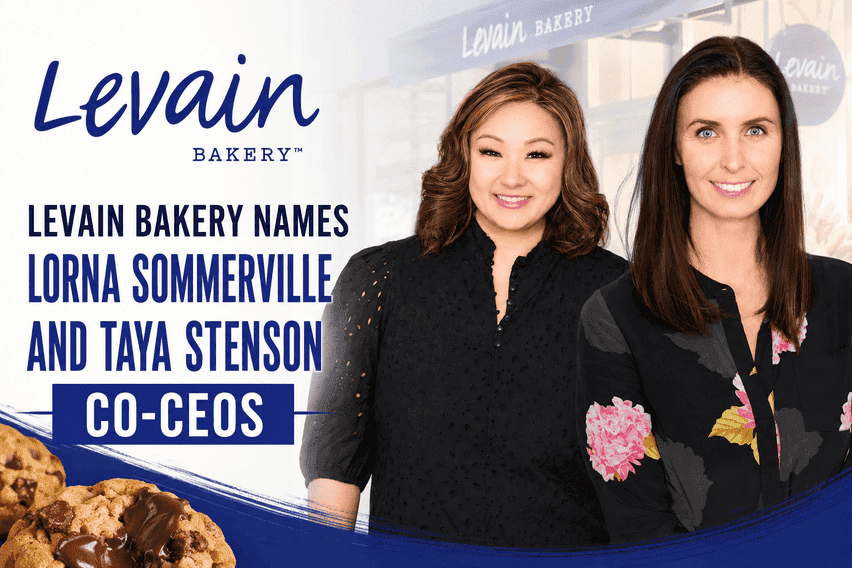
Levain Bakery appoints Lorna Sommerville and Taya Stenson as co-CEOs, blending operational and marketing expertise to power national expansion and innovation while staying rooted in its brand values.
Aug 25, 2026
A payroll advance policy helps restaurant owners define eligibility, limits, repayment, documentation, approval procedures, and compliance requirements for employee advances.
Aug 24, 2026

Unlock Exclusive Access To Webinars, Events, And The Latest News For Free!
Wonder closed a $650M Series D at a $9B valuation to expand locations and invest in robotics, AI, and delivery tech, accelerating its automation-first restaurant model.

Photo by Michael Fousert
Wonder closed a $650 million Series D on July 16, 2026, setting a pre-money valuation of $9 billion and pushing its automation-first restaurant model into a new gear. PR Newswire lists existing backers Accel, GV, and New Enterprise Associates alongside new commitments from funds managed by AllianceBernstein, ARK Invest, and Kayne Anderson Rudnick Investment Management. CityBiz reports the capital will underwrite new locations, expansion of Wonder’s marketplace, and continued investment in robotics and artificial intelligence. Since May 2025, the company’s operating footprint has grown from 46 to approximately 140 locations.
Founded in 2018 by entrepreneur Marc Lore, Wonder aims “to make great food more accessible,” positioning the company as a food technology platform that blends recipe development, kitchen robotics, and autonomous delivery.
Lore called the raise “fuel for the company’s core mission and operating model,” with a focus on compressing the trade-offs among quality, speed, and convenience. A Community Impact Report released July 9, 2026, details over $8.2 million invested in communities across all 50 states and Washington, D.C., with nearly 60 percent directed to initiatives improving access to healthy food for people experiencing food insecurity. Earlier financing in May 2025 brought in $600 million at a valuation above $7 billion, according to Bloomberg, moving the platform toward what Lore terms a “super app for mealtime.” The runway stretches back to 2022, when Wonder secured $700 million, including a $100 million personal investment by Lore, valuing the business at around $3.5 billion.

Wonder’s digital platform lets customers order across multiple restaurant concepts in a single transaction, then routes fulfillment to centralized kitchens outfitted with proprietary automation. The Infinite Kitchen system, acquired from Sweetgreen for $186 million, is currently the only fully automated bowl-making solution operating commercially, assembling hundreds of salad and grain bowls per hour without manual intervention. Fortune reports that Wonder’s robotics stack can produce up to 500 customized burrito bowls per hour, compared to roughly 45 bowls when prepared by a human cook.
To advance the technology, the company opened a dedicated R&D facility in Parsippany, New Jersey, earlier this year, where engineers refine robotic arms, vision systems, and AI-driven kitchen workflows. A partnership with Zipline will add on-demand meal delivery in Texas beginning next year, supported by Zipline’s record of over 2.5 million autonomous deliveries worldwide.

Investors are leaning in to the blend of culinary range, automated production, and integrated logistics. Tony Florence, co-CEO of New Enterprise Associates, said, “It’s been exciting to watch the evolution of what Wonder is building—a fundamentally new way for people to access great food, at a level of quality and speed traditional players can’t match,” reflecting NEA’s continued backing.
Jack Hartung, former CFO of Chipotle Mexican Grill and a recent appointee to Wonder’s Board, added, “Wonder has built a category-defining business at the intersection of food and technology, with a model that pairs exceptional restaurants and unmatched convenience with real scalability. I’m excited to join the Board and help the company execute on its long-term vision.” His four decades in restaurant finance and public company leadership are being tapped to help prepare Wonder for the public markets.

The funding arrives as off-premise production continues to scale. The ghost kitchen market is estimated at $97.20 billion in 2025 and projected to reach $112.99 billion in 2026, a 16.2 percent CAGR, according to The Business Research Company. North America is already the largest regional market, with operators using shared kitchens, data analytics, and automation to cut costs and improve consistency.
Wonder’s integrated approach, from a line capable of 500 bowls per hour to planned autonomous drone delivery in Texas, is engineered to reduce labor friction, broaden menu variety, and speed time-to-table under one digital roof.
There are unanswered questions. Wonder has not disclosed unit-level profitability or overall operating margins. Drone delivery will require FAA Part 135 certification and compliance with environmental review under NEPA, with active consultations underway for expanded operations in Texas.
Execution risk is real as the company brings multiple acquisitions under one umbrella, including Grubhub purchased for $650 million in 2024, Sweetgreen’s Infinite Kitchen unit for $186 million in late 2025, Blue Apron for $103 million earlier this year, and barbecue chain Mighty Quinn’s, which added eight locations across New York, Florida, and Maryland. The absence of an S-1 filing keeps the public-market timeline uncertain.
Fresh capital is earmarked for new sites, marketplace scaling, and continued investment in robotics and AI, and the restaurant sector will be watching whether that spend converts to scale economics that public investors can assess. With the ghost kitchen market expected to exceed $200 billion by 2030, operators that combine deep tech integration with strong brand portfolios are positioned to capture meaningful share.
For Wonder, the coming months will show whether a multi-brand, single-cart model can deliver the promised efficiencies, protect quality across diverse concepts, and manage regulatory and operational hurdles on the path to potential IPO readiness.