



Denny's Franchisee Hits Bankruptcy Court
Eduardo Diaz's 30-unit Denny's operation files for bankruptcy, continuing a pattern across Pizza Hut, KFC, and Panera since 2024.

Thirty Restaurants Now in Legal Limbo
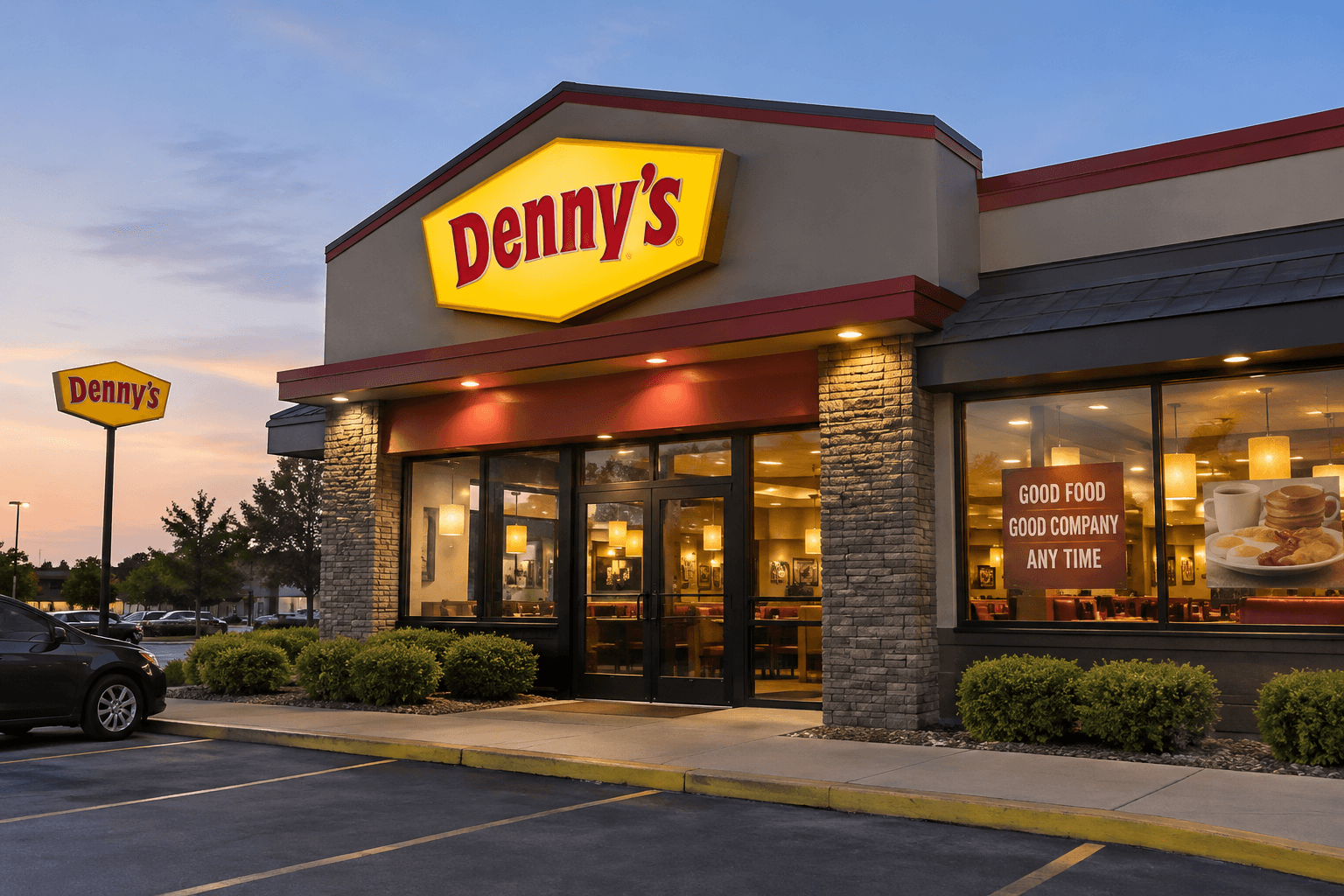
Eduardo Diaz just added another entry to what's becoming the messiest franchise story in casual dining. EYM Diner of DFW and EYM Diner of Florida, the two entities behind his 30-unit Denny's operation, have filed for bankruptcy. That's 30 restaurants across two states now sitting in legal limbo, and it's not even Diaz's first rodeo in bankruptcy court. Not close.
Denny's says it's already working with franchise partners and creditors to move as many of these restaurants as possible to new operators. The company's language is careful but telling: several locations are financially viable, and other franchisees already inside the Denny's system have raised their hands to take them over. Nobody's pretending this is a clean situation. But it's also not a total write-off.
Denny's Saw This Coming
This didn't come out of nowhere. Denny's has been quietly propping up Diaz's exit for two years, trying to help him sell off his restaurant holdings before things got to this point. Mark Burgess, senior vice president and chief development officer at Denny's, put it plainly: "We have spent the past two years working side by side with Mr. Diaz to support the sale of his Denny's restaurants; that commitment continues. There are viable restaurants in this group, and franchise partners within our system are willing to step in to help secure their future." Two years of behind-the-scenes work says a lot. This wasn't a company caught flat-footed by a surprise filing. It's a company that saw this coming and tried to get ahead of it.
No Deals Have Closed Yet
So how does the actual handoff happen? Burgess laid that out too: "We are working with those partners and other creditors through the necessary processes to transition operations of as many impacted restaurants as possible to experienced operators in our system. For the team members whose livelihoods depend on these restaurants and the guests who count on them, continuity matters. That is where our attention and effort remain." Translation: any ownership change has to clear bankruptcy court and get creditors on board first. As of now, zero deals have closed. The process is moving, but it hasn't produced results yet.
Four Brands, One Operator, Same Ending
Here's the part that should worry anyone watching the franchise world closely: this is not an isolated Denny's problem. Diaz-affiliated businesses have now filed for bankruptcy across Pizza Hut, KFC, and Panera since 2024, and the damage adds up to more than 100 closures across those brands. EYM Pizza, his Pizza Hut operation, filed in July 2024 after Pizza Hut sued over contractual violations, unpaid fees, and poor performance. At its peak, that business ran roughly 140 Pizza Hut locations, making Diaz one of the chain's bigger operators. The aftermath was brutal: 77 restaurants got sold off to six different buyers, while about 60 more closed for good.
The rest of the Diaz portfolio tells the same story on repeat. EYM Café, his Panera business out of the Houston area, once ran 15 bakery-cafés before Panera pulled the plug over royalty payment issues, food safety violations, and unpaid vendor invoices. EYM Chicken, the KFC arm, filed in 2025 and has already shuttered dozens of restaurants. Go back further and you'll find EYM King of Michigan closing all 26 of its Burger King locations in the state back in 2023 after a contractual dispute. Four brands, one operator, the same ending every time: rapid expansion that outran his ability to run the restaurants profitably.
An Awkward Moment For New Ownership
The timing couldn't be more awkward for Denny's. The chain is mid-stride on Project Grand Slam, a multiyear push to lift average unit volumes from roughly $2 million to $2.5 million through remodels, menu work, new tech, and better staffing standards. There's a new loyalty app coming, value menu pushes for price-sensitive diners, and beverage innovation meant to open new revenue lines. All of this is happening under a new ownership group, with TriArtisan Capital Advisors, Treville Capital Group, and Yadav Enterprises having completed their acquisition of Denny's Corporation in January (the same group now also owns Keke's Breakfast Cafe). Running a systemwide growth strategy while cleaning up a 30-unit bankruptcy at the same time is not the kind of multitasking any new ownership group wants on its plate in year one.
Risk Concentration In Franchise Systems
What this really comes down to is risk concentration. When a franchise system leans on a handful of large multi-unit operators, trouble at just one of them can ripple across dozens of locations and thousands of jobs almost overnight. That's exactly what's played out across Diaz's chains, and it's a lesson other brands are surely taking note of. Denny's approach, leaning on existing franchisees already inside its system rather than hunting for outside buyers, is a sensible way to contain the damage. The fact that other operators already want in suggests the real estate and customer bases still have value, even if Diaz's version of running them didn't work out.
Whether this ends like the Pizza Hut situation (ugly, with 60 permanent closures) or more like a clean handoff will depend entirely on what happens in bankruptcy court over the coming months. Denny's has said the right things about protecting jobs and keeping restaurants open for the guests who count on them. Now it has to deliver. For a new ownership group trying to prove it can execute Project Grand Slam, cleaning up this Diaz mess without losing more restaurants than necessary might be the first real test of whether they're up to the job.