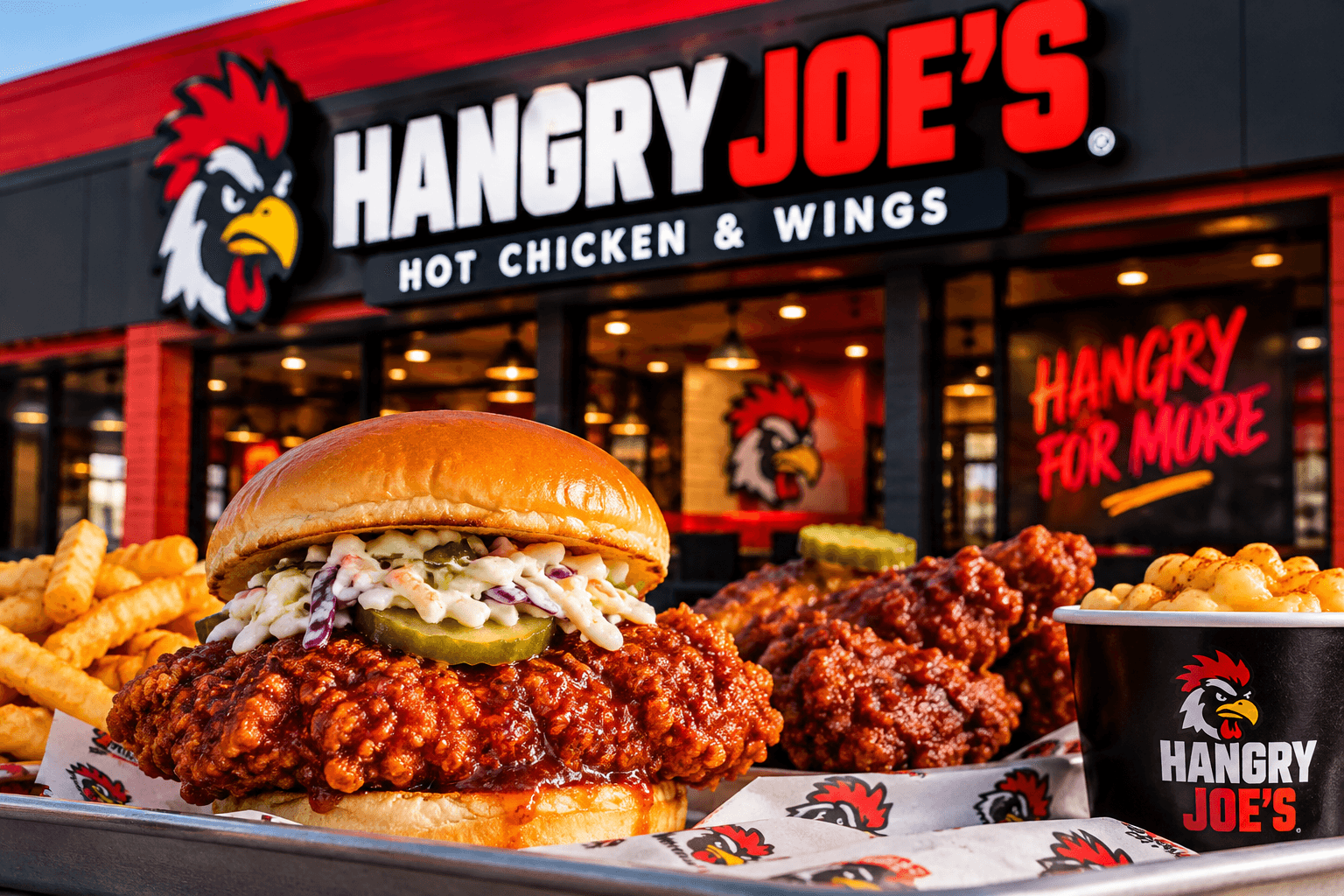
Hangry Joe's Names Brandon Wilhelm as New CEO
Hangry Joe's promotes insider Brandon Wilhelm to CEO, prioritizing franchisee profitability over rapid unit growth as the chain expands past 90 locations.
Franchising
Oct 6, 2026
Hangry Joe's promotes insider Brandon Wilhelm to CEO, prioritizing franchisee profitability over rapid unit growth as the chain expands past 90 locations.
Oct 6, 2026
Portillo's chief people officer Jill Waite departs as new CEO Brett Patterson reshapes leadership with layoffs and fresh executive hires.
Oct 6, 2026
Uber is paying $2.3 billion to acquire ezCater, merging its catering network into Uber Eats and Uber for Business to enter workplace catering.
Oct 6, 2026
A new lawsuit claims McDonald's pricing tool pressures franchisees into algorithmic price-fixing, raising fresh antitrust questions for the chain.
Oct 6, 2026

True Food Kitchen filed for Chapter 11 bankruptcy, closing 12 locations and shrinking to 34 restaurants across 14 states amid $42.1 million in debt.
Oct 5, 2026

Snooze Eatery names industry veteran Amy Hom as COO, starting Sept. 28, to strengthen hospitality and operations ahead of its next growth phase.
Oct 5, 2026

Opening a second restaurant location requires readiness, clear goals, financial planning, funding, smart strategy, standardized operations, strong teams, and careful launch monitoring for sustainable growth.
Sep 30, 2026
Improve restaurant visibility with local SEO by optimizing Google Business Profile, targeting local keywords, managing reviews, and maintaining accurate online information.
Oct 5, 2026
Evaluate restaurant industry performance in Q3 2026 through key trends affecting restaurant sales, traffic, consumer spending, labor, costs, and technology.
Oct 2, 2026
Restaurants can control operating costs by tracking food, labor, rent, utilities, technology, marketing, and other expenses against sales.
Oct 5, 2026

Unlock Exclusive Access To Webinars, Events, And The Latest News For Free!
Hangry Joe's promotes insider Brandon Wilhelm to CEO, prioritizing franchisee profitability over rapid unit growth as the chain expands past 90 locations.
Hangry Joe's just handed its top job to the guy who already knew where all the bodies were buried. The hot chicken chain, now sitting at more than 90 locations, named Brandon Wilhelm as Chief Executive Officer, effective immediately, and his mandate is blunt: shore up franchisee support, push the 20 new locations already in the pipeline, and build the operational backbone the brand needs before it gets any bigger.
Wilhelm isn't a stranger brought in to shake things up. He's spent more than 20 years in franchise development, most of it building Subway territory across the Midwest as a Development Agent, where he eventually ran operations strategy for more than 500 quick-service restaurant locations and mentored more than 140 franchisees. He later joined Hangry Joe's himself, first as a multi-unit franchisee and President of Hangry Development Texas, then as a member of Hangry Joe's Franchising's Board of Directors. His most recent stop before the CEO chair was Acting Chief Marketing Officer, which means he walked into this job already knowing where the marketing budget leaks and where it works.
That resume tells you something about what the company is prioritizing. Wilhelm holds a BBA from Baylor University and an MBA from Southern Methodist University, but the formal credentials read almost like an afterthought next to his operational history inside franchise systems. He's been explicit about where his attention is going. "My number one focus as CEO is franchisee profitability, reducing COGS, driving sales, and improving our franchise partners' bottom lines," he said. "If we give our franchisees the support, marketing, and systems they need to thrive, this brand will grow organically and quickly." He also admitted the brand nearly lost him to a different career entirely before he tasted the product: "I was actually considering stepping away from the restaurant business altogether, until I tried Hangry Joe's and fell in love with the food. We have the best chicken in the industry, and I believe the whole country needs to try it."
The strategy attached to his appointment runs on a clear sequence, and the order matters as much as the content. Profitability for existing franchised locations comes first, ahead of everything else, built around giving current operators the unit economics and support to actually succeed. Marketing and advertising investment system-wide comes second, aimed at driving traffic and visibility in a crowded fast-casual chicken category. Operational efficiency is third, meant to make franchisee support more consistent across the system. New restaurant development sits fourth, with Wilhelm stressing that pairing the right owner with the right location matters more than how fast new units open. Treating the 20 planned locations as a byproduct of a healthier system, rather than the headline goal itself, is the clearest signal of how this leadership team wants its performance measured.
Co-founder Mike Kim backed the move publicly, framing it less as a hire and more as a continuation. "Brandon has been a trusted partner to this brand for years, and we couldn't be more confident handing him the keys to our next chapter," Kim said. "His operational experience and genuine commitment to our franchisees make him exactly the right leader to take Hangry Joe's forward." That framing matters because Wilhelm has sat on both sides of the table, as a corporate development figure and as an actual multi-unit operator, which is precisely the kind of bridge a franchise system needs when headquarters strategy and ground-level reality start to diverge.
What makes the timing notable is that Hangry Joe's isn't slowing down to fix its foundations. It's doing both at once, operating more than 90 locations while 20 more move toward opening, and choosing to build franchisee-first priorities into the leadership structure mid-expansion rather than after the fact. The emphasis on matching operators to locations reads as a direct hedge against a familiar franchise failure mode: a strong brand can still get undermined by a mismatched owner or a poorly chosen site, no matter how good the product is.
Wilhelm is setting up a scoreboard built around COGS reduction and sales growth rather than unit count alone, which means the real test of his tenure won't be how fast those 20 locations open. It'll be whether existing franchisees are making more money before they do. The company hasn't put numbers or a timeline to that yet, and that gap is worth watching. The next several months, as those new units move toward launch, will be the first real signal of whether a profitability-first approach can coexist with an expansion plan that was already in motion before Wilhelm took the keys.
