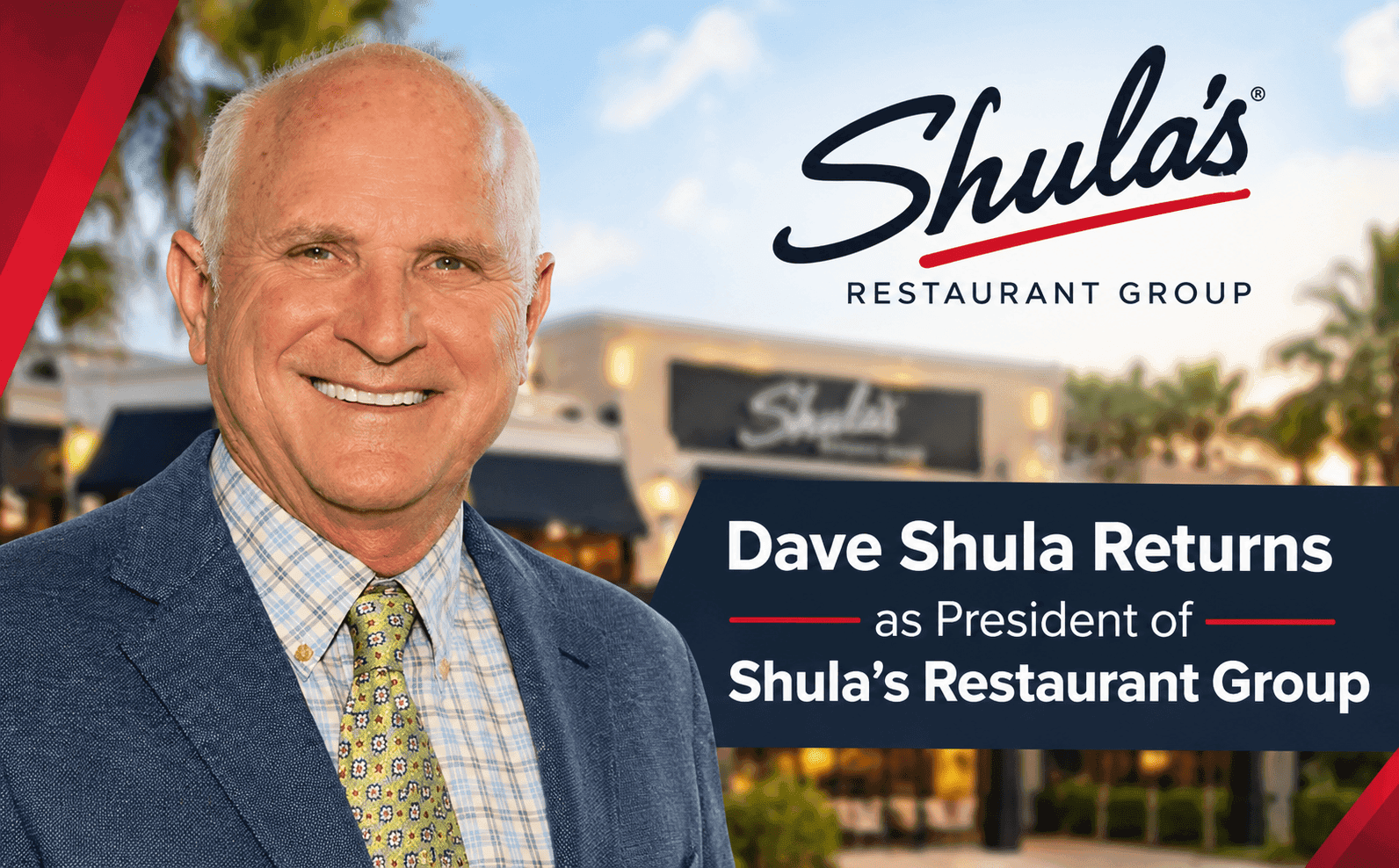
Dave Shula Returns as President of Shula's Restaurant Group
Dave Shula rejoins Shula's Restaurant Group as president, leading growth into Palm Beach Gardens and a 2027 Thomasville, Georgia expansion.
News
Sep 23, 2026
Dave Shula rejoins Shula's Restaurant Group as president, leading growth into Palm Beach Gardens and a 2027 Thomasville, Georgia expansion.
Sep 23, 2026
McDonald's commits $8.5 billion through 2036 to modernize restaurants, boost cash flow by $100,000 per store, and grow chicken and beverage sales.
Sep 23, 2026
WKS Restaurant Group promotes Jay Spongberg to president and COO after he helped grow the company from 65 to 382 restaurants over 16 years.
Sep 23, 2026

Smokey Mo's BBQ names Von Dawson, a Dine Brands veteran, as VP of Franchise Development to lead its Texas expansion strategy.
Sep 23, 2026
.png&w=3840&q=70)
Meritage Hospitality's Chapter 11 filing pulls 5% of Wendy's U.S. stores into bankruptcy, exposing cracks in franchising's bigger-is-safer bet.
Sep 21, 2026

Jack in the Box names Rachel Ruggeri to its board as Michael Murphy retires, amid a CEO transition and deal with investor GreenWood.
Sep 21, 2026

Improve restaurant Google Maps rankings by optimizing your business profile, selecting accurate categories, gathering reviews, adding photos, and strengthening local relevance signals.
Sep 21, 2026

Restaurant inventory tracking helps owners monitor stock, control food costs, reduce waste, improve purchasing, and make informed operational decisions.
Sep 21, 2026

Restaurant owners can significantly reduce restaurant costs by leveraging technology across inventory, labor, procurement, forecasting, and administrative operations for better profit margins.
Sep 18, 2026

Understand how to forecast restaurant revenue and expenses with methods for sales projection, cost scaling, fixed-cost planning, and risk buffering.
Sep 18, 2026

Unlock Exclusive Access To Webinars, Events, And The Latest News For Free!
Explore the latest employment trends, job growth, and recruitment challenges in the restaurant industry based on the November 2024 data release from the Bureau of Labor Statistics.

Photo by Luca Cavallin
According to the recent data released by the Bureau of Labor Statistics, the restaurant and bar sector experienced a moderation in growth in November 2024. With approximately 29,000 positions added during this period, the industry witnessed a notable change compared to the previous two months. This shift in employment trends signals a more controlled approach to hiring, reflective of businesses strategically gearing up for the upcoming year of growth and expansion.
In November 2024, the employment scenario in leisure and hospitality showed a positive trend with an addition of 53,000 jobs, following a marginal increase in the prior month. This sector had been averaging around 21,000 new jobs per month over the last year, indicating a steady growth pattern. The consistent uptick in employment highlights the resilience of the hospitality industry amidst changing economic landscapes and policy shifts.
While the employment figures show promise, recruitment remains a significant concern for operators in the restaurant industry. The Restaurant Workforce Report for 2025 revealed that 65% of respondents perceive the current labor market as 'tight' or 'very tight,' underscoring the challenges in sourcing and retaining talent. The ongoing labor shortage is a critical factor influencing hiring strategies and operational dynamics within foodservices and drinking places.

Photo by Luca Cavallin
The year 2024 presented a tumultuous landscape for job growth in the restaurant sector. Despite adding over 150,000 jobs during the year, which accounted for nearly half of the previous year’s additions, the industry faced inconsistencies and hurdles in achieving sustained growth. The data suggests that while progress has been made in bridging the gap to pre-pandemic employment levels, challenges persist in ensuring a robust and stable workforce in the long run.
With establishments adding 227,000 jobs in November 2024, there is a sense of cautious optimism within the industry. However, external factors like natural disasters and labor disputes can create fluctuations in job numbers, as seen in the October figures. The gradual increase in the unemployment rate to 4.2% raises concerns, emphasizing the need for sustainable employment practices and strategic workforce planning.
As the restaurant industry navigates through evolving employment trends and labor market challenges, organizations must prioritize innovative recruitment solutions and employee retention strategies. Investing in training programs, enhancing workplace culture, and leveraging technology for streamlined operations can help businesses adapt to the changing dynamics of the workforce. By staying agile and responsive to market conditions, restaurants can position themselves for sustainable growth and success in the post-pandemic era.